
Table of Contents (13)
Persona 3 Reload on Switch 2: My first week living inside the Dark Hour
I didn’t really plan to spend my commutes fighting Shadows and cramming for midterms, but Persona 3 Reload on Switch 2 made it too easy to fall back into that calendar loop. Across roughly fifty hours split almost evenly between docked play on a 55-inch TV and portable sessions on a train, a couch, and a questionably ergonomic desk chair, this port did something I didn’t expect: it made me forget I wasn’t on my living room console. Not always-Tartarus likes to remind you with the occasional hiccup-but often enough that I’d call this the best way to play Persona 3 if “anywhere” is part of your plan.
For context, I played and finished Persona 3 on PS2 back in the day, dabbled with Portable on Vita, and put about 35 hours into Reload on another platform earlier this year. So I came into this Switch 2 version with a grocery list of “please just don’t break X” requests: that punchy new UI, the full-party control, the difficulty options, the reworked combat flow with Shifts and Theurgy. It’s all here-and it feels right at home on a handheld.
First impressions: familiar faces, slicker flow, and that Persona 5-inspired menu magic
By the end of night one (about 3 hours), I had that comfortable “I know this place” feeling. The dorm chatter, the school day cadence, Elizabeth’s wonderfully odd requests—all intact. What struck me immediately was the UI. Reload borrows Persona 5’s confidence without copying it wholesale. Combat opens a radial that surfaces everything clearly: skills, guard, items, tactics, and the essential Assist prompt that nudges you toward known weaknesses when you’re half-distracted in portable mode. It’s quick, readable, and it reduces friction in the small but crucial ways that matter on a handheld: fewer clicks to do what you already know you want to do.
I started on Normal, like I did on console, and after about 10 hours I bumped it to Hard. Normal in Reload is generous—more generous than I remember PS2 Persona 3 being—especially because you can fully control your party now. If you grew up micro-managing tactics like “Knock Down,” “Conserve SP,” and “Full Assault,” you can still hand over the reins to the AI per character. But there’s a quiet delight in finally telling Junpei to stop wasting SP and actually making him listen. Hard made boss patterns click for me again; Normal felt like a guided tour.
Combat: Shift rhythms, Theurgy payoffs, and the return of the panic when the Reaper rattles his chains
Reload’s best change remains the turn economy. Hitting a weakness and then Shifting to a teammate to set up another weakness, then another, then an All-Out Attack—this loop just sings. On Switch 2, it never missed a beat in combat. One early moment that sold me (around Floor 17 of Thebel): a trio of Shadows with mixed affinities shows up. Akihiko lands Zio to stun the first, I Shift to Yukari to blow a Garu weakness, then pass to the protagonist to tag the last with Bufu via Orpheus. All-Out Attack, confetti of damage numbers, and that reload version of the battle theme kicks in. It’s the same thrill as on other platforms, except I was doing it in line at a coffee shop, half-worried the Reaper would spawn before my cappuccino.
Theurgy, Reload’s super move gauge, matters more on Hard. Bosses that felt like speed bumps on Normal suddenly demanded I pace my SP use and line up Theurgy blasts for phase changes. The “aha!” moment came during a mid-game Tartarus guardian where Mitsuru’s ice Theurgy cracked the enemy’s resist cycle wide open after I had stumbled for two attempts. The controls held up fine on handheld—no missed inputs, no sticky timing. The only time I felt the system creak was right after certain fights: a momentary hitch during the transition back to exploration, especially deep into a Tartarus block. It’s not every time, and it’s not long, but it’s there.
Tartarus: procedural comfort food or endless beige labyrinth? I’m still torn
Persona 3’s Tartarus has always split the room. On good nights, it’s a cozy treadmill: clear a handful of floors, push a mini-boss, bail before the Reaper punishes you for lingering. On bad nights, it’s a maze of hallways that blur together. Reload brightens the space with better lighting and more readable geometry, but it’s still Tartarus—tile sets shuffled into new layouts, loot chests, stair hunts, occasional hazard floors, and that telltale clatter when Death is on the way.
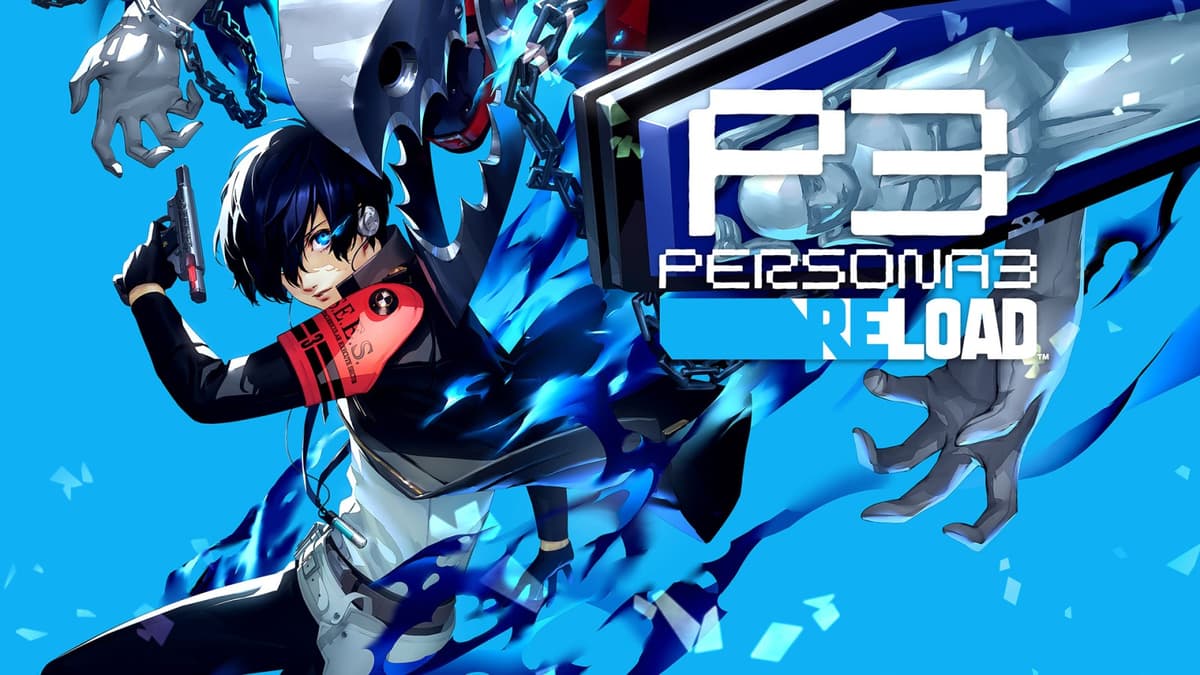
On Switch 2, Tartarus is where the port shows its seams. Across my run, I’d get brief slowdowns most commonly in two cases: when two shadows aggroed at once on screen and during the post-battle stutter I mentioned. These weren’t fight-killers—I never whiffed an ambush because of a hitch—but they pulled me out of the zone. In portable mode, there’s also a mild softness to the image that makes far-off enemies a touch harder to spot compared to docked, so I leaned on sprinting and camera nudges more than I did on console. The flip is that the combat itself remains smooth, and the Reaper panic still hits when you hear those chains and bolt for the stairs like you just remembered an exam you didn’t study for.
One unexpected upside: the little quality-of-life touches make Tartarus more tolerable. Quick heal with a button, faster item use, and the way known weaknesses surface in the UI let you churn through floors without feeling like your thumbs are wearing out. Monad Doors—those optional, meaner fights—translate well to on-the-go play since they’re self-contained and high-value. I’d clear two or three of those in a quick 20-minute session and feel like I’d actually progressed.
School life, Social Links, and the everyday magic of the calendar loop
If Tartarus is the grind, the day-to-day rhythm is why you stay. Persona 3’s calendar—studying for midterms, choosing club activities, catching movies, making time for Social Links—hits differently when you can nibble at it in handheld increments. I’d knock out a couple of after-school scenes on the train, then save the longer Tartarus push for the TV. The fast-travel map and the way Reload highlights available events cut down on the “waste a day by accident” anxiety I remember from the PS2 era.
Link Episodes (Reload’s expanded character bonding outside the classic Social Link framework) are still the unsung heroes here. They give SEES more breathing room and make certain teammates feel less like archetypes. Without spoiling specifics, one mid-game scene in the dorm recontextualized a character I’d written off as comic relief. That moment landed the same on Switch 2 as it did on console: warm, human, and quiet in a way RPGs rarely allow themselves to be. None of that is lost in the move to handheld.
Audio and music: reorchestrations that mostly soar, with a few “I liked the old one better” moments
The soundtrack remains a highlight. The rearranged battle theme still makes my shoulders do that involuntary bounce, and the dorm music has this lived-in warmth that makes late-night save sessions feel like home. I know some fans aren’t sold on certain reorchestrations—fair. There are a couple of tracks where I found myself missing the raw edge of the older versions. But as a whole, the OST on Switch 2 is clean and punchy in both docked and portable modes. I played a lot of this with midrange Bluetooth headphones and then swapped to the console speakers to see if compression reared its head. It didn’t. Portable audio is surprisingly full without forcing a headset, though a good pair obviously elevates the vocals.
French translation test, text quirks, and the elephant not in the room
I spent two evenings toggling the full French translation just to see how it held up. It’s comprehensive, easy to read on the smaller screen, and largely strong—but you’ll catch occasional odd phrasing and minor mistakes. Nothing story-breaking, just the kind of hiccup that makes you pause. One line meant to say “let’s regroup later” came out with a clunky tone that felt off. If you stick to English, you’ll still see a handful of text snags and stray punctuation that were present in Reload’s initial release. They’re not pervasive, but they haven’t magically vanished for this port either.
And yes, the same content caveats apply here: there’s no option to choose a female protagonist and no built-in, day-one integration of the FES epilogue. If those were deal-breakers for you before, this version doesn’t change that calculus. I wish Atlus would address it, because everything else about Reload feels like a definitive take.
Performance and visuals: shockingly close on TV, softer in handheld, with Tartarus wobbles
Let’s talk shop. Docked, this looks close enough to the other console versions that I had to squint to notice differences. The anime-styled rendering holds its crisp lines, the shadow work remains striking in late-evening shots around the city, and cutscenes look consistently clean. Handheld is where the compromises show: a slight blur that smooths edges and a minor drop in fluidity when Tartarus gets busy. Moment-to-moment exploration outside dungeons feels great in both modes; the dips are mostly confined to very specific Tartarus scenarios. Load times are brief in both use cases—long enough for a sip of coffee, not long enough to doomscroll.
Controls-wise, I never fought the hardware. Navigating menus, queuing up skill chains, tapping Analyze to check if we’d logged a weakness yet—it all flows. Working through Persona fusion in the Velvet Room is snappier than I remember from the original releases thanks to Reload’s search tools, and that carries through here. On TV, the crispness makes long fusion sessions pleasant; on handheld, the font size and layout keep it comfortably readable.

Little moments that stuck with me
After about 20 hours, I had one of those “video games are alchemy” evenings. I cleared a block guardian on my second attempt, stumbled back into the dorm tired but happy, and walked into a quiet event with a teammate that made the whole day feel cohesive. The next commute, I got ambushed by a rare spawn in Tartarus, improvised with items because I was SP-starved, and somehow threaded an All-Out Attack into a Theurgy finish. Two completely different spaces—one serene, one chaotic—yet on Switch 2, they snapped together into the same rhythm that made Persona 3 a classic in the first place.
Another small thing: I found myself using the Tactics menu in a way I never did on other platforms. On handheld, when I’m leaning with the console and half-watching the world around me, setting Yukari to conserve SP for a floor or two helped me play more deliberately. Later, flipping everyone to Full Assault for a Monad Door fight felt like kicking a door open. It’s a reminder that the option to let the AI help doesn’t fight against Reload’s design; it lets you tune your focus when life interrupts.
What works, what doesn’t, and who this version is for
- What works: The core. Combat is fast and readable, Shifts make weakness play electric, and Theurgy adds satisfying punctuation to boss phases. The UI is a dream in handheld, fast-travel and Assist reduce friction, and the school-life calendar still makes “one more day” turn into three.
- Also works: The port’s priorities. On TV, it essentially matches the console feel. In portable, audio quality and UI readability carry the vibe even when the image softens.
- What doesn’t: Tartarus performance wobbles. They’re not constant, but they’re consistent enough to mention—brief dips when multiple shadows crowd the viewport and tiny post-battle stutters.
- Also doesn’t: Lingering text issues and the unchanged content omissions. No female protagonist option, no extra story chunk baked in, and a few translation bumps if you go French.
- Who it’s for: Newcomers who want the best portable way to experience Persona 3. Returning fans who bounced off the PS2-era friction but love Persona 5’s flow. Commuters. People who want a large-scale JRPG that actually fits their life.
- Who should pause: If you despise Tartarus’s procedural grind, this won’t convert you. If you want the absolute cleanest performance and already have access elsewhere, you’ll get marginally smoother Tartarus runs on other hardware.
Technical odds and ends from my setup
I played docked on a 55-inch TV and handheld in a mix of quiet and noisy spaces. Bluetooth headphones and the console speakers both did justice to the soundtrack. I didn’t encounter crashes, save issues, or progress blockers. The only repeated technical annoyance was the Tartarus hitching described above. It never cost me a run, but I noticed it enough to test it: it happened in both docked and handheld, slightly more often in handheld during longer sessions. Outside dungeons—classrooms, the dorm, city hubs—everything felt smooth and responsive.
The bottom line: a near-definitive portable Persona 3, blemishes and all
Persona 3 Reload on Switch 2 nails the important stuff. It preserves the remake’s confident combat, classy UI, and richer character moments, and it lets you live with them in the most Persona-friendly format imaginable: in bite-sized chunks wrapped around your schedule, with the option to go deep on the couch. It’s not a miracle port—Tartarus wobbles, text nits, and missing content are still part of the package—but none of those outweighed the quiet pleasure of having this game in my backpack all week.
If you’re new to Persona 3, this is a fantastic starting point that respects your time without sanding down the heart of the original. If you’re a veteran, the smarter flow and portable freedom make the trip back to the Dorm worth it. Just do yourself a favor: pick Hard if you remember the PS2 days fondly, and don’t linger on a Tartarus floor unless you’re ready to hear those chains.
TL;DR
- Looks and feels remarkably close to PS/Xbox/PC on TV; handheld is softer but still great
- Combat is a joy: full-party control, Shifts, and Theurgy make fights snappy and strategic
- Tartarus runs fine overall but has brief dips and post-battle hitches, more noticeable on handheld
- Full French translation included, though a few lines read awkwardly; minor text issues persist in English too
- No female protagonist option or added story chapter; otherwise a generous, polished remake
- Best for players who want Persona 3’s school-life/dungeon rhythm on the go—pick Hard for a more classic challenge
FinalBoss // Gear
Level up your setup
01Best-selling Switch 2 gameson Amazon→02Switch 2 accessorieson Amazon→038BitDo controllerson Amazon→04Discounted game keyson Kinguin→Affiliate links · As an Amazon Associate, FinalBoss earns from qualifying purchases.
Want to Level Up Your Gaming?
Get access to exclusive strategies, hidden tips, and pro-level insights that we don't share publicly.
Ultimate Reviews Strategy Guide + Weekly Pro Tips