
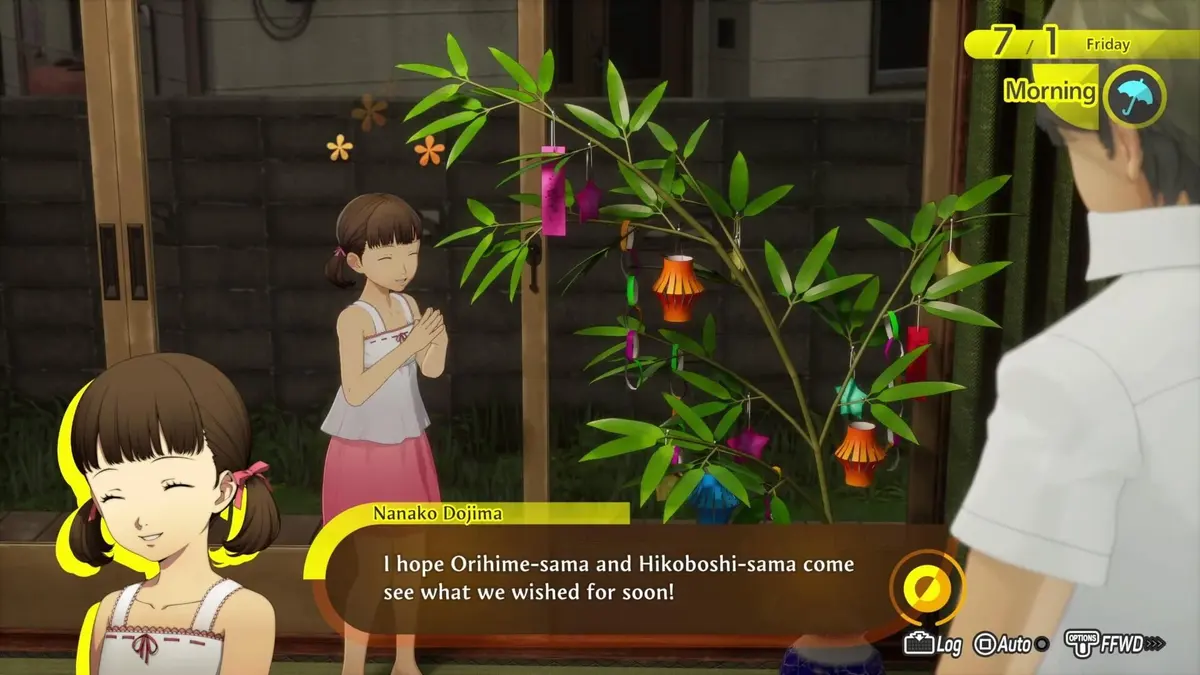
A 1 MORE action used to belong to the character who earned it. Persona 4 Revival turns that familiar reward into a decision: keep the extra turn, or pass it to the teammate who can crack open the rest of the enemy formation. That one adjustment gives the remake’s combat a sharper rhythm, but it also creates the uneasy feeling that Atlus may be giving players too many answers too early.
That contradiction runs through the roughly 25-minute PAX West demo. The story material is warmer and more confidently staged, the dungeon action is faster, and the new English cast gives the opening scenes a different emotional texture. Yet Yukiko’s Castle also hands over a formidable suite of momentum-building systems: Baton Pass, Guard, status chaining, and Prime Time. Each one is interesting. Together, they risk turning a dungeon built around uncertainty into a chain of increasingly reliable advantages.
Persona 4 Revival is Atlus’s full remake of Persona 4 Golden, published by SEGA as part of the studio’s current remake line after Persona 3 Reload. The game is planned for PlayStation 5, Xbox Series X/S, and PC via Steam on February 18, 2027, with Nintendo Switch 2 listed for May 20, 2027. The core case made by this hands-on is straightforward: the remake understands why Persona 4’s battle loop worked, but its new conveniences need careful restraint.
Table of Contents (7)
Key Takeaways
- Persona 4 Revival preserves the weakness-focused 1 MORE system, where knocking down every Shadow opens the way to an All-Out Attack.
- Baton Pass lets players hand a 1 MORE action to another party member, making element coverage and turn order more important than they were in Persona 4 Golden.
- Prime Time removes skill and SP costs, ignores resistances, grants consecutive actions, and ends with a powerful finishing attack.
- The first dungeon, Yukiko’s Castle, uses Guard, glowing route guidance, updated battle cameras, and fast transitions to make exploration and encounters more immediate.
- Re-recorded English voices, including Yuri Lowenthal as Yu Narukami, Paul Castro Jr. as Yosuke, and Erin Fitzgerald as Chie, give the story material fresh character.
One-More finally belongs to the whole party
Persona 4’s original combat identity remains intact. Hit a Shadow’s elemental weakness, knock it down, receive a 1 MORE action, and work toward an All-Out Attack by putting the entire enemy group on the floor. That loop is still the backbone of Revival, and it remains one of the cleanest systems in turn-based RPG design because it makes information valuable. Weaknesses matter, party composition matters, and the right action can change the entire shape of a fight.
Baton Pass changes the ownership of that advantage. Once a weakness hit earns 1 MORE, the active character can transfer the action to a teammate better positioned to exploit another weakness, apply utility, or push the party closer to an All-Out Attack. The result is much more than a flashy handoff. Revival asks the player to think about who should move next, rather than merely rewarding the character who already found the correct answer.
That is a real improvement over Persona 4 Golden, where 1 MORE stayed with the attacker. Revival turns a successful weakness hit into a routing tool. Yu Narukami’s Persona selection still matters, but the system gives Yosuke and the rest of the party more room to become active parts of a turn rather than support pieces waiting for their assigned slot. The preview’s party of Yu and Yosuke, with Teddie assisting from the sidelines and identifying enemy weaknesses, makes that teamwork easy to read.
I like this direction because it gives Persona 4’s established structure more texture without discarding it. Baton Pass comes from Persona 5 and Persona 3 Reload, but it fits naturally here. The concern is not whether the mechanic belongs. It does. The concern is how early it arrives, and whether enemies in the full game can meaningfully challenge a party that can so quickly redirect momentum toward its best available option.
Guard, status chains, and Prime Time pile on the advantages
Baton Pass is only the most visible part of Revival’s expanded combat kit. Dungeon exploration now includes a Guard action that lets the player block an incoming Shadow attack, stagger the enemy, and gain an advantage going into battle. It is a satisfying addition because it makes contact with roaming Shadows more interactive than simple positioning. A correct defensive read can put the party in control before the turn order even begins.

The remake also gives status ailments a larger role through Send Flying, also described as Knockback. Striking an enemy already afflicted by a status can send it into other foes and spread that ailment across the group. Persona combat has long rewarded weakness knowledge more consistently than condition play. This system gives ailment-focused actions a clearer reason to exist beside elemental exploitation, which is a welcome broadening of the player’s options.
Prime Time is where the demo becomes almost too generous. The charged meter fills through attacks and actions, then opens a highly favorable window: skills cost no HP or SP, attacks ignore enemy resistances, multiple consecutive actions become available, Baton Pass can be used freely, and the sequence ends with a cinematic Prime Time Finish. It is undeniably spectacular. The system gives combat a temporary burst mode that makes the party feel unstoppable.
Atlus has already made one important distinction: Prime Time’s gauge charges faster in the preview build than it is expected to in the finished game. That makes sense for a hands-on demo meant to show the mechanic, but it also limits what can be concluded about its final frequency. Even so, the design tension is clear. Revival has stacked several player-friendly systems on top of a battle framework that was already generous when the player knew enemy weaknesses.
Yukiko’s Castle looks more alive, even when it points the way
The demo is divided into story and dungeon sections, and that split makes the remake’s priorities easy to see. In the story material, Inaba still frames a mystery about disappearances and murders, but the updated presentation gives familiar scenes a more deliberate dramatic weight. The visual overhaul is not simply a matter of higher-detail character models. Camera placement, lighting, facial performance, and scene pacing work together to make the early material feel more immediate.
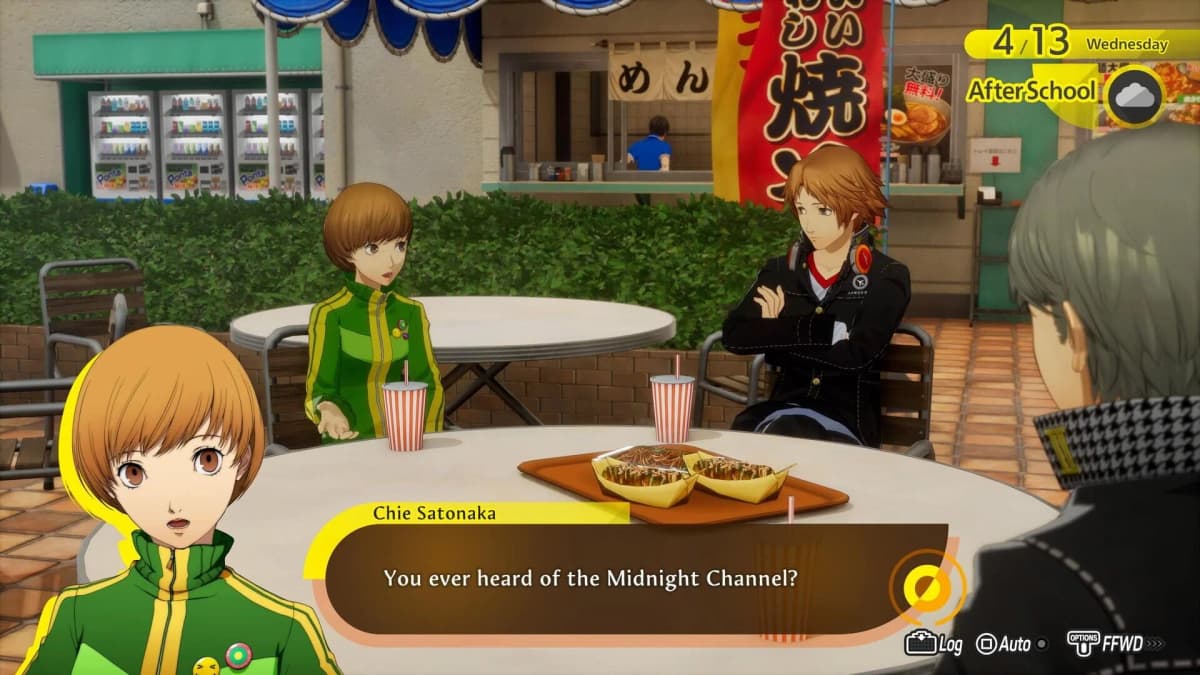
The Chie and Shadow sequence stands out because the renewed voice direction gives its emotional conflict more force. Yuri Lowenthal’s Yu Narukami, Paul Castro Jr.’s Yosuke, and Erin Fitzgerald’s Chie establish a distinct vocal identity for this version, while Teddie’s revised performance is more reserved in the preview material. New music tracks and remade versions of older tracks reinforce the sense that Atlus is revisiting the original with intention rather than merely repainting it.
Yukiko’s Castle is similarly modernized through motion and readability. Battles cut in with more dynamic camera angles, 1 MORE triggers land with brisker transitions, and All-Out Attacks receive the kind of framing expected from a contemporary Persona release. Those details make combat feel fast even when the fundamental turn-based structure remains familiar.
Exploration is the more complicated upgrade. A glowing golden pathing graphic directs the player toward the correct route or staircase in the dungeon. It certainly reduces dead time, and first-dungeon navigation benefits from clarity. Still, the preview does not establish whether that guidance can be disabled. A system designed to prevent friction can also drain some uncertainty from a dungeon, especially when the battle mechanics already offer so many ways to regain control after a mistake.
The remake’s biggest issue is not faithfulness
Persona 4 Revival does not have a problem with reverence. It retains the original battle structure, its setting, its investigation-driven story, and the recognizable shape of its first major dungeon. The remake’s strongest material comes from that faithfulness combined with selective modernization. The 1 MORE loop is still immediately legible; the presentation has more energy; the cast and music give old scenes a new texture.
The unresolved issue is friction. Baton Pass improves the combat’s moment-to-moment decision-making, Guard gives the player another route to initiative, status chains create extra solutions, Prime Time temporarily breaks normal resource rules, and dungeon guidance points toward progress. None of those choices is weak in isolation. I can see the argument for every one of them. Yet a remake can become less tense when every old source of pressure receives a new safety net.
That does not make the combat update a mistake. The faster flow is genuinely appealing, and the party-focused routing created by Baton Pass is more interesting than simply repeating the same elemental attack. It does mean the full game needs enemies, bosses, and dungeon pacing capable of asking something meaningful in return. The first dungeon demonstrates the tools very well. It cannot yet demonstrate whether the wider adventure knows when to take them away, limit them, or push back.
Who should look forward to it
Players who value Persona 4’s characters, Inaba setting, and classic weakness-driven battles have reason to be encouraged. The remake keeps the central loop intact while giving party turns more cooperation, cleaner visual feedback, and stronger dramatic presentation. Anyone who found the older combat rigid should appreciate how Baton Pass turns a successful weakness hit into a broader tactical opportunity.
Players who want early dungeons to feel restrictive, dangerous, and resource-starved should keep their expectations measured. Prime Time, Guard, visible route guidance, and the ability to pass 1 MORE actions all push the preview toward player empowerment. The final game may balance these systems with tougher encounters or stricter limits, but this hands-on only covers the opening dungeon and does not establish that wider difficulty curve.
Bottom line
Persona 4 Revival earns a provisional 7/10 from this hands-on. Its new combat ideas have real value: Baton Pass makes 1 MORE smarter, Prime Time adds memorable spectacle, and the updated voices and scene direction make the opening hours feel more vivid. The same demo also makes a convincing case that Atlus must protect Persona 4’s sense of pressure. Revival’s best new systems are designed to make the player feel clever; the unanswered tension is whether the finished game will still find enough ways to make that cleverness necessary.
FinalBoss // Gear
Level up your setup
01Top-rated gaming headsetson Amazon→02High-refresh gaming monitorson Amazon→03Gaming chairson Amazon→04Discounted game keyson Kinguin→Affiliate links · As an Amazon Associate, FinalBoss earns from qualifying purchases.
Want to Level Up Your Gaming?
Get access to exclusive strategies, hidden tips, and pro-level insights that we don't share publicly.
Ultimate Reviews Strategy Guide + Weekly Pro Tips