
You searched for a walkthrough of Felix’s loudspeaker puzzles across Scenes 1–48, hit a wall on a specific room, and every page you found either rambles about “interacting with objects” or jumps to a scene you haven’t reached yet. This hub fixes that. Phonopolis is Amanita Design’s handmade-paper point-and-click adventure: you play Felix, a garbageman who finds a pair of noise-cancelling headphones that make him immune to the loudspeakers (“amplions”) the Leader uses to control the city. Your goal is to stop the Absolute Tone and rescue Rachel, the opera singer the Leader is forcing to produce it.
Table of Contents (16)
The short version
- The headphones are the whole game. They block the loudspeakers’ commands. Almost every puzzle is about controlling, blocking, or redirecting a sound source while you, the only person immune, move through it.
- “Scenes 1–48” is an editorial split, not the game’s length. Published walkthroughs group the run into three parts — Scenes 1–10, 11–29, and 30–48 — but the game keeps numbering past Scene 48 (through Scene 51) before the credits. If you’re “past 48,” nothing is broken.
- Felix: garbageman who finds the headphones; the only citizen not under loudspeaker control.
- The objective: stop the Absolute Tone (a tone strong enough to strip every citizen of their humanity) and free Rachel, who the Leader is holding to sing it.
- The ending: Rachel grabs the microphone and sings a note so high the floor collapses, killing the loudspeakers and waking the city.
One thing to clear up before you read further: Felix the Reaper is a different game — a shadow-and-sunlight dance-puzzle title. Phonopolis has nothing to do with rotating light. If a result keeps sending you toward shadow puzzles, you’re on the wrong Felix.
How to use this hub
The three-part split below mirrors how the puzzles escalate: object handling first, then layered loudspeaker logic and escapes, then large multi-step setups. Use it to find your block quickly, then read the scene by function: what is blocking Felix, what changes that blockage, and what route opens after.
- Scenes 1–10: finding the headphones, learning that ordinary props carry the puzzle, the opera house, the police vehicle, and the first rooftop traversal.
- Scenes 11–29: the long middle — apartment loudspeaker setups, parade-vehicle controls, the prison, and the plumber’s-house chain.
- Scenes 30–48: the final chapter through the Avant-Garde Quarter and the Phonobureau, where setups span whole rooms.
Scenes 1–10: find the headphones, learn the rules
Felix starts working the landfill. The pivotal moment of this block is finding the headphones underground — they make him immune to loudspeaker commands, which is what lets him walk through the rest of the city while everyone else marches to the broadcasts. Three resistance members spell out the stakes here: the Leader’s ideas and the Absolute Tone are a disguise people are made to follow.
Opera house (Scene 3)
This is the clearest “ordinary objects carry the puzzle” lesson. To clear the obstacles, manipulate the sun decoration, move the columns and rocks, destroy a crate by dropping it repeatedly, and push the pyramid aside. Doing that reveals a hidden pair of headphones. The takeaway for the whole game: distinct-looking props are interactive, and the answer is usually about changing the room’s state, not using one item on every hotspot.
Police vehicle (Scene 5)
Treat this like a lever puzzle wearing a vehicle skin, not a driving minigame. You modify the control switches across three stages — liquid mode, gear settings, then speed — to destabilize the vehicle and escape. Set each stage deliberately; moving a control just because it’s available leaves the vehicle somewhere that looks useful but doesn’t solve the room.
Women’s House and the rooftop (Scenes 7 and 10)
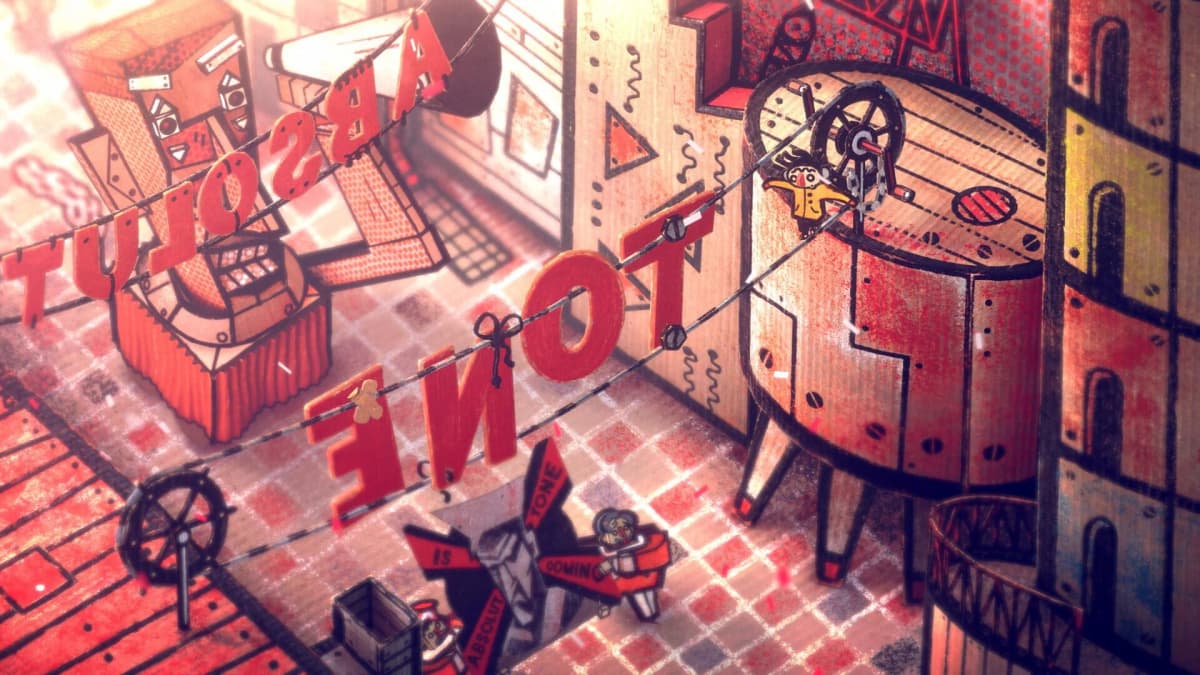
The Women’s House (Scene 7) is your first real loudspeaker puzzle: trigger the loudspeaker commands strategically — dropping plants, creating smoke, redirecting residents — to clear the blocked staircases. The rooftop (Scene 10) ends the block with traversal: remove the letters T, O, N, and E from a sign to clear the cable passage, then move between the upper and lower cables while the police rotate them. Most failed rooftop attempts come from misreading the destination, so confirm both landing points before you commit Felix.
Scenes 11–29: the loudspeaker midgame
This is where Phonopolis stops teaching one mechanic at a time and starts mixing movement, sound, and escape pressure. It’s also where Rachel moves to the center of the story: a poster in Scene 17 announces she’ll sing the Absolute Tone, the elders in Scene 18 call her their only hope, a dream in Scene 22 shows the Leader holding her in a cell, and in Scene 24 Felix learns she didn’t betray the resistance — she’s a hostage.
Apartment 51 wallpaper puzzle (Scene 12)
You cycle the wall squares through four layouts — plain gray to match the wall by the TV, a blue layout, a red bathroom arrangement, and a red kitchen. The button sequence that solves it is: second red (kitchen), blue, first red (bathroom), blue, blue, second red. If a configuration puzzle like this feels arbitrary, it’s because you’re pressing combinations instead of reading what each layout makes possible.
Hallway and parade loudspeakers (Scenes 13 and 14)
Scene 13 is the cleanest demonstration of the loudspeaker-as-tool idea: click a hallway loudspeaker to summon the cleaning lady, then use them left to right to move the guards upward and open elevator access. Scene 14’s parade vehicle is controlled by two vinyl records — pair the minus sign with the red button to lower the megaphone, minus with blue to stop the vehicle, plus with blue to speed up, and the yellow button to suck in or eject an officer. The lesson the midgame keeps hammering: a speaker is rarely a simple on/off switch. Ask whether it’s drawing Felix, controlling an NPC, blocking a route, or opening a safe window.
Prison and the plumber’s house (Scenes 23, 27–28)
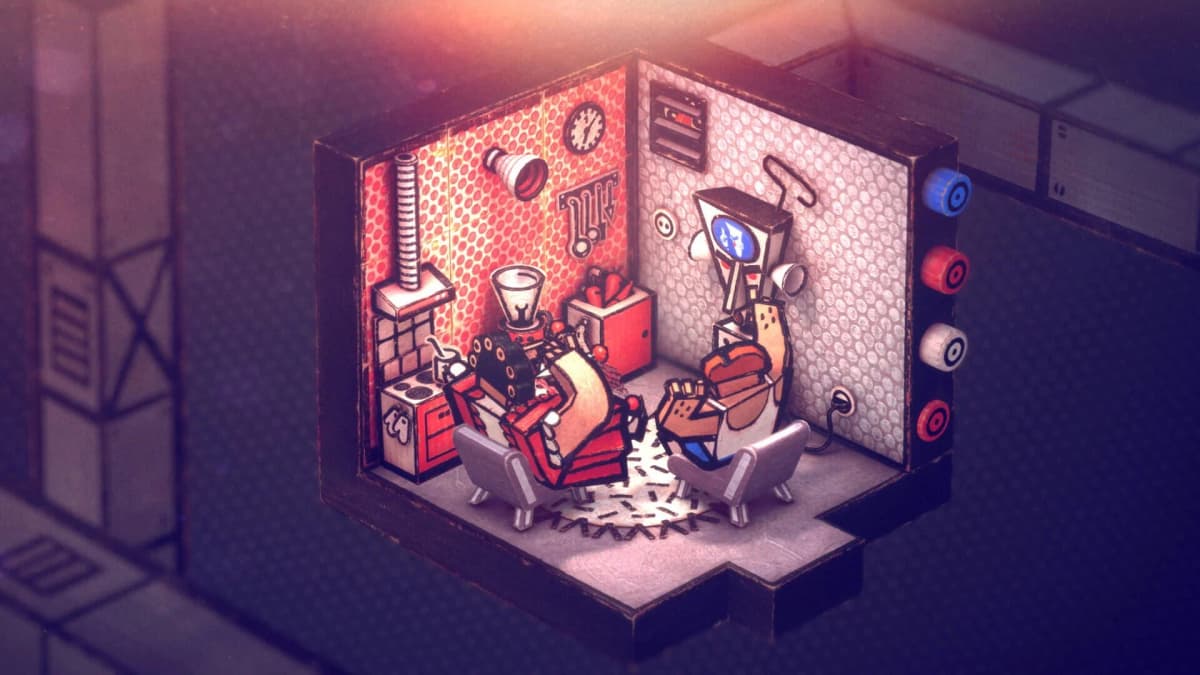
The prison (Scene 23) is a platform-rotation puzzle: build a path to the lever on the left, and watch the overhead light’s detection sweep before you move. The plumber’s-house chain is the big midgame setpiece. In Scene 27 you use the center spinning house as a blueprint to configure the six houses around it. Scene 28 is a strict sequence: close the chimney, send smoke through the tube, drag the garbage, use the crank handle, pull the neighbor’s yellow pants, rotate the red disk, bounce the plumber onto the hook, then redirect the red pipes. Do it in that order — these chained scenes punish solving steps out of sequence more than anything else in the game.
Scenes 30–48: the Avant-Garde Quarter and the Phonobureau
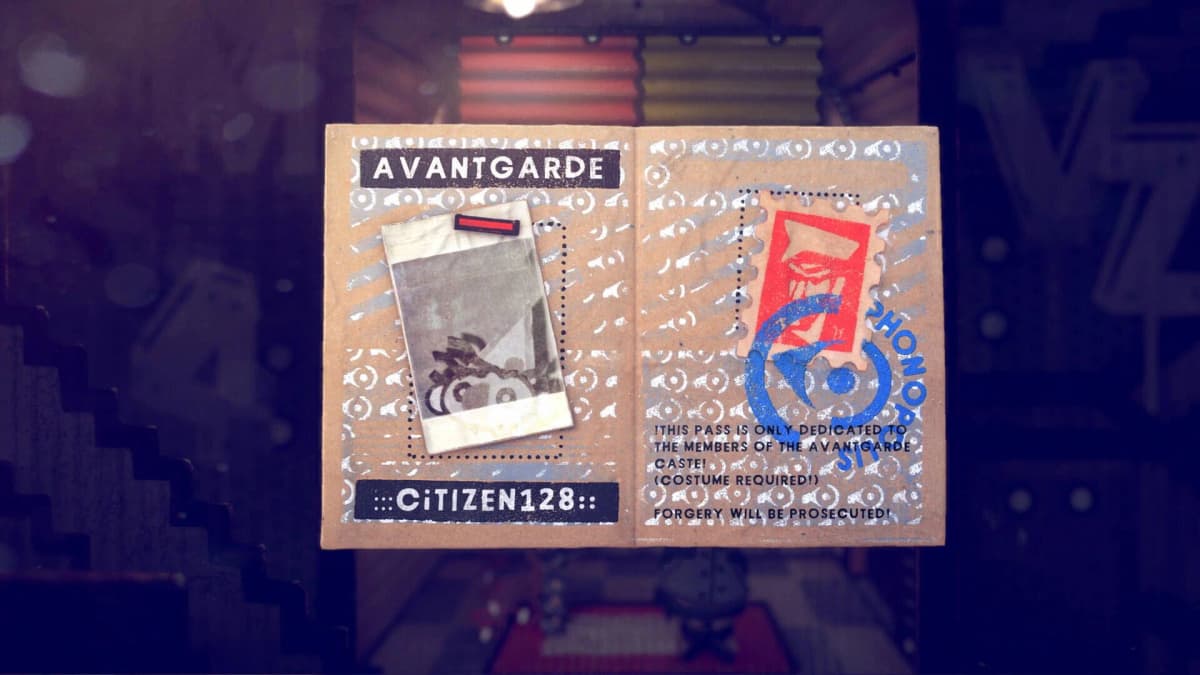
The final chapter stretches the same mechanics across larger environments. Two named locations anchor it: the Avant-Garde Quarter, which you can only enter with the proper attire and a pass, and the Phonobureau (single “n”) in the Bureaucratic Quarter, where you obtain that pass in Scene 33. Think of these scenes as staged construction puzzles — you build the answer piece by piece, and one missed setup step invalidates everything after it.
Crane construction (Scene 30)
The construction site uses a crane to coordinate several objects — a bowl, an engine, a drill, and a wooden box — into an inflatable platform that lifts Felix to the next pipe. Identify the destination first, then work out the intermediate position each object needs. The common mistake is using the crane reactively and parking something where it blocks the actual finish path later.
Bureaucratic office and food machine (Scenes 35 and 40)
Scene 35 is a four-worker stamp-approval system: rotate the layout so the blue-box worker sits above the yellow-box worker to let water flow for hydration. Scene 40 is a multi-layer food machine you operate to obtain a lightbulb — make pudding by retrieving the ice, mixing the ingredients, and positioning the components correctly so the lightbulb descends safely. Both reward patience over instant feedback; some steps here are preparation, not payoff.
The Absolute Tone confrontation (Scene 46)
The climax is a set of five energy-beam puzzles. Once they’re solved, the story resolves it for you: Rachel grabs the microphone and sings a note so high it collapses the whole floor, killing every loudspeaker. The city wakes up. The endgame is fair once you slow down — trust the reactive elements over the set dressing, and finish a room only when you can state in plain terms what’s blocking Felix, what changes it, and what opens after.
Common mistakes
- Mixing up games: rotating sunlight and shadow-only movement is Felix the Reaper, not Phonopolis.
- Treating loudspeakers as identical switches: some draw Felix, some control NPCs, some block a route. Read the speaker’s role before you click it.
- Triggering multiple changes at once: in chained scenes like the plumber’s house (Scene 28), out-of-order steps break the solution. One change, observe, then commit.
- Ignoring decorative props: the headphones in the opera house (Scene 3) are hidden behind a pyramid — ordinary-looking objects routinely carry the puzzle.
- Thinking the game ends at Scene 48: it numbers past 48 to Scene 51 before the credits. “Scenes 1–48” is just the walkthrough’s part split.
Practical takeaway
Hold one rule in your head and most of Phonopolis opens up: the headphones make Felix the only person who can act inside the loudspeakers’ reach, so every puzzle is really about controlling a sound source while you move. Learn the prop-handling rules in Scenes 1–10, isolate cause and effect in the loudspeaker midgame of 11–29, and plan the staged setups of 30–48 backward from the destination. Do that and you’ll reach Rachel, the Absolute Tone, and the falling floor without getting sidetracked by the wrong Felix.
FinalBoss // Gear
Level up your setup
01Top-rated gaming headsetson Amazon→02High-refresh gaming monitorson Amazon→03Gaming chairson Amazon→04Discounted game keyson Kinguin→Affiliate links · As an Amazon Associate, FinalBoss earns from qualifying purchases.
Want to Level Up Your Gaming?
Get access to exclusive strategies, hidden tips, and pro-level insights that we don't share publicly.
Ultimate Guide Strategy Guide + Weekly Pro Tips