
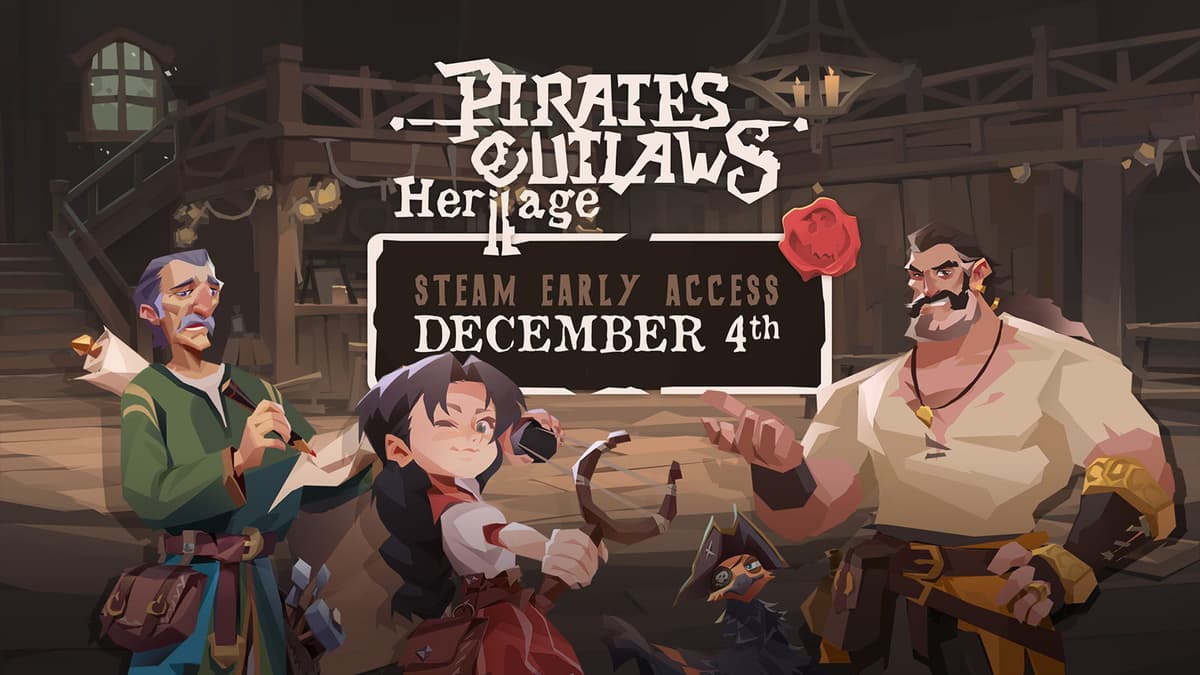
Pirates Outlaws 2: Heritage sets sail Dec 4 — bold ideas, big questions
Game intel
Pirates Outlaws 2: Heritage
Pirates Outlaws 2 is a swashbuckling roguelike deckbuilder. Collect & fuse cards, gather powerful relics and adapt your strategy during each run. Become a repu…
Pirates Outlaws 2 is going Early Access – here’s what actually matters
This caught my attention because the first Pirates Outlaws carved a real niche: a mobile-first deckbuilder that felt snappy, stylish, and different enough from Slay the Spire to matter – but it also had a grindy unlock meta that not everyone loved. Pirates Outlaws 2: Heritage launches into Steam Early Access on December 4, with Epic Games Store and mobile versions later in December. The pitch is bigger in every direction: 250 cards at launch, 90 relics, three heroes with seven classes, four animal companions, an Arena, and a new card evolution system. That’s a lot of spice in the stew. The question is whether Fabled Game can keep the flavor balanced.
Key Takeaways
- Early Access is packed: 250 cards, 90 relics, three heroes/seven classes, companions, an Arena, and the Pirates Bay region. Great on paper – but balance will be the real boss fight.
- New “card evolution” asks you to collect three duplicates to level a card, then choose a branch. Smart twist, but it could push players toward repetitive drafting or grind.
- Combat now revolves around a visible enemy “countdown” that your cards can manipulate. If tuned well, that’s a genuine identity shift for the series.
- Mobile launch later in December raises the usual monetization questions. Skins and equipment are mentioned — how much is unlockable versus paid?
Breaking down the announcement
Fabled Game is leaning into combinatorics. Each hero has multiple classes, each class arrives with its own starter deck and ability, and you can recruit an animal companion whose unique cards get folded into your build. Add an Alchemy shop where elixirs tweak abilities, decks, and even a hero’s appearance, and you’ve got a meta layer that encourages remixing rather than just chasing one busted build.
The new map approach promises more freedom: revisit islands, stop at taverns, hit markets, or chase secrets across Pirates Bay. The first game’s sea routes were already a nice flavor wrapper for node-based runs; giving players freedom to backtrack could cut down on pure RNG pain — as long as it doesn’t introduce busywork between fights.
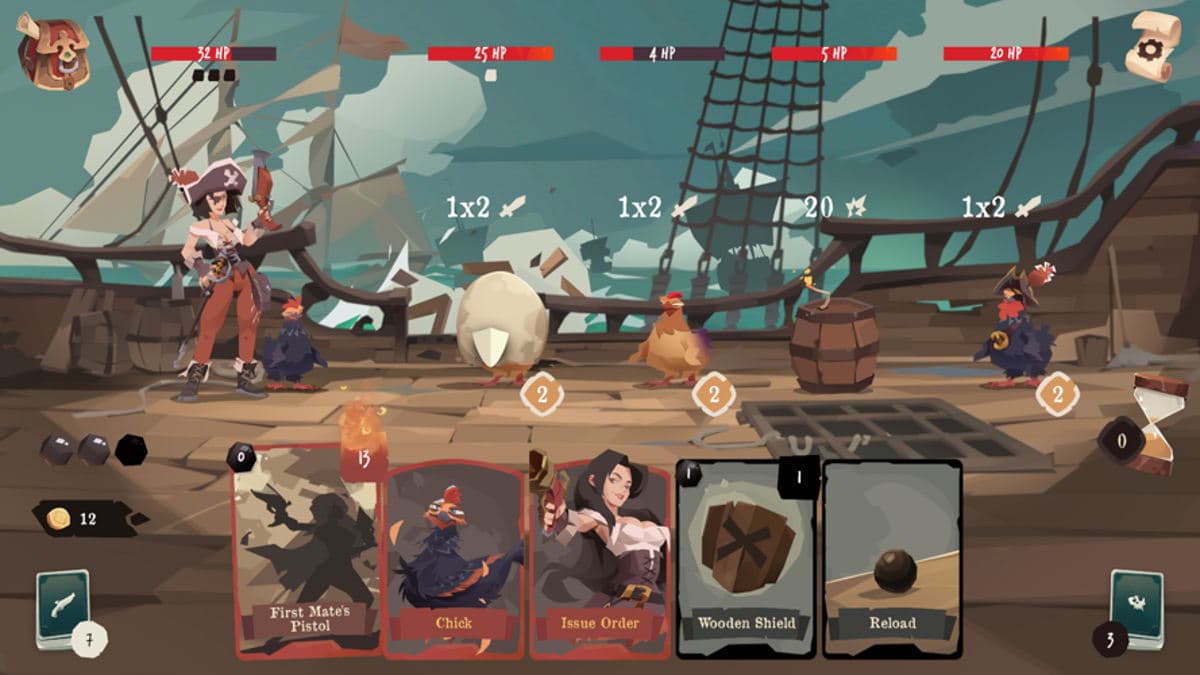
Combat is getting a mechanical shake-up. Every card you play affects a “countdown” to the enemy’s turn. Think timeline manipulation rather than just reading an intent icon. If cheap skills can stretch the clock and big plays speed it up, you’re suddenly making tempo calls every turn. That’s a meaningful identity play compared to the genre’s usual energy math.
Then there’s the card evolution tree: collect three identical cards to level one up and choose how it evolves. This is a clever middle ground between Monster Train-style upgrades and Slay the Spire’s single upgrade path. But it raises design landmines — duplication incentives can make shop RNG and event frequency disproportionately important, and it can punish players who don’t see dupes through no fault of their own. The upside: builds with personality. The risk: FOMO-driven drafting and a temptation to hoard mediocre cards just to hit a fusion threshold.
Rounding it out are 90 relics and a set system where completing an “outfit” yields a bonus, plus 100 pieces of equipment and 12 companion skins. The Arena returns for quick-hit challenges, and there are nine sea masters to topple if you prefer boss gauntlets to long voyages. On content breadth, Early Access isn’t shy.
Context: what the first game got right (and wrong)
Pirates Outlaws earned fans by being fast, readable, and crunchy in short bursts. It also experimented with mechanics like ammo management that made some decks feel distinct. Where it stumbled for some players was meta progression — unlocking characters and content could feel like a grindfest, especially on mobile. With Heritage, the class-companion-alchemy trio looks like a cleaner way to surface variety without burying you under a reputation grind. But it’ll only sing if unlocks feel like a ramp, not a wall.
The 250-card claim is both a flex and a warning label. Big pools support wild synergies, but they also make dilution and balance nightmares very real. Early Access is the right place to iterate, but expect week-one metas to be broken in funny ways. If Fabled Game is quick on balance passes and transparent with patch notes, that chaos can actually be fun.
The gamer’s checklist for day one
- How transparent is the countdown system? If delaying an enemy attack by one card play isn’t clear, the whole combat rhythm collapses.
- Do duplicate cards show up often enough to make evolutions viable without contorting every draft? Shops, events, and crafting need to support it.
- Does free exploration reduce dead runs or just add clicks? Fast travel and smart UI would be the difference.
- Are companions build-defining or just +5% modifiers with extra cards to dilute your deck?
- What’s the monetization on mobile? The original leaned premium with optional add-ons; I’m hoping skins stay cosmetic and there’s no energy/stamina nonsense.
One more practical thing I’m watching: cross-progression. With PC and mobile arriving the same month, cloud saves would be a killer feature for quick Arena bursts on phone and longer voyages on PC. It’s not promised here, but it’s the kind of quality-of-life that turns a good deckbuilder into a habit.
Looking ahead
I’m genuinely into the idea of tempo manipulation as a core combat pillar — it’s a smart way to differentiate Pirates Outlaws 2 from a crowded field. The evolution system could be the other pillar, provided duplicates are accessible and choices are meaningful. If Fabled Game dodges the grind traps from the first game and keeps balance patches flowing, this could be the “one more run” deckbuilder that sticks through 2026.
TL;DR
Pirates Outlaws 2: Heritage hits Steam Early Access on December 4 with a big card pool, a clever countdown combat twist, and a divisive-but-promising card evolution system. I’m cautiously excited — now show me clear UI, fair unlocks, and fast balance passes, and I’ll happily chart a course for Pirates Bay.