
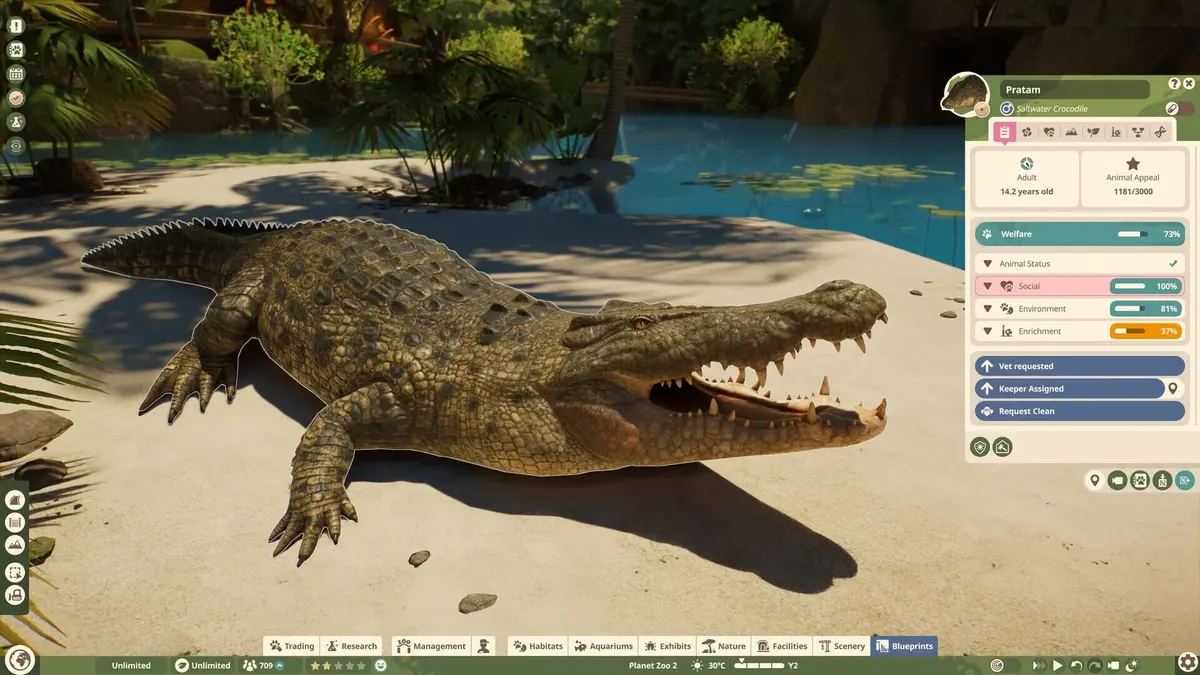
A green rainforest can still leave your tapir release blocked. In Sumatra, the Ecosystems view determines whether restoration is ready for animals, so check its requirements before sending a release group. That dependency sets the pace for this stretch of Planet Zoo 2’s Chapter 3, “Claws and Effect”: repair the environment first, prepare the animals next, then build the services that keep conservation work funded.
Table of Contents (14)
Before starting Chapter 3
Reach Career Accreditation Tier 3 by earning seven Bronze medals and one Silver medal, and complete the required earlier scenarios before attempting Sumatra’s Mine Your Business. This walkthrough follows Sumatra Reserve, Java and Rural France.
Keep money available for habitat infrastructure, staff wages, food and drink facilities, and education equipment. Spending the reserve on scenery too early leaves you short when an animal needs shelter or an objective calls for educators. Use the Planet Hub to manage stored animals, trading, species research and access to reserves.
Sumatra Reserve: Mine Your Business
Sumatra begins with damage from a landslide and mine collapse. Take care of the investigation before major restoration work, then establish the lowland rainforest and peatland as distinct, functioning ecosystems.
Photograph the mine evidence first
Enter the Research Vehicle and follow the marked evidence locations around the collapsed mine. Take three research photographs showing branded equipment, then inspect the evidence. Completing this pass before construction keeps the investigation separate from the much larger restoration job.
Restore the lowland rainforest and peatland
- Designate the lowland rainforest. Open the Ecosystems view and select a suitable damaged section for a Lowland Rainforest Ecosystem.
- Remove pollution and invasive plants. Clear the restoration zone before adding replacement vegetation, so contamination does not remain hidden beneath new planting.
- Match the ecosystem requirements. Add the tropical terrain, water and vegetation requested by the overlay. Visual greenery alone does not complete the objective.
- Establish a separate peatland zone. Clear its contamination and unwanted vegetation, then provide the wet ground, water conditions and plant coverage required for a Peatland Ecosystem.
- Wait for both areas to register. Check their status in the Ecosystems view before attempting releases. Keep the zones distinct unless an objective explicitly allows a combined area.
If restoration stalls, inspect the unmet category rather than adding more trees everywhere. Remaining contamination, an incorrect terrain balance or insufficient water can hold the objective open even when the area looks finished.
Prepare the release groups before transferring animals
A release group has requirements beyond having the right species in storage. In the Planet Hub, inspect the animals and their release-group information. Complete the necessary research if those details are unavailable, then assemble the requested group and check its health, composition and destination requirements.
Sumatra’s objectives include these releases:
- A Malayan Tapir maternal family group: assemble the family group and send it into the appropriate restored environment. An individual tapir does not satisfy a maternal-group requirement.
- One Siamang: check that its destination ecosystem and food requirements are satisfied before release.
- One Sun Bear: prepare its release through the same reserve interface and allow the result to register.
The scenario eventually asks for eight released groups, so completing these named releases does not finish the entire release tally. Track groups in the reserve interface rather than counting individual animals.
When a release remains unavailable, check the destination ecosystem, food supply, group composition and research requirements before replacing an animal. A healthy animal cannot compensate for an unfinished reserve or an incorrect family structure.
Finish Sumatra’s research and education setup
Place six Camera Traps to improve the Research Rating. Spread them across active wildlife areas instead of clustering all six beside one convenient access point.
For the guest-facing objectives, build two Animal Talk Points, connect seating to each, and hire three educators. Put the talks where visitors already stop, with accessible seating attached to the presentation areas. A talk point placed away from the guest route does little to help visitors engage with it.
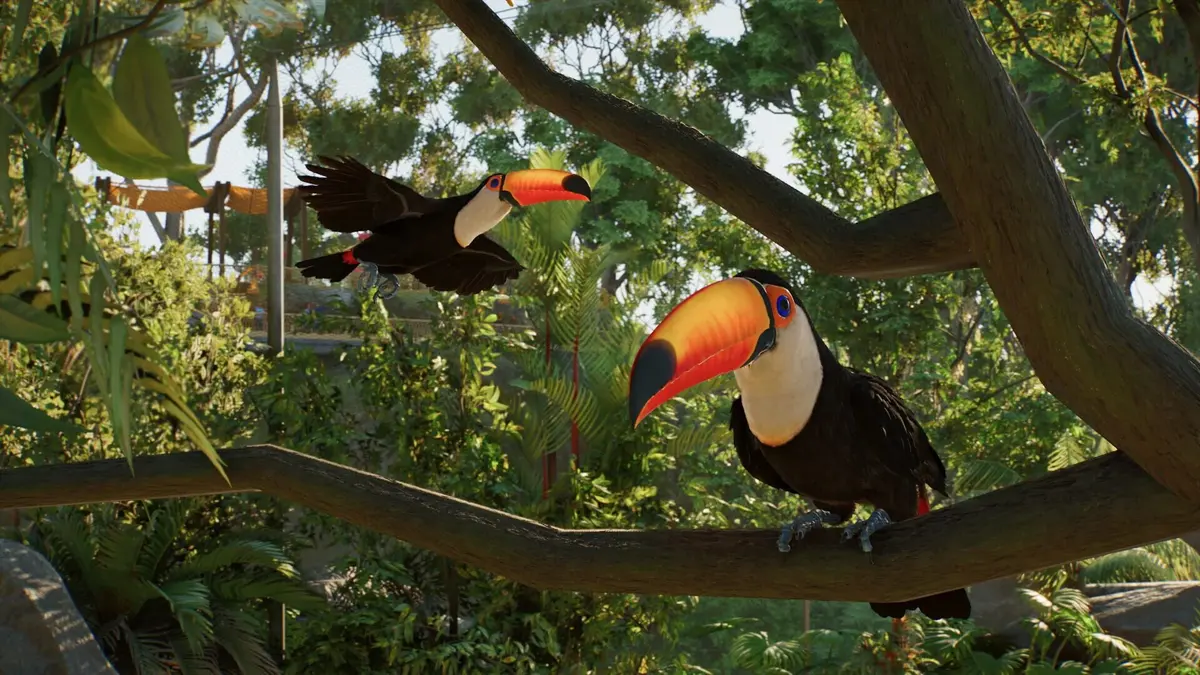
Check the Bronze objective panel before leaving Sumatra. Earning Bronze here unlocks Java; do not assume the next scenario has opened simply because the first animal releases succeeded.
Java: Creature Comforts
Java shifts the problem from ecosystem repair to rehabilitation. Injured animals arrive suffering from acute stress, while the Bronze objectives impose a maximum of four habitats. Plan the enclosure layout before building: an unnecessary fifth habitat creates an objective problem even if the animals inside are comfortable.
Plan the four habitats around the incoming animals
Pause and inspect the existing facilities, incoming species and available space. Leave usable access for keeper gates, staff paths and food preparation, then check guest viewing access without squeezing out the animals’ required shelter or enrichment.
Java’s placement tasks include a Sun Bear, a Siamang in a medium rainforest habitat and a Tapir in a small rainforest habitat. Account for these placements before spending the remaining habitat allowance. Share space only where species compatibility and habitat requirements permit it.
The Siamang needs particular attention: provide toys, food enrichment and a medium constructed shelter, then correct its terrain ratios. If welfare remains low after placing enrichment, inspect the individual welfare categories. More toys will not fix the wrong terrain balance or a missing shelter.
For every recovering animal, resolve disease, hunger, thirst and inaccessible facilities promptly. Monitor welfare and stress as rehabilitation progresses; having an animal inside the correct enclosure does not mean it is ready for release.
Research the crocodile and tapir to level 3
Start research on the Saltwater Crocodile and Malayan Tapir while you improve their care. Both must reach research level 3 to unlock the required release groups, so leaving research until rehabilitation is finished creates another wait.
- Saltwater Crocodile: prepare a solitary male release group.
- Malayan Tapir: prepare a maternal release group.
Wait until the game marks the animals as recovered, then check release eligibility in the animal or reserve interface. If a release stays locked, inspect treatment progress, welfare, research level and group composition before rebuilding an otherwise suitable habitat.
If you have exceeded four habitats, review whether compatible animals can share an appropriately configured enclosure and consolidate where possible. Keep the rehabilitation layout functional; decorative expansion can wait until the habitat-limit objective is secure.
Rural France: Trot To Go
Rural France ties conservation funding to the visitor experience. Food, drink, recycling, education and donations work best along the same busy guest route. Start with a compact service area near popular animal viewing, then distribute additional facilities as demand spreads through the zoo.
Build food and drink services where guests already stop
Place an initial food shop and drink shop near a busy viewing area, leaving room for their queues. Connect them to the guest path and ensure vendors can staff them. Add nearby toilets, bins and benches: drinks address thirst, while benches give tired visitors somewhere to recover energy.
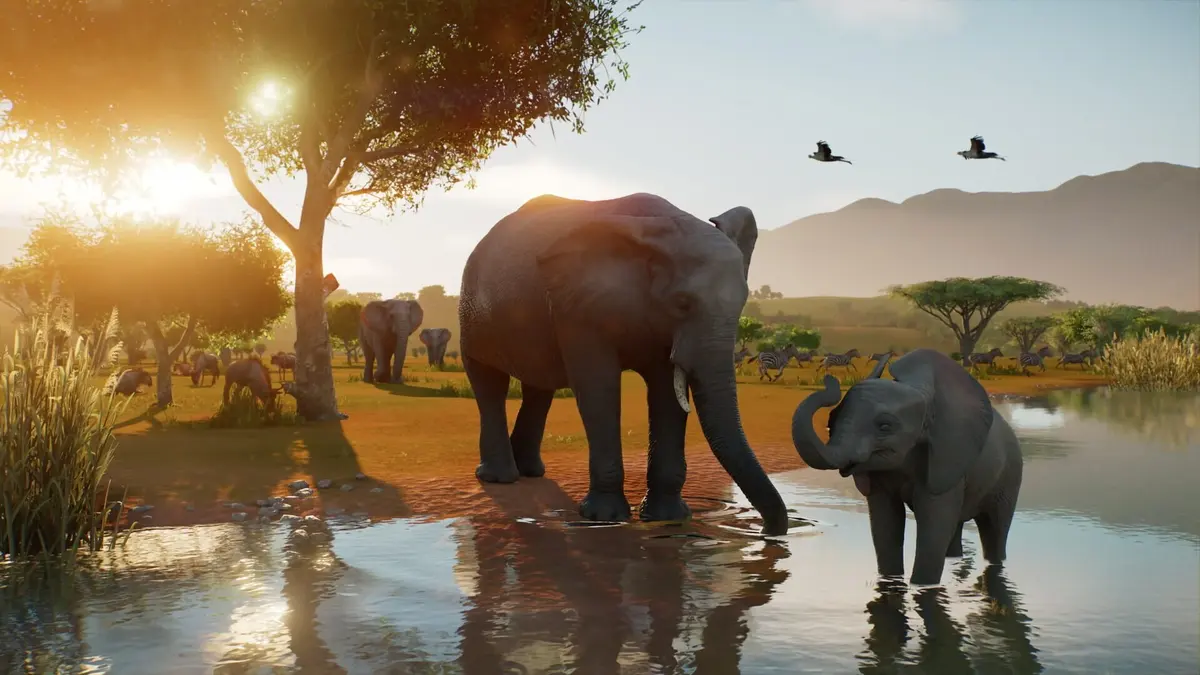
Watch demand and profitability before adding another outlet. A shop beside a quiet path still costs money to operate. If an outlet loses money, check vendor coverage and move it closer to a popular exhibit or established visitor stop before building more shops.
For a larger food-profit push, expand toward a restaurant, roughly four additional food shops and two vending machines. Add that capacity as guest traffic supports it rather than buying everything immediately. Spread the extra outlets across busy parts of the zoo so visitors do not have to return to the entrance whenever they need refreshments.
Place recycling bins beside the sources of litter
Put recycling bins beside food and drink shops, around seating and along the main guest loop. Concession queues and rest areas need their own coverage; a row of bins at the entrance leaves the places where guests eat and drink underserved.
Use the guest-management overlays to locate litter hotspots and add bins there. When a concession area stays dirty, check how far guests must walk from the queue or benches to dispose of waste before adding facilities elsewhere.
Raise education through accessible talks and displays
Hire educators and place Animal Talk Points near popular exhibits, with connected seating where visitors can remain for the presentation. Add education boards, speakers or other available education facilities along the viewing route, and connect their educational targets to the animals guests can actually see.
Expand coverage in stages and watch the education rating after each change. If it remains low, check whether guests can reach the talk, hear the presentation and use the seating, and whether educators are available to deliver it. Filling a quiet corner with equipment will not improve coverage on the busy route.
The two talk points and three educators specified earlier belong to Sumatra’s objectives. In Rural France, follow the current scenario targets and use the education rating to decide where additional coverage is needed.
Put donation boxes beside good animal views
Place donation boxes at busy viewing spots, near talks and beside educational displays. Guests donate more when they have a good view, so check sightlines before choosing a location. A box tucked behind scenery misses the visitors who have just stopped to watch an animal.
Keep animal welfare high and the visitor route clean, then reinvest early income in the service or education gaps that remain. Poor animal condition, thirst complaints and litter undermine the guest experience that supports donations.
Keep Rural France compact until that route works. A staffed drink shop, recycling beside the food queues and an accessible animal talk are stronger investments than opening another distant corner while existing visitors remain underserved. Expand once the current guest loop can support the conservation work.
FinalBoss // Gear
Level up your setup
01Top-rated gaming headsetson Amazon→02High-refresh gaming monitorson Amazon→03Gaming chairson Amazon→04Discounted game keyson Kinguin→Affiliate links · As an Amazon Associate, FinalBoss earns from qualifying purchases.
Want to Level Up Your Gaming?
Get access to exclusive strategies, hidden tips, and pro-level insights that we don't share publicly.
Ultimate Guide Strategy Guide + Weekly Pro Tips