
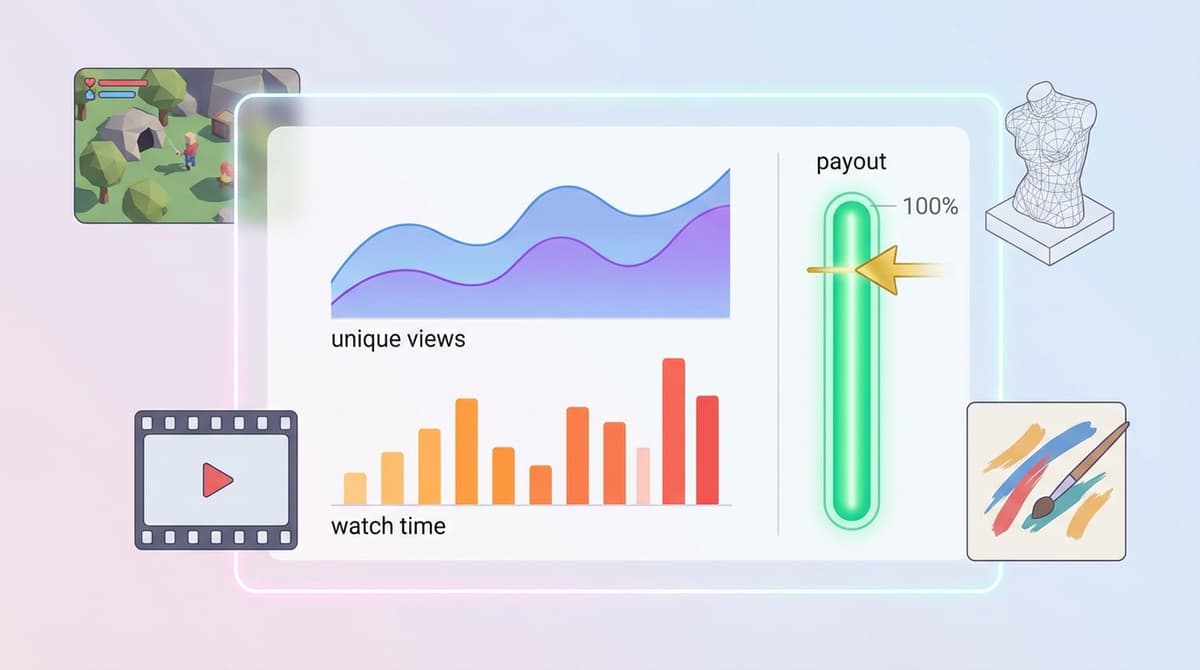
Creators finally have alternatives that promise two things most platforms haven’t: stable, engagement-based pay and an explicit no‑AI‑training promise. HTC’s VIVERSE Partner Program is the clearest example – a direct revenue path that pays creators for unique views and engagement time while refusing to feed that content into AI models. It lands the same week Discord backtracked on controversial age verification methods and Twitch retooled its blunt suspension system – a tidy snapshot of how platforms are now racing to fix trust and monetization problems they helped create.
Table of Contents (7)
Key takeaways
- VIVERSE launches a free, non‑exclusive Partner Program paying creators by unique views and engagement time with a $50 payout threshold and an explicit “no AI training” pledge (GamesPress).
- Discord delayed its global age‑verification rollout to H2 2026 and cut ties with vendor Persona after widespread privacy backlash (Steam News, PC Gamer).
- Twitch moved from all‑or‑nothing suspensions to targeted streaming or chatting suspensions to reduce collateral damage of enforcement (TechCrunch).
- Together, these moves show platforms responding to creator and user pressure on privacy, moderation fairness, and ad‑revenue volatility – but promises don’t solve discoverability, fraud risk, or long‑term economics on their own.
Why this cluster of stories matters now
Creators have been squeezed from several directions: ad CPMs that swing wildly, platform algorithms that bury audiences, and the newest worry — having your content eaten by AI models without consent or compensation. VIVERSE’s program is plainly pitched to that frustration: immediate, view‑based payouts for 30‑second engagements, embeddable web URLs, no proprietary file formats, and — crucially — a promise that creator content won’t be used to train machine learning systems.
At the same time, Discord’s decision to pause and rework age verification after a furious user response shows how fragile platform trust is. PC Gamer and Steam News reported Discord will publish technical details and pivot to on‑device options while ditching a controversial vendor. Twitch’s moderation change, reported by TechCrunch, is less about creator pay and more about not punishing whole accounts for localized offences. All three moves are bandages, but they’re strategically aimed at the two things creators care about: control and stability.

The uncomfortable observation
VIVERSE’s pitch is attractive because it promises what most platforms won’t: predictable, direct pay for engagement and an opt‑out from the AI training pipeline. That’s a real differentiator. But it’s easy to promise “no AI training” in a terms of service — harder to prove it at scale or guarantee the economics are sustainable once lots of low‑quality embeds and click farms show up. The PR line solves a trust problem; it doesn’t yet solve discoverability, quality control, or long‑term revenue math.
The historical anchor: trust is earned, not advertised
We’ve seen this pattern before. Platforms make a headline move — a feature, a payment model, a privacy promise — and creators flock in. Then the problems that matter most show up: tiny payouts after fees, opaque algorithms, bot traffic, and shifting policies. VIVERSE’s non‑exclusive approach and embeddable URLs purposely sidestep platform lock‑in, but without a reliable discovery funnel or clear anti‑fraud guardrails, creators could end up with more distribution and the same fragmented income.
The question nobody’s asking VIVERSE yet
How large is the payout pool, and how will VIVERSE stop gaming? Paying per 30‑second view sounds fair until click farms, embedded auto‑plays, and short, attention‑mining experiences inflate engagement. The company promises transparent reporting — that’s good — but creators need details: fraud detection, how engagement time is audited, and contractual enforcement of the “no AI training” promise. Those specifics will determine whether this is a useful niche or just a PR‑friendly storefront.

What to watch next
- VIVERSE: Watch for the first creator payouts and the rollout of promised analytics — if the $50 minimum clears and the payments are visible in public creator reports, this becomes credible. Also check for a published transparency or compliance report confirming the no‑AI‑training claim (timeline: weeks to months).
- Discord: Look for the technical blog and the revised verification methods in H2 2026. The choice of vendors and on‑device vs cloud processing will be the real test of whether Discord learned anything from this backlash (sources: Steam News, PC Gamer).
- Twitch: Track repeat offender stats and appeals under the new targeted suspension system. If chat/stream splits reduce collateral punishments without increasing evasion, that’s a real improvement (source: TechCrunch).
TL;DR
HTC’s VIVERSE is pitching creators a rare combo: engagement‑based pay and an explicit refusal to use content for AI training. Discord and Twitch are rearranging how they handle identity and punishment after user backlash. Promises are necessary — but not sufficient; the next few months will prove whether these moves are enforceable and actually improve creators’ bottom lines.
FinalBoss // Gear
Level up your setup
01Top-rated gaming headsetson Amazon→02High-refresh gaming monitorson Amazon→03Gaming chairson Amazon→04Discounted game keyson Kinguin→Affiliate links · As an Amazon Associate, FinalBoss earns from qualifying purchases.
Want to Level Up Your Gaming?
Get access to exclusive strategies, hidden tips, and pro-level insights that we don't share publicly.
Ultimate Gaming Strategy Guide + Weekly Pro Tips