
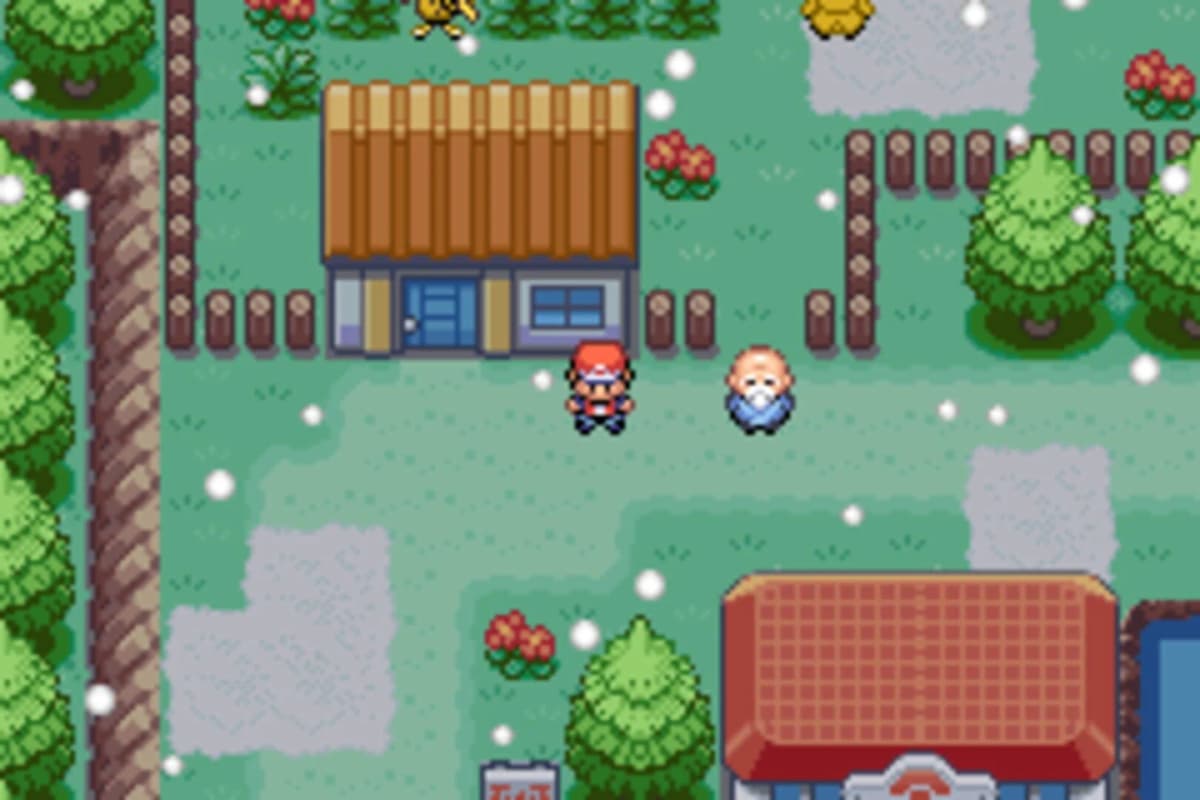
If you came here for “15 Rare Candies,” stop counting at 14. Pokemon FireRed and LeafGreen has 14 fixed Rare Candy pickups across Kanto and the Sevii Islands — seven visible Poké Balls and seven hidden floor items. The phantom fifteenth is Selphy’s reward on Five Island, which is a repeatable 5% random drop, not a static location, so it does not belong in a fixed-location count. Sort that out and the hunt becomes a clean, story-order sweep.
Table of Contents (16)
The short version
- There are 14 fixed Rare Candies. The “15” only appears when Selphy’s random reward gets counted as a location.
- The split is 7 visible / 7 hidden. The hidden seven are floor items with no sparkle — the Itemfinder pings them, but you can also just stand on the tile and press A.
- Item placement is fixed and never randomised, so anything you miss can be grabbed on a return trip.
- Cerulean City and Route 9 are two separate candies. Bad checklists merge them, which is where “13” lists come from.
- Selphy is a bonus, not a stop: rescue her from Lost Cave, show her the Pokémon she asks for, and Rare Candy is a 5% roll you can farm forever.
- Everything here applies identically to the Nintendo Switch and Switch 2 digital releases that launched on 27 February 2026. They are straight ports — same maps, same item table.
A note on the Switch version (and the “+” that doesn’t exist)
Nintendo put Pokémon FireRed Version and Pokémon LeafGreen Version back on sale digitally on 27 February 2026, Pokémon Day, at roughly $19.99 per version, eShop only. There is no “FireRed and LeafGreen+” product — that name floats around forums but Nintendo never used it. These are the 2004 GBA builds running on modern hardware: no HD pass, no graphical enhancements, no rebalancing, no new areas. The one genuine addition is local wireless link play standing in for the old Game Link Cable. There is no online trading, and Pokémon HOME support has come and gone from the store listings without ever being confirmed live.
The practical upshot for this guide: nothing about item placement changed. No post-launch patch has touched maps, hidden items or drop rates. A 2004 candy route is still the correct 2026 candy route. If you want the wider picture on what did and didn’t survive the port, we broke that down in our piece on the Switch re-release and its odd caveats.
All 14 fixed Rare Candy locations
| # | Location | Type | Notes |
|---|---|---|---|
| 1 | Mt. Moon | Visible | Ground-floor Poké Ball on the way through to Cerulean. Your first one. |
| 2 | Cerulean City | Hidden | Backyard of the robbed house north of the Pokémon Center. The candy sits on the ground between the two flowers. |
| 3 | Route 6 | Hidden | East of the Saffron City gate, in the centre of the fenced platform. |
| 4 | Route 9 | Hidden | Near the Rock Tunnel entrance, in the dirt patch off the main path. This is the one people merge into Cerulean. |
| 5 | Rocket Hideout B3F | Visible | Under the Celadon Game Corner, in the lower room’s three-item cluster. |
| 6 | Pokémon Tower | Visible | Lavender Town. Easy to walk past while the ghost floors are eating your attention. |
| 7 | Route 12 | Hidden | In the grass below the fisherman’s house — you need Snorlax dealt with before you can reach it. |
| 8 | Silph Co. 10F | Visible | In the 10th-floor item cluster. Sweep before you leave the building. |
| 9 | Route 17 (Cycling Road) | Hidden | Right-hand side, by the third route sign. One entry under two names — there is no separate “Cycling Road” candy. |
| 10 | Warden’s House, Fuchsia City | Visible | Inside the Safari Zone Warden’s house. |
| 11 | Pokémon Mansion | Hidden | Cinnabar Island, upper floor (usually listed as 3F). A floor item, not a ball. |
| 12 | Victory Road | Visible | Late dungeon pickup before the League. |
| 13 | Cape Brink, Two Island | Hidden | Behind the house by the waterfall, on the ground at the cliff edge. |
| 14 | Lost Cave, Five Island | Visible | Sitting in the middle of the correct chamber once you’ve solved the door pattern. |
The seven hidden ones, isolated
If you only want the list of tiles that will not show you anything: Cerulean City, Route 6, Route 9, Route 12, Route 17, Pokémon Mansion, Cape Brink. Those are the seven that need either the Itemfinder or precise tile knowledge. Every other candy on the list is a visible ball you cannot miss if you’re clearing rooms properly.
The Itemfinder is convenience, not a requirement. It tells you a hidden item is within a few tiles but not which tile, so on a big open route like Route 6 you’re still going to walk a grid. If you already know the tile from a list like this one, you can skip the Itemfinder entirely and press A on the spot.
The route that collects them with the least backtracking
Early Kanto
Mt. Moon on the way to Cerulean is candy one. At Cerulean City, go to the house Team Rocket robbed — the one north of the Pokémon Center with the back exit — step into the backyard and check the ground between the two flowers. Then handle Route 9 as a completely separate errand: the candy is in the dirt near the Rock Tunnel entrance. Two pickups, two trips. Players routinely grab one, assume the cluster is done, and leave the other behind for half the game.
Route 6 is the other early hidden one, sitting east of the Saffron gate on the fenced platform. Get it while you’re passing through toward Vermilion rather than making a special trip later.
Midgame Kanto: the building stretch where misses happen
Pokémon Tower, Rocket Hideout and Silph Co. swallow the most candies, because your attention is on the boss, the warp pads and the story beats rather than the empty corner tiles. Sweep each floor like a checklist before you take the next staircase, elevator or warp. Silph Co. 10F in particular: do the cleanup before you leave, because every floor looks the same once the plot is over and you will not trust your memory later.
Route 12 is gated behind Snorlax — the candy is in the grass below the fisherman’s house, so it’s naturally a post-Poké Flute pickup. Route 17 gets grabbed on the Cycling Road descent, by the third sign on the right. The Warden’s House candy in Fuchsia is a visible ball and takes ten seconds while you’re there for the Gold Teeth errand anyway. If you’re doing the Fuchsia stretch properly, our Safari Zone bait-and-ball breakdown will save you more time than the candy will.
Late Kanto and the Sevii Islands
Pokémon Mansion on Cinnabar and Victory Road are both maps where a miss comes from impatience — the Mansion pulls you into statue switches, Victory Road into Strength puzzles. Sweep them anyway. Then the route extends into the Sevii Islands, which is where most incomplete lists quit early. Cape Brink on Two Island is hidden behind the waterfall house at the cliff edge; Lost Cave on Five Island is a visible ball but sits behind a door-pattern puzzle, and the whole area reads as optional postgame content, which is exactly why it’s the most-skipped candy in the game.
Selphy: the infinite Rare Candy tap
Selphy is why the “15” number exists, and she’s also the only reason the real number stops mattering. Rescue her in Lost Cave, return her to Resort Gorgeous on Five Island, and she’ll start asking to see specific Pokémon you’ve already registered in your Pokédex.
- Bring her the requested Pokémon within 250 steps and she hands over a random reward.
- Rare Candy is roughly a 5% roll on that reward table.
- It is repeatable and effectively infinite. This is the actual answer to “where do I farm Rare Candies,” not any location list.
The other repeatable source is the Pickup ability. A Meowth or Phanpy in your party picks up items after battles, and Rare Candy sits at about 5% on that table too. Pickup is the lazier of the two — you get candies while doing something else — but Selphy is faster per attempt if you’re actively farming, because you control the trigger instead of waiting on random post-battle rolls.
Does anything differ between FireRed and LeafGreen?
Not for this. The two versions differ in which Pokémon you can catch, not in where items sit — the Rare Candy table is identical across both, in the GBA originals and in the Switch ports. If a guide claims a version-exclusive candy, it is wrong. The version choice matters for your roster, and if you’re weighing it up we compared the two rosters in our FireRed and LeafGreen hub.
FAQ
Is it 14 or 15 Rare Candies in FireRed and LeafGreen?
14 fixed locations. The 15th figure comes from counting Selphy’s random 5% reward as a location, which it isn’t — it’s repeatable and it isn’t tied to a map tile.
Do I need the Itemfinder?
No, but it helps for seven of the fourteen. Hidden candies are picked up by standing on the correct tile and pressing A. The Itemfinder narrows the search area; a tile-accurate list removes the need for it.
Can I get more than 14 Rare Candies in one playthrough?
Yes, unlimited. Selphy at Resort Gorgeous (about 5% per fulfilled request) and the Pickup ability (about 5% post-battle) are both repeatable. If you want a stack of 99, farm one of those.
Did the Switch version change any item locations?
No. The Switch and Switch 2 releases from 27 February 2026 are direct ports of the 2004 GBA games with no graphical or content changes, and no post-launch patch has altered maps or item placement. Every location above is still correct.
What’s the easiest candy to miss?
Lost Cave on Five Island, because the Sevii Islands read as optional and the chamber sits behind a door puzzle. Second place is Route 9, because people assume the Cerulean-area candy covers it.
If you’re building a Kanto run and want the other high-value detours, our Token Box and Game Corner farming guide covers the Dratini route, and getting Pikachu early pairs nicely with a candy stack if you want a Raichu carrying the midgame.
FinalBoss // Gear
Level up your setup
01Best-selling Switch 2 gameson Amazon→02Switch 2 accessorieson Amazon→038BitDo controllerson Amazon→04Discounted game keyson Kinguin→Affiliate links · As an Amazon Associate, FinalBoss earns from qualifying purchases.
Want to Level Up Your Gaming?
Get access to exclusive strategies, hidden tips, and pro-level insights that we don't share publicly.
Ultimate Guide Strategy Guide + Weekly Pro Tips