
Pokémon Legends Z-A Preview: Real-time battles, urban Illumis, and a big performance question
Game intel
Légendes Pokémon Z-A
A new adventure awaits within Lumiose City, where an urban redevelopment plan is underway to shape the city into a place that belongs to both people and Pokémo…
This is the Pokémon shake-up I’ve been waiting for-mostly
Pokémon Legends Z-A caught my attention for one simple reason: Game Freak is finally taking a real swing at real-time combat. After Legends Arceus flirted with action systems while keeping turn-based battles, Z-A goes all-in and drops you into Illumis (Lumiose City) for a more kinetic, trainer-in-danger kind of Pokémon. I spent about two hours with a hands-on build at a preview event in Paris, and yeah-the series finally feels different. Not perfect. Not finished. But different in ways that actually matter.
Key Takeaways
- Real-time combat with cooldowns, positioning, and enemy telegraphs is the biggest mechanical shift since the series began.
- Illumis’ vertical, district-based exploration is fresh, but low daytime Pokémon density hurts pacing.
- Nightly Royale Z-A ladder battles and spontaneous wild Mega Evolutions add pressure-and some repetition.
- It’s silky at 60fps on the Switch 2 demo units; performance on the original Switch is the real unknown.
Breaking down the new combat
Z-A abandons the cozy back-and-forth of turns. Instead, you issue commands on the fly while keeping your trainer out of danger. Attacks have distinct ranges, windups, and cooldowns; think action-RPG more than JRPG. In our session, Gyarados could charge in with Waterfall to close distance or drop a lingering Whirlpool to control space. The difference is immediate: reading enemy tells, dodging, and repositioning your partner matters as much as type matchups.
It’s exciting and legitimately demanding. Veterans are going to unlearn a lot of muscle memory. The rough edges are UI-side: health bars are small, target swaps can feel fiddly, and when multiple effects stack, clarity drops fast. This is solvable with UI scaling and better target priority, but it needs a pass—especially if you’re playing handheld. Still, the core loop of “scout, stagger, secure the catch” feels punchier and more personal than anything the mainline games have tried.
Illumis finally feels like a city, not a hub
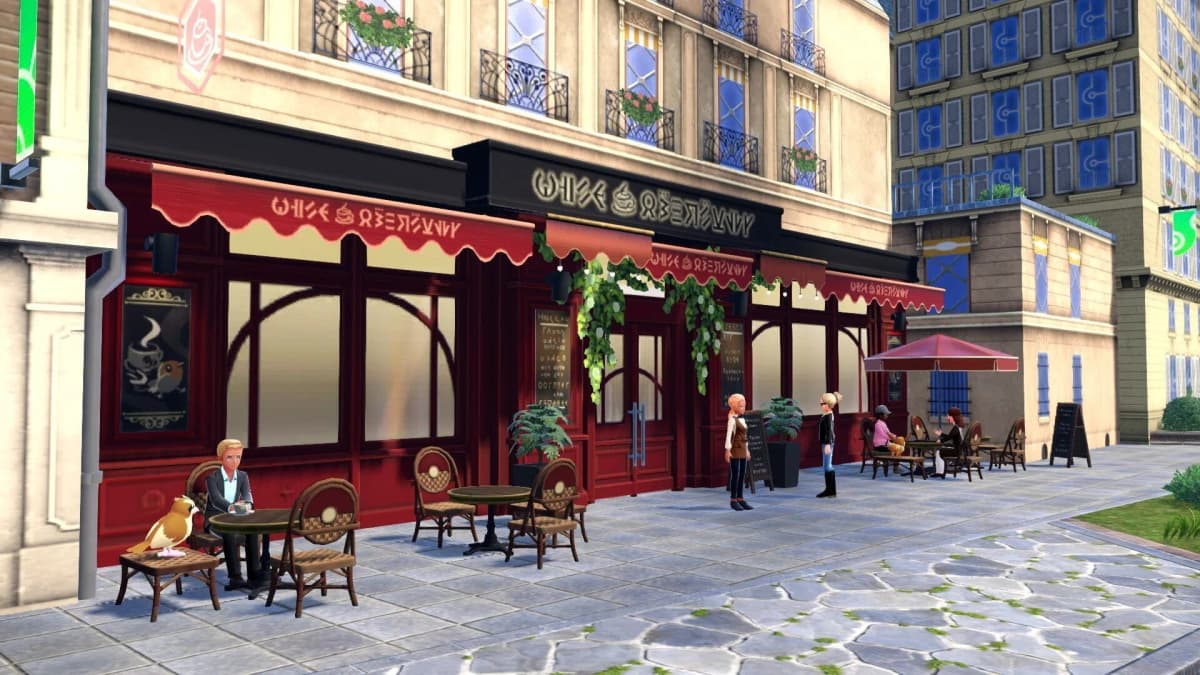
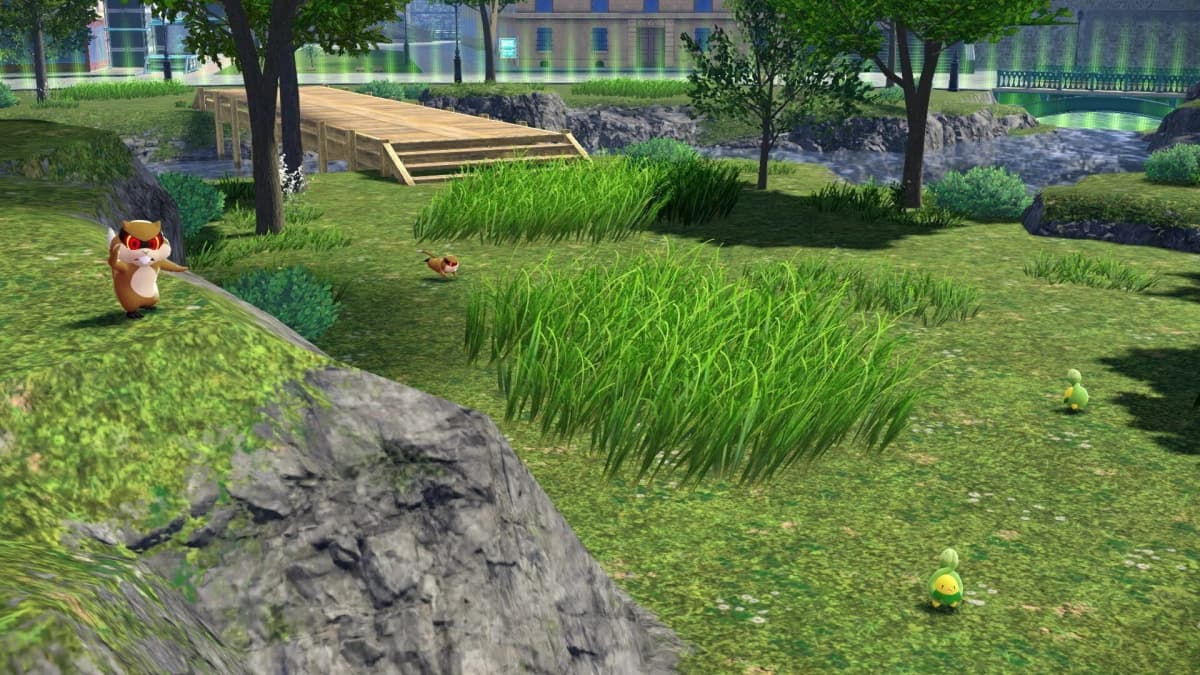
Illumis is the star here: rooftop routes, alley shortcuts, ladders, pipes, and a planned glider promise more movement variety than the wider-but-emptier wilds of Arceus. This isn’t another open plain—it’s dense and layered. The structure is district-based, and during the demo we were limited to District 6. We cleared its Pokédex checklist in about 20 minutes, which exposed the one buzzkill: daytime encounter density is low. When a rare spawn slipped away, waiting on a reappearance killed momentum. If later districts don’t ramp density and variety, the urban fantasy loses steam fast.
At night, the city flips into Royale Z-A, a rolling ladder of trainer battles with optional modifiers. It’s a clever way to push combat mastery—win streaks, type challenges, stealth starts—but even in a short session, objectives started repeating. If Game Freak doesn’t add wrinkles (unexpected hazards, multi-trainer gauntlets, dynamic events), Royale risks becoming a corridor you run for rewards rather than a mode you crave.
Mega Evolutions return—with teeth
The wild-card encounters are spontaneous wild Mega Evolutions, which can kick off during story missions and turn a street corner into a panic zone. These fights push the new system hardest: area denial hazards, burst windows, and resource management around so-called “mega energy.” One example: a Mega Victreebel turned an intersection into a poison trap, forcing constant repositioning while chipping away at adds. It’s the closest Pokémon has felt to a boss design philosophy borrowed from action RPGs, and it works. If these beats scale in creativity rather than just HP sponges, they’ll be the moments people clip and share.
Performance reality check
Let’s talk frame rate—the thing Scarlet/Violet never fully recovered in the court of public opinion. On the Switch 2 demo units at the event, Z-A ran at a clean 60fps with busy streets, flashy particle effects, and big attack tells. The art direction leans into Parisian flair—reorchestrations, bright signage, dramatic real-time move animations—and the smoothness sells it.
But the elephant in the room is the original Switch. We didn’t get to test it, and “targeting parity” is a phrase that has haunted Nintendo’s late-gen releases. If Z-A dips into the 20s during crowded night fights or Mega encounters, the whole real-time pitch suffers. I’ll take the win that Game Freak is clearly optimizing for responsiveness, but I’m not celebrating until we see performance on base hardware. Also, the current UI readability issues will only feel worse at lower resolutions and handheld distances—accessibility options (scalable text, thicker outlines, colorblind filters) would go a long way.

What I’m watching before launch
- Encounter pacing: Will later districts boost density and spawn variety, or are we waiting on timers for rares?
- Royale Z-A depth: Are there unique rulesets, dynamic events, or online components beyond a ladder vibe?
- Combat clarity: Better telegraphs, target selection, and camera behavior in multi-enemy chaos.
- Base Switch performance: Stable frame rate during night ladders and wild Mega fights is non-negotiable.
Even with caveats, this feels like Pokémon finally stretching. Real-time systems reward game sense, Illumis has personality, and wild Megas inject real danger. The mission design needs more spice, and the UI needs polish, but if the Switch version holds together, Z-A could be the turning point many of us have been asking for since Arceus proved the audience wants risk.
TL;DR
Pokémon Legends Z-A impresses with real-time combat and a stylish, vertical Illumis, while wild Mega encounters bring legit boss energy. The fun-killers could be low daytime density, repetitive night ladders, and unknown performance on the original Switch—but if those land, this one’s a fresh start worth getting excited about.