
Table of Contents (11)
From skeptic to hooked: 40 hours inside Illumis
I went into Pokémon Legends Z-A with a chip on my shoulder and a soft spot for Arceus. I loved Arceus’ freedom despite its janky tech, and I’ve been craving that same sensation of discovery without the technical hangover. Z-A promised something bolder: a modern Kalos backdrop, a day-night competition loop, and-biggest of all-real-time combat that pulls trainers directly into the fray. After about 40 hours on Switch 2, finishing the main story and most sidequests, my feelings are loud and messy: I adore the audacity and the heart here, but Illumis’ cramped scale constantly bumps elbows with the game’s best ideas.
My first session ended somewhere around 2 a.m., after the Royale Z-A transformed a sleepy neighborhood into a neon-lit gauntlet and I squeaked out a ticket défi by chaining surprise trainer ambushes down a tramline. It was sweaty-palmed, chaotic, and genuinely fresh. But by hour 20, after being pinballed down yet another narrow corridor with five angry Pokémon dogpiling me, I started to miss the breathing room that made Hisui sing.
A modern Kalos with a pulse-and a point of view
What struck me immediately: the tone. Pokémon usually plays it safe; Z-A has a spark. You arrive in Illumis as a tourist—literally an outsider—which works way better than it sounds. It gives the writers license to explain, question, and poke at the city’s contradictions. Quazara, the slick corporation “reimagining” Illumis with citywide “Wild Zones,” feels like an optimistic tech pitch that’s teetering on hubris. The citizens argue about it; trainers hustle in its margins; and stray stories intersect in ways I didn’t expect from a Pokémon spin-off.
Your first real anchor is the Hôtel Z, run by the eccentric A.Z.—a character who’s equal parts cryptic mentor and walking loose end. It’s almost empty, which makes the regulars who linger there feel like a little found family. The rival (mine was the sharper, wryer option) meets you at the station and, in a twist I actually liked, hands you your starter. I picked Froakie because I always do, and the moment I Mega-Evolved a Gengar later on and realized my little frog could actually keep up in the new system, I grinned like an idiot.
By hour 10, I’d settled into the loop. Daytime is for exploring Illumis, picking through Wild Zones, stumbling into sidequests, and figuring out why random Pokémon are suddenly mega-evolving and losing control. Night flips a switch: the Royale Z-A claims a district at random and turns it into a roaming arena. You’re part of Team MZ, climbing from rank Z to A in a city-sized, televised contest where the top prize is a wish granted. It’s a sly riff on gym battles, but it feels organic—like the city itself is the gym and its people are the judges.
Real-time battles that finally put trainers on the line
The headline change is the combat. Forget the hard cuts into turn-based duels—Z-A keeps trainer and Pokémon on the same map, moving, dodging, guarding, and striking without breaks. Think of it as action-lite with a Pokémon heart: you time attacks, bait counters, and reposition constantly. It’s not Devil May Cry, but it’s not the old chessboard either.
The first time it clicked for me was a sidequest duel: Pikachu vs. Pikachu, stripped loadouts, tiny arena. I learned to respect “Abri” (Protect) and “Détection” (Detect) in a way I never had. Waiting for the faint shoulder animation before a Volt Tackle, popping a perfectly timed guard, and punishing with a quick combo suddenly felt like rhythm. It made me reevaluate “useless” moves because in real-time, their windows matter.
And then there are the Mega Moments. Mega Evolutions return not as pre-scripted cutscenes but as tools you can deploy mid-fight. Fill your Mega gauge—there’s a clear ring next to your trainer portrait—pop it, and the transformation slams into the action without breaking pace. Mega Gengar is a monster here; Mega Dragonite, newly added, turns space control into an art. The best part? Even random Royale Z-A opponents bust out Mega forms. It’s not a rare treat reserved for bosses; it’s a system you must plan around. That makes hunting Mega Stones an actual game, not just a checklist.
The new “Pokémon Mega Ferox” fights are basically MMO-flavored raids. Picture an arena where your trainer has to constantly dodge telegraphed AOEs while your Pokémon chips down health bars, gathering orbs across the ground to charge your Mega gauge. Fail to keep moving and you’ll get pancaked. I wiped twice on a late-game Mega Ferox when I grew greedy with damage and ignored the red vignette warning that signals you’ve only got a hit or two left. On the third attempt, I played measured, Mega-Evolved on the second phase, and it felt properly climactic.
It isn’t all roses: the system can get noisy and, frankly, messy. To its credit, the final build’s lock-on is much better than the preview I tried months ago; target swapping is snappier, and a thin line traces your current focus to keep your eyes honest in crowds. But in tight spaces, with particle spam from Mega attacks and three enemy trainers calling in reinforcements, it still veers into button-mashy survival—especially because the AI would rather bulldoze you with big numbers than play the long game. Buffs and debuffs rarely feel worth the setup compared to raw pressure.
Royale Z-A is a brilliant idea stuck in a narrow city
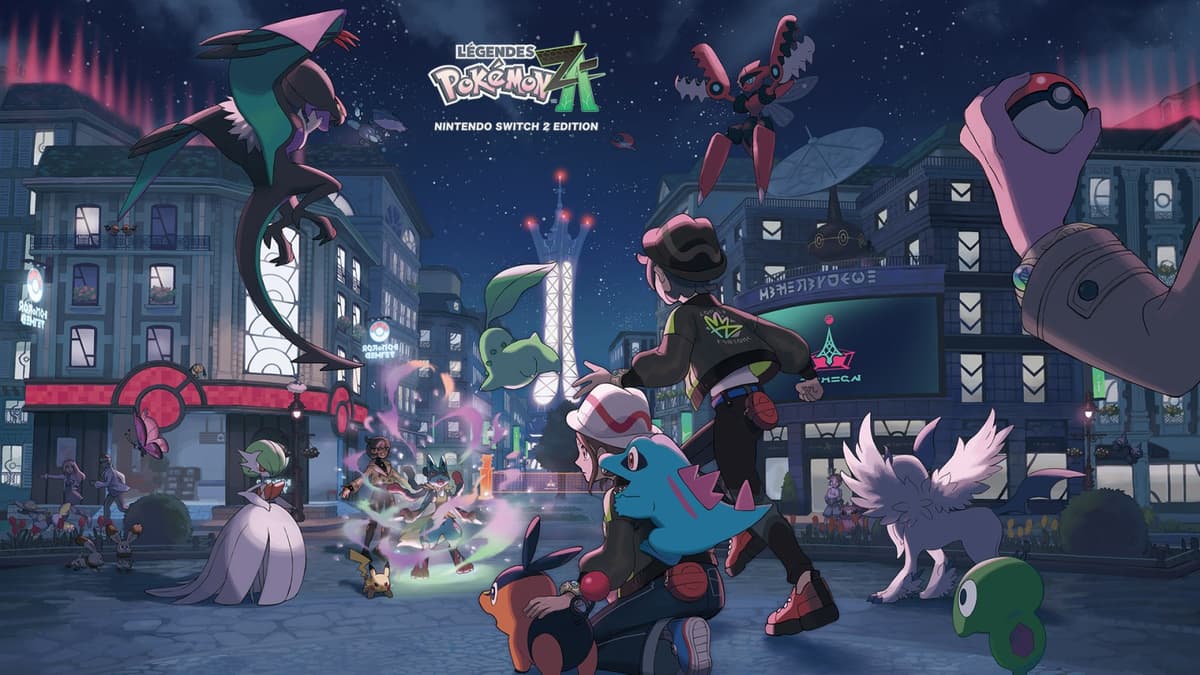
Royale Z-A might be my favorite structural shakeup Pokémon has tried in years. At night, a random slice of Illumis becomes a citywide arena: elevated trams double as flanking routes, cafés turn into choke points, and you can ambush opposing trainers from behind for a cheeky advantage. Climb enough points in a session and you earn a ticket défi—a pass to challenge up the ranking ladder. On good nights, it’s electric.
But Illumis doesn’t give the mode enough elbow room. A lot of these arenas are bottlenecked into alleyways and corridors, which means a strategy game about angles too often devolves into a scrum at a doorway. One memorable disaster: I tried to set a crossfire on a boulevard by luring a pair of trainers into the open and got third-partied by a roaming Baron Pokémon that had pathed in from the Wild Zone behind me. Suddenly I’m in a 1v5 with my camera jammed against a kiosk and my dodge timing ruined by geometry. I still eked out the ticket, but it felt like winning a bar fight, not a tactical match.
Sometimes, yes, that chaos is the charm. A live city should feel unpredictable. But the line between “lively” and “cramped” is thin, and Z-A trips more than it should. The same squeeze affects exploration and, especially, stealth captures—the part of Arceus I loved most.
Wild Zones: big ideas packed into small boxes
Quazara’s Wild Zones are a great worldbuilding hook—green pockets woven into a city, spaces designed for human-Pokémon coexistence—but they’re too small for the mechanics layered onto them. It’s hard to play the silent hunter when a stealth route is two hedges and a bench. If a target spots you, the aggro spreads fast, and retreating usually hoovers in even more enemies. More than once I tried to snag a Fletchling from a café terrace only to end up ringed by an angry flock, with a high-level brute rolling in like, “Hey, nice picnic.”
Arceus thrived on breadth—you could adjust your approach on the fly: circle wide, climb, glide, reset. Z-A has some of those tools. The Motismart lets you glide briefly; you can open shortcuts; a bit of verticality adds interest with rooftops and sewers. I spent a hilarious 30 minutes trying to chain glides between awnings to reach a hidden ledge along the Prism Tower district. It worked, barely, and I felt clever. But too often, Z-A’s levels feel like they were designed for spectacle first and player agency second. There just isn’t enough room to breathe.
Sidequests that actually teach—and occasionally delight
The side content is where Z-A’s writing pops. Little stories about Illumis’ residents double as sly tutorials, each built around a type gimmick or a move you probably ignore in the mainline games. The Pikachu 1v1 I mentioned earlier? It’s one of several “focus” duels that sneakily trains you to read animations and bait counters. There’s a series featuring a café owner whose favorite customers gradually become a trio you fight at night in the Royale, each layered with a different status-focus approach. I didn’t love that buffs feel underpowered overall, but I loved how the game tried to convince me otherwise.
My favorite random encounter came around hour 28: a fashion blogger begged me to “style-battle” for a collab at Hôtel Z. I had to fight under a restriction—no Mega, limited items, flashy finish required—which forced me to combine positioning with a timed Discharge to end the fight on a “camera cue.” Ridiculous? Absolutely. Memorable? Completely. Those moments humanize a city that can otherwise feel like a maze of walls.
Performance on Switch 2: smoother, not sexy
Let’s be blunt: visually, Z-A still lives far from the cutting edge. Textures are flat, asset variety is modest, and a lot of surfaces look like they missed a polish pass. The art direction plays it safe compared to Arceus’ painterly vibe. That said, the city has lovely beats—pocket gardens tucked into courtyards, museum halls with Kalos flair, streetlights that paint the cobblestones on rainy nights. It’s not gorgeous, but it’s occasionally charming.
The good news is that on Switch 2, the whole thing runs notably smoother. Load times are snappy, and while I hit frame dips during particle-heavy Mega Ferox phases and some Royale Z-A chaos, they were blips more than showstoppers. Pop-in happens, especially with crowd clusters and small props, but it’s no longer immersion-breaking. Handheld play felt steady; docked had the same strengths and weaknesses, just bigger. It’s an upgrade in comfort, not a revelation in fidelity.
UI-wise, the lock-on toggle is reliable now, and the damage-warning vignette (that darkening, red-edged effect when your trainer is close to fainting) saved me a few times. The quick-access wheel for items and the clear Mega gauge icon keep your eyes on the action. I wouldn’t mind more granular control remapping, but the default layout stopped getting in my way after the first night.
What works—and what snagged for me
After finishing the story and doing most of the sidequests, here’s where I landed:
- The real-time combat is genuinely fun in focused scenarios and duels, with Mega Evolutions adding clutch, hype-ready swings.
- Royale Z-A is an inspired structural pivot—touring the city, earning tickets, and climbing the ranks made me care about Illumis’ neighborhoods.
- The writing is a pleasant surprise. The tourist perspective works, A.Z. is captivating, and several sidequests linger in my head.
- Exploration and stealth are hamstrung by the city’s small scale. Wild Zones are conceptually brilliant but physically cramped.
- AI prefers brute force; status play and buffs rarely feel as rewarding as raw pressure, which flattens strategy in bigger brawls.
- Performance on Switch 2 is smooth enough to let the ideas breathe, even if the visuals never wow.
One limitation worth flagging: I didn’t get to try online battles; servers weren’t live during my time. My gut says PvP could rescue some of the meta depth that the AI bulldozes, but until I get bodied by an actual human, that’s speculation.
Comparisons that shaped my expectations
People will naturally compare Z-A to Arceus and Scarlet/Violet. Here’s my quick take from the couch:
Versus Arceus: Z-A trades wide-open hunting grounds for an urban playground built around a nightly competition. The cost is exploration freedom; the gain is a more cohesive rhythm and a story that lives in the present-day Pokémon world. I missed stalking prey over a hill and working a big loop. I didn’t miss Arceus’ performance woes.
Versus Scarlet/Violet: Z-A is more focused and less messy. It doesn’t try to be a massive open-world RPG; it tries to be a city action-adventure with a standout PvE/PvP ladder. In doing so, it finds a personality—especially with Mega Evolutions making a legit comeback. But Scarlet/Violet’s sprawl gave you more room to create your own fun, clunky as it was. Z-A often dictates the terms of engagement, and in narrow spaces, those terms can feel claustrophobic.
My most memorable moments (good and bad)
By hour 12, I finally understood how to bait counters in real time—thanks, Pikachu dojo—and used that to dismantle a cocky rival match on a rain-slick side street. I walked away with my first genuine “I earned that” grin.

By hour 18, I was cursing at a Wild Zone in the sewers because every stealth attempt ended with a screaming chain of aggro. The instant one Grimer spotted me, three others oozed in, and a Baron Krookodile decided he lived there now. It was chaos, and not the fun kind.
At hour 28, a Mega Ferox fight clicked, and I nailed the dance: dodge, orb run, timed Mega activation, finish with a last-second punish. The soundtrack even swelled with this slick accordion-and-synth flourish that, for a moment, made Illumis feel like the most stylish city on the planet.
At hour 35, a Royale Z-A night turned a museum district into a labyrinth. I tried flanking on the rooftops using Motismart glides, ran out of stamina mid-hop, and landed in the middle of a three-way brawl. I scraped by on instinct—dodge, lock-on swap, Mega pop—but walked away thinking, “Give this mode a little more space and it would sing.”
Who should play this
If you liked the idea of Arceus more than its execution, Z-A might be your sweet spot. It’s cleaner, faster, and braver in its structure. If you crave open plains for stealth and capture loops, temper expectations—the Wild Zones aren’t built for long-stalk hunts. If competitive tinkering is your thing, the real-time system plus Mega Evolutions could become a playground once online is live; AI won’t push your brain like a person will. And if you want Pokémon to try new things without throwing the identity away, this is the most convincing experiment since Arceus.
FinalBoss // Gear
Level up your setup
01Best-selling Switch 2 gameson Amazon→02Switch 2 accessorieson Amazon→038BitDo controllerson Amazon→04Discounted game keyson Kinguin→Affiliate links · As an Amazon Associate, FinalBoss earns from qualifying purchases.
Want to Level Up Your Gaming?
Get access to exclusive strategies, hidden tips, and pro-level insights that we don't share publicly.
Ultimate Reviews Strategy Guide + Weekly Pro Tips