
Table of Contents (12)
Leaf House Capacity in Pokopia: The Direct Answer
If you only need one fact, here it is: a standard Leaf House in Pokémon Pokopia can house 4 Pokémon, regardless of their size. That number does not change with furniture, decorations, or how much space you leave inside. I’ve tested this repeatedly by cycling different teams through a single Leaf House – the UI and behavior always cap at four residents.
Once you understand that hard cap, the whole housing system becomes much easier to plan around. The real optimization isn’t about squeezing more than four Pokémon into a Leaf House (you can’t), but about where you place those houses and which Pokémon you assign to them.
Where Leaf Houses Sit in the Pokopia Housing Tier System
Pokopia’s housing looks cute and cozy, but under the hood it runs on a strict tier structure that decides how many Pokémon can live in each building. Once I stopped guessing and treated it like a simple tier chart, my villages stopped feeling cramped and chaotic.
Here’s the pattern you’re working with across the “leaf”, “sand”, and “stone” families:
- Dens and Huts (e.g., Leaf Den, Leaf Hut): hold 1 Pokémon
- Cottages: hold 2 Pokémon
- Houses (e.g., Leaf House): hold 4 Pokémon
Some details that matter in practice:
- Leaf Den – 1 resident, and only for medium or smaller Pokémon. Good for early-game basics, but it fills up fast.
- Leaf Hut – still 1 resident, but with looser size rules than the Den.
- Leaf Cottage – 2 residents. A decent stepping stone, but it’s basically half a Leaf House for a similar footprint.
- Leaf House – 4 residents, any size. This is the point where housing starts feeling efficient instead of cramped.
This pattern repeats with Sand and Stone equivalents: their “House” tier also tops out at four Pokémon. There are a few outliers (for example, some special huts or cabins also support four), but Leaf House itself never breaks the 4-Pokémon cap.
From a planning standpoint, think of it this way: if a structure’s name literally says “House”, you can safely assume you’re working with a 4-Pokémon slot in your mental spreadsheet for that area.
Can You Increase a Leaf House’s Capacity Beyond 4?
No. The four-resident limit on a Leaf House is hard-coded. I tried all the obvious tricks:
- Expanding the interior floor space
- Removing or adding furniture to “free up room”
- Putting the door in different places
- Building massive custom “mansions” around a door
None of that changed the cap. The moment four Pokémon were assigned to that house, the game stopped offering the option to invite a fifth. Even with huge custom builds, the game still labeled them as a single home with max 4 residents or, if I pushed things too far, stopped counting them as a home at all.
So if your goal is to expand capacity, the answer isn’t “make one giant Leaf House and cram ten Pokémon into it.” Instead, you need to:
- Build more Leaf Houses (or equivalent-tier homes)
- Use lower-tier housing for overflow or utility Pokémon
- Plan around the game’s per-area limits on structures and visible Pokémon
Prefab Leaf Houses vs. Custom “Real” Houses
Pokopia supports two broad housing approaches:
- Prefab homes – things like Leaf House selected directly from the build menu.
- Custom “real” houses – homes you assemble yourself with blocks, a door, and a valid interior.
In my runs, prefab Leaf Houses and properly-recognized custom houses shared the same capacity: 4 Pokémon each. A few important details about custom builds that I wish I’d learned sooner:
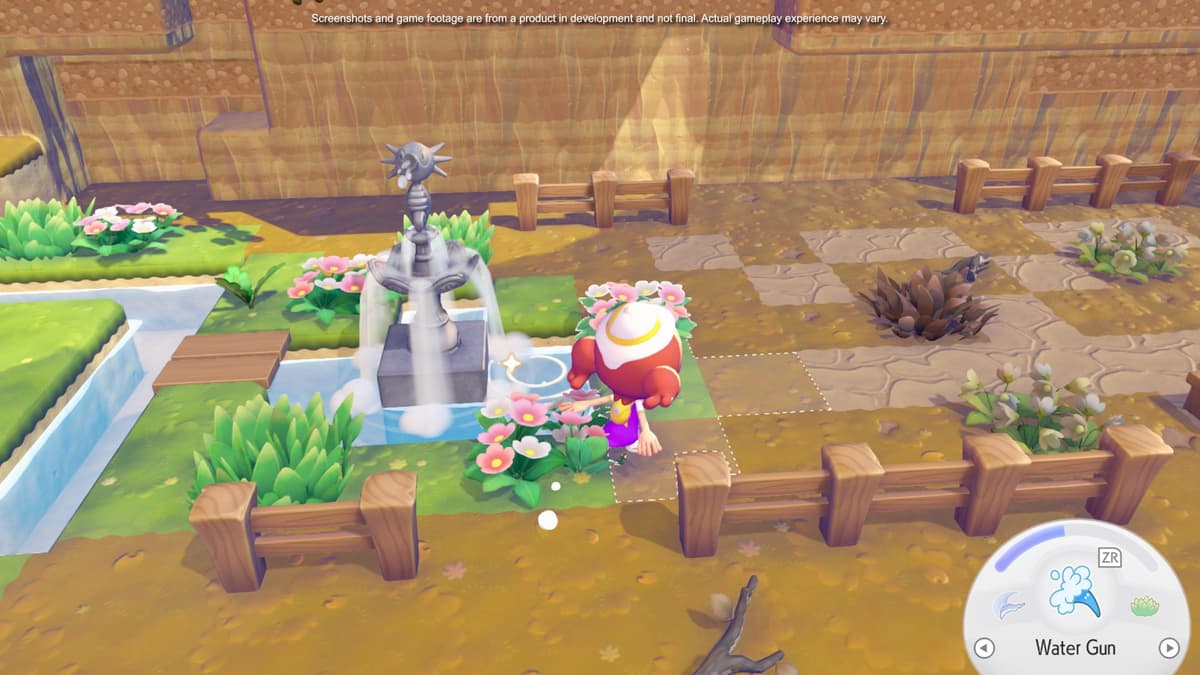
- The interior floor needs to be at least 2×2 blocks.
- Walls can be only one block high and still count.
- You must place a door; without it, the game won’t flag the structure as a home.
- A roof is optional – it’s just visual flair.
Once those conditions are met, the game registers it as a house and allows up to 4 residents. Making the house larger (for example, a 10×10 floor) doesn’t increase that number. If you try to get too fancy and break the rules (weird shapes, missing walls), the game may stop recognizing it as a home entirely and your Pokémon lose their assigned house status.
How Many Pokémon Can You Have in a Pokopia Area?
This is where the Leaf House capacity actually matters: the game doesn’t just limit houses, it also limits how many Pokémon can be present or “active” in an area.
From playing and testing, there are three overlapping limits you’ll feel:
- Visible Pokémon limit – roughly 20–30 Pokémon can be visibly active in an area at once. Beyond that, the game quietly shuffles who is visible.
- Housing structure limit – each map seems to allow only a certain number of houses, with high-tier houses (like Leaf House) counting more heavily toward that limit than small dens.
- Per-home resident cap – the 4-Pokémon limit for houses like Leaf House.
Players typically end up with around 60 Pokémon tied to a single area before things start to feel strained. Leaf Houses are popular because they’re very efficient: 4 Pokémon per structure. With about 20 house-tier buildings allowed in an area, that’s up to roughly 80 housed Pokémon, plus whatever is wandering or quest-bound.
In practice, the game rarely lets you keep everything visible at once due to the 20–30 Pokémon visibility constraint, but that doesn’t stop you from assigning more Pokémon to homes there. They’ll simply pop in and out of the active scene as you move around.
So when people ask, “How many Pokémon can you have in Pokopia?” the honest answer is:
- There is no single global hard cap you’ll realistically hit in a normal save.
- Each area has practical limits based on housing and visibility.
- You manage your population by spreading Pokémon across multiple areas and homes.
Leaf Houses are one of the best tools for pushing an individual area’s capacity upward without cluttering it with dozens of tiny dens and huts.
Planning Your Leaf House Layout
Once I accepted that 4 was a hard limit, I started treating Leaf Houses like “apartment blocks” for my key Pokémon. That mindset made it much easier to decide what to build and where.
Early Game: Use Dens, Upgrade to Leaf House ASAP
In the early hours you’ll usually unlock Leaf Den first. Its recipe is cheap – for example, something like a small number of Sturdy Sticks and Leaves, crafted by worker Pokémon such as Timburr – and it unlocks at a low Environment Level. It’s fine as an emergency shelter so your first few partners have a place to live.
However, dens and huts only house 1 Pokémon each, so if you spam them everywhere, you hit:
- The structure cap in that area
- Visual clutter that makes it hard to navigate your town
- Low “Pokémon per structure” efficiency
As soon as you unlock Leaf House in the build menu (typically after raising the area’s Environment Level and completing a few tasks), it’s worth switching almost entirely to that tier for serious housing.
Mid Game: Consolidate into Leaf Houses
Mid-game is where your roster explodes. Utility Pokémon, quest-givers you’ve befriended, and biome specials all start crowding the map. This is when I usually:
- Demolish redundant dens/huts once their residents move into a Leaf House.
- Cluster Leaf Houses into small “neighborhoods” near key facilities like workbenches and farm plots.
- Reserve a few cottages or huts for theme reasons (for example, a lone hut on a cliff for a specific Pokémon’s vibe), but treat them as luxury, not main housing.
A simple cluster of 5 Leaf Houses gives you room for 20 Pokémon, which usually covers a full working roster plus a few favorites, all packed into a tidy neighborhood.
Late Game: Area Specialization
By late game, you’ll probably have multiple areas unlocked. At that point, the smart move is to specialize:
- Turn one area into your “heavy” hub with Leaf Houses and other 4-capacity homes for large or favorite Pokémon.
- Use another area for quest-locked or biome-locked species that can’t move freely.
- Keep a more “functional” area where utility Pokémon (miners, builders, farmers) live close to the structures they use.
Leaf Houses fit best into that first and third category: they’re flexible, compact, and don’t care about resident size, so you can house anything from small companions to huge showpieces.
Which Pokémon Should You Put in Leaf Houses?
Since Leaf Houses don’t discriminate by size, they’re ideal for Pokémon that either:
- Take up a lot of visual space in the overworld
- Are important to you mechanically or emotionally
- Need to stay near a specific work area or building
Examples of good Leaf House candidates from my own layouts:
- Large or rare Pokémon that you want to see frequently without them dominating the pathing or crowding out smaller residents.
- Key workers (builders, miners, farmers) grouped near the structures they use so you’re not chasing them around the map.
- Favorite team members you’re always inviting to follow you; keeping them in one neighborhood makes them easy to find.
Meanwhile, single-Pokémon dens and huts are fine for:
- Temporary guests
- Quest NPCs you don’t interact with much
- Biome-specific Pokémon you rarely visit
Because Leaf Houses use up more of your limited “housing budget” per area than a basic den, it’s worth reserving them for residents you actually care about seeing and using regularly.
Biome and Quest Restrictions Still Apply
One common misunderstanding I ran into early: even if you have spare space in a Leaf House, not every Pokémon is free to move into it wherever you like.
- Some Pokémon are biome-locked while they’re tied to specific quests or progression. For example, water Pokémon involved in early swimming quests may refuse to move inland until you clear their tasks.
- Certain story Pokémon (like those on “househunting” quests) can’t be freely reassigned until their related questline is resolved.
So if the game won’t let you invite a Pokémon into a Leaf House, check whether:
- You’re trying to place them outside their allowed biome.
- They’re still flagged as part of an active quest in that area.
- You’ve already reached the 4-resident limit in that specific house.
The 4-Pokémon limit is only one piece of the puzzle; biome and quest flags are equally important gatekeepers.
Summary: How to Use Leaf Houses Effectively
To pull everything together:
- A Leaf House in Pokémon Pokopia always holds 4 Pokémon, regardless of size.
- This 4-Pokémon cap applies to both prefab Leaf Houses and correctly-built custom houses.
- Housing tiers follow a simple pattern: dens/huts = 1, cottages = 2, houses = 4.
- You cannot raise the per-house cap; to house more Pokémon, you must build more houses or use multiple areas.
- Each map has soft limits on both visible Pokémon (around 20–30) and housing structures, so plan clusters of Leaf Houses instead of spamming small dens.
- Use Leaf Houses for your most important, largest, or most frequently used Pokémon, and leave single-occupant dens/huts for edge cases.
- Biome restrictions and quest flags can block some Pokémon from moving into a Leaf House, even if you have space.
Once you start thinking in terms of “4 slots per Leaf House, X houses per area”, it becomes much easier to decide where every Pokémon should live and how many you can comfortably maintain in each part of Pokopia.
FinalBoss // Gear
Level up your setup
01Best-selling Switch 2 gameson Amazon→02Switch 2 accessorieson Amazon→038BitDo controllerson Amazon→04Discounted game keyson Kinguin→Affiliate links · As an Amazon Associate, FinalBoss earns from qualifying purchases.
Want to Level Up Your Gaming?
Get access to exclusive strategies, hidden tips, and pro-level insights that we don't share publicly.
Ultimate Guide Strategy Guide + Weekly Pro Tips