
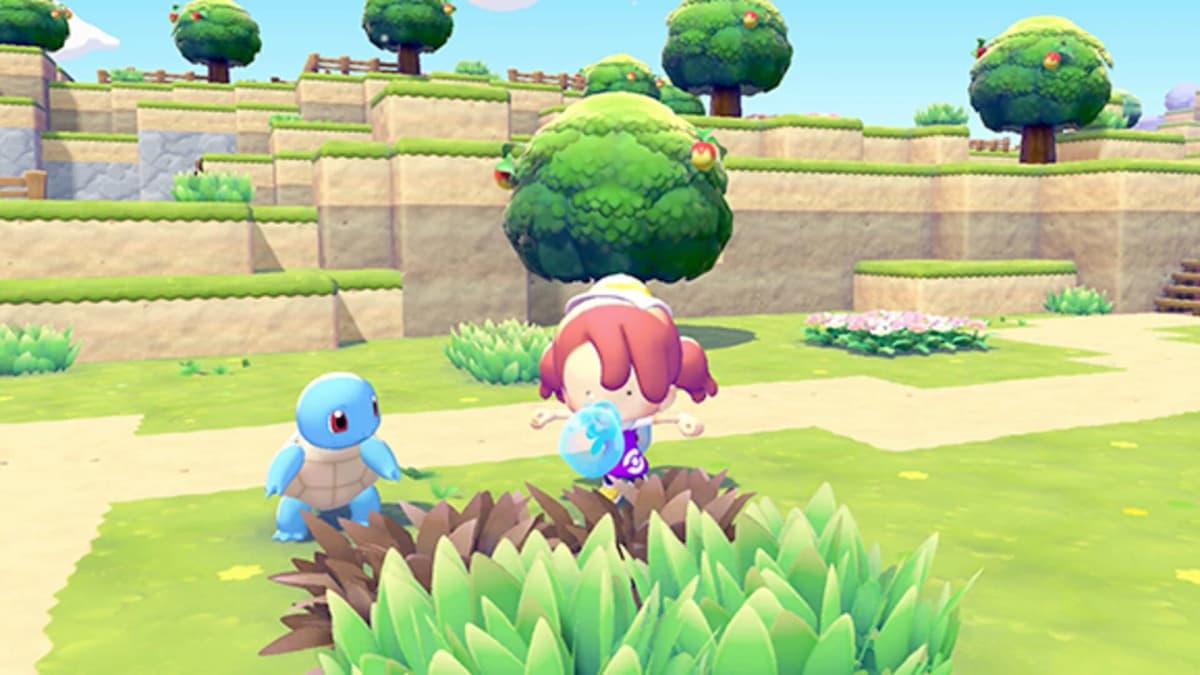
Muplodocus is Goodra. That one sentence solves most of the confusion around this Pokémon, because the guides that use the French name and the guides that use the English name describe the same spawn and never say so. In Pokémon Pokopia you get it by building habitat #045, called Very-Berry Space in English (Assortiment de meubles Baie in French), from four pieces of Berry furniture: Berry Chair, Berry Bed, Berry Table and Berry Table Lamp. Once that habitat registers, Goodra/Muplodocus is a Rare spawn there. There is no bench, and there are no bushes.
Everything below is checked against the live build, Ver. 1.1.1 (released 18 June 2026), which is still the current patch as of late July 2026. The next update is Ver. 2.0 with the Dive ability, due August 2026 alongside the Bubbly Basin Expansion Pass, so nothing here should shift before then.
Table of Contents (13)
Quick checklist
- Habitat: #045 Very-Berry Space
- Furniture: 1× Berry Chair, 1× Berry Bed, 1× Berry Table, 1× Berry Table Lamp
- Recipe unlock: Withered Wasteland Pokémon Center PC, gated behind Environment Level 9 in that area
- Where it can be built: Withered Wasteland, Bleak Beach, Rocky Ridges, Sparkling Skylands, Palette Town
- Documented spawn conditions: any time of day, any weather, any biome — rarity Rare
- Player-reported extra: lamp switched on, and raining. Not in any guide database, but it keeps coming up (see below)
The furniture list most guides get wrong
If you have been placing benches and bushes, that is why nothing has spawned. Very-Berry Space is a room, not a garden. The English habitat databases (RankedBoost, Game8, WikiPokopia) all list the same four items, and they are the four you would put in a bedroom:
| Piece | Notes |
|---|---|
| Berry Chair ×1 | Cheapest of the four; craft this first to confirm the recipe line is unlocked |
| Berry Bed ×1 | The largest footprint — place this first and build the room around it |
| Berry Table ×1 | Sits between the chair and the bed in most working layouts |
| Berry Table Lamp ×1 | Needs power. This is the one people forget to switch on |
Place all four in one tight cluster. Pokopia gives you a sparkle cue when a habitat arrangement is valid — if you do not see it, the pieces are too spread out or one of them is the wrong variant. Do not craft every item with “Berry” in the name hoping something sticks; the habitat is exactly these four.
Getting the Berry furniture recipes
This is the real gate, and it is the reason so many players think Muplodocus is bugged. The Berry set recipes appear at the Withered Wasteland Pokémon Center PC once that area hits Environment Level 9. Some players report needing to be closer to Level 10 before the full set is purchasable, which lines up with how Pokopia drip-feeds shop stock rather than dumping a whole category at once.
Practically, that means Very-Berry Space is a mid-to-late build, not something you throw together in your first ten hours. If your Withered Wasteland environment is sitting in the 5–7 range, stop hunting the Pokémon and go raise the area instead: revive dead ground, keep flower fields watered, add furniture to existing habitats and spread residents out so nowhere is overcrowded. The environment score is what unlocks the shop line, and the shop line is what unlocks the habitat.
The rain question, answered honestly
Every habitat database that lists Goodra gives it Weather: Any, Time of Day: Any, Biome: Any Area, Rarity: Rare. On the documented data, there is no rain lock.
What complicates it is that multiple players independently report the same thing on r/Pokopia: the spawn only showed up for them with the Berry Table Lamp turned on and while it was raining. That is a player observation, not a datamined condition, and it is worth treating it that way. Two readings both fit the evidence:
- Rain is genuinely a hidden modifier the databases have not captured, or
- Goodra is simply a Rare spawn, and people notice it during rain because rain is when they stand around waiting in a wet-looking berry room
Either way the practical advice is the same and costs you nothing: switch the lamp on and check the habitat during rain. Rarity does most of the work here — if the room is correctly built, keep passing through it across several in-game days rather than assuming a single dry afternoon has ruled it out.
Layout that works
The habitat itself does not care about the surrounding terrain, so build it wherever it is convenient to walk past often. That matters more than aesthetics: a Rare spawn you never visit is a Rare spawn you never see.
- Put Very-Berry Space on a route you already walk — near your crafting bench, storage, or the Pokémon Center — rather than in a scenic corner of the map
- Leave clear walking space around the bed and table. Cramped layouts cause pathing problems for larger Pokémon, and Goodra is a two-metre-tall lump
- Power the lamp properly and confirm it is lit, not just placed
- If you have security cameras unlocked, point one at this habitat. It is the single most efficient way to catch a rare spawn you would otherwise miss while working elsewhere
What Goodra actually does for your town
Once it moves in, Goodra is a support resident rather than a workhorse. Its water-side specialty keeps nearby soil and basins hydrated between natural rain, which is genuinely useful if you have crop plots or moisture-sensitive plants in the same zone and you are tired of manually watering them. It is slow, it does not gather aggressively, and it will not fix a resource bottleneck — treat it as maintenance staff, not a miner. If you want throughput, that is what the Cut and Chop specialists are for.
What I removed from this guide, and why
An earlier version of this page described a shiny Hisuian variant unlocked through 25,000 Gypso points, a Rayquaza requirement and 5★ Dragon rifts. None of that is documented anywhere in English Pokopia sources, and Pokopia does not have a rift system of that description. Rayquaza in Pokopia is tied to a Sparkling Skylands habitat, not to a rift coordinator. Rather than keep an unverifiable method on the page, it is gone. If a Hisuian form arrives, the most likely vector is the August 2026 Ver. 2.0 update or the Expansion Pass, and this guide will say so when there is a source for it.
FAQ
Is Muplodocus the same as Goodra?
Yes. Muplodocus is the French name; Goodra is the English one. Same Pokémon, same habitat, same #045 Very-Berry Space requirement. If you are cross-referencing a French guide, “meubles Baie” means Berry furniture, not a bay or a bench set.
Why has it not spawned after several days?
In order of likelihood: the habitat is not registering (no sparkle cue — check all four correct pieces are grouped), the lamp is unpowered, or you are simply losing the Rare roll. Confirm the habitat is valid first; everything else is patience.
Do I need to be in the postgame?
No. There is no story gate on Very-Berry Space. The gate is Environment Level 9 in Withered Wasteland, which most players hit well before the credits if they have been restoring the area properly.
Can I build more than one Very-Berry Space?
The habitat can be built in five different areas, so if you have the materials, duplicating it across zones you visit regularly gives you more chances to catch the spawn. It is expensive, though — one well-placed room on your main walking route is usually the better trade.
Where to go next
If your environment level is what is blocking you, the fastest fixes are in the beginner island-building guide, which covers comfort, habitat spacing and specialty roles. For a straightforward habitat that shows the same build-and-wait pattern with far cheaper materials, try the Growlithe habitat first. And for everything else in the game — quests, legendaries, events, patch notes — the Pokémon Pokopia hub collects it in one place.
FinalBoss // Gear
Level up your setup
01Best-selling Switch 2 gameson Amazon→02Switch 2 accessorieson Amazon→038BitDo controllerson Amazon→04Discounted game keyson Kinguin→Affiliate links · As an Amazon Associate, FinalBoss earns from qualifying purchases.
Want to Level Up Your Gaming?
Get access to exclusive strategies, hidden tips, and pro-level insights that we don't share publicly.
Ultimate Guide Strategy Guide + Weekly Pro Tips