
Table of Contents (20)
Why Your Area Unlock Order Matters
After spending my first 20+ hours in Pokémon Pokopia wandering in circles around Withered Wasteland, I realized I’d quietly bottlenecked my own progress. I was happily decorating and crafting, but I hadn’t triggered the key story beats that actually unlock the rest of the map. Once I understood how the four core biomes and Palette Town connect, the game opened up fast.
This guide breaks down exactly how to unlock every area in Pokémon Pokopia, what to expect in each biome, and what you should prioritize while rebuilding so you don’t waste time like I did. If you follow this order, you’ll reach all five areas smoothly and have resources ready for the harder late-game building.
All Areas in Pokémon Pokopia (Launch Version)
At launch, there are four main story biomes plus one sandbox town:
- Withered Wasteland – Starting biome, drought-stricken hub
- Bleak Beach – Seafront city, brick materials, light-focused rebuilding
- Rocky Ridges – Forest-and-rock area with underground tracks
- Sparkling Skylands – Late-game floating islands, rare resources
- Palette Town – Optional sandbox town with Special Challenges
The core progression path goes:
- Start in Withered Wasteland → restore rain (story quest)
- Rain unlocks Bleak Beach (gate near the Pokémon Center)
- Rain also lets you access Rocky Ridges (northeast cave)
- Finish the main quests in those areas and craft ladders → unlock Sparkling Skylands (north gate)
- Palette Town sits off Withered Wasteland as a mostly optional sandbox
Below I’ll go area by area, with what you need to do, common pitfalls, and quick checklists so you know when you’re ready to move on.
Withered Wasteland – Your Starting Hub and First Bottleneck
Withered Wasteland is where the game drops you and where I unknowingly stalled myself. The whole biome is locked in drought; you’ll see cracked earth, dry riverbeds, and a lot of sad, empty habitats.
How to Progress Here: The Rain Dance Party
Your main goal in Withered Wasteland is to bring the rain back. If you just grind resources and decorate, you’ll miss the trigger that unlocks the rest of the game. What you actually need to do is follow the story questline that culminates in a big Rain Dance party.
- Talk to NPCs around the central Pokémon Center construction site.
- Accept the early story tasks that mention fixing the drought or preparing for a party.
- Build the requested habitats (check
Build → Habitats) to attract key Pokémon visitors. - Craft and place the event items for the party (lights, music, decorations).
- Once everything’s ready, trigger the Rain Dance event.
When the party completes successfully, rain returns to Withered Wasteland. This single event is what unlocks the paths to both Bleak Beach and Rocky Ridges. I wasted a couple of in-game days farming generic materials before finally pushing those story tasks-don’t repeat that mistake.
What to Prioritize Before Leaving
- Upgrade basic habitats to at least level 2 so common Pokémon spawn more reliably.
- Stockpile simple materials (wood, stone, basic plants) – you’ll need them to bootstrap the next areas.
- Finish the “Yawn Up a Storm” quest when it appears; it ties into Rocky Ridges later.
Once rain is restored, check two places:
- Right of the Pokémon Center – Gate to Bleak Beach
- Northeast cave – Tunnel that leads to Rocky Ridges
Palette Town – Optional Sandbox with Hidden Rewards
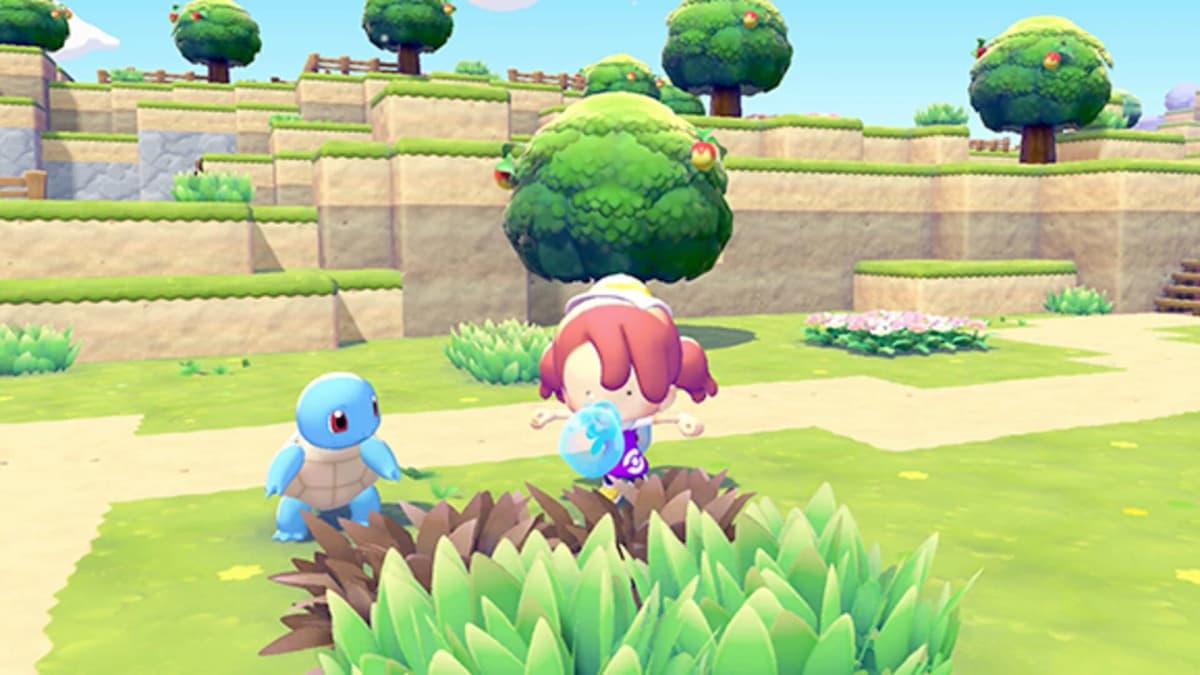
Palette Town unlocked for me pretty early, shortly after the tutorial wrapped and I could roam Withered Wasteland more freely. It’s tucked just off the main biome and is easy to ignore because it has no main story questline tied to the drought or the Skylands.
Why You Should Still Go There
Even though it’s a sandbox, Palette Town isn’t pointless. Once you enter, you unlock a series of Special Challenges. Completing these rewards you with unique habitat items you can’t get elsewhere, and those unlock Pokémon that won’t appear in the standard four story biomes.
- Build its Pokémon Center to turn it into a proper base.
- Experiment with town layouts – you can even rename the town to whatever you like.
- Focus on the challenges that explicitly mention new habitats; the rewards are worth the detour.
I recommend dipping into Palette Town between your main biome pushes. Finish a big quest in Bleak Beach or Rocky Ridges, then relax with a few Palette builds and challenges before heading back to the story.
Bleak Beach – Bricks, Lights, and “Brighten Things Up”
Once the rain is back in Withered Wasteland, look for the gate at the end of the path to the right of the Pokémon Center. That door opens to Bleak Beach, a Vermilion City–inspired seafront that’s currently more “abandoned pier” than thriving resort.
Unlock Requirements
- Complete the Rain Dance party in Withered Wasteland.
- Interact with the now-active gate to the right of the Pokémon Center.
- Step through to enter Bleak Beach and start its story.
This area introduces brick crafting. You’ll find the specific sand and mineral materials along the shoreline and in nearby construction debris. Bricks become a core mid-game building block, so Bleak Beach is a huge progression step.
Main Quest: “Brighten Things Up”
Bleak Beach’s main story revolves around literally brightening a gloomy city. You’ll meet Pokémon like Peakychu and Mosslax who help you power and decorate the town.
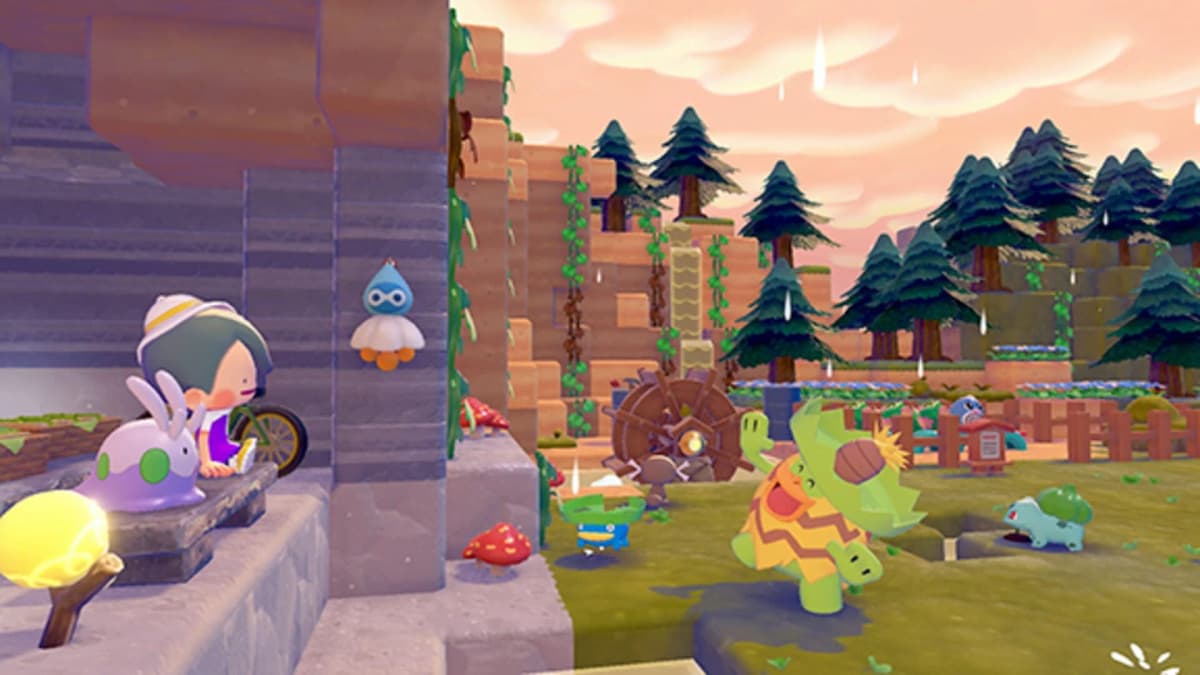
- Gather the materials to craft streetlights, lanterns, and neon-like signs.
- Place lights in specific dark spots marked by quest indicators.
- Upgrade a few key buildings from ruins into functional shops/attractions.
Don’t make my mistake of using all your new brick supply on random decorations. Finish the quest-critical structures first, then decorate. The game is generous, but running out of bricks mid-quest and having to farm at night on the beach was not fun.
Bleak Beach Checklist Before Moving On
- Complete “Brighten Things Up”.
- Unlock and craft bricks reliably (check their recipe under
Build → Materials). - Set up a couple of sea- or pier-themed habitats for unique Water and Electric Pokémon.
Rocky Ridges – Forest, Tracks, and “Time to Party”
Rocky Ridges is the second area that opens after you fix the drought. Its entrance is sneakier: you’ll find it in a cave to the northeast of the Withered Wasteland map. This is the same cave where you handle the “Yawn Up a Storm” quest involving Onix.
Unlock Requirements
- Restore rain in Withered Wasteland.
- Progress or complete “Yawn Up a Storm” in the northeast cave.
- Interact with the gate inside that cave to reach Rocky Ridges.
Rocky Ridges is modeled after Pewter’s surrounding nature: lots of trees, rocky outcrops, and train tracks running through the area and underground. It leans more into verticality and pathing than Bleak Beach, so expect a bit more navigation and platform-style movement.
Main Quest: “Time to Party”
The central quest here is “Time to Party”, another big celebration scenario that ties into the game’s recurring theme of rebuilding through community events. Compared to the Withered Wasteland party, this one expects you to juggle more advanced materials and multi-step builds.
- Collect sturdier building materials from rock clusters and forest nodes.
- Repair and decorate areas around the train tracks for the event.
- Set up habitats that attract specific Pokémon needed to help with the party.
This is where I felt the game start to test my resource planning. If you walk in with no stockpile from Withered Wasteland and Bleak Beach, you’ll end up backtracking a lot. Bring extra generic materials and don’t be afraid to temporarily strip decorations from earlier areas to finish party-critical objects.
Rocky Ridges Checklist Before Skylands
- Finish “Time to Party”.
- Unlock a couple of mid-tier habitats – especially ones tied to Rock- and Grass-type Pokémon.
- Pay attention to any recipes that mention ladders or climbing aids; you’ll need them soon.
Sparkling Skylands – Late-Game Floating Islands
Sparkling Skylands is the fourth and, at launch, final major biome. It’s a series of beautiful floating islands above Pokopia and easily the most demanding area to rebuild.
Unlock Requirements
- Complete the main quests in the earlier areas:
- “Yawn Up a Storm” (Withered Wasteland cave)
- “Brighten Things Up” (Bleak Beach)
- “Time to Party” (Rocky Ridges)
- Craft multiple ladders using recipes you’ll have picked up in prior biomes.
- Head to the north edge of Withered Wasteland and use ladders to reach the Skylands gate.
This is where I hit my second big wall. I had finished the quests but didn’t realize I needed enough ladders crafted ahead of time, so I had to trek back to previous areas to gather materials. Learn from that: as soon as you see ladder recipes, start banking the required components.
What to Expect in Sparkling Skylands
Skylands demands more of everything:
- Rarer resources for higher-tier building pieces and habitats.
- Trickier habitat placements thanks to the floating island layout.
- Exclusive Pokémon and habitats you won’t find anywhere else.
By this point you should treat your earlier biomes as supply lines. I routinely fast-traveled back to Bleak Beach and Rocky Ridges to pull materials, then ferried them into the Skylands to keep construction flowing.
Prep Checklist Before Entering
- A healthy stash of ladder materials (craft more ladders than you think you’ll need).
- Plenty of mid- and high-tier materials from previous areas.
- A few well-developed habitats already producing unusual Pokémon helpers.
Putting It All Together – An Efficient Area Route
If you want a smooth, low-backtracking run through Pokopia’s areas, this is the route that felt best after I’d fumbled my blind first attempt:
- Withered Wasteland
- Push the story ASAP, especially anything related to the Rain Dance.
- Finish or at least progress “Yawn Up a Storm”.
- Stockpile basic materials.
- Palette Town (first visit)
- Unlock it, build the Pokémon Center.
- Knock out a couple of Special Challenges for unique habitats.
- Bleak Beach
- Unlock via the right-hand gate after the rain.
- Complete “Brighten Things Up”.
- Learn brick crafting and bring some back to Wasteland/Palette.
- Rocky Ridges
- Enter through the northeast cave; continue “Yawn Up a Storm”.
- Finish “Time to Party”.
- Start crafting ladders when the recipes appear.
- Palette Town (second visit)
- Use your upgraded materials to complete more Special Challenges.
- Set up any new exclusive habitats you’ve unlocked.
- Sparkling Skylands
- Head north from Withered Wasteland with a pile of ladders ready.
- Focus on story-critical builds first, then go wild decorating.
Once you’ve rebuilt all four main biomes and fleshed out Palette Town, the game really becomes about fine-tuning habitats and chasing down the full Pokédex across its 200+ habitat types. But everything hinges on unlocking and stabilizing these areas first.
If you stick roughly to this progression and keep an eye on story quests instead of just building at random, you’ll hit every area in a fraction of the time my first save took-and you’ll have far fewer “wait, why isn’t this gate opening?” moments along the way.
FinalBoss // Gear
Level up your setup
01Best-selling Switch 2 gameson Amazon→02Switch 2 accessorieson Amazon→038BitDo controllerson Amazon→04Discounted game keyson Kinguin→
Affiliate links · As an Amazon Associate, FinalBoss earns from qualifying purchases.
Want to Level Up Your Gaming?
Get access to exclusive strategies, hidden tips, and pro-level insights that we don't share publicly.
Ultimate Guide Strategy Guide + Weekly Pro Tips