
Table of Contents (14)
Pokémon Pokopia on Switch 2 – Where It Fits in the Series
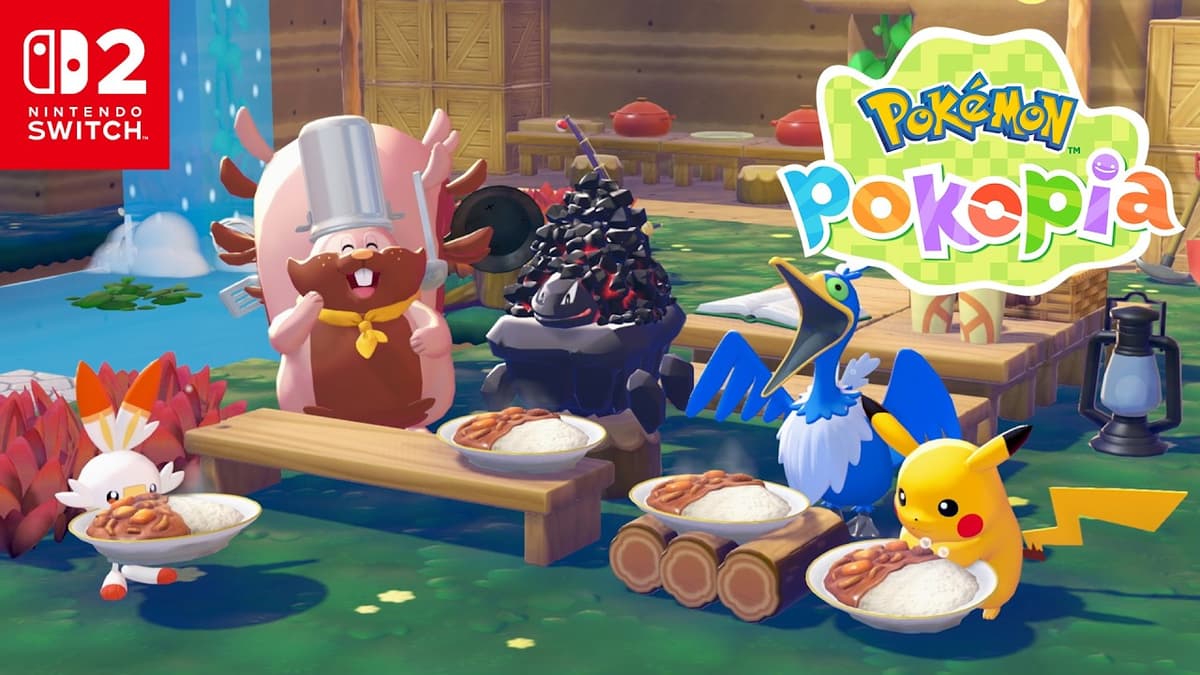
Pokémon Pokopia on Nintendo Switch 2 is the first time in years that a Pokémon spin-off has felt like its own full-size pillar, not just a side experiment. Instead of chasing gyms and battling trainers, you’re rebuilding a quiet, post-human world as a Ditto, one habitat and one town at a time. It leans hard into cozy, low-pressure play, but there’s a lot more going on under the surface than the pastel visuals suggest.
This review is based on extended play on a Switch 2 (mostly handheld, with some docked TV time) across two full islands and a good chunk of endgame collecting. I’ll break down what Pokémon Pokopia actually plays like, how it runs on hardware, and, most importantly, whether it’s worth your money depending on what kind of Pokémon player you are.
What Pokémon Pokopia Actually Is (and Isn’t)
If you go in expecting “mainline Pokémon but cozier,” you’ll bounce off Pokopia quickly. It’s much closer to Animal Crossing or Dragon Quest Builders than Pokémon Scarlet/Violet.
Core pitch in one sentence: a cozy town-building life sim where you collect Pokémon not to battle, but to build customized habitats and a living world together.
Key structural differences from mainline Pokémon:
- No traditional trainer battles. Combat is almost entirely gone; conflicts are solved via crafting, special field abilities, and habitat design.
- You play as a Ditto. Your “trainer” is a shape-shifter who mimics Pokémon skills (Rock Smash, Surf-equivalents, etc.) to interact with the world.
- Focus on long-term building, not linear progression. There’s a story with chapters, but most of your time is spent gathering, crafting, decorating, and optimizing islands.
- Pokémon are workers, neighbors, and puzzle pieces. Their species traits drive what they like, what they do, and how they interact with your builds.
If that sounds appealing, you’re exactly the target. If you mainly want min-maxed teams and online battles, Pokopia is very deliberately not that game.
The Gameplay Loop: A Day in Pokopia
Pokopia’s loop is deceptively simple, but it’s tuned to be “just one more day” addictive. A typical session for me went like this:
- Check what requests and research tasks are active.
- Visit resource spots (forests, mines, beaches) to gather materials.
- Craft furniture, tools, and habitat pieces back at town.
- Rearrange habitats to attract new Pokémon or improve existing ones’ happiness.
- Trigger little emergent scenes when Pokémon interact with your builds.
- Push the main story forward when a requirement threshold is met.
Habitats & Pokémon Behavior
The Habitat system is the backbone. Every Pokémon species has:
- Preferred terrain (forest, cave, coastal, etc.)
- Favorite items/furniture types (plants, toys, tools, structures)
- Interaction hooks (what they do with other Pokémon and objects)
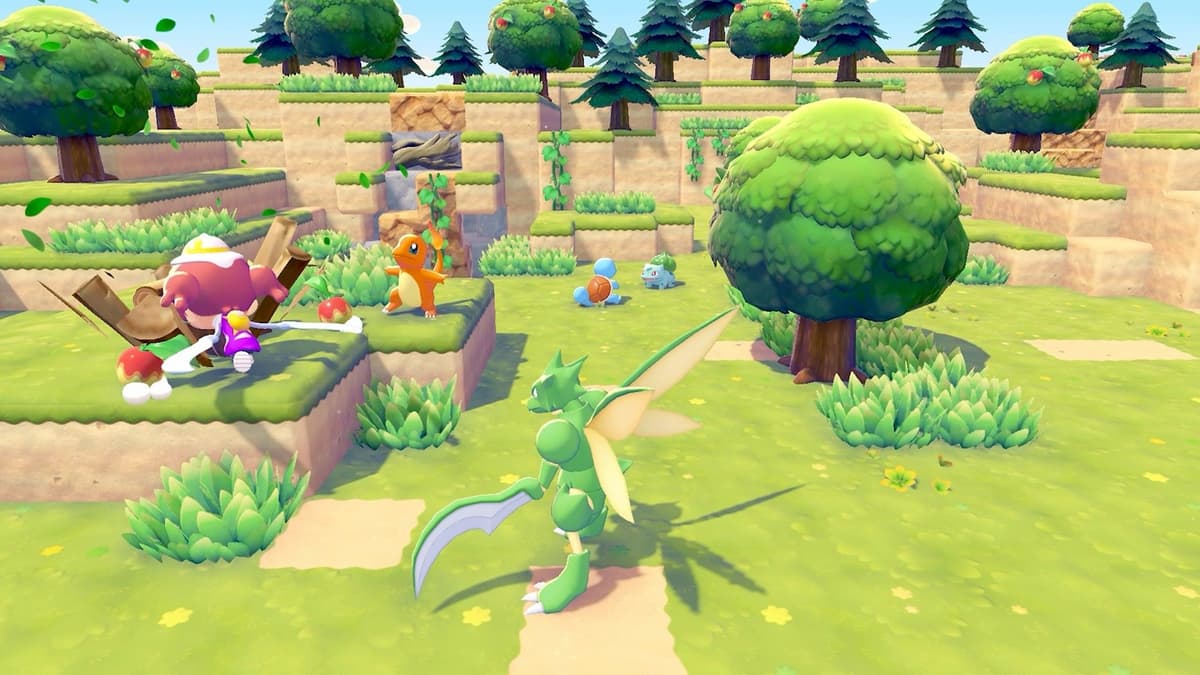
You lay out small diorama-like plots using blocks, plants, props, and special set pieces. When you get the mix right, specific Pokémon show up, start living there, and unlock new behaviors or resources. It feels closer to designing a puzzle than pure decorating: “What combination of water tiles, reeds, and rocky outcrops convinces this one stubborn Water-type to appear?”
Once several species share a habitat, you start seeing emergent interactions: a Grass-type tending a berry patch while a Normal-type naps under a crafted shelter, a Fire-type poking at your campfire and changing how the scene looks. These don’t radically change gameplay, but they’re the kind of detail that makes you stop and watch for a minute instead of sprinting to the next objective.
Crafting, Farming, and Building
Crafting is broad but streamlined. Recipes cover:
- Basic blocks and paths (wood, stone, sand, glass)
- Furniture and decor (benches, lanterns, playground gear, Pokémon-themed objects)
- Functional structures (workstations, storage units, farm plots, cooking gear)
On Switch 2, menus are snappy and logically grouped. Crafting runs off a simple “have materials, press craft” system rather than fiddly sub-menus. You do eventually hit the classic life-sim issue: storage and item bloat. Once I’d unlocked multiple islands, my storage tabs were packed with niche materials and one-off quest items. The game gives you ways to expand storage, but managing it can feel like low-grade admin work between the fun parts.
Building itself is powerful but occasionally fussy. You can raise/lower terrain, lay tiles, and stack blocks in multiple heights, letting you shape islands into cliffs, rivers, and multi-layered town centers. The trade-off is precision placement sometimes fights you-especially when trying to angle small objects or place blocks in tight spaces. Expect a bit of nudging the stick and rotating the camera to get that one lantern exactly where you want it.
Story, Chapters, and Progression
The narrative frame is a gentle, post-human world rebuilding tale. You and Professor Tangrowth (your main NPC partner) are reviving an archipelago after people have vanished. Each island acts as a distinct chapter with its own biome and thematic focus.
Progression is driven by:
- Town “development levels” based on how much you’ve built and how happy your Pokémon residents are.
- Research tasks (observe certain behaviors, complete Pokédex-style entries, build habitat types).
- Story quests that usually ask for a mix of crafted items, habitat setups, and exploration.
There is some time-gating and waiting. Certain buildings or processes take in-game time to complete, and a few story beats won’t trigger until the next day cycle. If you enjoy checking in for a relaxed hour every evening, that pacing works. If you want to binge eight hours straight of constant “ding, next unlock,” the waits can feel like friction.
Performance and Controls on Nintendo Switch 2
Technically, Pokémon Pokopia is one of the smoother Pokémon-adjacent titles on Nintendo hardware.
- Frame rate: It targets (and generally hits) 60 FPS on Switch 2. Even with busy towns full of active Pokémon, I only noticed brief drops when loading into new regions.
- Visuals: Clean, bright, and stylized-think “console-quality cozy mobile game” in the best way. Text readability is solid in handheld.
- Loading times: This is one of the few consistent complaints. Moving between large zones triggers noticeable loads. They’re not brutal, but when you’re bouncing between islands or interior spaces a lot, they add up.
Controls are mostly intuitive:
- Exploration uses standard third-person movement and camera controls.
- Building mode switches to a grid / cursor system; you use the sticks to move a reticle and triggers to raise/lower or rotate pieces.
- Tool actions (like a Rock Smash analog) are mapped cleanly, but aiming can be finicky in tight spaces or at odd angles, leading to the occasional whiffed action or mis-placed block.
Handheld play is where Pokopia shines. The soundtrack, clean UI, and “one more task” structure feel perfect for curling up on a couch. Docked on a TV, the visuals upscale adequately, but this clearly feels built first with handheld in mind.
A quick note on search confusion: a lot of people type “pokémon pokopia switch 1” when hunting for info. Pokopia is built for Nintendo Switch 2; this review reflects that version. If you’re still on original Switch hardware, you’ll want to double-check regional release details, because the experience described here assumes the Switch 2 performance profile.
How It Compares: Animal Crossing, Minecraft, and Mainline Pokémon
Most people trying to decide on Pokopia are really asking, “How does this stack up to Animal Crossing, Minecraft, or regular Pokémon?” The answer is: it borrows from all three but doesn’t fully replace any of them.
- Versus Animal Crossing: Pokopia is more objective-driven and systems-heavy. Where Animal Crossing is mostly about vibes, villagers, and decorating, Pokopia layers in puzzle-like habitat design and research tasks. Some players hoping for a 1:1 AC replacement have called it “overhyped” because it feels a bit more game-y and less purely chill.
- Versus Minecraft / Dragon Quest Builders: Pokopia’s terraforming and building tools are strong, but not as freeform as a pure block-builder. You’re limited to defined island maps rather than infinite seeds, and many elements are prefab furniture instead of raw blocks.
- Versus mainline Pokémon: This is almost a different genre. If team-building, battling, and competitive play are why you love Pokémon, Pokopia is a side dish, not a main course. What it does give you is a more intimate, “slice of life” relationship with the creatures themselves.
Think of Pokopia as a hybrid: a Pokémon-flavored life sim with enough depth to stand alone, but not a substitute for whichever of those three games you love most.
Strengths: Where Pokémon Pokopia Really Delivers
Across extended play, a few strengths kept standing out.
- Generous content and replayability. Between multiple islands, 200+ Pokémon, and a pile of collectibles, you easily get 30-40 hours from a casual run, and more if you chase perfect habitats and full research.
- Customization and self-expression. Character styling, materials, island layouts, and interior/exterior decoration all give you plenty of room to make spaces feel “yours.” Creatives will get hooked on tweaking little details.
- Low friction crafting/building. Compared to earlier Nintendo life sims, menu friction is minimal. It’s quick to craft batches of items, swap tools, and enter/exit building modes.
- Cozy presentation that respects your time. The game is unabashedly warm and comforting, but still gives you clear goals and a sense of forward motion so you don’t just drift.
- Multiplayer and shared spaces. Visiting others’ islands and seeing different build philosophies adds life to the late-game once your own layouts are mostly “done.”
Weaknesses and Annoyances You Should Know About
The weaknesses won’t ruin the game for most people, but they’re worth factoring into a buy decision.
- Waiting and time gates. Building timers, daily resets, and gated story beats can feel like padding if you’re in binge mode. Players who dislike any form of “come back tomorrow” pacing may get impatient.
- Storage and item management. As your catalog expands, sorting and remembering what you own becomes a chore. The UI is functional but doesn’t fully solve the busywork of a large inventory.
- Fiddly precision in building. Block placement, small-object positioning, and some environmental actions (like smashing narrow rock clusters) occasionally fight the controls, especially with analog sticks only.
- Loading between areas. While performance in areas is solid, the transition loads between islands or dense regions slightly break the flow of rapid hopping around.
- Not enough “Animal Crossing” for some. If you mainly want villager-style personality drama and heavy social sim elements, Pokopia can feel a bit more mechanical and goal-driven by comparison.
Who Should Buy Pokémon Pokopia on Switch 2
Because Pokopia targets a specific niche, it helps to be blunt about who it suits.
Strong Buy If You Are:
- A cozy game fan who likes having clear goals. If you enjoyed Animal Crossing but sometimes wished it gave you more structured objectives, Pokopia lands in that sweet spot.
- A creative builder. Players who love laying out towns, optimizing space, and creating themed areas will get a ton of satisfaction from the Habitat and terraforming systems.
- A long-time Pokémon fan who cares about the creatures more than battles. If your joy comes from seeing Pokémon live, work, and play in believable spaces, this spin-off is essentially built for you.
- Someone looking for a low-stress mainstay game. Pokopia works very well as a “between big releases” anchor title you keep coming back to for a few in-game days at a time.
Probably Skip or Wait for a Sale If You Are:
- Primarily a competitive battler. There’s effectively no traditional battling here. You’re paying full price for a different genre.
- Impatient with timers and slow-build games. If you dislike progression that unfolds over many sessions, Pokopia’s pacing may feel like dragging your feet.
- Buying just one full-price game for a long stretch. In that situation, many players will get more mileage from a massive RPG or a game with deeper mechanical mastery, unless cozy building is exactly what you want.
- Expecting Animal Crossing-level villager depth. Pokémon have personality through animations and behaviors, but they’re not written like chatty villagers with evolving dialogue arcs.
Value for Money and Longevity
On pure hours-per-dollar, Pokopia is strong. A focused run through the main islands and core story easily lands in the 30-40 hour range, and that’s without obsessively optimizing every habitat or grinding for full completion. If you fall in love with the building side, you can double that time across experimentation, redesigns, and multiplayer inspiration.
Crucially, the game feels content-complete at launch. There’s no sense you’re buying into a half-finished framework waiting on patches or DLC to become worthwhile. Future updates or content drops would be icing, not structural fixes.
Where the value question becomes more nuanced is opportunity cost. If your library is thin and you want a single tentpole experience with deep mechanical combat or story complexity, Pokopia is more of a comfort food choice. But as part of a broader Switch 2 lineup-especially if you already have or are eyeing other cozy titles—it’s a very strong addition.
FinalBoss // Gear
Level up your setup
01Best-selling Switch 2 gameson Amazon→02Switch 2 accessorieson Amazon→038BitDo controllerson Amazon→04Discounted game keyson Kinguin→Affiliate links · As an Amazon Associate, FinalBoss earns from qualifying purchases.
Want to Level Up Your Gaming?
Get access to exclusive strategies, hidden tips, and pro-level insights that we don't share publicly.
Ultimate Guide Strategy Guide + Weekly Pro Tips