
Table of Contents (8)
Landing in Pokopia: My first night with the Switch 2’s big digital-only Pokémon game
The first thing that hit me about Pokémon Pokopia wasn’t a flashy cutscene or some wild new battle gimmick. It was silence.
I started it up on my Switch 2 late at night, lights off, headphones on, expecting the usual fanfare: rival introduction, big stadium battle, the traditional “you’re the chosen kid, here’s a starter, go conquer the world.” Instead, Pokopia quietly handed me a half-built sanctuary, a chunk of land, and a simple pitch: this is supposed to be a paradise for Pokémon. Try not to screw it up.
Within the first 30 minutes, I realized this wasn’t another side game chasing the competitive itch. Pokopia is obsessed with Pokémon as living creatures, not weapons or trophies. You’re exploring, observing, and building actual spaces for them to live in, not just grinding for better stats.
It also reminded me that we’re firmly in the digital-only era for some Nintendo releases. Pokopia launched as a download-only title, and at around 6GB it slotted neatly onto my 1TB microSD Express card. Load times do run noticeably long between major areas (you feel the game streaming in all that habitat detail), but that slower pacing strangely matches the chilled-out vibe. This is a game that’s happy to let you breathe.
What kind of game is Pokémon Pokopia, really?
Pokopia is an exploration-focused spin-off with a strong management and customization layer built around “habitats.” Imagine someone took the environmental storytelling of New Pokémon Snap, mixed it with a low-stress management sim, and then removed almost all the pressure. That’s the headspace this game lives in.
The core loop in my first ten hours shook out like this:
- Head out into a semi-open zone, wandering trails, caves, and beaches.
- Observe Pokémon behaviors, collect items, and complete light quests tied to the ecosystem.
- Unlock or expand habitats back at your sanctuary based on what you’ve learned.
- Invite Pokémon to live in those spaces and tweak layouts so they’re actually happy there.
- Watch new interactions and behaviors unlock as you improve their homes, which in turn opens up new exploration opportunities.
There is progression, but it’s tied to understanding and caring for the world more than raw power. Instead of grinding levels to steamroll gyms, you’re nudged to notice things like, “This Water-type keeps hanging around the rocky pools instead of the big lake… maybe I should build something that caters to that.”
After about five hours, Pokopia clicked into this incredibly satisfying feedback loop. Fix up a habitat, and suddenly a new species starts appearing out in the wild. Learn how that species behaves, and you’ll be given new tools or structure types for the sanctuary. It’s slow-burn progression, but it always felt like I was earning things by paying attention, not just ticking off a checklist.
Exploring Pokopia: gentle, curious, and surprisingly absorbing
Most of my time in Pokémon Pokopia was spent just… wandering.
The exploration areas aren’t massive in the “open-world” sense – don’t expect a full Scarlet/Violet-style sprawl – but they’re dense in a way that feels intentionally designed rather than procedurally bloated. I kept finding little side paths that looped back to earlier spots, or vantage points that made me rethink how certain Pokémon were moving around the environment.
Pokopia nudges you to slow down through how it handles discovery. Pokémon aren’t just idling in obvious clusters waiting to be farmed; they’ll wander, hide, interact with the terrain, and sometimes bolt the second you barrel toward them. My best finds came from hanging back, watching patterns, and then approaching carefully once I’d figured out what they seemed to like or avoid.
One early moment that sold me: I kept seeing a nervous Psychic-type flicker in for a few seconds near a cliff edge at dusk, then vanish as I ran up. I initially wrote it off as a scripted tease. Later, after building a calmer, quieter habitat back home and placing some matching features, that same species started sticking around longer in the wild. When I returned to that cliff at the same time of day, it finally let me get close enough to interact properly.
Nothing about that sequence was loud or dramatic, but it made me feel like the world noticed what I was doing back in the sanctuary. That illusion is powerful, and Pokopia leans into it constantly.
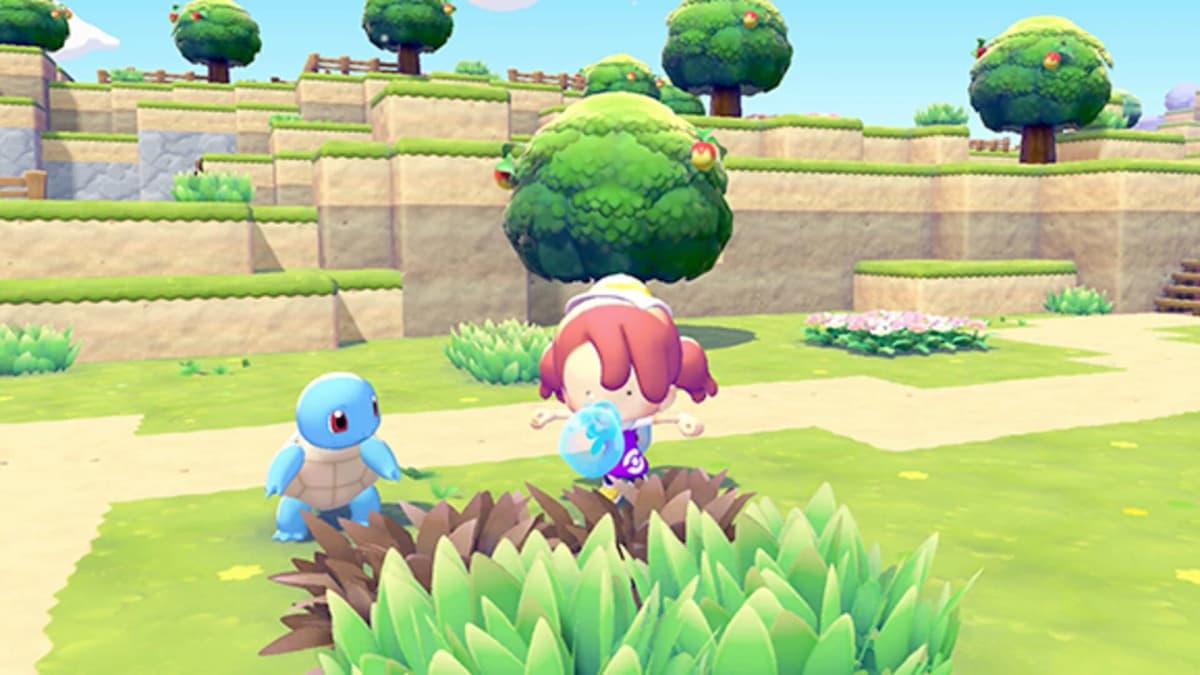
Habitat building: Pokémon as residents, not stat blocks
If exploration is where you gather information, habitats are where you act on it. This is the real heart of Pokémon Pokopia.
Your sanctuary starts small – a few basic plots, some type-themed decorations, and a barebones layout. Over time, you unlock new “biomes” to build within: forests, wetlands, rocky outcrops, cozy indoor spaces, that sort of thing. Within each, you place features and structures that different Pokémon respond to. Some are obvious (Water-types like, well, water), but others are more about personality than type matchup.
There’s a light resource-management layer to it – you can’t just spam every cool thing you’ve unlocked in a single pen and call it a day – but it’s never harsh. Mistakes usually mean your residents move around, act bored, or refuse to settle, not that you’ve permanently ruined anything. Rearranging a space to finally make a picky Pokémon comfortable was weirdly as satisfying to me as nailing a perfect turn in a traditional battle.
The game tracks “harmony” or happiness in ways that feed back into progression. Happier Pokémon unlock new behaviors, new interactions with each other, and sometimes new exploration hooks. I had one pair of residents that refused to share a space peacefully; after splitting their habitat and giving each their own tailored area, a new cooperative behavior unlocked that I could only see when they met up outside in the wild.
It’s not a hardcore sim – you’re not juggling food meters or bathroom breaks – but it does a great job of selling the fantasy of running a living sanctuary, not a glorified storage box. After about 20 hours, I realized I cared more about tweaking my habitats so they felt right than I did about filling out a traditional Pokédex checklist.
What Pokopia does better than most Pokémon games
Pokopia quietly fixes one of my long-running gripes with the franchise: how little the games usually care about what Pokémon actually do when they’re not fighting.
Mainline entries have dabbled with this – camp interactions, picnic systems, partner Pokémon that follow you around – but it’s always felt like an optional extra bolted onto a combat-first structure. In Pokopia, non-combat behavior is the entire point. Every system supports the idea that these creatures have preferences, routines, and social lives, and you’re there to facilitate rather than dominate.
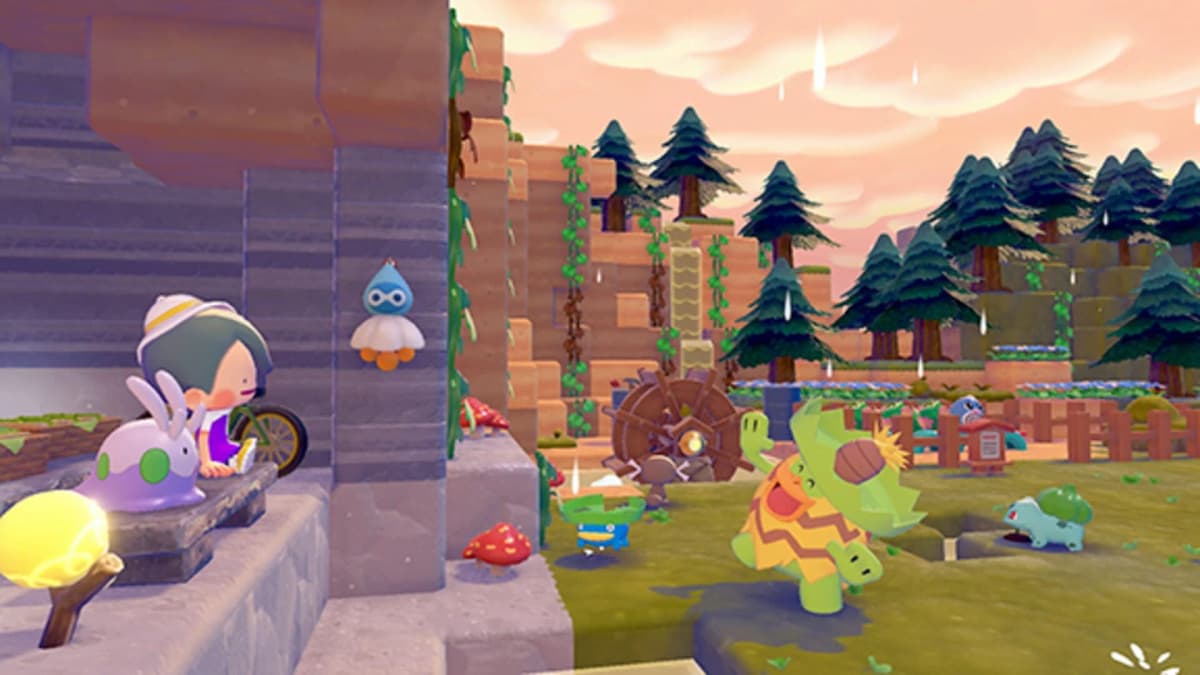
The game is also refreshingly light on busywork. There are quests and objectives, sure, but they’re more like gentle nudges toward interesting behaviors than rigid checklists. Instead of “catch five of X,” you’ll get prompts to “find out why this Pokémon keeps moving territories” or “create a space that encourages these two types to coexist.” It pushes you toward experiments over grind.
The replay value is real, too. Because so much of the experience is about how you choose to shape your sanctuary, I found myself restarting sections just to test different “themes” – a zone focused on Flying-types with vertical traversal, or a moody nocturnal area where only certain residents come alive. The structure supports that kind of tinkering without punishing you for not min-maxing everything on the first try.
Visuals, sound, and Switch 2 performance
On the Switch 2, Pokémon Pokopia feels like a small but meaningful visual step up from the series’ recent history. It’s not suddenly a graphical showpiece in the broader console landscape, but character models and animations have a level of detail that matches the game’s focus on observation.
Little touches stood out: idle animations that change depending on the habitat layout, different movement behaviors in rain versus sun, and small group interactions that only trigger when you’ve built the right kind of shared space. It all goes a long way toward making the sanctuary feel alive.
Performance in handheld mode was mostly smooth during my week with the game. I noticed the occasional hitch when a habitat was packed with residents and animated set pieces, but it never spiraled into the kind of slideshow we’ve seen in some past Pokémon releases. The Switch 2’s extra muscle is clearly helping here.
The tradeoff is load times. Booting from the Switch 2 user screen into Pokopia’s main menu routinely took around half a minute for me, and moving between large areas can trigger another lengthy pause. Running it from a fast microSD Express card brought those times very close to the internal storage, sometimes even a hair faster, but you’re still going to feel those transitions if you’re bouncing between zones rapidly.
Audio-wise, the soundtrack leans into soft, almost meditative themes – lots of gentle strings, woodwinds, and environmental ambience. Habitat areas each have their own subtle variations, and the music often dials back to let rustling grass, water, or distant calls take over. It fits the slow, observational pace beautifully.
Where Pokémon Pokopia stumbles
As much as I ended up loving Pokopia, it’s not a flawless sanctuary.
The most obvious friction point is pacing. If you come in expecting a fast, objective-driven adventure with frequent battles, you’re going to bounce off this pretty quickly. The game is happy to let you wander in circles, and some progression gates can feel opaque if you’re not used to systems that reward observation over checklist completion.
A few early tutorials also fall into that classic Nintendo trap of over-explaining the obvious and under-explaining the important. I spent too long not realizing how certain habitat features subtly boosted harmony for specific temperaments because the game buried that info in a throwaway tooltip. Once I figured it out, the whole thing opened up, but there’s a slightly clumsy learning curve there.
Then there’s the UI. Managing multiple habitats with dozens of residents can get cluttered, especially when you’re trying to diagnose why one area’s mood keeps dipping. The game gives you charts and indicators, but tabbing between them isn’t as smooth or intuitive as it should be. Over a long session, I definitely felt the friction of a menu system that wasn’t quite built for heavy-duty sanctuary micromanagement.
Finally, while I appreciated the lack of forced combat, part of me missed the option to occasionally test these residents in more traditional challenges. There are a few light, non-lethal activities that scratch the itch a bit, but if you live for tight battle systems, you’ll probably feel underfed.
Who Pokémon Pokopia is really for
Pokopia feels tailor-made for a very specific type of Pokémon fan:
- People who obsess over where their team would live, not just how hard they hit.
- Players who loved the observational side of Pokémon Snap or Legends: Arceus.
- Cozy-game fans who want something gentler than ranked battles but meatier than a pure idle sim.
- Switch 2 owners who are happy sinking dozens of hours into a single “forever” game.
If your favorite thing about Pokémon is competitive battling, min-maxing IVs, or ladder climbing, Pokopia is more like a vacation from that life than a replacement. It doesn’t try to compete with mainline entries on that front, and it would be unfair to expect it to.
But if you’ve spent years wishing the franchise would take its creatures seriously as animals with needs, habitats, and social dynamics, this is the game that finally does it. I went in cautiously curious and came out thinking it might be my favorite Pokémon spin-off since the original Mystery Dungeon days, just in a very different emotional register.
FinalBoss // Gear
Level up your setup
01Best-selling Switch 2 gameson Amazon→02Switch 2 accessorieson Amazon→038BitDo controllerson Amazon→04Discounted game keyson Kinguin→
Affiliate links · As an Amazon Associate, FinalBoss earns from qualifying purchases.
Want to Level Up Your Gaming?
Get access to exclusive strategies, hidden tips, and pro-level insights that we don't share publicly.
Ultimate Reviews Strategy Guide + Weekly Pro Tips