
Table of Contents (10)
The Pokémon game that quietly asks, “What if the trainers never came back?”
Pokémon Pokopia shouldn’t work as well as it does. A combat-free, post-cataclysm Kanto where you play as a Ditto doing habitat restoration sounds like the kind of pitch that dies in a boardroom. Yet after roughly 25 hours on Switch 2, it’s the Pokémon game that’s stuck with me the most in years – not because it’s the biggest, but because it’s the most honest.
Instead of chasing gym badges or Legendary cutscenes, Pokopia hands you a ruined world, a bunch of sad and confused Pokémon, and basically asks: “So… what are you going to do about this?” It’s cozy in the way tending a community garden in a bombed-out city would be cozy – soft, hopeful, but with a constant whisper that something went seriously wrong before you got here.
If you’ve ever sunk 100 hours into Animal Crossing or lost weekends to Dragon Quest Builders 2, this is that same brand of time-evaporating comfort. But it wraps it in a surprisingly mature, post-human Kanto that made me, a grown-up Gen 1 kid, sit back more than once and go, “Oof. Okay, Pokémon, I see you.”
A ruined Kanto that still feels like coming home
The first 30 minutes set the tone hard. You wake up as a Ditto – literally a blob, no chosen one monologue – in a rusted-out facility that looks like Silph Co. after a few centuries of neglect. Professor Tangrowth, an overworked plant-typed AI assistant, explains that humans are gone, the environment collapsed, and Pokopia is a last-ditch program to restore what’s left of Kanto’s habitats.
Stepping outside that first bunker hit me in a weird nostalgic gut-punch. You can clearly recognize the shape of Kanto – forests where Viridian would have been, a broken skyline where Saffron used to stand – but everything’s smothered under sludge, weird crystalized blight, and toppled human infrastructure. Think less Fallout, more “Nausicaä of the Valley of the Wind if the Toxic Jungle was full of confused Pikachu.”
The magic trick is that Pokopia stays child-friendly without sanding off the melancholy. Tiny details do a lot of the heavy lifting. In one early zone I found a tilted playground half-swallowed by vines, with a rusted-out Poké Ball-themed slide. Tangrowth chirped about “recreational human enrichment devices,” while a group of Pidove quietly nested in the hollowed slide tunnel. There’s no dramatic cutscene here – you just stand there, listening to the wind, and the implication lands.
By the time I reached a drowned coastal area with billboard skeletons advertising old battle tournaments – basically Champions League posters for trainers who simply aren’t around anymore – I realized this game wasn’t just using the apocalypse as flavor. It’s genuinely asking what Pokémon look like in a world that humans pushed too far, then exited stage left.
Being Ditto, the builder, not the trainer
Pokopia’s smartest decision is taking humans off the board and putting you in the squishy shoes of a Ditto. You don’t catch Pokémon, you don’t order them around, and you don’t fight anything. Instead, you mimic, collaborate, and build alongside them.
Mechanically, Ditto is your Swiss Army knife. You learn moves from Pokémon you befriend, then use Transform to turn into them contextually. That Bulbasaur in your camp? Copy its Vine Whip to pull down dangerous hanging debris. Befriended a Sandshrew? Transform to tunnel through collapsed subway tunnels. Every move has a practical, environmental purpose rather than a battle animation, and that shift reframes the whole Pokédex as a toolbox instead of a roster of combat units.
There’s a light resource management layer via PP. Each move has a small PP bar that refills every in-game day or at specific restoration terminals, so you can’t just spam Surf to erase half the map’s sludge in one go. In practice, this system is there to pace building projects. On one hand, it kept me planning: “Okay, I’ll clear this patch with Squirtle today, then tomorrow I’ll use Oddish’s Sweet Scent to coax more grass-types into the area.” On the other, a few nights I found myself jogging back to a terminal purely because I’d spent Magmar’s last PP on melting some optional scrap metal pile I definitely didn’t need to touch.
This isn’t an action game, so don’t come in expecting precision platforming or tight combat. You’re on a gentle, slightly floaty third-person control scheme that’s tuned more for stacking blocks and tending berry patches than anything else. It’s closer to the feel of Dragon Quest Builders 2 than Minecraft: there’s a clear structure, NPC goals, and zone-specific objectives rather than pure sandbox anarchy.
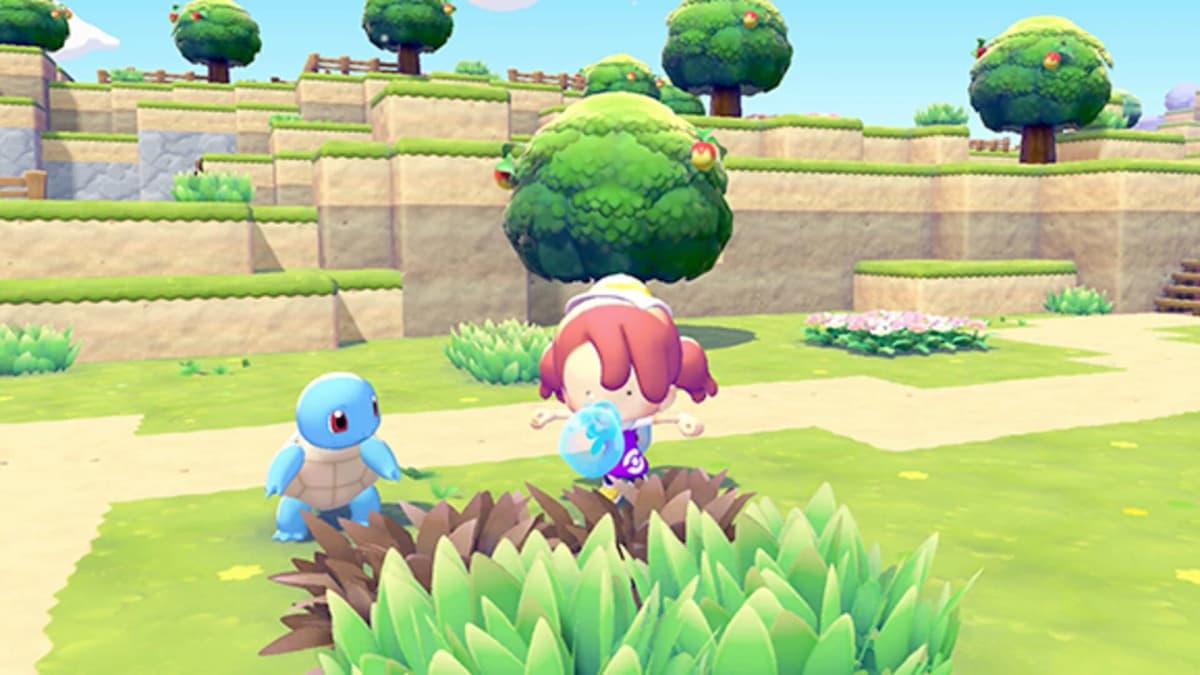
The restoration loop: part builder, part park ranger
The core loop scratches the same part of my brain that tidy-house TikToks and PowerWash Simulator do. Every major area starts out choked by some combination of pollution, dead soil, or human rubble. Professor Tangrowth boots up a big Habitat Panel that tracks different stats – Cleanliness, Biodiversity, Comfort, plus type-specific meters like “Grass Resonance” or “Water Flow.” Hit certain thresholds and new species start visiting or permanent residents decide to stay.
In practice, that means you’re constantly juggling a few simple questions:
- What junk can I clear to free up space and boost Cleanliness?
- What structures or flora do I need to place to attract the Pokémon this area “wants”?
- Which Pokémon do I need to befriend to unlock the next restoration trick?
One early forest zone wanted more shelter and verticality. The Habitat Panel hinted that bug-types would thrive if there were “canopies” and “hollow spaces.” That turned into a two-hour spiral where I built an elaborate multi-layer tree village out of reclaimed planks and leaf blocks, dotted with glowing fungi to act as natural lanterns. When a bedraggled Caterpie showed up, inspected one of the little nooks I’d carved into a trunk, then did a tiny hop and stayed, it was an unreasonably satisfying moment.
I had a completely different experience in a later industrial wasteland. Metallic shards and oil slicks everywhere, almost no plant life. Tangrowth nudged me toward “stabilization” – laying down sturdy rock and metal supports to stop further collapse before thinking about greenery. Here, getting a solitary Magnemite to accept my weird Franken-steel tower felt like a win on a totally different emotional wavelength.
Importantly, the game rarely barks orders at you. Each zone has a main objective – “restore this habitat to X rating,” uncover a piece of the mystery, that kind of thing – but the way you reach those numbers is loose. You can build tidy, almost-urban parks, or go full chaotic forest goblin. The system only cares about stats like shade coverage and water access, not whether your log cabin walls line up perfectly.
Crafting, building, and small storytelling moments
On the mechanical side, crafting sits right in the middle ground: deeper than Animal Crossing’s one-tap recipes, not as obsessive as something like Factorio. You salvage junk from ruins – broken bikes, rusted PC terminals, old vending machines – and break them down at workbenches into base materials. Those go into furniture, tools, decorative props, or new building blocks.
On paper, it’s standard stuff. In practice, Pokémon flavor keeps it fresh. A “water purifier” is actually a series of Slowpoke statues channeling run-off into a clean pond. A “power generator” is literally a bunch of Voltorb you’ve convinced to roll in a loop. One of my favorite little builds was a rooftop greenhouse powered by a squad of lazy Chikorita fanning sunlight through cracked skylights.
Pokémon requests tie everything together. Instead of villagers whining about a new sofa, they ask for things that reflect their species’ quirks. A Charmander I met during a sudden downpour asked, in its garbled text-bubble way, for “high place with roof, not too windy.” I slapped together an elevated lean-to with a chimney gap, guided it up there, and watched the little guy curl up under the cover while its tail flickered safely. That scene hit the same emotional chord as the old anime episode, except this time I wasn’t a passive viewer; my build solved the problem.
These tiny moments keep the grind from feeling like pure checklist work. Even simple stuff – laying a trail of lanterns so nocturnal Pokémon can safely reach a new pond, or arranging a cluster of berry planters so a group of Munchlax “commuters” develop an obvious daily routine – makes the world feel less like a set of numbers and more like a sanctuary you’re genuinely curating.
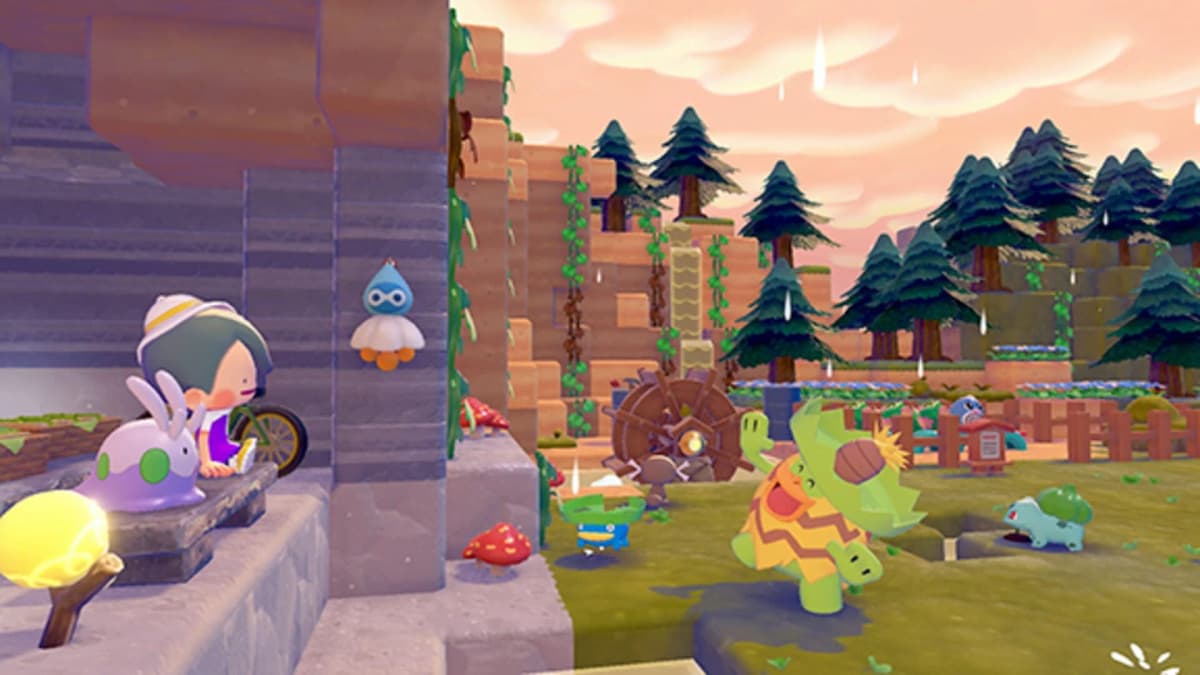
Quiet storytelling and a surprisingly heavy subtext
The overarching mystery of where the humans went stays deliberately vague for a long time. You’ll find old terminals with half-corrupted logs, museum exhibits talking about “record-breaking Trainer League attendance” right up until the data cuts off, and a few eerie AR-style projections showing packed cities under clear skies that no longer exist.
Pokopia never turns into a lecture, but it also doesn’t flinch from the obvious climate and overconsumption parallels. One mid-game area revolves around a derelict “eco resort” built as a PR stunt by a big corporation – complete with greenwashed slogans – that ended up accelerating the area’s collapse. Restoring it forces you to decide how much of that infrastructure you actually want to keep. Yes, the broken water slides look cool cleaned up, but they also disrupt a natural migration path. Tangrowth will happily chart both outcomes; the choice is on you.
The fact that this is all wrapped in bright colors, goofy Pokémon animations, and a completely battle-free experience makes it more, not less, effective. Kids can absolutely play and enjoy Pokopia as “cute building game with Pikachu.” Meanwhile, older fans will catch the very pointed question it keeps asking: if Pokémon’s world mirrors ours, what happens if we don’t change course?
Performance, visuals, and living with it on Switch 2
I played mostly on a Switch 2 OLED in handheld, with a handful of long docked sessions. Technically, this is one of the most stable Pokémon-adjacent releases we’ve had. Frame rate felt mostly locked at 60fps in smaller hubs and around 45–60 in my most ridiculous, object-packed builds. The only hitching I really noticed was when I spammed terrain edits over huge chunks of land, which is fair.
Visually, Pokopia leans hard into clean shapes and bold colors. This isn’t pushing photorealism; it’s more like a physical toy diorama. That art direction suits the block-building mechanics and hides hardware limits nicely. Water, in particular, looks great: polluted swamps slowly transition from muddy to crystalline as you cleanse them, and it’s genuinely satisfying to watch reflected light shift as your clean zones expand.
Audio deserves a nod too. The soundtrack dances between gentle lo-fi-esque tracks in safe hubs and slightly haunting, echoey motifs in ruined zones. When the music finally brightens in an area you’ve fully restored, it lands. Pokémon cries are used sparingly but effectively; hearing a Skrelp’s muffled call under dirty water before you’ve fully purified an inlet is the kind of small touch that nudged me to keep going.
Where Pokopia stumbles
For all my praise, living with the game for 25 hours did expose some rough edges – most of them UI and pacing quirks that will annoy different people to different degrees.
The inventory system is the biggest offender. You’re constantly juggling raw materials, crafted items, build blocks, and quest doodads in a grid that feels just a bit too tight. You can expand it over time, but early on I was bouncing back to storage boxes every 15–20 minutes. It’s not game-breaking, just friction you feel when you’re in a creative flow and suddenly get the “inventory full” pop-up for the third time in a row.
Building controls sit in that awkward middle ground between “simple enough for kids” and “precise enough for obsessives,” and occasionally manage to annoy both. The default auto-snapping is helpful for basic walls and floors, but when I tried to get fancy with diagonal roofs or cliffside balconies, I wrestled the camera more than I wanted. There are advanced options buried in a sub-menu – free cursor mode, vertical-only placement, that sort of thing – but the game doesn’t surface them early.
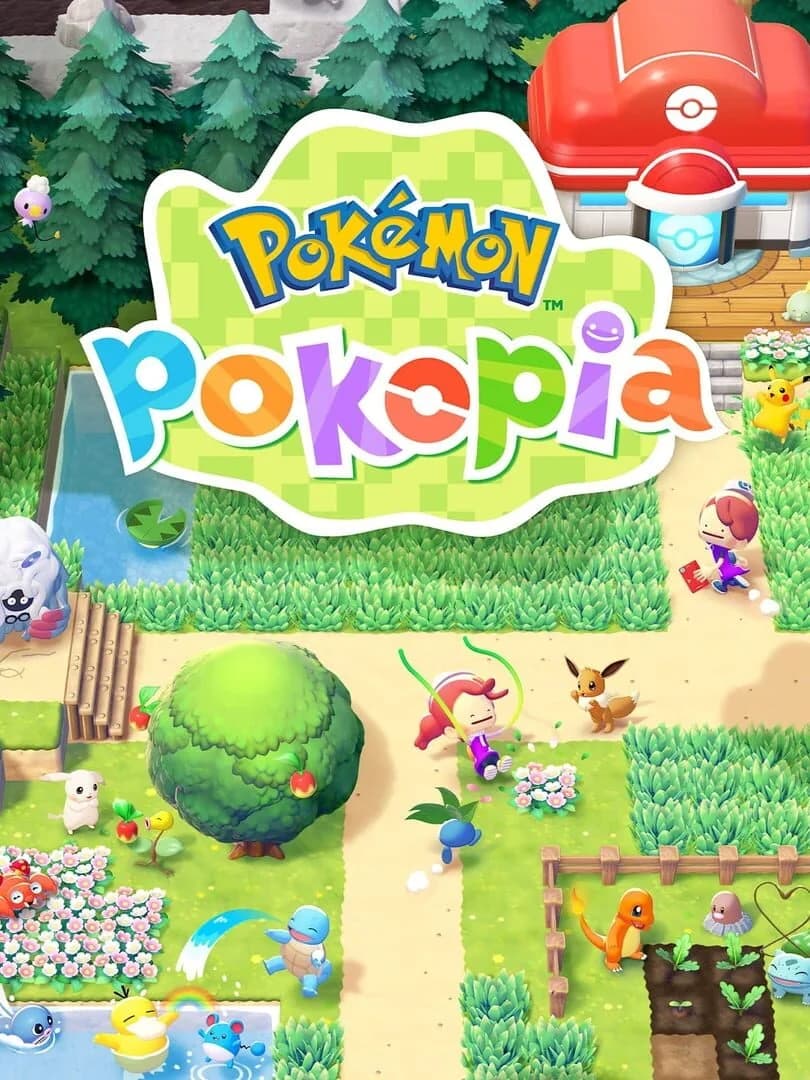
Structurally, there’s a stretch in the middle where the formula shows its seams. Two zones in a row lean hard on “raise the habitat rating to X, then watch a short story beat, then raise it again.” Because the actual tasks are fun, I didn’t mind much, but I definitely felt that familiar life-sim ennui creeping in around the 18-hour mark. The late-game areas shake things up again with more pronounced narrative choices and multi-layered habitats, which helped pull me through.
Who Pokopia is really for
This is not a replacement for the mainline RPGs, and it doesn’t try to be. If your favorite part of Pokémon is optimizing EVs or battling online, Pokopia will feel like a weird, gentle side alley. There is zero combat, very little traditional “challenge,” and your Pokédex fills at a relaxed, habitat-driven pace rather than aggressive catching sprees.
But if you’ve ever thought “I just want to hang out in this world with my favorite Pokémon and build a place for them,” this is basically that fantasy pulled into focus. It’s particularly tuned to:
- Lapsed fans from the Red/Blue or Gold/Silver era who bounced off the newer games’ pace but still care about the world
- Players who love chill building and life-sim loops more than grinding battles
- Parents looking for something their kids can play that isn’t saccharine fluff, but also isn’t traumatizing
As someone who grew up memorizing type charts on the playground and now spends workdays reading climate reports, Pokopia landed in an oddly perfect sweet spot. It acknowledged the anxiety humming in the background of adult life without giving up on warmth or forward momentum. I’d finish a long day, boot it up “just to check my habitats,” and look up two hours later after rearranging a communal kitchen for my camp’s Machop and Chansey like it was the most important thing in the world.
TL;DR – the grown-up Pokémon spin-off I didn’t know I wanted
- Cozy but heavy: A post-human Kanto that stays family-friendly while quietly hitting you with climate and responsibility themes.
- Brilliant premise: Playing as Ditto, copying moves for building and restoration instead of combat, makes old Pokémon feel new again.
- Addictive loop: Habitat stats, Pokémon requests, and zone objectives create that “one more task” spiral for hours.
- Strong presentation: Stable performance on Switch 2, clear art direction, and a soundtrack that supports the mood shifts.
- Rough edges: Clunky inventory, occasionally fussy building controls, and a slightly saggy mid-game stretch.
- Who should play: Builders, life-sim fans, and older Pokémon kids now facing adult worries; less ideal for battle-first players.
FinalBoss // Gear
Level up your setup
01Best-selling Switch 2 gameson Amazon→02Switch 2 accessorieson Amazon→038BitDo controllerson Amazon→04Discounted game keyson Kinguin→
Affiliate links · As an Amazon Associate, FinalBoss earns from qualifying purchases.
Want to Level Up Your Gaming?
Get access to exclusive strategies, hidden tips, and pro-level insights that we don't share publicly.
Ultimate Reviews Strategy Guide + Weekly Pro Tips