
Table of Contents (8)
The moment Pokopia punched me in the gut
I went into Pokopia fully expecting to bounce off it in two hours. That’s important context, because I’m the absolute worst audience for “cozy builder” games. Animal Crossing bored me to tears. Minecraft-style crafting loops usually feel like unpaid labor wrapped in pastel aesthetics. Fallout 4’s settlement system? I still think it derailed a perfectly good RPG just so someone could shout “player engagement” in a meeting.
So when I started Pokopia – a Pokémon spin-off where you play as a Ditto who builds habitats and little towns – I was ready to roll my eyes, do my critic homework, and move on. “Sure, it’s Pokémon meets Dragon Quest Builders, I get it,” I thought. Then the game quietly slipped a knife under my ribs: you’re a Ditto transforming into the memory of your old human trainer… in a Kanto where humans are gone, Pokémon are gone, and everything you remember about the world is basically extinct lore.
That’s when it clicked. Pokopia isn’t really about construction or min-maxing habitats. It’s about doing emotional archaeology on your own childhood with Pokémon as the artifacts. And that’s why it works – not in spite of its building systems, but because of them. This isn’t a Dragon Quest Builders 2 clone. It’s Builders’ melancholic heart transplanted into Pokémon’s nostalgia, and it hit me way harder than I was prepared for.
I’m tired of fake comfort games – Pokopia feels honestly sad
I’ve been playing Pokémon since Red and Blue on a chunky Game Boy that barely held a charge. I’ve done the whole journey: Link Cable battles on school trips, late-night Emerald marathons, getting irrationally angry at X/Y’s EXP Share. The franchise has always been comfort food for me. Even when the games stumble technically, the emotional tone is safe: bright colors, plucky kids, friendship solves everything.
Pokopia throws that away from minute one. You wake up as a Ditto who can barely remember its trainer. The Kanto you’re standing in is after everything we know. Those gym badges, the Elite Four, the rival battles, the legendary captures — it all happened long ago, and now it’s just dust and broken buildings. Humans are missing, nature is hollowed out, and even the Pokémon feel like ghosts of a happier world that slipped through your fingers.
It’s not horror. It’s something more uncomfortable: a quiet, heavy melancholy. Hironobu Sakaguchi once talked about how Japanese RPGs are built on a sort of gentle sadness, that bittersweet feeling beneath the heroism. Pokopia leans straight into that. It feels like waking up years after your childhood house has been demolished, wandering the empty lot, and trying to remember where your bedroom used to be.
And then, slowly, Pokémon start to appear. A lonely Charmander sheltering in a ruined shop. A Bulbasaur rooted in concrete where grass should be. They’re cute, obviously — it’s still Pokémon — but the context is brutal. These aren’t party members waiting to be caught. They’re survivors. You’re not their trainer. You’re the last thing in the world that remembers what love for them used to look like.
That’s the genius: your urge to build doesn’t come from a checklist or an achievement pop-up. It comes from guilt and empathy. Someone has to take care of them. If the humans are gone, if the joy is gone, if the world that raised you on Saturday morning anime is dead… then the least you can do is build these Pokémon a home.
Construction as grief work, not busywork
Most crafting games start from the same premise: here’s a plot of land, here are your tools, now chase efficiency. Better materials, faster crafting, prettier houses, more optimized layouts. The “why” of it all is usually paper-thin. You build because the game told you to, and if you ignore it, your punishment is missing out on content or buffs.
Pokopia flips that. Yes, mechanically it’s familiar: you gather materials, you unlock blueprints, you plonk down houses and habitats. Big projects want very specific stuff. One early bay restoration center, for example, asks for exact material counts — bricks, thread, the whole lot — and a minimum “environment level” before they’ll even let you start it. You assemble teams of up to eight Pokémon, each with specialties like Construction, Demolition, or area skills that speed up gathering and building. On paper, it’s absolutely a systems-driven builder.
But emotionally? It feels less like city planning and more like group therapy. These Charmanders and Pidgeys aren’t villagers from Animal Crossing who just want a cute sofa. Their requests have weight. When a Squirtle wants a house near water, it lands differently because the ocean it remembers isn’t there anymore. When a flying-type asks for open sky, you realize the island is literally suffocating under ruin until you carve away the wreckage.
And the kicker is that you, as Ditto, are in the same boat. You’re building not just to satisfy NPC needs, but to prove that this world — your world — can be something other than a graveyard for memories. It’s grief expressed in floor plans. Every completed building is a tiny refusal to let the past stay dead.
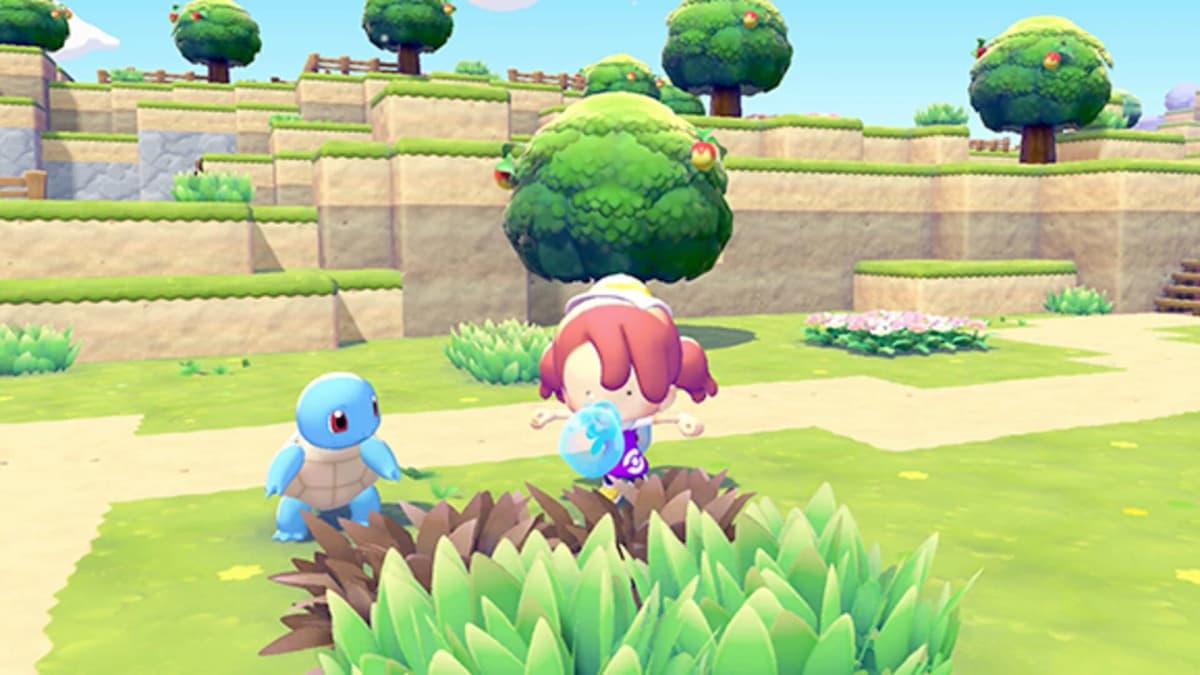
I can’t stress enough how much this matters if, like me, you usually hate this genre. I’m allergic to checklists for their own sake. But when I was laying out basic 2×2 houses or cobbling together the early Poké-centre kits with my limited funds, I wasn’t thinking “ugh, another fetch quest.” I was thinking: this is the least I can do for the things that raised me.
The Dragon Quest Builders 2 DNA is obvious — and that’s a compliment
Let’s address the Slime-shaped elephant in the room: Pokopia owes a huge debt to Dragon Quest Builders 2. I adored Builders 2. I’d go so far as to say it’s my favorite Dragon Quest game, mainline or not. And that’s coming from someone who usually rolls their eyes at spin-offs.
The brilliance of Builders 2 was never just “Dragon Quest, but Minecraft.” It was the tone. Dragon Quest games have always hidden something dark under their cheerful art. Builders 2 made that darkness explicit: the world’s broken, people are crushed by despair, and your goofy building projects are this completely earnest way of pushing back. You’re not just stacking blocks; you’re handing people a reason to get out of bed.
Pokopia takes that exact emotional structure and swaps villagers for Pokémon. Instead of an NPC saying “I need a bedroom,” you’ve got a traumatized Pikachu asking for a place that feels like the forest it lost. Instead of harvest festivals and bathhouses, you’re restoring habitats so that species can actually exist again. You’re still doing the same kind of optimization — placing buildings to maximize their effect, managing limited space, picking the right eight-Pokémon team to shave down construction time — but your heart is somewhere else entirely.
This is why I laugh when people dismiss Pokopia as a “Builders 2 reskin.” It’s absolutely a spiritual cousin, sure. The way big works finish after a real-time day, the material gating, the whole “return joy to a ruined world through creation” theme — all of that could sit comfortably in a Dragon Quest box. But Pokémon brings something to the table that Builders couldn’t: three decades of personal history sitting inside your chest.
I’ve met players who bounced off Builders 2 because they didn’t care about that universe. Swap in Pokémon, though? Suddenly every little detail — every reference to Kanto’s past, every visual nod to the old anime, every “Human Record” you find that hints at trainers long gone — lands like a punchline to a joke you’ve been living with since childhood.
Pokopia turns nostalgia into a building material
Pokopia doesn’t treat Pokémon lore as fanservice; it treats it as ruins. That’s a massive difference.
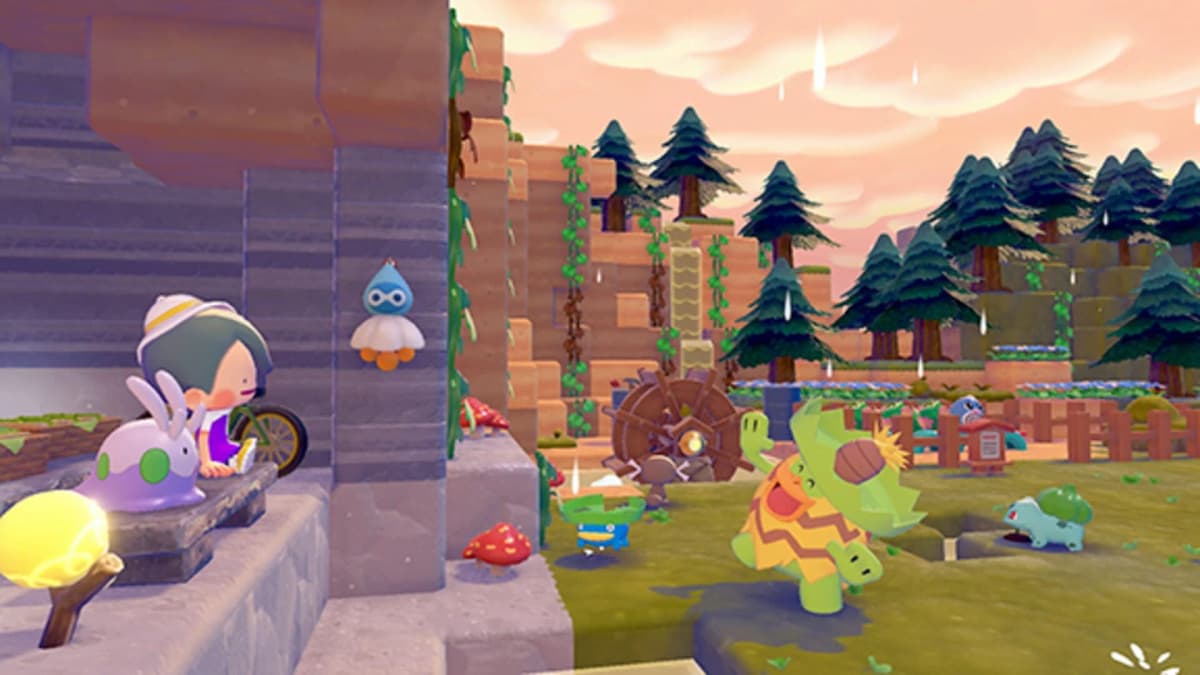
In a lesser game, the 30th anniversary vibe would just be endless winks: “Hey, remember this gym leader? Remember this route? Here’s that song again!” That’s how a lot of nostalgia projects work — like someone standing behind you, elbowing your ribs every few minutes going, “Remember when you were happy?”
Here, Kanto’s history is dig sites and data fragments. You collect “Human Records” that piece together what the world used to be like when trainers and Pokémon lived together. Old battles, iconic locations, tiny human moments — all reframed as relics of an extinct culture. Crucially, the game doesn’t just tell you “this is sad.” It makes you do something about it: build.
Every time you lay foundations for a new habitat, you’re basically saying: this mattered. My time with Red’s team, my first shiny, the friend I lost touch with after we traded Link Cables for smartphones — all of that is encoded in these creatures. When I build an absurdly cozy house for a single Eevee, I’m not thinking in hitboxes and pathfinding. I’m thinking about the hours I spent breeding Eevees in HeartGold just to get a team of my favorites for no good reason.
Pokopia’s smartest trick is that it makes you realize something quietly devastating: you’re not the kid in these stories anymore. You’re the caretaker. The person who shows up after the end of the anime, sweeps the rubble away, and tenderly preserves what’s left. Pokémon used to be your refuge from the adult world; now you’re the one building the refuge.
That’s why this hits harder than just “aww, remember Pikachu?” It’s not just referencing your memories — it’s asking you to accept that they’re over, and then inviting you to honour them anyway. For a 30th anniversary game, that’s one hell of a statement.
Yes, there’s a time-skip exploit — no, I didn’t use it, and here’s why
Because the game leans on real-time progression for some constructions and crops — big projects completing “the next day” instead of instantly — the community did what the community always does: it found a way to break it. There’s a now-widely-shared trick where you fiddle with your system clock so builds and harvests complete instantly. As of mid-March, it still works even if you switch the time back.
On any other game, I’d probably roll with it. Life’s short, backlog’s big, why not speed things up? But using that exploit in Pokopia feels like skipping through your own eulogy. The wait isn’t there to pad the runtime; it’s there to let what you’re doing sink in. You drop off the materials, assign your little eight-Pokémon crew, log off for the night… and you’re left thinking about why you’re rebuilding this bay or forest or town square.
The real-time delay syncs weirdly well with how nostalgia works. You don’t process it in an instant hit. It lingers. You walk away from the console and remember old episodes, old cartridge labels peeling off, the smell of that first handheld you owned. When you come back the next day and see the new building standing there, it feels like more than just a ticked box — it’s a little monument to whatever your brain dredged up in the meantime.
Could Nintendo eventually patch the exploit out? Maybe. Do they absolutely need to? Not really. If you want to blast through the game like a content checklist, go ahead. But I think you miss the point. Pokopia isn’t just tolerating your nostalgia; it’s asking you to sit with it. The waits are part of that.
This might be the game that sells you on a Switch 2
I’ve been playing Pokopia on Nintendo Switch, but it’s painfully obvious how much it was designed with Switch 2 in mind. The expanded sandbox, the number of moving parts, the precision of building placement — all of that benefits from the newer hardware. On Switch 2, the optional pointer-style controls for placing blocks and furniture solve one of my biggest issues with builders: the absolute agony of lining things up with clunky joysticks.
If you’re a lapsed Pokémon fan staring at the Switch 2 store page thinking, “Is this just another spin-off I’ll abandon in a weekend?” — this is probably the one you want. It’s relaxed, yes. You’re not grinding competitive ladders or breeding for perfect IVs. But it’s also not brainless comfort food. There’s a real story here, a gentle mystery about what happened to humans, and a sprawling island that slowly fills up with creatures you genuinely care about.
It’s not perfect. Late-game projects can tip into that familiar resource grind where you’re vacuuming up materials just to meet yet another demanding blueprint. If you’re allergic to repetition, you’ll feel it. But the difference is that in Pokopia, I didn’t feel insulted by the grind. I wasn’t doing it for cosmetics or some meta progression bar — I was doing it because I’d emotionally committed to seeing these Pokémon safe.
And if you’re into co-op, the fact that you can tackle parts of this world with friends on Switch 2 adds another layer. Sharing this kind of nostalgia project with someone who also grew up on the franchise? That’s not just good game design; that’s shared therapy.
So is Pokopia a Dragon Quest Builders 2 clone with a Pikachu skin?
No. It’s closer to the opposite: it feels like a Dragon Quest Builders spin-off that hijacked Pokémon for maximum emotional damage — and I mean that as a compliment.
Structurally, sure, the heritage is obvious. If you’ve played Builders 2, you’ll instantly recognize the rhythm of gathering, constructing, watching a community spring up, and slowly purging a poisoned land of its sadness. But the way Pokopia uses your actual history with the franchise — not as trivia, but as the emotional core of the whole thing — makes it something else entirely.
Honestly? In my head, Pokopia belongs on the same shelf as Builders 2, not next to the mainline Pokémon RPGs. And yeah, I’ll say it out loud: Builders 2 is still my favorite Dragon Quest, even if that makes purists grind their teeth. Those games understood that building isn’t compelling because of systems; it’s compelling because of who you’re building for. Pokopia just pushes that one step further and asks, “What if the ones you’re building for are also the ones that made you who you are?”
That’s why this thing won’t leave my head. Not because the crafting is flawless, not because the story is some mind-blowing epic, but because it managed to do something incredibly rare: it made me feel the passage of time in my own life while I was restoring a fictional island.
I started Pokopia expecting a chill distraction and walked away feeling like I’d just tucked my younger self’s Game Boy under a warm blanket and promised to keep it safe. Building shelters for these Pokémon isn’t just base construction — it’s archiving your own joy. It’s you, as an adult, picking up a hammer and saying, “What I loved as a kid deserved better than to fade away. I’m going to build a place for it to live.”
If that’s not the most honest way to celebrate Pokémon’s legacy, I don’t know what is.
FinalBoss // Gear
Level up your setup
01Best-selling Switch 2 gameson Amazon→02Switch 2 accessorieson Amazon→038BitDo controllerson Amazon→04Discounted game keyson Kinguin→Affiliate links · As an Amazon Associate, FinalBoss earns from qualifying purchases.
Want to Level Up Your Gaming?
Get access to exclusive strategies, hidden tips, and pro-level insights that we don't share publicly.
Ultimate Gaming Strategy Guide + Weekly Pro Tips