
Pragmata hitting gold should feel like a victory lap. Instead, it feels like the moment Capcom runs out of excuses.
After years of delays, apology artwork, and total radio silence, Capcom’s oddball sci-fi project has finally reached “development complete” status, with a confirmed launch on April 17, 2026. That’s a real date, not another “window”. Discs can be pressed, digital builds can be locked, and for once Pragmata is something more than a mood trailer from 2020.
But in a market that eats mid-budget narrative sci-fi for breakfast, the question isn’t “is it finished?” It’s whether there’s actually a game here that deserves all the oxygen Capcom has spent on it.
Table of Contents (8)
Key takeaways
- Capcom confirms Pragmata has gone gold and moved its release up to April 17, 2026, for PC, PS5, Xbox Series X/S, and Nintendo Switch 2.
- The demo’s tight mix of third-person shooting and real-time hacking is promising, but also makes you wonder how much the full game can escalate beyond it.
- A New York-inspired “AI aesthetic” level is clever PR in 2026, but risks turning the game into a gimmick if the rest of the worldbuilding can’t keep up.
- Launching on Switch 2 alongside stronger hardware is great for sales and rough for optimization; performance will be the first hard verdict on Capcom’s ambition.
Going gold isn’t the happy ending Capcom wants you to think it is
Capcom’s line is simple: Pragmata erreicht Gold-Status – Release am 17. April 2026. Translation: the game is “gold” (1.0 build locked) and nothing stands in the way of launch. On paper, that means production is done, QA has signed off on a shipping build, and manufacturing can start.
In 2026, “gone gold” really means “we’ve frozen something that will be patched the second you install it.” Push Square is already framing a day-one patch as a given, and they’re not wrong. That’s just how the industry works now. So don’t mistake “gold” for “bug-free” or “content-complete”; it just means the chaos is under control enough to print Blu-rays.
Still, it matters for this game. Pragmata was unveiled at the PS5 reveal back in 2020 as a next-gen-only enigma, then missed window after window. The 2023 delay came with that infamous hand-written apology art from in-game android Diana, practically memeing how off the rails the timeline had gone.
That’s the baggage “gold” is carrying here. It’s not just a production milestone; it’s Capcom publicly saying: we’re done restarting this thing. Whatever Pragmata is now, this is the version we’re all stuck with.
Capcom quietly nudging the release forward to April 17 from an originally floated April 24 date is interesting too. Publishers don’t move a date up unless QA is confident and marketing is locked. Either production really did land cleanly after all the drama, or Capcom wants to get ahead of something else in the April/May window before it eats all the conversation.
There’s an actual combat idea here, not just vibes
If you’ve touched the demo on PS5, Xbox, PC, or the Switch 2 test build, you know Pragmata isn’t just “Dead Space on the Moon with a child companion,” tempting as that comparison is from the original trailers.
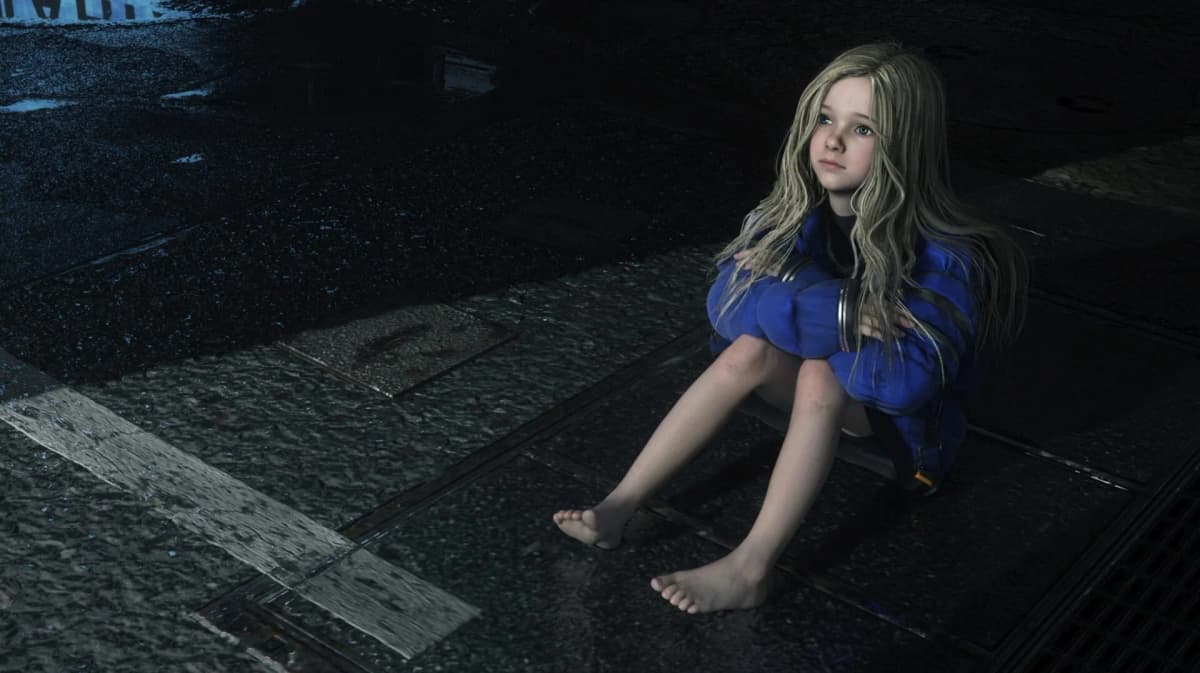
You’re playing as Hugh Williams, an astronaut type on a damaged lunar base, partnered with Diana, an android girl tied tightly into the game’s systems and story. The headline mechanic isn’t cover shooting-it’s a kind of real-time combat hacking layer that sits on top of the gunplay.
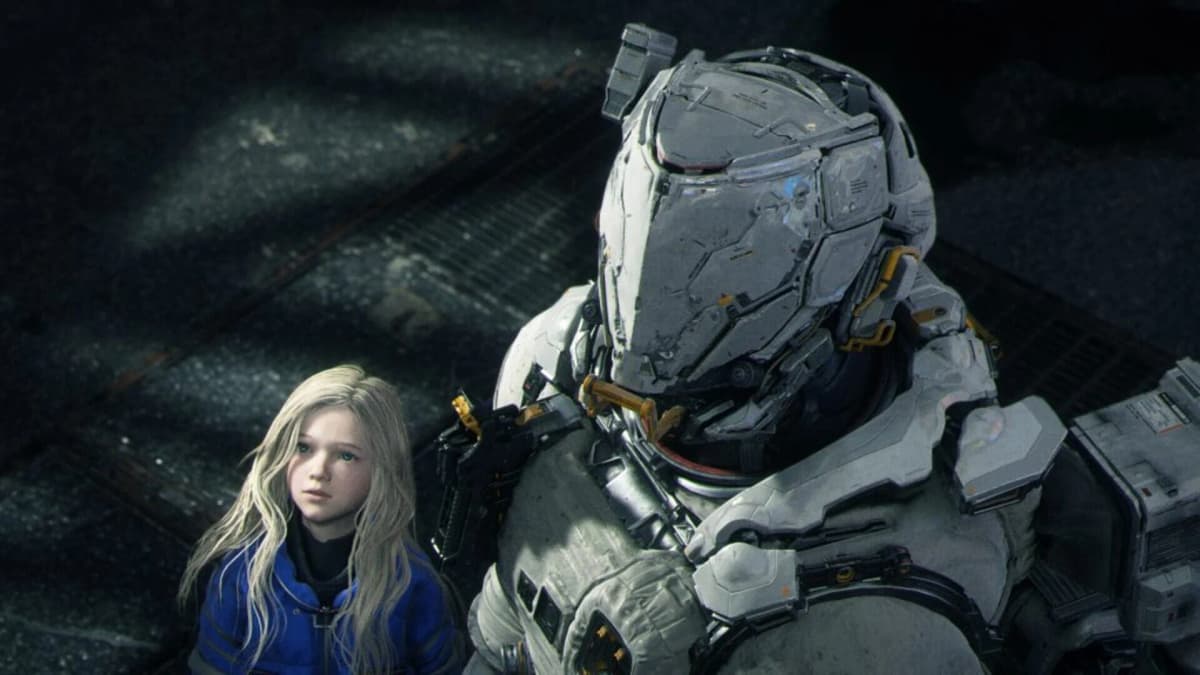
Capcom’s own breakdown (and the hands-on writeups from PC Games and Noisy Pixel) sketch a consistent picture:
- You’re moving and shooting in third-person while bringing up a cursor-based hacking panel mid-fight.
- Robotic enemies have armored segments that can be highlighted and stripped via quick hacks, exposing weak points.
- Diana handles bypasses, lockouts, and some environmental manipulation, while Hugh uses suit thrusters to cross gaps and reposition.
It’s a nice break from “shoot glowing weak spot” design. When it clicks, combat becomes a rhythm: tag armor, strip it, snap your aim to the exposed core, then use movement tools to stay ahead of the next wave. The demo proved that, at least in a controlled slice, the gun-hack synergy works and doesn’t feel like a tacked-on minigame.
The concern is scale. The demo’s encounters are tuned around a handful of enemy types and arenas built to flatter the system. The real game has to keep layering complexity-new enemy behaviors, overlapping hack priorities, environmental hazards-without turning every fight into UI overload. If you’ve played any action game that leans too hard on “scan and strip” mechanics, you know how fast that can become busywork if the designers run out of ideas.
If I had Capcom’s PR on the line, the first question would be: how far into the campaign does the demo’s toolkit represent? If this is essentially your combat ceiling, we’ve got a problem. If what we’ve seen is the floor, then Pragmata might actually have the systemic depth its marketing hints at.
The “AI-generated” New York level is clever – and a warning sign
One detail that jumped out of IGN’s coverage: Pragmata includes a New York-inspired level deliberately built to look like it was spat out by an AI model… without actually using AI generation.
Developers told Japanese outlet 4Gamer that the team studied AI glitches—taxis half-submerged in pavement, buses clipping out of building walls, small perspective errors—and then recreated that off-ness by hand. It’s meant to sell the idea of a synthetic, unstable reality without letting real AI tools anywhere near the art pipeline.
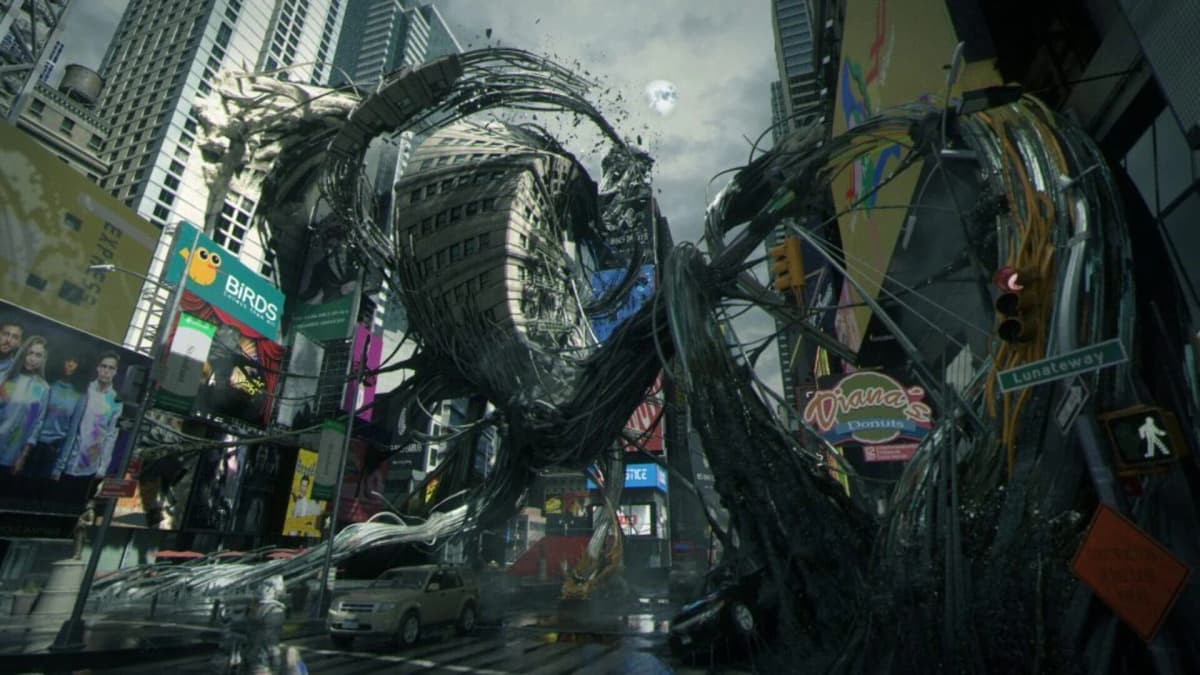
On one level, that’s a smart move. It taps straight into 2026’s anxiety about algorithmic junk content while letting the artists keep control. It also fits the broader theme Pragmata’s been flirting with from day one: fragile digital worlds, fake skies, bodies in the wrong gravity.
On another level, it feels like extremely convenient PR. In an industry that keeps trying to sneak AI into content pipelines, “don’t worry, our AI-looking level is actually hand-made” is engineered to win headlines and calm a very online subset of the audience.
The risk is simple: if the AI-aesthetic New York is the most interesting idea in the game, then Pragmata becomes “that AI level game” and nothing else. Great single-player sci-fi isn’t built on a single meme-ready concept. It needs consistency—worldbuilding, pacing, character work—that doesn’t evaporate once you pass the headline setpiece.
Capcom has been here before. Remember how much of Remember Me (developed by Dontnod, published by Capcom) lived and died on its memory remix gimmick? When the rest of the experience couldn’t match that high, the game sank. Pragmata is in similar danger: a strong hook, decent demo, and one very marketable level aren’t enough on their own.
Switch 2 support is a sales win and a tech headache
One of the more quietly important details in all this: Pragmata is launching not just on PS5, Xbox Series X/S, and PC, but on Nintendo Switch 2 as well.
Originally pitched as a “next-gen only” showcase, Pragmata now has to scale down to Nintendo’s hybrid hardware. Yes, Switch 2 is significantly more capable than the original, but it’s not magically on par with a PS5. That means compromises, and they tend to land in one of three places:
- Lower or less stable framerates
- Reduced environmental density and effects
- Cutback AI and physics complexity
If Capcom is smart, the Switch 2 version will target visual trims while keeping the core combat and level layouts intact. If they’re under the gun, the Switch 2 build becomes the baseline, and everything else is a prettier version of that. The gold master existing doesn’t guarantee we’re getting a true “designed around PS5/Series X” experience.
This is where going gold early can actually backfire. Once you lock content across four platforms, your room to address performance issues—especially on the weakest system—shrinks fast. Big systemic fixes become “maybe in a post-launch patch” instead of “let’s solve this now.”
The upside: launching on Switch 2 on day one dramatically widens Pragmata’s potential audience. For a brand-new IP with no built-in fanbase and an odd personality, that might be the difference between “cult favorite” and “remember that moon game Capcom did?”
Capcom’s track record cuts both ways
Capcom in the last decade has been two different companies at once.
On one side, you’ve got ruthlessly well-executed projects like Monster Hunter: World, the Resident Evil remakes, and Devil May Cry 5—games that land fully formed, mechanically sharp, and well-supported. On the other, you’ve got experiments that never quite land or get left to die, like Exoprimal or the publisher’s occasional attempts at live service.
Pragmata sits in the risky middle. It’s not a safe sequel, but it’s also not a cheap experiment. It’s a new IP with AAA production values in a genre that doesn’t have a monetization cushion. If it misses its first impression, there’s no GaaS tail to earn the investment back slowly.
The silver lining is that Capcom rarely ships completely broken single-player campaigns. Even the company’s B-tier releases usually function, which is more than you can say for some competitors in 2026. The question isn’t “will it run?” It’s “will it matter?”
Going gold and dropping a date answers the first half of the Pragmata story. The second half—whether this thing deserves to stand alongside Capcom’s modern heavy hitters—starts on April 17.
What to watch next
- Final pre-launch previews (next 1–2 weeks): If extended preview builds show new enemy types and hacking variants beyond the demo, that’s a good sign Capcom isn’t front-loading all its ideas.
- Performance reports on Switch 2 at launch (April 17–20): The Switch 2 version will expose whether the game was truly built for high-end hardware or quietly compromised down.
- Day-one patch notes: A small, focused patch is normal. A massive “fixes late-game performance, rebalances combat, and adjusts progression” monster would hint that gold was more about hitting the date than finishing the work.
- Player reaction to the AI-style New York level: If discourse fixates on that one stage and nothing else, Pragmata has a depth problem. If people are quoting story beats and late-game encounters instead, Capcom might have finally landed a new flagship IP.
TL;DR
Capcom’s long-delayed sci-fi shooter Pragmata has gone gold and is now locked for an April 17, 2026 release on PC, PS5, Xbox Series X/S, and Nintendo Switch 2. The demo’s mix of third-person shooting, real-time hacking, and a deliberately “AI-glitched” New York level shows there’s at least one strong idea in the box, but also raises the risk of the whole game leaning on a single gimmick. The real verdict will arrive with performance across platforms and whether the full campaign can build meaningfully on what the demo already laid out.
FinalBoss // Gear
Level up your setup
01Top-rated gaming headsetson Amazon→02High-refresh gaming monitorson Amazon→03Gaming chairson Amazon→04Discounted game keyson Kinguin→
Affiliate links · As an Amazon Associate, FinalBoss earns from qualifying purchases.
Want to Level Up Your Gaming?
Get access to exclusive strategies, hidden tips, and pro-level insights that we don't share publicly.
Ultimate Gaming Strategy Guide + Weekly Pro Tips