
Pragmata running on Switch 2 isn’t proof that Nintendo’s new hardware is secretly a PS5 in disguise. It’s proof that with DLSS doing overtime, publishers can squeeze ambitious current-gen games onto the hybrid – if you’re willing to accept softer lighting, stripped-back effects, and a frame rate that never really settles down.
Table of Contents (7)
Key takeaways
- Switch 2 leans on DLSS to reconstruct Pragmata from ~540p (docked) and ~360p (handheld) up to crisp-looking 1080p, but motion exposes shimmering and instability.
- Capcom keeps the core art direction intact, yet trims lighting, shadows, global illumination, textures, reflections and fancy hair to make the port feasible.
- Performance is unlocked and inconsistent: roughly 30-40fps in exterior areas and 50s indoors, with no performance or 30fps cap option to stabilize the experience.
- This is likely a best-case template for big third-party Switch 2 ports: technically impressive, genuinely playable, but always trading away visual fidelity and frame stability.
DLSS is carrying Pragmata – and showing its seams
The reason Pragmata is even possible on Switch 2 is simple: NVIDIA’s DLSS. The hardware supports two broad flavours – a more expensive, higher-quality model similar to what you see on PC, and a cut-down “Tiny” / “Lite” variant that’s far cheaper to run but less robust in motion.
Capcom is very obviously leaning into that lightweight route. Docked, Pragmata reportedly renders at around 540p internally and uses DLSS to upscale to 1080p. Handheld, the internal resolution can drop to the 360p range, still reconstructed toward the panel’s native output. On paper that sounds brutal, but here’s the twist: in static shots, it actually looks surprisingly good.
Pause the game, line up a screenshot, and Switch 2 Pragmata holds up better than a 540p buffer has any right to. DLSS’s neural reconstruction fills in detail, sharpens edges, and keeps the game recognisably the same sci-fi showpiece you see on PS5 – just with lower-grade lighting and materials. This is the part publishers will love to show in trailers and comparison stills.
The problem starts when you move the camera.
Lite DLSS is notorious for motion compromises, and Pragmata on Switch 2 ticks the usual boxes. Fast pans reveal disocclusion artifacts and a faint “crawl” on fine detail. Foliage and cables can “sizzle”, with thin geometry shimmering as it moves across the screen. Hard edges like railings and thin limbs show stair-stepping and flicker that simply isn’t there on the PS5 version rendering natively.
It’s not broken – it’s just the cost of asking a small SoC to fake a much higher resolution in real time. And it’s exactly the kind of compromise that’s going to define a lot of Switch 2 third-party ports. Still images and slow cinematic sweeps will sell the illusion. Actual gameplay, especially in busy scenes, will remind you what’s really going on under the hood.
If I had Capcom’s tech lead in front of me, the question would be simple: did you ever try the heavier DLSS model with a hard 30fps cap, or was Lite + unlocked frame rate the only way to keep the engine inside performance budgets? The answer would tell us a lot about how much genuine headroom this hardware actually has.
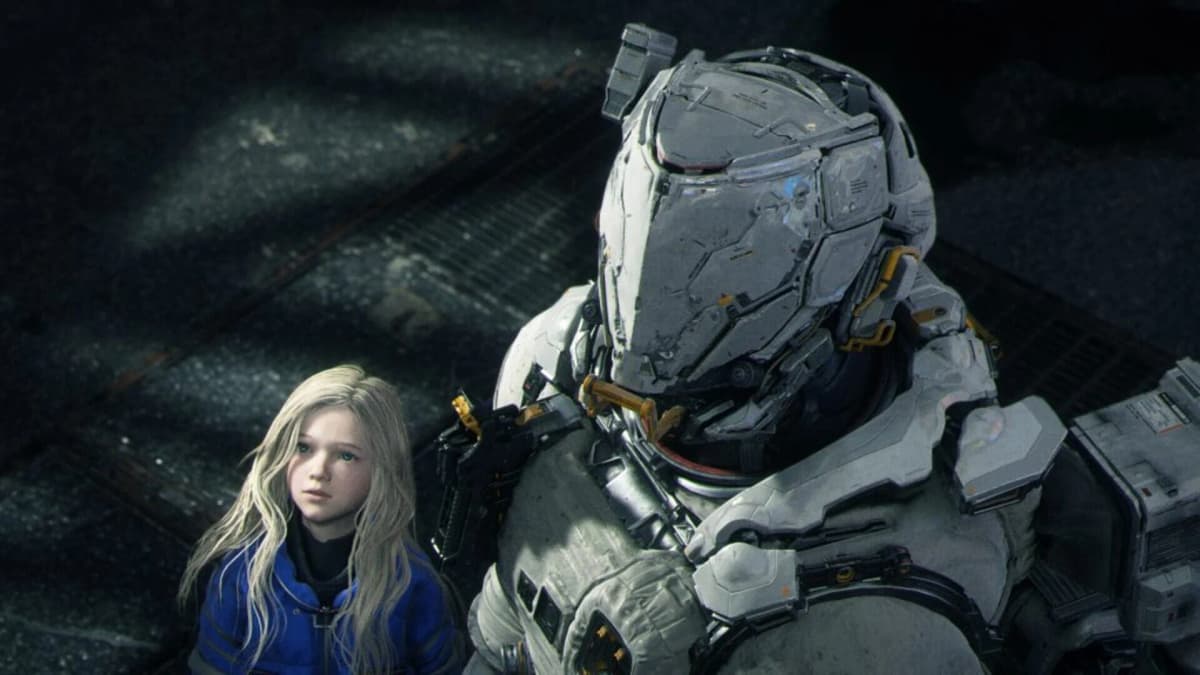
Capcom kept the game, but cut deep into the visuals
To their credit, Capcom didn’t ship a cloud version and call it a day. Pragmata on Switch 2 is the full game running natively under the new Aria Engine, not a streamed compromise. The core art direction, environment layout and general mood survive the trip.
The price is paid in almost every fancy rendering feature that made those original reveal trailers pop.
- Lighting and shadows: Dynamic lighting is simplified, shadow maps run at lower resolution, and contact shadows / ambient occlusion are dialed back. Scenes that look rich and volumetric on PS5 come across flatter and less grounded on Switch 2.
- Global illumination and reflections: The RT-assisted bounce lighting and specular nuances seen on high-end hardware are replaced with cheaper, more static solutions. Reflective surfaces lose their nuance, often falling back to screen-space or cubemap-style approximations.
- Textures and assets: Texture quality is pared down, especially on surfaces that used to show off high-frequency detail. Distant assets pop in sooner, and some geometry density appears reduced to keep memory and bandwidth in check.
- Hair and materials: The strand-based hair that served as a subtle flex for Capcom’s tech is simplified. You still get the broad silhouette, but a lot of the fine strand interaction and shading is gone.
This isn’t nitpicking. Put the Switch 2 version side-by-side with PS5 and, yes, the family resemblance is there – but so is the diet. It’s closer to the relationship between Series S and Series X than anything like a “same game, just at 30fps” story.
The good news: Capcom didn’t butcher the portfolio shots. Key story moments still communicate visually; the staging and composition carry a lot of weight. The bad news: once you’ve seen Pragmata on a machine that can push the full lighting stack at a locked 60, it’s hard to un-see how much has been peeled away to make it portable.
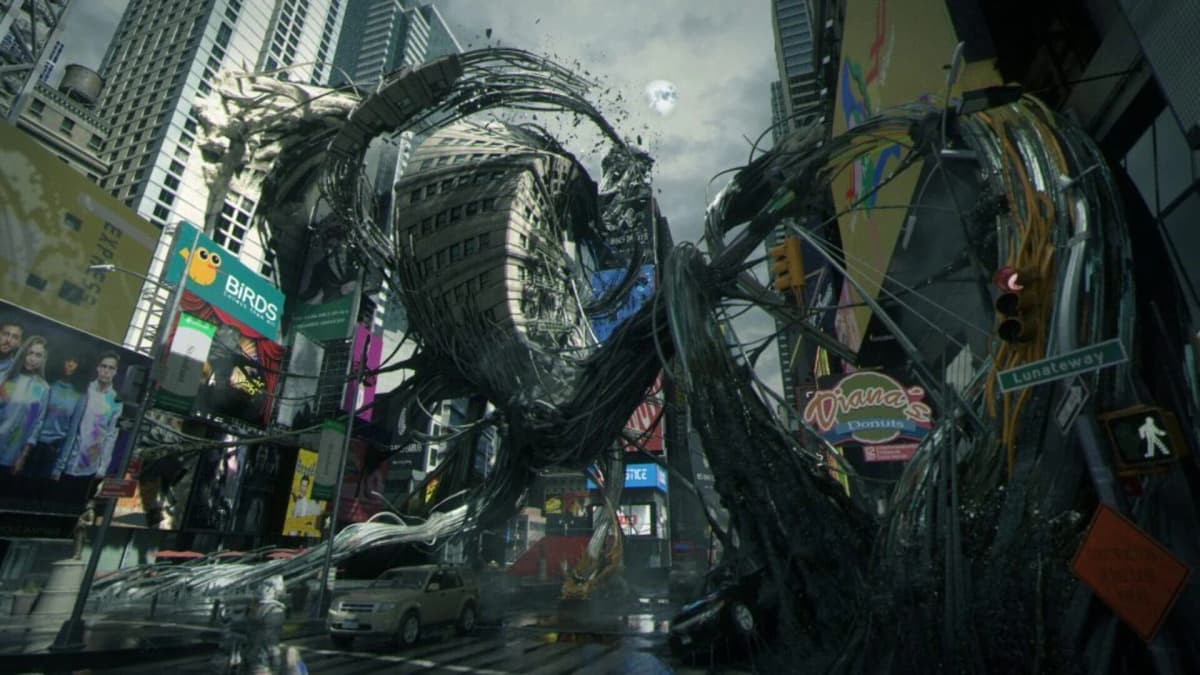
Performance is where the illusion actually breaks
The one thing DLSS can’t fix for Switch 2 Pragmata is the feeling that the frame rate is constantly trying – and failing – to climb a hill.
Capcom ships the port with an unlocked frame rate and no performance modes. Outdoor areas typically hover in the 30–40fps band, while indoor spaces sit more in the 50s. On paper that sounds fine; in practice, that constant fluctuation can feel worse than a flat 30fps cap.
You get that classic “is this smooth or not?” feeling moment to moment. Traversal sequences can feel decent when the engine climbs into the 40s, only for combat or heavy effects to yank it back down. Input latency and motion consistency are never truly stable, because the target isn’t fixed. On a high-refresh PC monitor, this kind of behaviour is annoying; on a handheld you’re holding inches from your eyes, it can be downright distracting.
Contrast that with PS5, where Pragmata runs at a locked 60fps in its standard mode and can layer ray tracing on top in a separate option. Even Xbox Series S – not exactly a powerhouse – manages something closer to a traditional 30/60 split, albeit with its own suite of compromises. Switch 2 ends up in an awkward middle ground, not cleanly in either camp.
This is the part the marketing will never highlight, but it’s arguably more important than any texture downgrade. Visual fidelity you can get used to. A frame rate that can’t decide what it wants to be is something you feel, all the time.
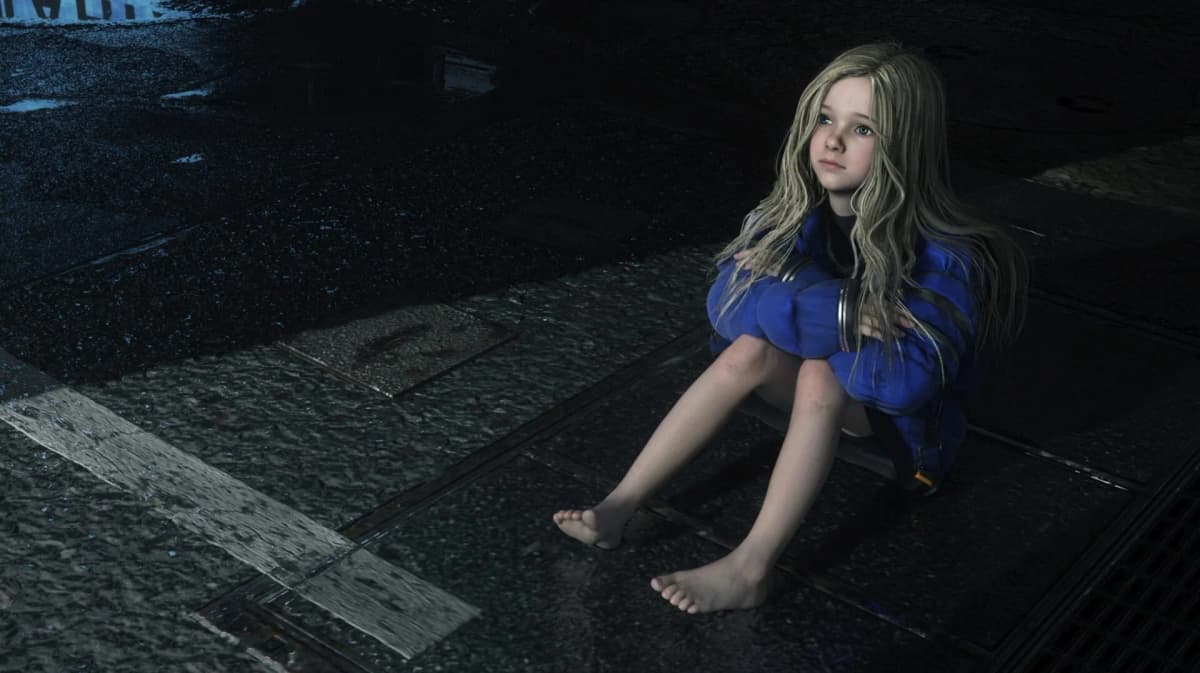
In 2026, with a new piece of hardware and a flagship third-party release, shipping an unlocked, unstable mode as the only option is a creative choice, not just a technical limitation. Capcom could have locked Pragmata at 30fps and reclaimed some headroom for better image stability or slightly higher internal resolution. They chose chase-the-ceiling instead.
What Pragmata really tells us about Switch 2’s third-party future
Strip away the “DLSS miracle” headlines and Pragmata sends a clear message: Switch 2 can run serious current-gen games natively, but at a cost that’s going to feel very familiar if you lived through the Doom/Witcher 3 era on the original Switch.
- DLSS is not a free 4K button. It buys Nintendo’s hybrid a huge amount of headroom, but when you’re reconstructing from 540p and 360p, you’re still going to see the reconstruction working, especially in motion-heavy games.
- Visual feature parity is gone out of the gate. If Capcom is dropping GI quality, reflections, high-end hair and lighting on day one, expect other big publishers to be at least this aggressive – if not more so – when they chase a Switch 2 SKU.
- Unlocked and unstable may become the default. If the first wave of ports prioritises unlocked frametimes over hard 30fps caps or dual-mode setups, we’re in for a generation of “30–50fps-ish” experiences that never quite feel as smooth as they look in screenshots.
- Portable context saves the pitch. Just like the original Switch, a lot of players will forgive these cuts because the game is in their hands, on a train, at 1080p docked or 720p handheld. That’s the trade you’re really making.
None of this makes Pragmata on Switch 2 a write-off. For a hybrid handheld, getting something this ambitious running at all – with no streaming, no absurd resolution like 360p native output on a TV – is impressive. But it’s also probably close to the ceiling for this kind of game on this hardware.
If you want the cleanest IQ, the full-fat lighting, and rock-solid 60fps, the message is still the same: buy it on PS5, Xbox Series X|S, or PC. If you want it portable and can live with reconstruction shimmer and frame wobble, Switch 2 offers a technically clever, visibly compromised alternative.
What to watch next
- Patch support: The big tell will be whether Capcom patches in a 30fps cap or a “Quality” mode with heavier DLSS and tighter performance. If they don’t, expect other publishers to feel no pressure to do so either.
- The next wave of ports: How games like Resident Evil, Monster Hunter, or big Western AAAs land on Switch 2 will confirm whether Pragmata is an outlier or the new normal for DLSS-driven ports.
- Nintendo’s own DLSS usage: First-party titles will show what the hardware can do when the engine is built for it from day one, rather than back-ported from PS5/Series X.
- Player tolerance: If Pragmata sells well and the complaints about instability stay niche, publishers will see that as a green light to keep pushing similarly aggressive targets.
TL;DR
Pragmata on Switch 2 uses DLSS to turn a brutally low internal resolution into a surprisingly sharp 1080p image, at the cost of motion artifacts and heavy visual cutbacks. The game remains fully playable, but an unlocked, fluctuating 30–50fps frame rate makes it feel less smooth than its stills suggest. If this is the template for third-party ports on Nintendo’s new hardware, expect technically clever, portable versions of big games that always trail the PS5 and Xbox builds in stability and visual punch.
FinalBoss // Gear
Level up your setup
01Best-selling Switch 2 gameson Amazon→02Switch 2 accessorieson Amazon→038BitDo controllerson Amazon→04Discounted game keyson Kinguin→Affiliate links · As an Amazon Associate, FinalBoss earns from qualifying purchases.
Want to Level Up Your Gaming?
Get access to exclusive strategies, hidden tips, and pro-level insights that we don't share publicly.
Ultimate Gaming Strategy Guide + Weekly Pro Tips