
Table of Contents (10)
Trying to shoot robots while solving puzzles in real time shouldn’t work… but it does
Within ten minutes of playing Pragmata, I realized I’d stopped blinking. My eyes were bouncing between a swarm of hostile robots in front of Hugh, and a bright little hacking maze tucked to the right side of the screen. My left thumb was dancing Hugh around incoming rockets; my right thumb was frantically tapping Diana through a grid of tiles to squeeze out just a bit more damage.
It felt wrong in the best way. Like trying to play a third-person shooter and a WarioWare microgame simultaneously, except this time the game is built entirely around that chaos instead of it being a goofy extra mode. Multitasking isn’t a gimmick in Pragmata – it is the combat loop.
Across a couple of hours with Capcom’s new sci‑fi action game, that constant split-focus became the thing that hooked me. The slice I played didn’t tell me much about the wider story or world beyond some intriguing glimpses of a broken lunar station mimicking Earth cities, but moment to moment, the combat clicked hard enough that I didn’t really mind. This is a hands-on preview based on that limited chunk, not a full review, but it already feels like Capcom has something special in how it makes you use your brain and fingers at the same time.
How the Hugh & Diana tag-team actually works
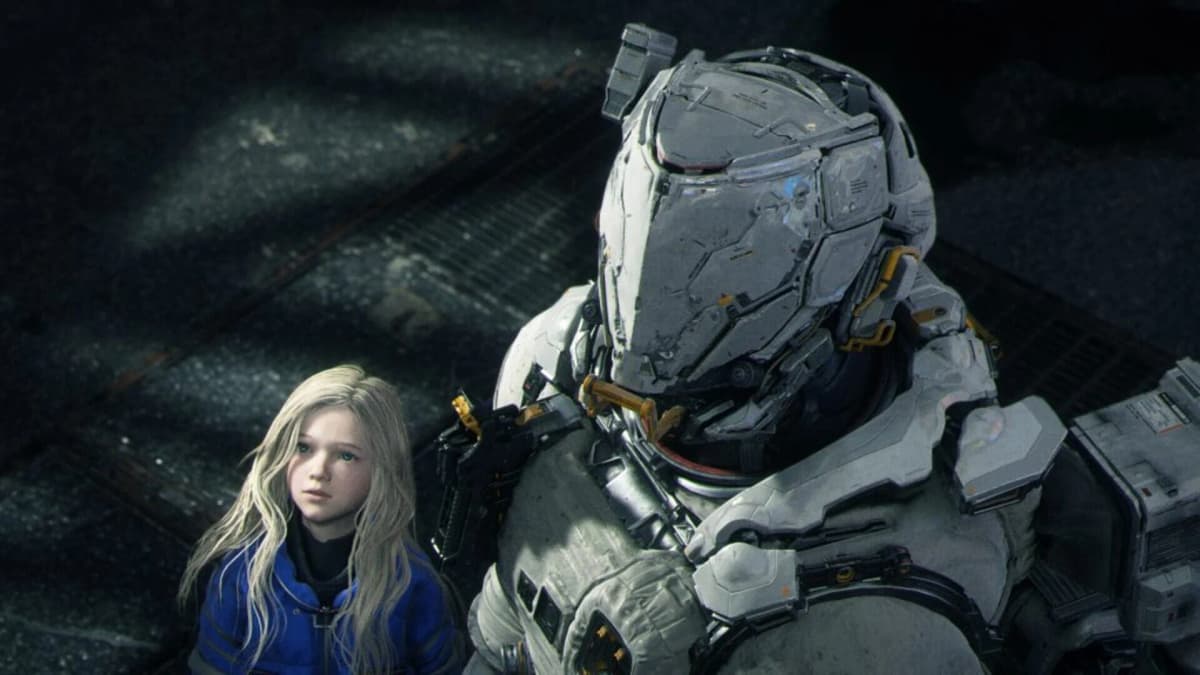
On paper, Pragmata sounds like a pretty standard third-person action game. You’re Hugh, a space-suited soldier wandering through a futuristic station on (or above) the Moon, trying to purge an out-of-control AI infestation. Your partner is Diana, an AI/android companion literally riding on your back like a high-tech ghost child. You run, you snap to cover, you fire assault rifles and shotguns at mangled security drones.
That’s the basic layer. The real meat is what happens the second you aim at an enemy and hold them in your sights. A hacking tile pops up on the right side of the HUD – a compact maze of squares that Diana can traverse. You move her with the controller’s face buttons, hopping her across tiles in real time while the firefight rages on. Each tile you pass through can add a damage multiplier, trigger effects, or unlock the endpoint that completes the hack.
Finish the path before the timer burns out or before you have to break line of sight, and Hugh’s shots punch way above their weight. Fail it, and you’ve basically wasted precious seconds staring at a mini-puzzle while robots close in. The trick is: you’re never really “safe” while hacking. Enemies don’t politely wait for you to finish your little grid doodle. You’re strafing and vaulting in the 3D world while simultaneously nudging Diana along a 2D route with your other thumb.
At first it felt like patting my head and rubbing my stomach at the same time. I’d start a hack, panic when a rocket whistled in from the side, and drop the puzzle completely to dodge. By the end of the session, I was doing tiny hacks on trash mobs between reload animations, saving full routes for big targets, and mentally planning: “If I break that armor plate first, I’ll open a shorter path through the grid.” The system slowly clicked into this satisfying rhythm where aiming, moving, and solving were all part of the same mental flow.
The combat loop: chaos with just enough clarity
What surprised me is how fast Pragmata is. This isn’t a slow, cover-based plink-fest. Hugh slides around, vaults over debris, and sprints between bits of futuristic furniture while flying drones and spider‑bots flank from multiple angles. There’s rarely only one enemy on screen, which turns hacking into a constant judgment call.
One early arena dropped me into a wide, circular chamber full of waist-high barriers and patrol routes. The first few attempts went the same way: I’d tunnel on hacking a beefy turret enemy, nail the path, then look back to Hugh’s side of the screen and notice three smaller bots had crept right up to me. Cue stun-lock, panic, death.
On the run where it finally clicked, I treated hacking as a tool instead of a compulsion. I thinned out the mob with normal gunfire, using only the quickest hacks on anything that got too close. Once the arena was mostly under control, I took a breath, ducked behind a pillar, and committed to a full, multi-step hack on the turret. Watching its health bar evaporate in a couple of seconds afterward was the first time I thought, “Okay, this is actually genius.”
That’s Pragmata’s loop at its best: playing chicken with your own greed. Can you afford two more tiles in the grid to juice your damage, or do you bail out and roll away before the swarm reaches you? The game keeps pushing you into those decisions with surprisingly dense encounter design, even in this early chunk. The fights feel handcrafted, not just “here’s a hallway with some dudes.”
Weapons that force you out of your comfort zone
Hugh’s default assault rifle is your dependable workhorse – decent range, clean recoil pattern, respectable damage when paired with a good hack. If Pragmata had let me lean on that thing forever, I would have, and the game would’ve been worse for it. Instead, Capcom leans into limited, contextual weapons that show up in the environment with fixed ammo pools.
In one corridor I grabbed a chunky, electrified rifle that arced blue lightning between clustered enemies. Another encounter handed me a shotgun that absolutely shredded anything in close quarters but left me vulnerable if I misjudged distance. My favorite was a bizarre decoy-gun that spat out little fake robots to pull aggro, letting me focus on hacking a tougher enemy while the fodder was distracted.
You don’t keep these forever. Once the ammo is gone, they’re gone, and the game nudges you toward the next toy lying ahead. It’s almost like a linear shooter from the Xbox 360 era in that way, where each room is designed around a specific combo of tools rather than a permanent loadout. Combined with the hacking, that enforced variety keeps fights from ever feeling routine in the preview slice I played. I couldn’t just autopilot with the AR; I had to think about weapon ranges, ammo conservation, and which targets were worth the time to hack.
The ammo economy felt tight but fair. I never ran totally dry, but I did have moments where I was forced to swap to something I wasn’t comfortable with because I’d been sloppy earlier. There’s a subtle “use what the level gives you” philosophy here that pairs well with the puzzle-like combat – you’re solving each arena not just with hacks, but with whatever weird gun assortment it hands you.
Hacking evolves just enough (so far)
The obvious risk with any mini-game that sits at the heart of combat is repetition. If the hacking always felt identical, Pragmata would get old fast, no matter how slick the shooting feels. The good news: even in just a few hours, I started to see some promising wrinkles.
One early upgrade added a rare “killswitch” tile to some grids. If I could route Diana through it before reaching the exit, it would essentially pop the enemy like a balloon once the hack completed. It’s incredibly satisfying to risk a longer path for that instant kill, especially on nasty elites. Later enemies started spawning with literal weak points on their bodies – targetable nodes that, when shot off, changed the layout of the hacking maze or opened new paths inside it.
Stronger foes also come with bigger, more complex grids. Basic drones might just be a handful of tiles where you’re chasing a 2x or 3x multiplier for a bit of extra DPS. Larger robots turn into mini-mazes where you’re weaving through junctions, navigating hazards, and trying to min-max your route before your window of safety collapses. The hacking never becomes full-on turn-based strategy – everything is still extremely snappy – but there’s enough depth that I started strategizing between fights, not just inside them.
Stronger foes also come with bigger, more complex grids. Basic drones might just be a handful of tiles where you’re chasing a 2x or 3x multiplier for a bit of extra DPS. Larger robots turn into mini-mazes where you’re weaving through junctions, navigating hazards, and trying to min-max your route before your window of safety collapses. The hacking never becomes full-on turn-based strategy – everything is still extremely snappy – but there’s enough depth that I started strategizing between fights, not just inside them.
🎮 Get This Game at the Best Price
Compare prices instantly and save up to 80% on Steam keys with Kinguin — trusted by 15+ million gamers worldwide.
*Affiliate link — supports our independent coverage at no extra cost to you
That said, this is where I’m most curious about the full game. The preview slice shows a good ramp from “simple puzzle” to “okay, I really need to think for a second,” but it’ll need to keep layering in new tile types, hazards, or systemic twists to avoid feeling like the same brain teaser over a 10+ hour campaign. The foundation is strong; the question is whether Capcom has enough ideas to keep evolving it.
Boss fights: spinning all the plates at once
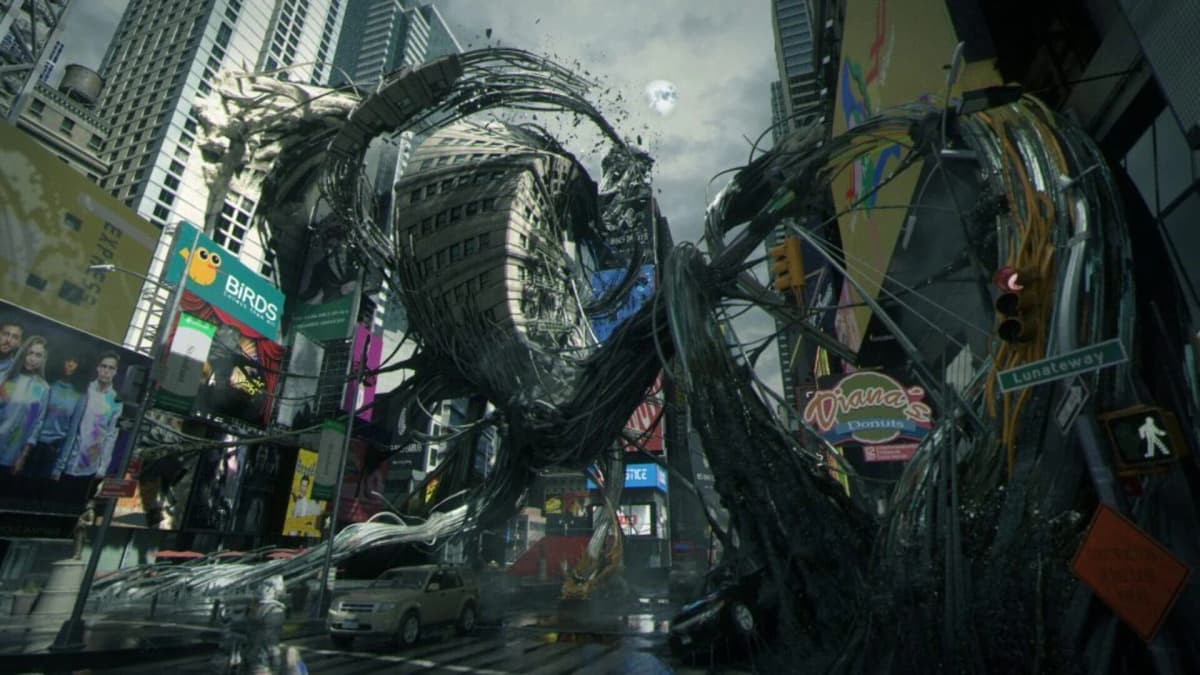
The best showcase of Pragmata’s design in this preview was a big set-piece fight against a towering, insect-like war machine stomping around a fake Manhattan street, printed inside the lunar station like a corrupted simulation. It’s one of those bosses that would already be stressful in a normal shooter: sweeping laser patterns, minions dropping in from above, weak points that only open up after certain attacks.
Layer hacking on top and your brain turns to soup in the best possible way. The boss’s armor nodes acted like keys for both the physical and digital arenas – shoot them off in the 3D world, and suddenly Diana’s hacking grid would reconfigure, opening shortcuts to brutally strong multipliers. Miss your opportunity and you’re stuck with a longer, riskier route next time.
On my first few attempts, I tried to brute force it with raw gunplay and minimal hacking. I technically survived phases, but the fight dragged on and I burned through every ammo pickup on the map. Once I committed to mastering the hack, the pacing flipped. I’d wait for the boss to telegraph a certain beam sweep, pop its armor node mid-animation, then dive behind a wrecked car and race Diana through a nasty grid to grab a killswitch tile. Burning half the health bar in one perfectly timed volley felt like cracking a raid mechanic with a coordinated team – except the coordination was happening between my left hand, right hand, and a little AI girl living on Hugh’s spine.
It’s hectic, for sure. There were a few moments where the screen noise pushed into “overwhelming” territory, especially when smaller enemies spawned mid-fight and tried to flank me. But even when I was cursing under my breath, I never felt like the game was cheating. When I failed, I could always point to the one greedy decision or mistimed hack that did me in.
Upgrades, difficulty, and how it actually feels to control
Between missions, I spent some time in a hub area where you can feed resources into skill trees for both Hugh and Diana. The preview build didn’t open the entire grid, but what I saw hit a nice balance between boring stat bumps and meaningful perks. Faster hack traversal, extra time on grids, higher odds of spawning special tiles – they all directly fed back into that core loop without feeling like filler.
On a controller, the dual-focus control scheme felt surprisingly natural after the initial adjustment. Aiming with the right stick while using the face buttons for hacking means your thumbs are never idle, and your brain is constantly choosing which “screen” to prioritize. It’s the kind of setup that would probably feel awkward on mouse and keyboard; this very much feels designed for a gamepad first.
Difficulty-wise, the slice leaned challenging but not punishing. Standard arenas let me recover from mistakes with smart use of cover and hacking; bosses demanded a few tries but always left me feeling like I’d learned something, not like I’d slammed into a wall. If you hate the idea of repeating a fight to internalize patterns, this might rub you the wrong way, but if you grew up replaying encounters in things like Vanquish or Control just to nail them, Pragmata slots nicely into that lineage.
The world, story, and characters are still a big question mark
Here’s where the preview left me wanting more, in a slightly frustrating way. The setting is cool as hell on the surface: a derelict lunar station that can “print” slices of Earth-like cities inside itself, like Manhattan streets distorted by a glitchy 3D printer. The visual contrast between sterile sci‑fi corridors and eerie, half-finished urban spaces stuck in zero-g is striking, but the game barely stopped long enough for me to really soak it in.
Part of that is the sheer pace. Combat encounters roll into traversal, which rolls into another set-piece, with only brief lulls to breathe. There’s some environmental storytelling scattered around – broken holo-ads, maintenance logs hinting at what went wrong – but nothing in this slice coalesced into a clear thematic throughline beyond “AI gone bad, humans suffered.”
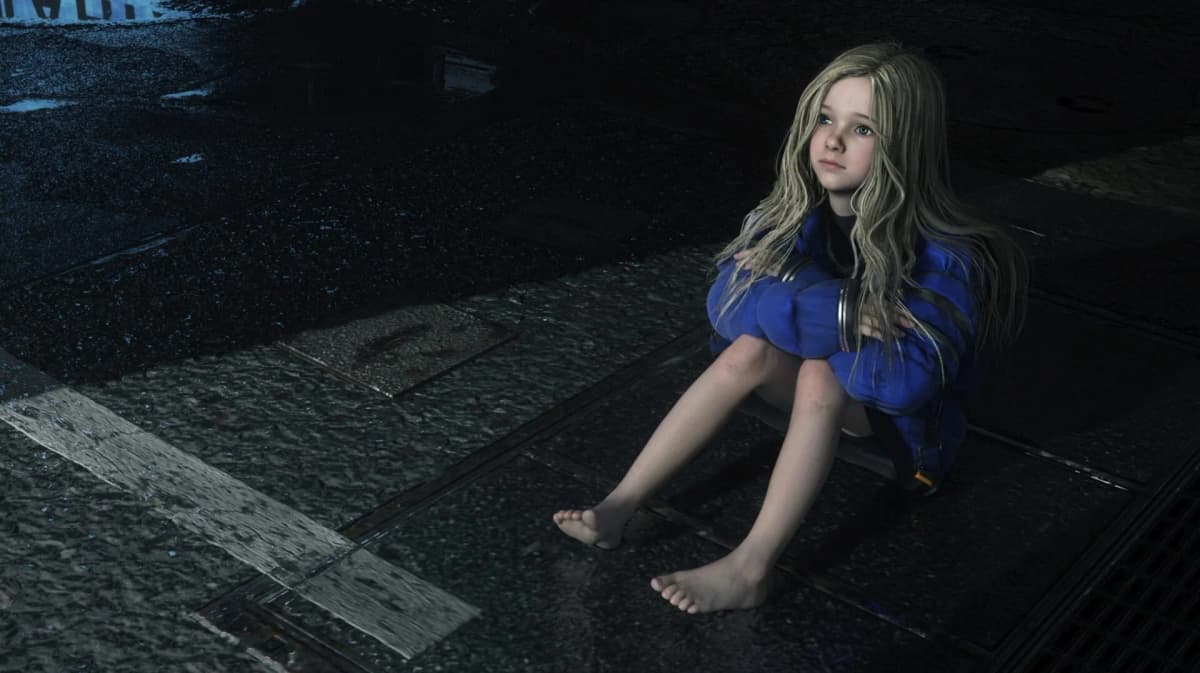
Hugh himself, at least in this chunk, is Generic Stoic Space Guy. He’s not actively annoying, just kind of a blank slate. Diana fares better simply because the mechanics make her feel integral; you literally can’t play the game without her. Personality-wise she leans into the naïve, curious AI child trope, which can be endearing but also occasionally veers into “we get it, she doesn’t understand human stuff” territory.
There are hints that their relationship is meant to be the emotional core – a couple of quiet elevator rides, some optional dialogue while you move through non-combat zones – but the preview slice never lands a big story beat. That’s fair for an early hands-on, but it means I walked away with a stronger sense of how Pragmata plays than what it’s truly about. If Capcom can match the ambition of the combat with a narrative hook that’s more than “sad dad and AI daughter versus evil computers,” it could elevate the whole thing significantly.
Who Pragmata is really for
Based on this preview, Pragmata feels built for a very specific kind of player. If any of the following describes you, put it on your radar:
- You enjoy third-person shooters but wish they demanded more brainpower than just aiming and dodging.
- You loved the plate-spinning intensity of games like Vanquish or Nier: Automata when they layered multiple systems at once.
- You don’t mind replaying arenas or bosses to optimize your performance and master mechanics.
- You’re nostalgic for tightly designed, linear action games that aren’t open-world collect-a-thons.
If you crave big, open spaces to explore, or you want a story-first experience where combat is just a vehicle for cutscenes, this might not be your thing. The build I played is unapologetically gamey. It cares first and foremost about making every fight feel like a little puzzle box to crack under pressure.
FinalBoss // Gear
Level up your setup
01Top-rated gaming headsetson Amazon→02High-refresh gaming monitorson Amazon→03Gaming chairson Amazon→04Discounted game keyson Kinguin→
Affiliate links · As an Amazon Associate, FinalBoss earns from qualifying purchases.
Want to Level Up Your Gaming?
Get access to exclusive strategies, hidden tips, and pro-level insights that we don't share publicly.
Ultimate Reviews Strategy Guide + Weekly Pro Tips