
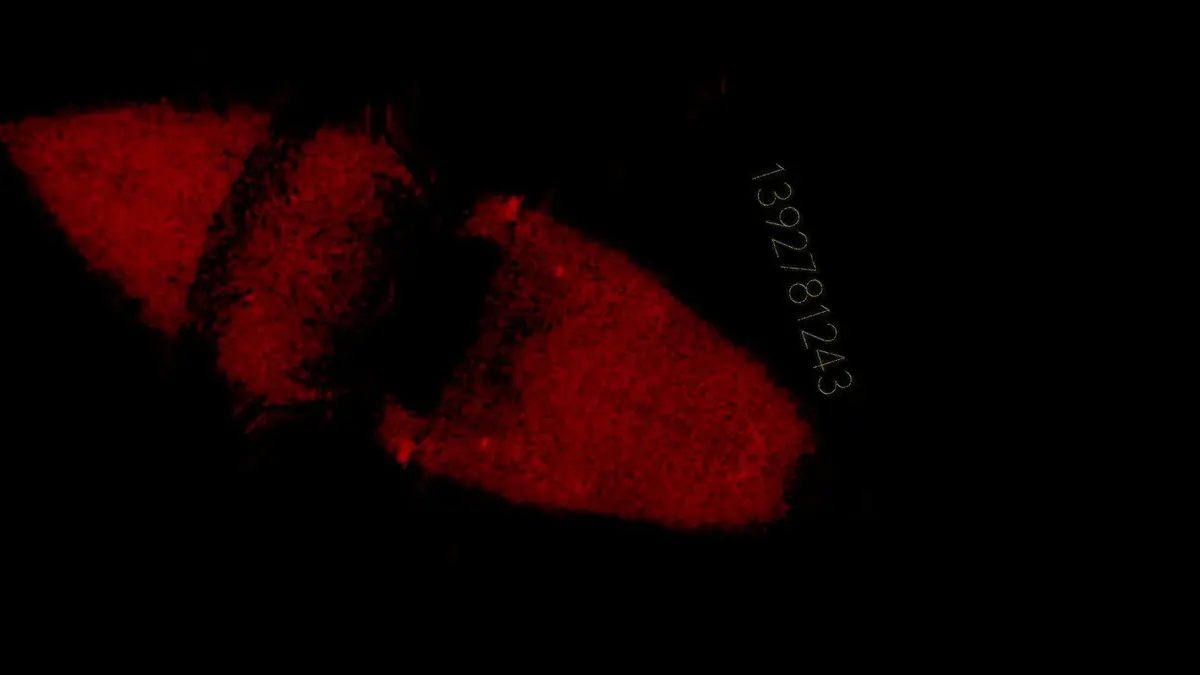
PRECOGNITION’s headline idea is the part worth watching most closely. You play as Diana, who gains glimpses of possible futures through an experimental brain implant, and the announced premise says players can choose which visions to retain as memories, changing what happens next. If that system works the way it sounds, this could be more than a standard branching-story prompt. It could turn prediction itself into the puzzle.
Developed by Sam Barlow’s Half Mermaid Productions and made in collaboration with Possessor and Infinity Pool filmmaker Brandon Cronenberg, PRECOGNITION is a live-action science-fiction horror game built around full-motion video and non-linear investigation. Kinetic Publishing will publish it on PC via Steam, PlayStation 5, Xbox Series X/S, and Nintendo Switch 2 in Spring 2028.
Table of Contents (6)
Barlow’s usual trick is player inference, not simple branching
Barlow’s Her Story and Immortality established a particular kind of player agency: searching footage, connecting fragments, and deciding what events mean rather than simply selecting dialogue options. PRECOGNITION appears to keep that video-scouring structure, but with a more overt sci-fi horror frame. The interesting possibility is that Diana’s visions turn reconstruction into intervention, with the player not only figuring out what happened, but deciding which possible future becomes the version that sticks.
That said, this is where it is easy to get ahead of the evidence. The current material confirms the premise, the live-action format, and the non-linear design language. It does not yet confirm exactly how players access footage, how often they make vision-related choices, or how visibly those choices rewrite later scenes. In other words: the hook is strong, but the mechanic still needs to show its work.

The first footage needs to answer very practical questions
The key detail to watch in future footage is how those future memories are handled on screen, not just how they are described in promotional copy. A freeform archive search system would place PRECOGNITION closer to Her Story; clip-to-clip discovery would recall Immortality; direct decisions that visibly rewrite scenes would push it toward a more conventional choice-driven narrative. Right now, the exact interface and extent of branching remain unconfirmed.
What to verify in the first footage
- Vision selection: Does the player literally choose between possible futures, cycle through them, or tag one to keep? Look for a clear interface prompt rather than a purely cinematic cut.
- Timeline changes: How does the game show that reality has shifted? The useful signs would be alternate scene versions, visible transitions, labels, audio cues, or some other explicit signal that the chosen memory altered events.
- Choice interface: Watch for how Diana “retains” a vision. Is it a menu, an overlay on FMV footage, a time-limited prompt, or something embedded in archive navigation?
- Cause and effect: The footage needs to show a concrete before-and-after relationship. If a selected vision changes a later clip, character response, or available path, that proves the mechanic is gameplay rather than flavor text.
- How non-linearity works: Is progress driven by search terms, clip relationships, a timeline view, or a more guided sequence? That will tell players whether PRECOGNITION is truly archive-led or simply styled that way.
If early trailers avoid those questions and stick to mood, premise, and montage, then the safest read is that the system is still more described than demonstrated. For a game built on causality, that distinction matters a lot.
Cronenberg’s involvement changes the tone expectation more than the format
Sam Barlow is the main draw here because his games trained players to read story through evidence. Brandon Cronenberg adds a different kind of expectation: not action, not jump-scare spam, but clinical unease, distorted identity, and the kind of sci-fi horror that gets under your skin by making reality feel unreliable. That pairing makes PRECOGNITION sound less like a traditional adventure game and more like an investigation where the footage itself may be unstable.
That also helps explain why the exact implementation matters so much. In a Barlow game, the space between clips is often where the player does the real work. If PRECOGNITION layers future-memory selection on top of that structure, it could become a sharper cause-and-effect game than Half Mermaid’s previous archive mysteries. If not, it may still be compelling as atmosphere-first FMV horror, but that is a different promise.

Switch 2 support matters, but it is not a performance guarantee
Switch 2 support is meaningful for players who want a portable version at launch, especially because story-heavy FMV games can be a natural fit for handheld play. But at this stage, the platform announcement is exactly that: a platform announcement. No resolution, frame-rate, storage, benchmark, or control details have been announced for any platform, so there is no basis to assume parity with PC or PS5 beyond basic availability.
That is the practical consumer angle here. The Switch 2 version is interesting because it gives PRECOGNITION a likely portable home from day one, not because it proves technical equivalence. Until actual footage or hands-on reporting appears, the smart move is to separate “coming to Switch 2” from “runs the way I want on Switch 2.” Those are not the same statement.
Buy timing right now
- If you primarily play handheld: waiting makes sense. The deciding factors will be handheld readability, interface clarity, and whether portable-mode footage looks comfortable for a game built around studying video.
- If you want the best performance: wait for platform footage or technical comparisons. For an FMV game, you will want to watch for compression quality, stutter, and interface responsiveness as much as raw frame rate.
- If the mechanic is the whole appeal for you: do not buy on premise alone. Wait until footage clearly proves how vision selection works and how those choices change later scenes.
- If you are a PC-first buyer: wishlisting on Steam is the easiest low-commitment move right now, since the store page is live and already lists a planned 2028 release.
- If you are backlog- or price-sensitive: there is no harm in sitting tight. The game is slated for Spring 2028, and no pricing or preorder details have been confirmed.
So yes, the reveal gives us the important basics: PRECOGNITION is real, it has a strong creative pairing behind it, and it is headed to PC, PS5, Xbox Series X/S, and Switch 2 in Spring 2028. But the reveal also leaves the biggest player question untouched. Not whether Diana can see the future, but whether the game can make choosing that future feel tangible, readable, and meaningfully different every time it asks you to commit.
FinalBoss // Gear
Level up your setup
01Best-selling Switch 2 gameson Amazon→02Switch 2 accessorieson Amazon→038BitDo controllerson Amazon→04Discounted game keyson Kinguin→Affiliate links · As an Amazon Associate, FinalBoss earns from qualifying purchases.
Want to Level Up Your Gaming?
Get access to exclusive strategies, hidden tips, and pro-level insights that we don't share publicly.
Ultimate Gaming Strategy Guide + Weekly Pro Tips