
Table of Contents (8)
The moment it clicked: “Oh, this isn’t really a console anymore”
I was watching Microsoft’s GDC keynote, half-expecting another vague “power of the cloud” nothingburger, when the Helix slide dropped: AMD SoC, high-end performance target, runs Windows games alongside the full Xbox back catalogue. And I genuinely had this split-second reaction: “Hang on… this isn’t an Xbox in the old sense. This is a locked-down gaming PC that happens to wear an Xbox logo.”
That’s when the real question hit me, and it’s the one that’s going to define this whole generation for Microsoft: are we still going to have actual, honest-to-God Xbox games on this thing, or is Helix just becoming a fixed-spec target for PC builds?
After going back through the keynote details and the interviews, I’ve landed on a pretty blunt conclusion: Project Helix looks far more like an Xbox-branded, PC-like box than a new console platform in the traditional sense. And I think that means “Helix-native exclusives” are probably dead on arrival.
Here’s the twist, though: as someone who’s been deep into both PC and console ecosystems for decades, I’m not convinced that’s a bad thing – but it absolutely explodes what “Xbox” used to mean, and Microsoft needs to stop dancing around that.
Helix is an Xbox-shaped PC, and Microsoft basically admitted it
Strip away the marketing sugar and Helix’s pitch is surprisingly straightforward: high-end AMD SoC, performance-first design, can run Windows games and your existing Xbox library. That’s a PC with training wheels, not a bespoke console ecosystem.
Previous Xbox generations tried to pretend they were walled gardens with their own identity, even as Microsoft quietly pulled everything towards Windows. Play Anywhere, Xbox app on PC, day-one Game Pass on both platforms – the writing’s been on the wall for years. Helix is just the moment the mask slips.
With Helix, Microsoft is openly doing three things at once:
- Dragging Xbox hardware closer to a general Windows PC (to the point it can run Windows games)
- Making Windows behave more like a console with “Xbox mode” and system-level integrations
- Using Game Pass and backward compatibility as the glue that makes the whole mess feel coherent
That’s not some minor iteration like “now with ray tracing.” That’s a platform identity shift. When they tell developers, effectively, “Helix runs PC games,” what they’re really saying is: stop thinking of Xbox as its own platform; start thinking of it as one more PC configuration you can target.
And as someone who’s already knee-deep in Steam, Windows, and Game Pass, I see exactly where this is going. This isn’t a rival to Steam Deck or ROG Ally so much as a rival to my current mid-range gaming PC – with a green logo stamped on and some console UX polish layered over the top.
Be honest: “Helix-native exclusives” don’t make much sense
The most telling part of the keynote wasn’t what they said, it’s what they dodged. Nobody would just come out and say, “Yes, there will be Helix-native titles that only run here and nowhere else.” Instead, the messaging stayed super safe: backward compatibility, PC support, performance, Game Pass, yadda yadda. Everything except the thing everyone’s actually wondering — will this box have its own software identity?
Based on everything we know, the realistic answer is: almost certainly not in the old-school sense.
From a developer’s perspective, the sane route is obvious. You build your game for PC — where your tooling already lives, where your shaders and pipelines are tested — and Helix is just another fixed-spec configuration to certify against. You don’t make a separate “Helix edition” any more than you make a “Steam Deck edition.” You optimise a bit, you tweak settings, you pass certification on that hardware, done.
And once Helix is positioned that way, the whole concept of “Helix-native exclusives” starts to look silly. Why would Microsoft pay studios to make something only available on a single, enthusiast-tier box that’s explicitly just a sub-set of the PC ecosystem, when they can ship it on Windows generally, shove it on Game Pass, and hit a much larger audience?

I’ve seen people try to carve out weird edge cases like, “Well, maybe there could be Helix-only modes,” or some marketing-led nonsense where a game is “best on Helix” because of a toggle in the options menu. That’s just spin. We’ve done that dance before with “Optimized for Series X|S” badges that boiled down to slightly higher resolution and a logo on the box.
If Helix is a PC that happens to be nailed to the floor with a fixed spec, then Xbox as a platform for bespoke, console-specific software is effectively dead. You don’t need “Helix games.” You need “PC games that run great on Helix.” And Microsoft is clearly happy with that, because their real obsession now is Game Pass subs and ecosystem lock-in across Windows and whatever boxes you own, not unit sales of one black rectangle under your TV.
This is the generation where “Xbox” stops meaning “a box”
I grew up in the era where “Xbox exclusive” actually meant something. Halo 2 LAN nights, Gears of War feeling like it lived and breathed on that hardware. There was a sense that the console itself mattered — that its architecture, its controller, its online service defined the games that arrived there.
Fast-forward to now and that romance is gone. The Series X sitting in my living room is already mostly a Game Pass terminal and a backwards-compat nostalgia machine. Anything current I care about on Xbox I can also play on my PC, often with better settings and mod support. The only real difference is where my friends are sitting and how lazy I feel about using a mouse and keyboard that evening.
Helix doesn’t fight that trend; it leans into it. It says the quiet part out loud: Xbox is not a platform in the old sense, it’s a brand and a service umbrella. It’s the name on a curated slice of the Windows ecosystem, with some hardware attached for people who don’t want to deal with the full PC chaos.
If you’re still clinging to the idea of “pure” Xbox identity, where certain games feel like they’re born for that machine and nowhere else, Helix is basically your final notice. The last real “Xbox generation” — as in, a distinct software platform with its own catalogue — is the one we’re in right now. After this, it’s all just Windows with different badges.
The elephant with a Valve logo: Steam absolutely breaks Helix
The biggest strategic question around Helix isn’t power, or form factor, or even price. It’s one word Microsoft carefully sidestepped at GDC: Steam.
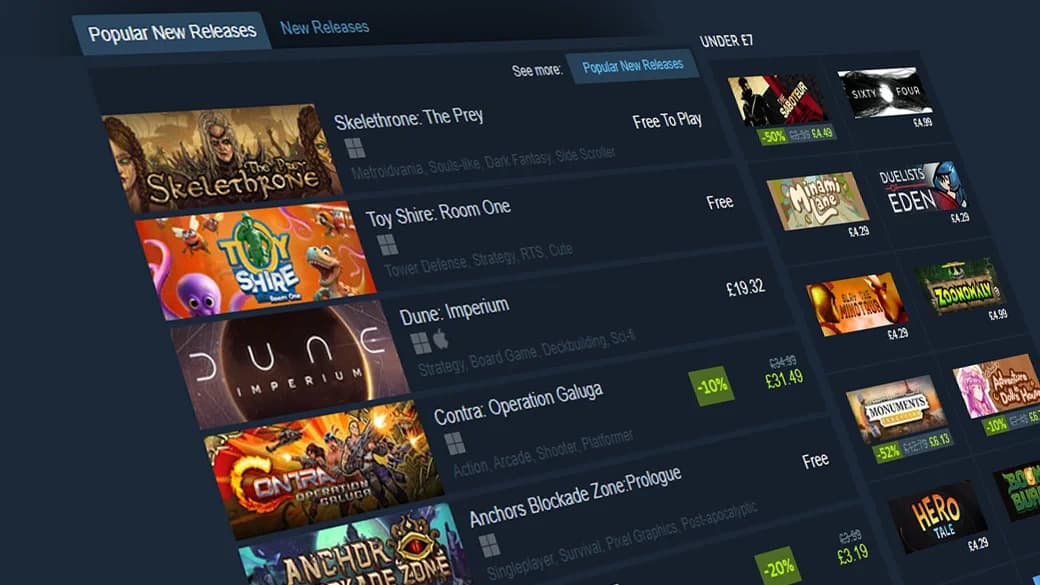
On PC, Microsoft already lost the storefront war. Steam isn’t just “popular,” it’s where people’s entire gaming lives are parked — libraries worth thousands, social graphs, cloud saves, workshop mods, the lot. The Microsoft Store is an afterthought at best, a bad joke at worst.
So Microsoft has exactly two options with Helix, and both hurt.
- Option 1: No Steam. You lock Helix down to Xbox, Game Pass, and maybe the Microsoft Store. You keep your 30% cut on everything sold through your ecosystem. And in exchange, you make a thousand-dollar-ish “PC-like” box that can’t run the majority of people’s PC libraries. That’s suicide. Nobody who already has a half-decent PC or Steam Deck is touching that.
- Option 2: Yes Steam. You let Helix be what it wants to be — a glorified living room PC — and you hand Valve the keys to your living room again. You sell hardware at thin margins (or a loss), then happily watch 30% of every purchase walk straight out the door to Gabe Newell.
There’s no magic middle road here. You can’t talk about being able to “play Windows games” and then pretend the biggest Windows storefront doesn’t exist. Either Helix is a genuine, PC-compatible box, or it’s a tightly controlled, pseudo-PC that’s actually less capable than a Steam Deck in real-world terms.
If I’m being brutally honest, the only version of Helix that I would actually buy with my own money is the one that embraces Steam completely. If I’m dropping serious cash on a high-end AMD-based, Windows-capable box in 2027 or 2028, it needs to be my Game Pass machine, my Xbox back compat box, and my Steam library device. Anything less and I’m better off building a small-form-factor PC and installing Steam Big Picture plus the Xbox app myself.
Pricing and the ROG Ally problem: who is Helix even for?
If you’ve looked at hardware pricing lately, you already know where this is going. High-end PC-grade silicon isn’t cheap, and Microsoft is openly chasing “lead in performance” bragging rights again. That doesn’t scream $399 mass-market toy. It screams “enthusiast box you defend on forums while your credit card weeps.”
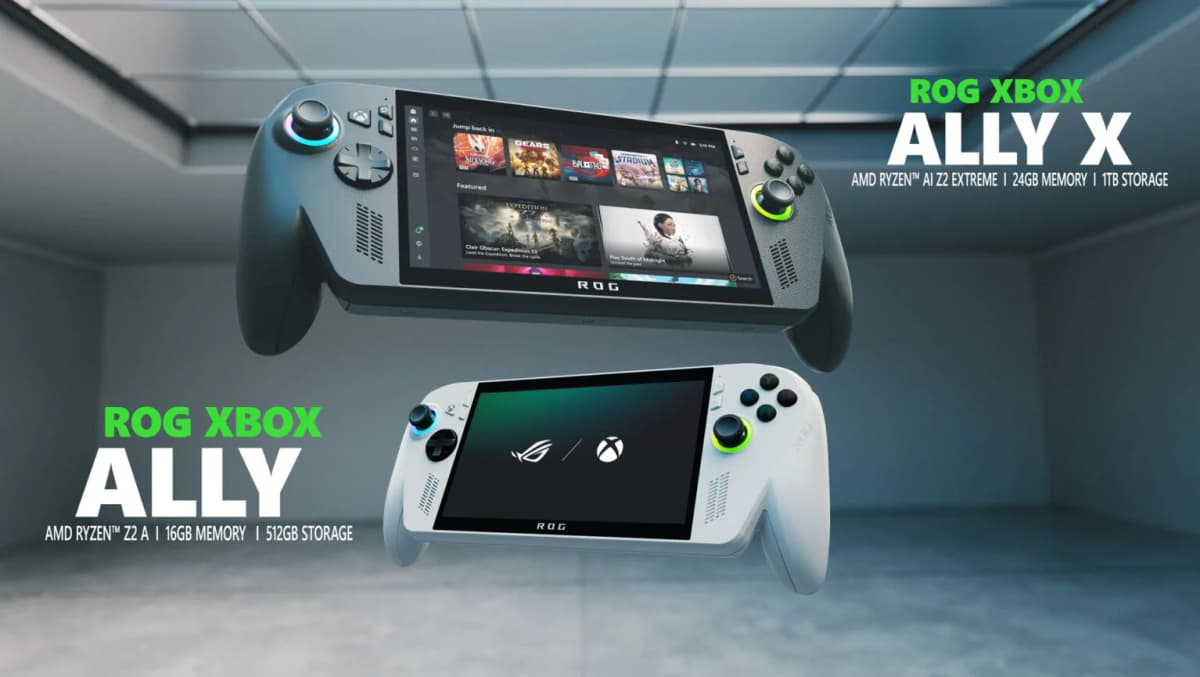
Look at the ROG Ally and other Xbox-branded gaming handhelds: they’re not cheap impulse buys. They’re enthusiast hardware for people who know what TDP and VRAM actually mean. Helix feels like it’s aiming straight at that same crowd — the folks who like the idea of PC freedom but are sick of driver updates, Windows nonsense, and form-factor compromises.
And to be fair, this isn’t the worst idea Microsoft’s ever had. A high-end, fixed-spec, living-room PC that:
- Runs Game Pass and Xbox back compat out of the box
- Can (hopefully) boot straight into an Xbox-style UI
- Still gives you access to broader PC storefronts and apps
- Is tuned by Microsoft so you don’t spend your life fighting Windows updates
That’s actually appealing to a very specific type of player — and I’m squarely in that demographic. I’ve spent too many nights tweaking ini files and shader caches when all I wanted was to play something for an hour. If Helix gives me 90% of my PC freedom with 10% of the maintenance headache, I’m listening.
But let’s not pretend this thing is going to be the “standard Xbox.” It’s a flagship. A halo product. The Series S/X were already struggling to compete with PlayStation on mindshare and exclusives; Helix is clearly being pitched as the shiny enthusiast crown jewel in a broader Xbox-branded family, not the new default console for everyone.
What this means for how I buy (and where I play) Xbox games
This is where the personal impact hits. I’m already someone who splits time between PC and console. I play competitive stuff and “living” games on PC where input and frame rate really matter, and I use consoles for comfort play: RPGs on the couch, backwards-compat nostalgia sessions, Game Pass dabbling.
Helix doesn’t convince me to switch ecosystems. It convinces me to consolidate within the one I already live in. If it delivers on the pitch, it becomes the heart of a Windows-Xbox hybrid lifestyle:
- Most single-player stuff: Helix on the couch, with saves syncing to PC if I want
- Steam indies and weird experimental games: still PC… unless Helix can finally be my reliable Steam box
- Back compat and legacy Xbox games: Helix becomes the one-stop shop
- Competitive multiplayer: likely still PC for mouse and keyboard and refresh-rate freedom
Notice what’s missing from that mental map: anything that needs to be “Helix-native” to justify the hardware. I’m not buying Helix because I expect it to have killer exclusives. I’m buying it (if I do) because it reduces friction inside an ecosystem I’m already committed to — because it’s a cleaner gateway to a mix of Windows, Game Pass, and Xbox that I’m already using.
That’s the quiet revolution here: I no longer care if a game is “on Xbox” in the old sense. I care if it’s on Game Pass, if it’s on PC, if it runs well on a Helix-like device. Xbox as a logo doesn’t matter. Xbox as a service layer does. That’s a massive shift in how I think about the brand, and Microsoft seems perfectly happy to lean into that.
Where I draw the line with Helix
So here’s where I land on all of this.
Project Helix is not a new console in the way the original Xbox, 360, or even the One and Series generations were. It’s a curated, fixed-spec, Xbox-flavoured Windows PC. That means the age of true “Xbox-native” console exclusives is effectively over, and pretending otherwise is just marketing theatre.
I’m okay with that trade-off if Microsoft is honest about what it’s building and doesn’t half-ass the execution. For me, the hard lines are pretty simple:
- If Helix doesn’t support Steam or other major PC storefronts, I’m out. I’m not buying a pretend-PC that locks me out of the ecosystem I’ve spent years building. Either it’s a real PC box, or it’s just a very expensive Xbox that happens to run some Windows apps.
- If Helix ships at a ridiculous price without being clearly superior to building a small form factor PC, I’m out. Nostalgia for the Xbox brand isn’t worth an extra few hundred in markup just for a green logo and a friendlier UI.
- If Helix tries to sell me on “native exclusives” instead of a unified ecosystem, I’m out. I’m not playing that console war game again. Either commit to the Xbox-Windows convergence or don’t, but don’t insult everyone’s intelligence with platform FOMO that doesn’t actually exist.
If, on the other hand, Helix fully embraces what it clearly wants to be — a genuinely powerful, fixed-spec PC with proper Xbox integration, full backward compatibility, and access to the real PC ecosystem — then, yes, I’m weirdly fine with the death of traditional Xbox exclusives.
I’ll happily buy a box that stops pretending to be a console and starts being what I actually need: a reliable, high-end, living-room PC that plays everything I care about with minimal bullshit. If that means the old idea of “Xbox” gets left behind in the process, so be it. That version of Xbox has been on life support for years anyway.
Helix just might be the moment Microsoft finally pulls the plug — and replaces it with something that, for players like me, might actually make more sense.
FinalBoss // Gear
Level up your setup
01Best-selling Xbox Series X|S gameson Amazon→02Xbox controllerson Amazon→03Top-rated gaming headsetson Amazon→04Discounted game keyson Kinguin→Affiliate links · As an Amazon Associate, FinalBoss earns from qualifying purchases.
Want to Level Up Your Gaming?
Get access to exclusive strategies, hidden tips, and pro-level insights that we don't share publicly.
Ultimate Gaming Strategy Guide + Weekly Pro Tips