
Table of Contents (8)
The Indie Reality: PC First, Console If You Somehow Survive
The basic shape of indie development hasn’t changed for years: you build for PC first, usually targeting Windows and Steam, and then maybe, if the game sells and you have any money or sanity left, you scrape together a console port. That “maybe” has killed a lot of perfectly good games.
I’ve watched small teams burn months on console ports that added nothing creative, just technical compliance. You go from working on your game to wrestling three different SDKs, chasing certification failures about save locations or error wording, and rewriting perfectly good systems just to make platform holders happy. It’s not glamorous, it doesn’t make the game better, and it absolutely punishes anyone who isn’t already huge.
So when Microsoft starts talking about Project Helix as a way to “make one Xbox build in the future and it’ll run on their Project Helix console, on PC and on streaming and cloud surfaces like smart TVs and other devices,” my instinct isn’t to clap. It’s to squint at the fine print. Because that promise, if it’s real and not just another marketing hallucination, cuts directly into the most painful part of the indie pipeline.
And this time, for once, the technical direction actually lines up with what small teams have already been doing: build for PC, then figure out the rest later. Microsoft’s GDC messaging has basically boiled down to: start from PC, stay on PC, and let Xbox become an extension of that work instead of a separate target. That’s not just convenient; it’s a philosophical shift.
What Project Helix Actually Is, Behind the Buzzwords
Stripped of the hype, Project Helix is the next Xbox, built around a custom AMD SoC, heavy DirectX and FSR Next support, and a very blunt goal: stop treating Xbox and Windows as different planets. Microsoft’s own framing has been clear enough: developers should “start with the Xbox for PC version first and then use that as the basis for the Xbox console version.”
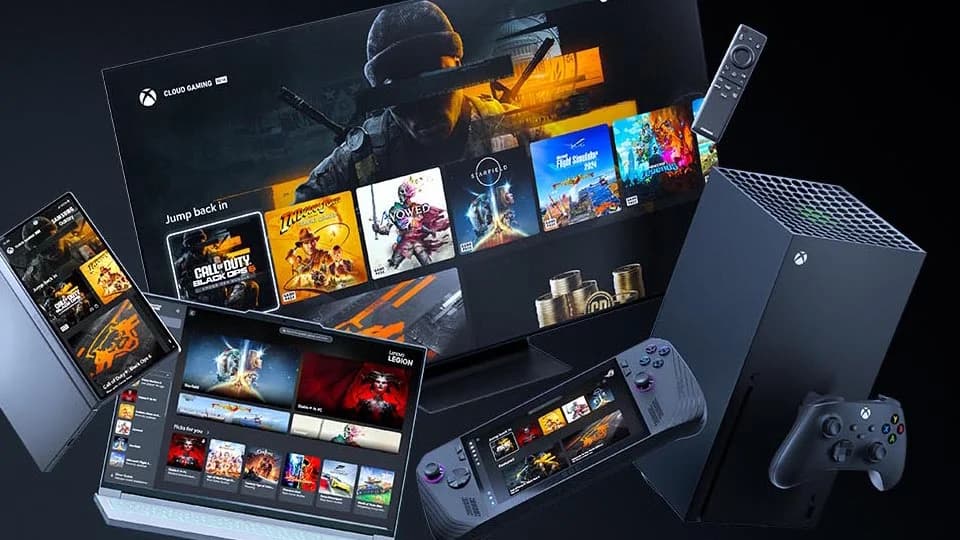
The backbone of this is a unified build model. Instead of having an “Xbox version” and a “PC version” with their own quirks and code paths, you aim for a single “Xbox build” that runs across:
- Project Helix hardware in the living room
- Windows 11 PCs in an upcoming “Xbox mode”
- Cloud/streaming targets like smart TVs and handhelds
Microsoft keeps repeating the same promises: fewer unique code paths, less “certification pain,” and a smoother path from a Windows build to an Xbox experience. The first step lands in April 2026 with Xbox mode on Windows 11, which is effectively a console shell and runtime sitting on top of regular Windows. Helix hardware itself is expected in 2027, and devs get alpha units around then.
If you’ve lived through the Universal Windows Platform experiment, it’s fair to be suspicious. We’ve heard “write once, run everywhere” before, and it usually translated into “write once, debug everywhere, and enjoy being second-class on every platform”. The difference this time is that Helix is openly built on plain Windows and DirectX, not some hermetically sealed off abstraction layer players and devs are supposed to magically embrace.
In other words: instead of dragging indies toward a weird Microsoft-specific sandbox, Helix finally leans into the reality that almost every small studio already lives in Windows and ships to PC first. Xbox isn’t asking them to move; it’s trying to meet them where they already are.
Why This Could Actually Change Indie Economics
Porting isn’t just a technical chore; it’s an economic tax. If you’re a three-to-five-person team, a console port can easily swallow three to six months of someone’s time, plus QA, plus certification cycles, plus all the edge cases you only discover when a platform TRC explodes on you two days before release. That can represent a terrifying chunk of your total budget.
Right now, the typical indie pipeline looks something like this:
- Build and ship on PC (usually Steam + maybe itch/EGS/GOG)
- Pray for sales or a publisher that justifies doing console ports
- Outsource or internalise ports per platform (Xbox, PlayStation, Switch), each with different technical requirements
- Run separate certification processes, hit different failure states, push different patches
- Maintain several semi-forked codebases and build configurations indefinitely
Every one of those steps multiplies risk. Delays on one platform complicate release strategy everywhere. A late-breaking crash on Xbox? Congratulations, you just blew your synchronised launch plans and your marketing beat. For AAA teams, this is annoying. For a tiny studio, it’s existential.
Helix’s “one Xbox build” pitch directly targets that sprawl. If the Xbox version is essentially a Windows build that passes a thinner, more predictable layer of certification, you trim away a massive amount of bespoke engineering:
- No more re-authoring low-level systems just to fit a console sandbox
- Far fewer differences in networking, storage, and save systems
- Shared graphics and performance paths tuned once for DirectX, then scaled
- Unified patching and content pipelines across PC and console
Economic translation: you can forecast console support more like an incremental cost on your existing PC work, instead of a separate multi-month project. That alone is huge. It means that “PC first” doesn’t quietly imply “maybe console, if we don’t go broke.” It means “PC first, Xbox too” becomes a reasonable default for far more teams.
There’s a psychological effect here as well. If you know from day one that your mainline PC build is the Xbox build, you’re more willing to design with controller support, TV readability, and couch play in mind from the start. Historically, a lot of indies have tacked that on at the end because they didn’t know if they’d ever reach consoles. Helix nudges that mindset earlier in development, without demanding console-specific heroics upfront.
Microsoft has already been inching this way with Xbox Play Anywhere, where buying once got you the PC and Xbox versions. That was a consumer-facing hint at what they clearly wanted the tech stack to look like. Helix feels like the fully committed version of that philosophy: unified ownership backed by unified development.
What We Gain When Xbox Becomes “Just Another PC Endpoint”
There’s a slightly uncomfortable implication in all this: the more Helix succeeds technically, the less Xbox feels like a distinct platform in the traditional sense. For small studios, that’s mostly a net win.
If your “Xbox version” is essentially a packaged Windows build:
- Your engine pipeline barely changes between Steam and Xbox
- Middleware and online services behave consistently across both
- Testing can be consolidated instead of duplicated per platform
- Patch risk is lower because you don’t have platform-specific code hacks
It also lands better in a world where handheld PCs like Steam Deck exist. If your Windows build gracefully scales from a handheld PC to a mid-tier desktop GPU to a Helix box under a TV, you finally get something close to the mythical “build once, ship everywhere” setup the industry has been pretending existed for a decade.
From an indie perspective, a converged Xbox-PC ecosystem does something very concrete: it makes the living room attainable without demanding that you become a console engineering specialist. It stops punishing the teams that pick PC first, even though that’s where 90% of tools, communities, and early players already live.

The Catch: Tech Is the Easy Part, Discovery Is the Nightmare
It’s tempting to look at Helix and declare the indie problem solved: fewer ports, less certification pain, unified builds, job done. But the hardest part of being an indie isn’t your compiler; it’s the store shelf.
Microsoft can eliminate half the technical friction tomorrow and still fail indie developers if discovery and economics stay stuck in the same old patterns. A unified build doesn’t guarantee:
- Anyone can actually find your game on the Xbox store
- You get a meaningful share of revenue once fees and discounts kick in
- Promotional opportunities aren’t dominated by Game Pass deals
- The PC and Xbox audiences are both meaningfully reachable without platform favoritism
Game Pass is the obvious elephant here. Early on, it looked like a lifeline for indies: guaranteed money up front, player reach, marketing support. Then reality settled in. The deals vary wildly, you risk your game being seen as disposable subscription filler, and once it falls out of the featured carousels, it can sink just as hard as any premium title.
Helix doesn’t magically change that calculus. If anything, by making Xbox feel more like PC, it pushes Microsoft deeper into direct competition with Steam and other PC stores on the one front that matters most: who has the better discovery and revenue story for small studios.
Valve’s SteamOS and Deck ecosystem have basically said, “If players stay on Windows, fine. If they move to Linux, also fine. Just keep buying games on Steam.” Microsoft, with Helix and Xbox mode, is countering with: “Stay in Windows, but now Windows feels like a console too.” Both approaches are trying to take friction out of PC gaming. But neither of them automatically fixes the problem where your game is buried under thousands of other releases.
So yes, Helix lowers the technical bar to entry. That’s real. But it also means even more games can justify landing on Xbox at launch. You’re not just competing with the usual indies who could afford a port; you’re competing with basically every PC-native title that can tick a few extra boxes. The floodgates opening is great for access, but it makes visibility a blood sport.
Learning from UWP: Don’t Hide the Cost Behind Shiny Promises
Anyone who lived through the Universal Windows Platform days has earned the right to be cautious. Back then, the promise was similarly grand: one app, many devices, clean APIs. In practice, UWP was an awkward, constrained environment that few players wanted and most developers tolerated at best. It fragmented tooling, created compatibility headaches, and never truly delivered on the “everywhere” part.
The good news is that Helix does not appear to be a UWP re-skin. It’s explicitly grounded in regular Windows, DirectX, and PC-standard tech. The danger now isn’t that Microsoft forces everyone into a broken sandbox. The danger is softer but still serious: that they oversell the simplicity of the unified model and underdocument the compromises.
For indies to actually benefit, a few things need to be brutally clear long before 2027:
- Exactly how “thin” Xbox certification really becomes in practice
- Which PC APIs, overlays, and third-party services don’t fully translate to Helix
- How Xbox mode on Windows behaves compared to a real Helix box, especially under stress
- Whether Microsoft will resist the urge to add platform-specific features that quietly reintroduce fragmentation
Cutting “unique code paths” is a strong slogan, but the minute Helix-only features start appearing-special achievement hooks, UI quirks, platform integrations that don’t exist on raw Windows-studios are back to juggling exceptions. The technical win only holds if Microsoft has the discipline to let Xbox be a specialised Windows endpoint, not a new fork in disguise.
How This Will Quietly Change What We See on Consoles
If Helix and Xbox mode behave the way Microsoft is describing, the long-term impact won’t just be on budgets; it’ll be on what gets built in the first place.
Right now, a lot of PC-first indies never seriously think about consoles. They build for keyboard and mouse, they optimise for mid-range GPUs, and the thought of hitting Xbox or PlayStation is something they defer indefinitely. Only the breakout hits or publisher-backed projects make the jump.
In a Helix world, more of those “pure PC” ideas can realistically reach the TV with modest extra work. That doesn’t just mean more 2D platformers and roguelites sneaking onto Xbox. It means stranger, more experimental stuff-niche sims, systemic sandboxes, weird narrative games—that were effectively locked to PC by sheer porting pain might finally justify a console presence.
From a player perspective, that blurs the line between “PC library” and “console library” in a way we’ve been hand-waving about for years but never quite achieved. From a developer perspective, it pushes consoles closer to being just another delivery surface for work you were already doing, not a separate strategic phase that might bankrupt you.
What Needs to Happen Next for Helix to Actually Matter
On paper, Project Helix makes sense. Technically, it aligns with where games are already being built: on Windows, for PC, using DirectX, with an expectation that players span desktops, handhelds, and TVs. For indies, that’s the right direction. But the difference between “promising” and “transformative” will come down to execution on some very unglamorous details.
Microsoft has roughly a year between Xbox mode arriving on Windows 11 in April 2026 and Helix hardware showing up in dev kits to prove this isn’t just a rebranded wish list. That window needs to be used for real stress tests with actual small teams, not just big partners and internal demos. The goal should be painfully simple:
- Take existing PC-native indie projects
- Run them through the “Xbox for PC first” pipeline
- Quantify exactly how many steps, hours, and bugs are saved versus the Xbox Series era
- Publish the messy bits as well as the success stories
If Microsoft can show—honestly—that Helix cuts porting time and certification overhead by a meaningful margin, indie studios will adjust their roadmaps. They’ll plan Xbox in from the start instead of treating it as a luxury phase two. If the savings are cosmetic, they won’t.
Underneath the buzzwords and silicon specs, that’s what Project Helix really represents: a chance to finally stop punishing small teams for starting where they actually live—on PC. If Xbox can become a natural extension of that work instead of an expensive detour, the whole shape of indie development shifts, not because Microsoft said the right things on a GDC slide, but because the numbers finally add up.
FinalBoss // Gear
Level up your setup
01Top-rated gaming headsetson Amazon→02High-refresh gaming monitorson Amazon→03Gaming chairson Amazon→04Discounted game keyson Kinguin→Affiliate links · As an Amazon Associate, FinalBoss earns from qualifying purchases.
Want to Level Up Your Gaming?
Get access to exclusive strategies, hidden tips, and pro-level insights that we don't share publicly.
Ultimate Gaming Strategy Guide + Weekly Pro Tips