
Table of Contents (7)
Project Songbird understands creative burnout better than most horror games (and most therapists)
Within ten minutes of starting Project Songbird, I realised this wasn’t just another “spooky cabin in the woods” game. Before you even take a step, the developer speaks directly to you, laying out accessibility options and content warnings with a kind of quiet care you rarely see in horror. No edgy marketing, no “you’ve been warned” bravado-just a human being saying, “Here’s what this game touches on. Here’s how to keep yourself safe.”
I played on PC with headphones, late at night, lights off. Bad idea. Or perfect idea, depending on how much you enjoy the feeling of your heart living somewhere near your throat. Over about five hours and a second partial playthrough, Project Songbird got under my skin not because of jump scares or gore, but because it weaponises something far more relatable: staring at a blank page while your life quietly falls apart.
A cabin, a deadline, and a song you can’t quite finish
You play as Dakota, a musician whose career has been built on upbeat pop tracks that don’t match the world they’re living in anymore. After a personal tragedy, their writing twists into darker, heavier territory. The label is nervous. Their manager is nervous. The first scene is literally you on the phone being gently pressured back into something more marketable while your grief sits like a third person in the room.
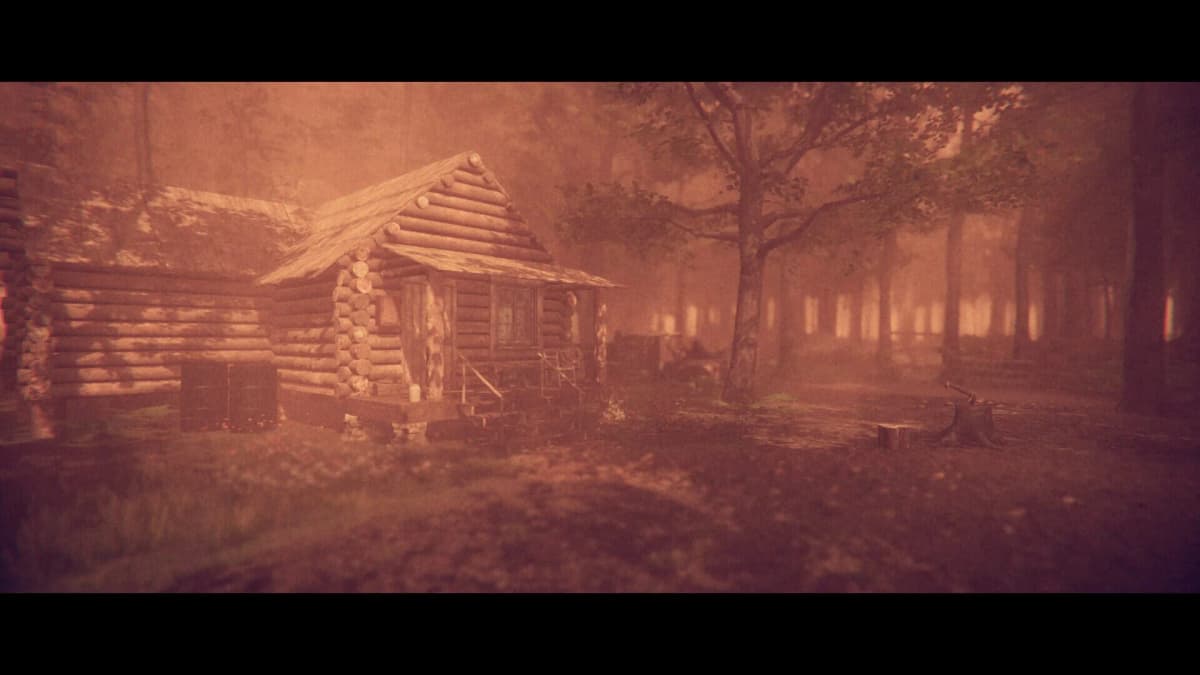
The “solution,” of course, is a classic horror setup: isolate yourself in a cabin in the Appalachian woods, no distractions, just you and your instruments and a looming deadline. It’s a setup that could’ve gone full slasher cliché, but Project Songbird only nods at that expectation before drifting into something more unsettling and personal. This isn’t a game about a masked killer. It’s about what happens when you lock yourself in with your own memories and try to force art out of them.
From the first walk around the cabin, you can feel the game’s priorities. Framed photos, scattered notebooks, a record player begging for you to put something-anything-on to drown out the silence. Dakota talks to themself just enough to sketch in their personality, but it’s the environment that does most of the heavy lifting. It feels like a place someone is trying to turn into a temporary home, rather than just a horror set dressed with blood and cobwebs.
And hanging over everything is that one song: the half-finished, grief-soaked track that keeps coming back as a leitmotif. It’s the emotional spine of the game, and the way it evolves as the story unfolds is easily one of the strongest narrative tricks Project Songbird pulls.
Walking simulator meets survival horror, without a shotgun in sight
On paper, Project Songbird sounds like an awkward hybrid: part walking simulator, part survival horror. In practice, that blend is exactly why it works.
The “daylight” segments—the cabin, the forest, the more grounded spaces—lean fully into walking sim territory. You explore at your own pace, examine objects, piece together Dakota’s headspace, solve light environmental puzzles. No health bar, no enemies, just the low hum of anxiety and creative pressure. These sections feel almost meditative, like being stuck in that loop of make coffee, jot ideas, pace around, repeat.
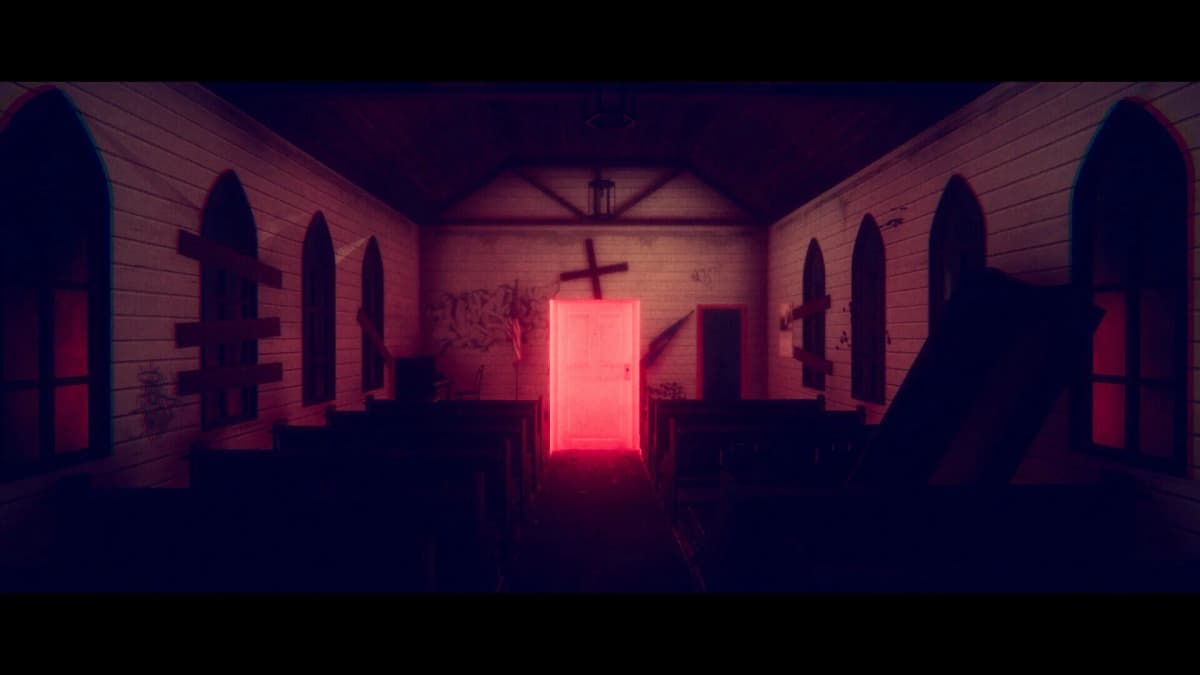
Then the game tilts. Time fractures, environments twist, and you’re suddenly in liminal nightmare zones that look like someone tried to build a memory from scratch and got halfway through. Hallways bend into themselves, doors lead back where you started, familiar rooms are wrong by a few inches—just enough that your brain won’t relax. Here, Project Songbird shifts gears into survival horror, but crucially, it doesn’t suddenly turn you into an action hero.
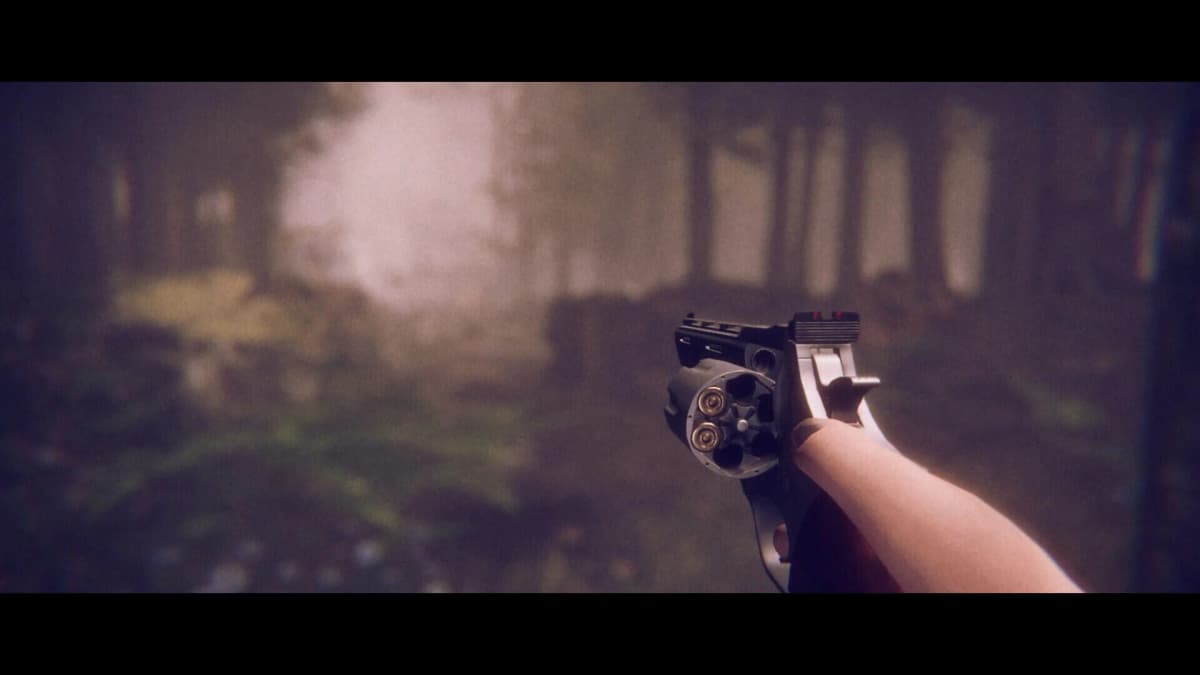
There’s no shotgun, no upgrade tree, no slick parry system. The closest thing you get to a traditional weapon is the axe you use to chop firewood in the “real” world, which silently follows you into the dreamlike sequences. You can swing it, but combat never feels like the point. Most of the time, the smartest move is to avoid enemies entirely: peek around corners, listen for audio cues, time your dashes between pools of light, and hold your breath as something heavy shuffles past.
The enemies themselves come in two main flavours. First are the lumbering, tree-like figures that feel carved out of the forest itself. They’re slow but absolutely brutal if they connect, turning any misstep into a sharp spike of panic. Then there are the ones I still think about when I switch the lights off: demonic shapes that only move when you’re not looking at them. Yes, the “don’t blink” gimmick has been done in games before, but here the sound design and pacing make it miserable in the best way.
There’s a sequence where you have to interact with a piano while one of these creatures hunts you. To play the right notes, you need to stare at the keyboard, which means letting the monster move. I ended up propping a digital keyboard layout on my second monitor so I could glance away faster, which is exactly the kind of janky, real-world workaround horror games tend to inspire when they’re doing their job.
Death is punishing enough to make you respect the threats, but not so brutal that it feels cheap. The tension comes less from losing progress and more from the atmosphere itself. If you’re the kind of player who bounces off horror the second ammo counts and headshots enter the equation, Project Songbird is refreshing: stealth, timing, and item use matter far more than twitch reflexes.
I do wish a couple of the later liminal areas were tighter. One maze-like section overstayed its welcome for me, drifting from “disorienting in an interesting way” to “okay, I get it, let me out”. When the horror works, it’s because the game is saying something about Dakota’s state of mind; on the rare occasions it doesn’t, it feels more like a genre box being checked.
Soundtrack as weapon: when the music is the monster and the comfort
Because the whole game is built around a musician’s crisis, the audio design has nowhere to hide. It needs to carry the weight of the story and sell the horror. It does both.
The cabin is full of diegetic music. You’ve got a stack of licensed records you can throw on, little slices of comfort and distraction you control. I found myself putting on the same track every time I returned from a nightmare sequence, like a ritual cleansing. That simple ability to set your own background music makes the cabin feel lived-in, and it doubles as subtle character work: what Dakota plays, when, and for how long says a lot.
Then there’s the original score, especially that central song Dakota keeps circling back to. It starts as this delicate, hesitant thing—half-demo, half-ghost—and by the time the credits roll it’s doing most of the emotional heavy lifting. The way the game drops in variations, fragmenting and rebuilding the melody, mirrors the way grief keeps resurfacing in slightly different forms. I finished the game, made tea, and realised I was still humming it twenty minutes later.
On the horror side, the audio work is just nasty. Those weeping-angel-style enemies don’t just stomp around; they scrape, hiss, and cut out chunks of ambient sound every time they shift position. You start listening not just for where they are, but for the holes they leave in the soundscape. It’s the kind of design that basically demands headphones if you want the full effect.
Voice acting is equally strong. Valerie Rose Lohman gives Dakota this brittle, wounded energy that never slips into melodrama. There’s a lot of internal monologue and self-directed muttering in narrative games, and it’s easy for that to sound like someone reading from a diary on cue. Here, it feels like we’re eavesdropping on thoughts that weren’t meant to be heard. The supporting cast do solid work too, but this is very much Dakota’s show, and Lohman absolutely sells it.
Puzzles, spaces, and liminal logic
Mechanically, Project Songbird keeps things grounded. The puzzles you tackle in the cabin are the kind of low-key tasks that fit the fantasy of holing up to make an album: finding the right tape, setting up gear, hunting for where you left your notebook after pacing around in a fog of anxiety. They’re simple, but they feed into the narrative rhythm—small, solvable problems in a life that’s otherwise coming apart.
In the dreamlike spaces, puzzles get stranger without becoming obtuse. Doors unlock based on audio cues, pathways rearrange if you interact with the wrong “memory”, familiar objects become hostile or distorted. Crucially, it almost always makes emotional sense, even when the layout is impossible. These aren’t just arbitrary switch-hunts; they’re manifestations of regrets and fears being turned into navigable spaces.
What impressed me most is that, even at their most maze-like, levels are readable. Landmarks repeat in meaningful ways, light and sound guide you more often than explicit objective markers. I rarely felt properly lost, even when the game wanted me uncomfortable. That’s a tough balance, and it’s what separates this from horror games that mistake confusion for depth.
Handling grief and suicide without turning them into props
Project Songbird deals directly with loss, suicidal ideation, and the way trauma warps creative work. That’s heavy territory, and I went in worried it might go for cheap shock value. It doesn’t. The game is frank about what Dakota is going through, but it never feels like it’s using those themes for a twist ending or a marketing bullet point.
The content warning and accessibility screen at the start matter here. You’re told upfront, in plain language, what kinds of topics will surface. You can also tweak difficulty and comfort options so the horror sections don’t become physically overwhelming—whether that’s adjusting things like camera effects, or giving yourself a bit more breathing room in stealth sequences. It feels like an invitation: “Engage with this if and how you’re able,” rather than a dare.
For me, the most effective moments weren’t the explicit references to death or self-harm, but the way the game shows how grief infects the act of creation. Drafts get darker without you meaning them to. Nostalgic places become hostile in your head. Even silence turns into an accusation—if you’re not writing, what are you even doing out here? Project Songbird nails that constant low-level self-cruelty in a way that stung more than any monster encounter.
Of course, how “sensitive” the handling feels is going to vary person to person. I found it respectful and honest without being exploitative, but if you’re in the thick of similar experiences, some scenes may still hit too close. The fact that the game gives you tools and information to make that decision for yourself is important, and I wish more horror titles were this upfront.
Polish, rough edges, and who this is actually for
Technically, my time with Project Songbird was mostly smooth. On my setup it held a steady frame rate, with only the occasional micro-stutter when shifting between “real” and liminal spaces. Visually, it goes for a stylised, slightly cinematic look, helped by a narrower aspect ratio that makes everything feel a little more filmic. The cabin and forest look great, and the more abstract areas find this neat middle ground between dream and stage set.
The jank that does exist is the kind of thing you expect from a smaller, personal project. Enemy pathfinding occasionally glitches; one tree-like monster got confused on a doorway and gave me an unearned breather. Some animations are a bit stiff. None of it broke immersion enough to matter, but if you’re expecting AAA slickness, that’s not what this is trying to be.
In terms of length, you’re looking at roughly four to five hours for a first run, depending on how cautious you are in the horror sequences and how much you linger in the cabin leafing through environmental details. It’s the right size for what it’s doing. Any longer and I think the tricks would start to wear thin; any shorter and it wouldn’t have room to breathe between the quiet and the terror.
This also isn’t a game for everyone. If “walking simulator” is an instant turn-off for you, the stretches without direct threat may feel like dead air, even though they’re doing vital character work. If you’re hunting for combat depth or intricate systems, you’re going to come away disappointed. But if narrative-driven indies like What Remains of Edith Finch, Stories Untold, or the quieter parts of Alan Wake II are your thing, Project Songbird belongs in that conversation.
FinalBoss // Gear
Level up your setup
01Top-rated gaming headsetson Amazon→02High-refresh gaming monitorson Amazon→03Gaming chairson Amazon→04Discounted game keyson Kinguin→
Affiliate links · As an Amazon Associate, FinalBoss earns from qualifying purchases.
Want to Level Up Your Gaming?
Get access to exclusive strategies, hidden tips, and pro-level insights that we don't share publicly.
Ultimate Reviews Strategy Guide + Weekly Pro Tips