
At 7 p.m. local time on August 23, #PSBlackout organizers asked PlayStation users to do something simple and deliberately expensive for Sony: log out, power down, avoid playing, and spend nothing in the PS Store for seven days. The planned shutdown runs until 7 p.m. on August 30, and Sony earned that anger by pairing a January 2028 end to new PlayStation disc production with a blunt reminder that digital software is “licensed to you, not sold.”
That phrase is legally familiar. It is also poison when Sony is removing the physical fallback that gave players a tangible copy they could keep, lend, sell, or buy secondhand. I am tired of platform holders taking full-price money while asking us to accept weaker rights, weaker preservation, and weaker control over the games we paid for. Sony wants digital convenience to carry the weight of ownership. Its own terms say otherwise.
Table of Contents (6)
Sony Is Retiring the Backup Plan for Digital Ownership
Sony confirmed on July 1 that physical disc production for new PlayStation releases ends in January 2028. Existing discs do not stop working because of that decision, and PS5 models with disc drives will still read compatible games already on shelves. Games already released, or already scheduled for a disc release before January 2028, are not being erased from history.
That distinction matters, because some of the online outrage has treated 2028 like a kill switch for every PS5 disc in somebody’s cabinet. It is not. The actual problem is slower and more permanent: every new PlayStation game released from January 2028 onward loses the option of a retail disc entirely. There is no used-copy market for a download tied to an account. There is no lending it to a friend. There is no shelf copy to pick up years later after a delisting, an account problem, or a storefront change.
That is why the “licensed, not sold” email language landed so badly during the blackout. Sony describes the digital license as limited, non-exclusive, non-transferable, personal, and intended for private, non-commercial use on the relevant device. The terms also restrict copying, hacking, sublicensing, and emulation, with violations voiding the license. Sony is telling players exactly what it believes they are buying: permission to access software under Sony’s conditions.
A license does not mean every purchased PlayStation game vanishes tomorrow. It does mean a digital purchase carries no automatic resale right, no physical transfer path, and no public long-term re-download promise that matches the permanence people associate with paying launch price for a game. Once discs disappear for new releases, account access and PlayStation Store availability become the entire foundation beneath a player’s library.
The Player Math Gets Worse After January 2028
Sony’s terms are easy to dismiss as legal boilerplate until the physical alternative is gone. Then the difference between a consumer-held disc and an account-bound license becomes the whole deal. Here is the practical split PlayStation buyers face.
| Type of PlayStation game | Resale and lending | Offline and access position | Long-term risk |
|---|---|---|---|
| Existing physical disc release | The disc can be sold, lent, or bought secondhand. | Strongest consumer control for games that can run from the installed disc copy without online services. | Some games still depend on patches or servers, but the player retains a physical copy outside the store account. |
| Digital PS5 purchase before 2028 | No ordinary transfer or resale path because the license is personal and non-transferable. | Use and re-download access remain tied to the account, the store, and Sony’s platform rules. | The buyer depends on Sony maintaining access even after the original purchase date. |
| New PlayStation release from January 2028 | No disc version means no physical resale or lending route for the PlayStation edition. | Installation and future re-downloads depend on digital infrastructure and account access. | Highest preservation risk because the consumer has no physical fallback when access changes. |
That third row is why a seven-day boycott has become a flashpoint. Sony is not merely nudging players toward digital distribution. It is closing off the consumer-controlled route and then defining the replacement as a revocable license. A company can make that choice. Players can also decide that the deal deserves less trust and less money.
Horizon Hunters Gathering Sits in the Middle of the Trust Problem
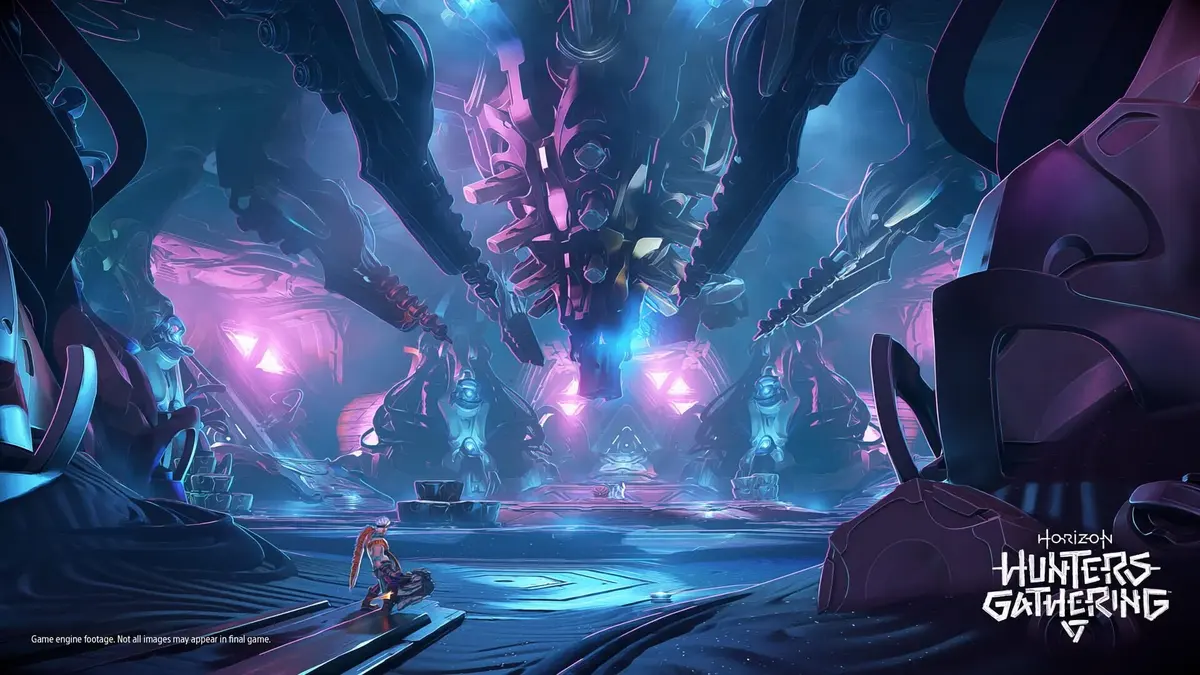
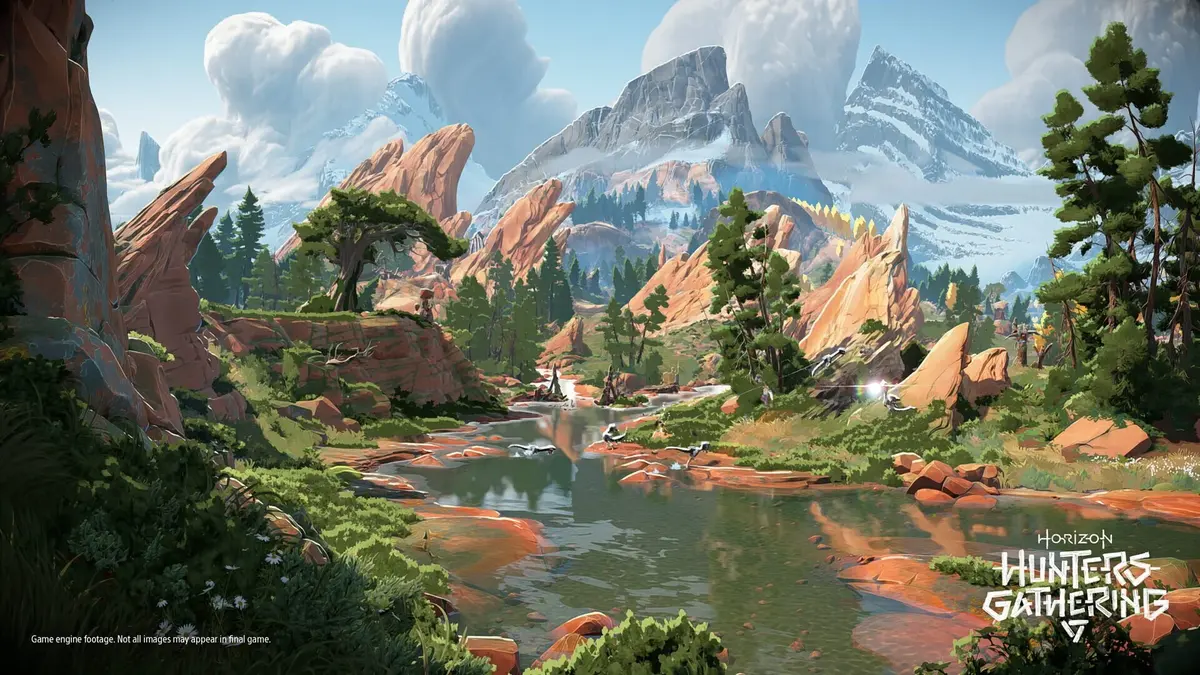
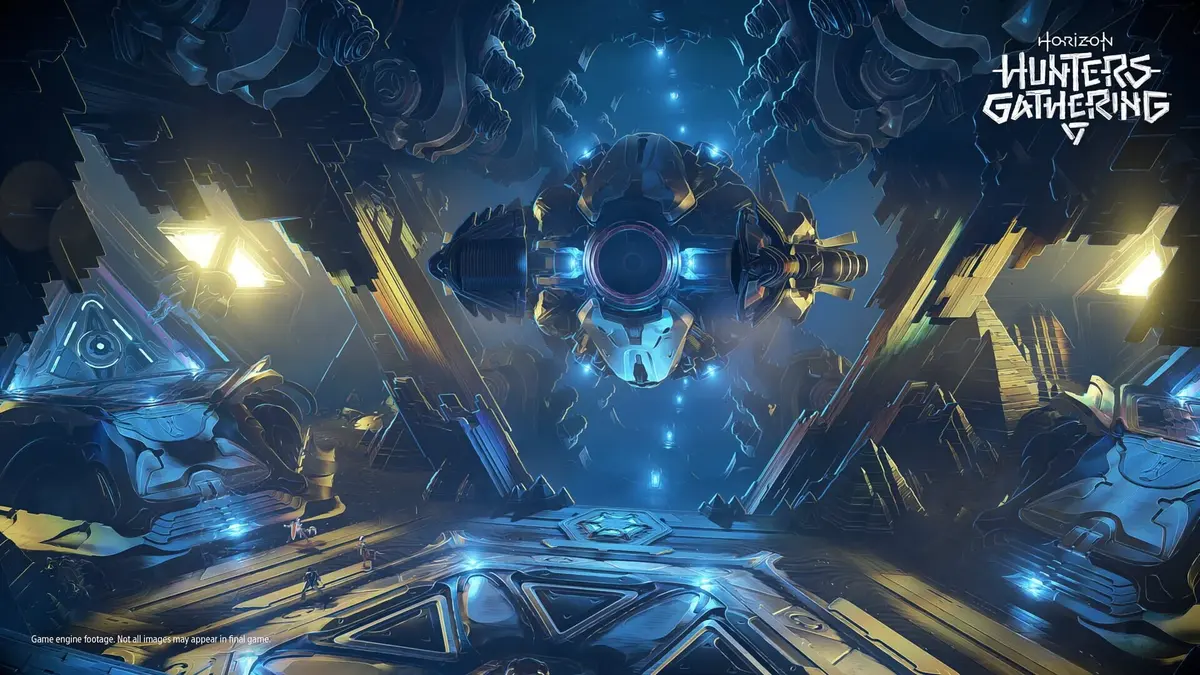
Horizon Hunters Gathering makes this debate feel immediate instead of theoretical. Guerrilla announced the PS5 and PC co-op action game on February 5, 2026. Up to three players can team up as Hunters against deadly machines, making it exactly the kind of first-party release Sony wants people to buy into as an ongoing platform experience rather than a one-and-done box on a shelf.
Its PlayStation game page was updated on August 21, and the announcement post received an update on August 23 as the blackout window began. Keeping first-party pages current is routine business, and it does not prove some grand conspiracy against the protest. The timing still exposes Sony’s tone-deafness. The platform can maintain promotional momentum for future PS5 releases while refusing to provide ordinary buyers with a clear answer on how long their purchases will remain downloadable and usable.
Horizon Hunters Gathering has no public release date, price, edition breakdown, or system requirements yet. That means nobody can say whether it will land before the January 2028 cutoff or become part of Sony’s disc-free future. If it launches after that date, PlayStation buyers deserve to know what replaces the security of a physical copy before preorders begin, not after the money is spent.
A Seven-Day Blackout Will Not Break Sony, but It Can Break the Spell
Sony has around 125 million monthly active users. A coordinated week offline will not produce some magical collapse in PlayStation’s user numbers, and anyone selling that fantasy is wasting people’s time. The blackout matters because it targets the behavior Sony can measure most directly: logging in, buying digital games, renewing subscriptions, and treating the PS Store like the only acceptable place to build a library.
The hardware calendar makes the contrast almost comical. Pulse Elevate wireless desktop speakers open for preorders on September 1, shortly after the planned blackout ends. They launch on November 12 in Midnight Black and White at $219.99 USD or £199.99 GBP. Sony is free to sell new hardware. Players are equally free to look at a company asking for another $220 in ecosystem spending while it strips away physical ownership options and calls their games licenses.
That is the part Sony keeps missing. This protest is not a tantrum over a plastic disc. It is a financial refusal to reward a platform that keeps increasing its control while reducing the customer’s exit routes. A disc lets a player leave the store, leave the account ecosystem, and still retain some value. Digital-only distribution makes leaving far more painful.
Sony Needs Guarantees, Not Another Legal Reminder
Digital distribution has real benefits. Downloads are convenient, patches can be delivered quickly, and a digital library does not require shelf space. None of that grants Sony a free pass to remove every consumer protection that physical media provided. If PlayStation wants players to accept an all-digital future from 2028, it needs to put meaningful commitments in writing.
- Publish a minimum re-download guarantee for purchased games, measured in decades rather than vague platform-policy language.
- Commit to durable offline authorization for single-player software, so a paid game does not become useless because an account check or storefront service changes years later.
- Provide an archival plan for delisted games, patches, and downloadable content that protects paid access when store infrastructure eventually changes.
- Create a legitimate transfer or resale mechanism for digital licenses, or keep physical releases available until PlayStation offers an equivalent consumer right.
These are not radical demands. They are the minimum conditions for calling a digital purchase something more substantial than temporary access. Sony already has the technical power, the storefront, and the user base to establish an industry-leading preservation policy. It lacks the will to make a promise that limits its own control.
Physical Media Is Imperfect, and Sony Still Has No Better Answer
A disc is not archival perfection. Some games need patches, some rely on online components, and some become less complete when services close. Anyone pretending a disc fixes every preservation problem is overselling it. Yet a disc remains a consumer-held copy with real practical value: it can be lent, resold, collected, installed without a storefront purchase, and preserved outside a single platform account.
Sony’s 2028 plan removes that layer of player control for every future PlayStation release. Its licensing language then makes clear that Sony sees the digital alternative as a conditional privilege. Those two decisions fit together far too neatly for players to shrug them off as unrelated administrative changes.
The #PSBlackout protest has the right target. Sony should reverse the 2028 disc cutoff until it offers enforceable guarantees for re-downloads, offline access, preservation, and transfer rights. Until then, any post-2028 PlayStation release sold only as a “licensed, not sold” download deserves to be treated as temporary access priced like permanent ownership. If Horizon Hunters Gathering reaches that future without a disc or hard player protections, I will not pay launch price for it. Sony has made the calculation brutally clear. Players should return the favor.
FinalBoss // Gear
Level up your setup
01Best-selling PS5 gameson Amazon→02DualSense controllerson Amazon→03PS5 SSD upgrades (M.2 NVMe)on Amazon→04Discounted game keyson Kinguin→Affiliate links · As an Amazon Associate, FinalBoss earns from qualifying purchases.
Want to Level Up Your Gaming?
Get access to exclusive strategies, hidden tips, and pro-level insights that we don't share publicly.
Ultimate Gaming Strategy Guide + Weekly Pro Tips