
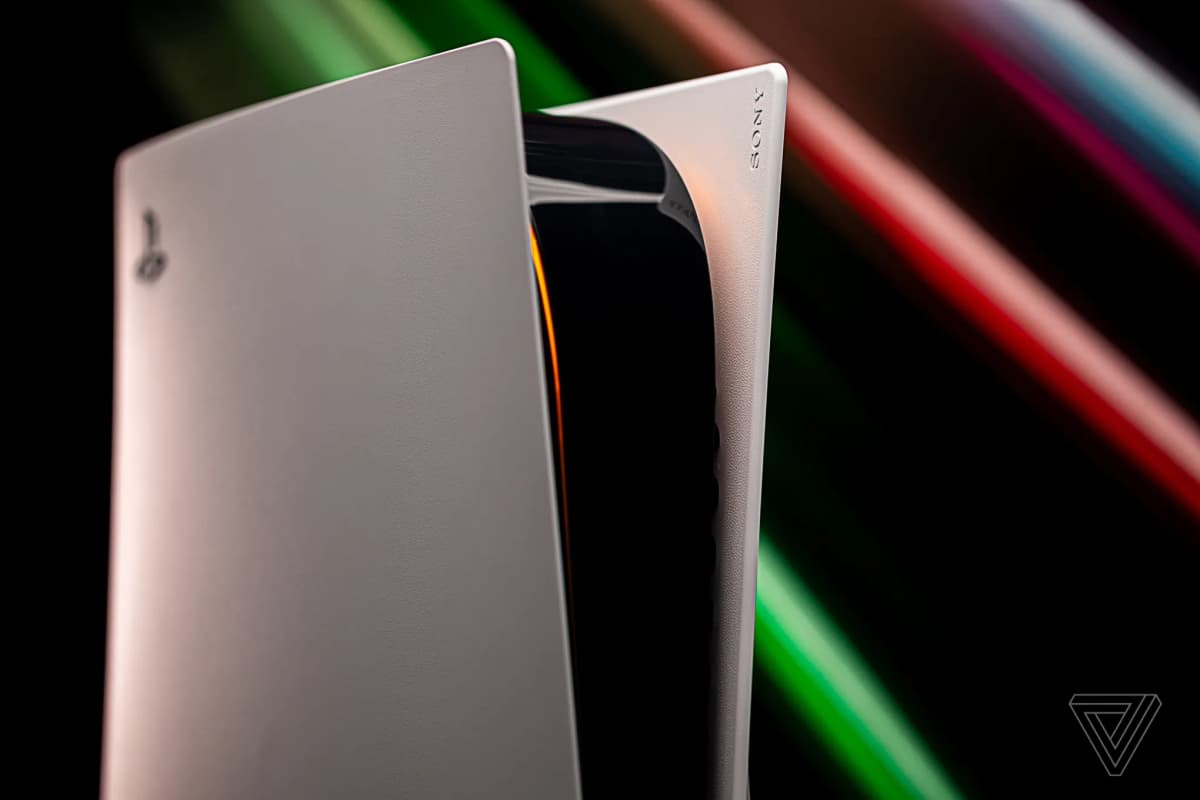
Console generations used to follow a simple rule: wait a few years and the hardware gets cheaper. With PlayStation 5, that rule is dead. From April 2nd, PS5s, the PS5 Pro, and even the PlayStation Portal all jump in price worldwide – in some regions to higher than launch – and this is the second hike in under a year.
Table of Contents (8)
Key takeaways
- From April 2nd, US RRPs jump to: PS5 – $649.99, PS5 Digital – $599.99, PS5 Pro – $899.99, PlayStation Portal – $249.99, with similarly sharp increases across the UK, Europe, and Japan.
- This is the second US PS5 price rise in under a year, and the third in parts of Europe – reversing 40 years of console pricing trends where mid-generation hardware usually gets cheaper.
- Sony blames “continued pressures in the global economic landscape,” including tariffs and surging RAM and storage costs driven by AI data centers, not just simple inflation.
- The hikes don’t just hurt late adopters; they signal that next-gen hardware like a future PS6 may launch later, cost more, or both.
Consoles were supposed to get cheaper. PS5 is doing the opposite.
Sony’s new RRPs are brutal, especially if you were waiting for “the inevitable price drop.” In the US, according to Sony’s own regional breakdowns reported by outlets like Eurogamer and Push Square, prices now look like this:
- PS5: from $549.99 → $649.99
- PS5 Digital Edition: from $499.99 → $599.99
- PS5 Pro: from $699.99 → $899.99
- PlayStation Portal: from $199.99 → $249.99
In the UK and Europe, it’s the same pattern, just with different currency symbols. Eurogamer and Push Square tally the jumps as:
- UK – PS5: £569.99; Digital: £519.99; PS5 Pro: £789.99; Portal: £219.99
- Eurozone – PS5: €649.99; Digital: €599.99; PS5 Pro: €899.99; Portal: €249.99
- Spain (3DJuegos) – PS5 Digital: 599.99€; Standard: 649.99€; Pro: 899.99€; Portal: 249.99€
For context: at launch in 2020, the standard PS5 was $499.99 / £449.99 / €499.99. The Digital Edition was $399.99 / £359.99 / €399.99. In other words, the US Digital Edition has climbed by $200, a 50% increase over its launch price. In Japan, local reporting notes that the base PS5’s sticker price has effectively doubled compared to 2020 once you factor in prior hikes and the weak yen.
This is historically upside down. In the PS4 era, by this point in the lifecycle you could regularly find the console around $200 on sale. The PS3, which launched at a notoriously high $599 in 2006, spent the rest of its life walking that price down. PS5 is walking the other way.
And this isn’t a one-off. TheSixthAxis points out this is the second price increase in the US and the third in Europe. Sony already nudged prices up in 2025; now it’s back for a much larger bite. The company’s own blog post, quoted across multiple outlets, leans hard on the same line: “continued pressures in the global economic landscape” and a “necessary step” to keep delivering “innovative, high-quality gaming experiences.”
Translated from PR: the old “consoles get cheaper every year” math is broken.
AI, tariffs, and the end of the subsidised box
So what actually changed? It isn’t that Sony suddenly discovered greed in 2026. What’s changed is the component market around consoles.
Both TheSixthAxis and Push Square highlight two factors Sony is quietly pointing at behind that “economic landscape” phrasing:
- Tariffs and trade friction, particularly for hardware landing in the US.
- Exploding memory and storage prices, driven by AI and data centers hoovering up the same RAM and NAND that consoles rely on.
Console makers have always played the “razor and blades” game: sell the hardware close to cost (or at a loss at launch), then make your money back on games and subscriptions over a 6–8 year run. That model assumes one crucial thing: that parts will get cheaper over time.
Right now, they’re not. Analysts tracking the memory market have been flagging this for months: DRAM prices have spiked dramatically year-on-year as cloud providers and AI firms swallow capacity, and SSD pricing has been through wild swings instead of the gentle downward slope console planners used to bank on. Eurogamer also notes RAM costs specifically as a sore point for Sony.
Then there’s the more niche, but important, chip story. The advanced nodes used in console APUs are competing with everything from phones to GPUs to automotive chips. Factor in reports of looming constraints around things like helium used in some fabrication processes, and suddenly the “it’ll get cheaper every year” assumption looks like a fantasy.
Here’s the uncomfortable bit for Sony: it’s still shipping a big fixed box into your living room while the rest of the chip industry retools itself around AI servers that can charge enterprise prices. If you’re a chip supplier, who do you prioritise — the company that needs a custom SoC at a tight margin, or the one stuffing racks of high-margin accelerators into data centers?
If I had one question for Sony’s marketing VP right now, it’d be this: at what point does the PlayStation business stop being able to subsidise hardware at all? Because this round of hikes looks less like a blip and more like the industry admitting that the old subsidy model doesn’t survive the AI land grab.
Xbox, Nintendo, and the new pricing normal
Sony isn’t raising prices in a vacuum. Microsoft already nudged Xbox Series X|S hardware and Game Pass prices upward last year, breaking its own “best value in gaming” messaging. TheSixthAxis notes analysts fully expect competitors to follow this latest move, not undercut it.
That’s the really bad news for players who’ve historically waited out the first half of a console generation. This isn’t looking like a PS3 situation where lingering at $599 let Xbox 360 eat Sony’s lunch until they blinked. Component cost pressure is hitting everyone. There’s less room for an aggressive undercut without someone swallowing real, sustained losses.
If anything, Sony’s willingness to move first — and move hard — may give Microsoft cover. If PS5 Pro is flirting with €899.99 in Europe, it’s a lot easier for a beefed-up Xbox refresh or a “Series X2” to creep higher than the $499 sweet spot we used to treat as sacred. And if Nintendo’s long-rumored Switch successor lands into the same memory market, don’t expect a $299 miracle box.
The competition might shift from “who’s cheapest?” to “who can justify being expensive?” Sony’s clearly betting that its catalogue — Spider-Man 2, Helldivers 2, the looming gravitational pull of GTA 6 — can carry a higher hardware price. The question is how far that elasticity really stretches once average buyers realise the “cheap” digital PS5 is now $600.
Late adopters are paying for everyone else’s early access
One of the most annoying parts of this for regular players is who gets punished. Early adopters who bought a launch PS5 have already weathered cross-gen droughts, supply shortages, and a couple of quiet years. Late adopters typically “win” the generation: cheaper hardware, big game library, mature firmware.
With PS5, late adopters are being told to pay more than ever for the privilege of joining late. Spanish outlet 3DJuegos underlines that this is now the third PS5 price adjustment since launch and lands just months before GTA 6 hits — exactly when a lot of holdouts were planning to finally make the jump. Instead of a discounted entry point, they’re staring at 599.99€ for the Digital Edition and 649.99€ for the disc model.
In the UK, all three PS5 models jump by £90. Portal goes up by £20. That’s the difference between “I’ll grab one with a game or two this Christmas” and “maybe I just stick with PC or my Series X.”
There’s also a knock-on effect: services and rental schemes suddenly look more attractive. If you’re in a market with console rental or subscription hardware programmes, this is the kind of move that pushes people towards paying monthly instead of owning outright. Good news for recurring revenue; bad news if you liked the simplicity of buying a box and being done.
And then there’s PlayStation Portal. The remote-play handheld was already a niche luxury at $199 / €219; bumping it to $249 / €249 turns it into a clear “enthusiasts only” accessory. Paired with rising PS5 prices, Sony is quietly nudging its ecosystem into more premium territory across the board.
What this signals for PS6 and the next generation
Underneath the sticker shock is a bigger question: what does this do to the timeline and pricing for whatever comes after PS5?
Sony’s own logic on the blog — echoed and dissected by Eurogamer, Push Square, and others — is that these hikes are “necessary” to keep investing in high-end experiences. If the company is already struggling to keep PS5 margins tolerable six years in, it has two options for PS6:
- Launch later, stretching the PS5 lifecycle while it waits for component markets to calm down.
- Launch more expensive, pushing well past the old $499 comfort zone from day one.
Neither is especially player-friendly, but the second PS5 hike in under a year makes them both feel more likely. A “panic” price cut later in the gen, like we saw with PS3, seems less realistic when the underlying DRAM and storage markets are this volatile.
Meanwhile, Sony’s software strategy suddenly matters more. If you’re being asked to pay $649.99 for a PS5 in 2026, the expectation for how long that box will feel “current” goes up. Cross-gen support for PS6, more aggressive PC ports, and how quickly first-party titles move into PlayStation Plus all become part of the value equation.
And that’s the core shift this price rise exposes: consoles are no longer the obviously “cheap” way into high-end gaming. They’re now just another participant in a global chip war that doesn’t care about your living room. Sony’s betting it can ride that wave without losing the mass-market audience that made PS4 a phenomenon.
What to watch next
- April–June 2026 sales data: Sony’s next earnings call and shipment numbers will show how much this actually dents PS5 uptake, especially in regions like Europe where the hikes are sharpest.
- Microsoft’s response: If Xbox doesn’t mirror these prices by the holiday season, that’s a clear sign it smells an opportunity to claw back market share.
- GTA 6 launch window: Take-Two’s megaton release later this year is the stress test — do millions still jump in at the new RRPs, or does sticker shock push them to other platforms?
- Any hint of PS6 timing: A longer-than-usual quiet period on next-gen hardware talk would suggest Sony is stretching PS5’s life to make the math work.
TL;DR
Sony is raising PS5, PS5 Pro, and PlayStation Portal prices worldwide on April 2nd, with US RRPs up $100–$200 and Europe and Japan seeing similarly steep jumps. It’s the second PS5 price increase in under a year and flips the traditional console script where hardware gets cheaper over time, driven by tariffs and surging demand for the same RAM and storage AI servers need. The real story isn’t just more expensive PS5s today, but what this says about how costly — and how late — the next generation of consoles might be.
FinalBoss // Gear
Level up your setup
01Best-selling PS5 gameson Amazon→02DualSense controllerson Amazon→03PS5 SSD upgrades (M.2 NVMe)on Amazon→04Discounted game keyson Kinguin→Affiliate links · As an Amazon Associate, FinalBoss earns from qualifying purchases.
Want to Level Up Your Gaming?
Get access to exclusive strategies, hidden tips, and pro-level insights that we don't share publicly.
Ultimate Gaming Strategy Guide + Weekly Pro Tips