
Table of Contents (9)
Resident Evil Requiem isn’t just a new RE game – it’s a tech demo for Sony’s improved upscaler
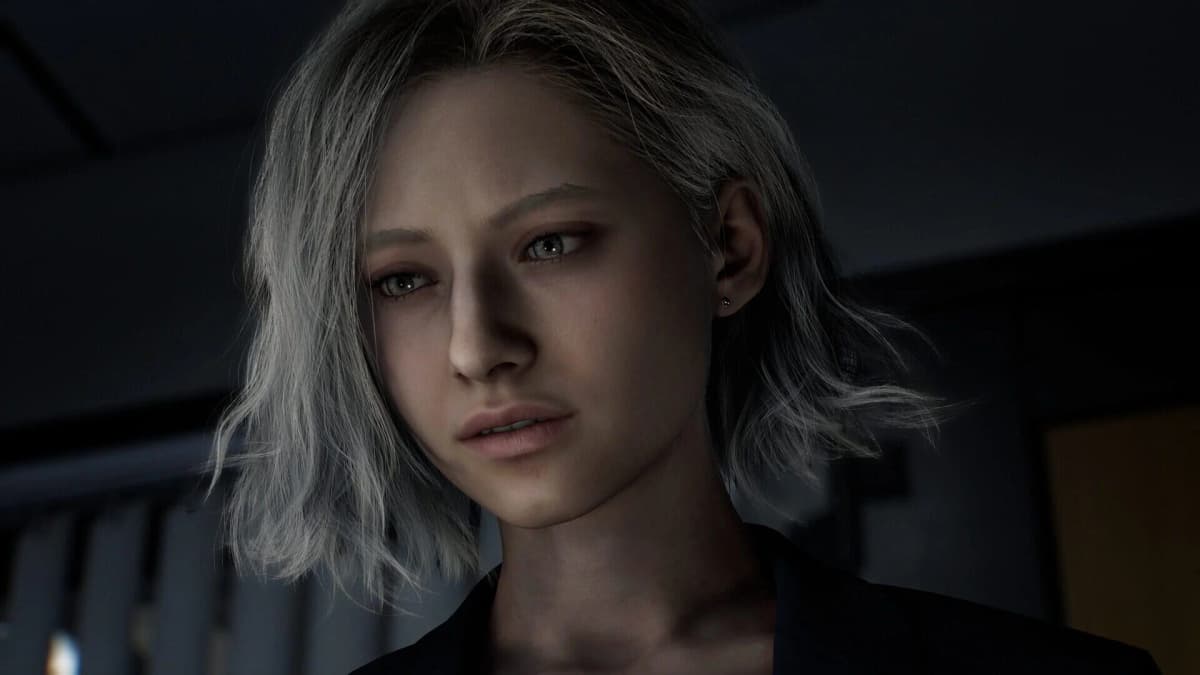
PlayStation visuals just leveled up in a way you can actually see. Resident Evil Requiem on PS5 Pro ships with Sony’s reworked PlayStation Spectral Super Resolution (PSSR) – the version co-developed with AMD and built atop Project Amethyst’s FSR4 ideas – and the results are immediately noticeable: sharper, more stable 60fps ray-traced images that push near-native 4K from much lower internal resolutions.
Key takeaways
- PSSR’s upgrade (sometimes called “PSSR 2.0”) debuts in Resident Evil Requiem and was confirmed by PS5 Pro lead Mark Cerny.
- Early technical analysis from Digital Foundry and other outlets shows a clear image-quality jump at 60fps RT, comparing well with PC FSR4 and Nvidia’s DLSS 4.5 in many scenes.
- Sony plans a system-level “Enhance PSSR Image Quality” toggle in March to enable the upgraded upscaler across PSSR-supported games — no per-title patch required.
- There are caveats: minor reflection/denoiser noise, limits on 120Hz RT, and lingering motion-AA edges where PC alternatives still have an advantage.
Why this actually matters
Upscaling is the invisible plumbing of modern console graphics. When it’s good, players get higher-resolution images and ray tracing without a huge performance tax. When it’s bad, textures shimmer, edges alias, and reflections read as mush. Resident Evil Requiem is the first high-profile game to ship with Sony’s refined PSSR, and across multiple technical breakdowns (Digital Foundry, Notebookcheck, Push Square) it delivers a tangible improvement over the original PSSR: crisper geometry, fewer artifacts, and a stable 60fps ray-traced mode that actually looks closer to native 4K on typical living-room setups.
That shift is not just bragging rights for PS5 Pro. It changes the calculus for developers and players. Devs can target higher-quality RT with less frame-rate compromise. Players get a clear visual dividend for choosing a PS5 Pro. And Sony’s March toggle could make that dividend retroactive for older PSSR titles without waiting on studio patches.
The uncomfortable observation Sony hoped you’d skip
“System-level toggle” reads like a magic switch in a PR mailer, but it’s also a dodge. Enabling a newer, stricter upscaler across legacy builds without per-title tuning risks surfacing other problems — mismatched denoiser settings, ghosting, or odd reflection noise — that the original developers never saw on their test benches. Early DF notes and community threads confirm minor reflection noise in Requiem’s RT mode; that’s not a dealbreaker, but it’s the sort of trade-off you’d expect if you apply a one-size-fits-most neural upscaler to games each built with different rendering quirks.

How it stacks up technically
Digital Foundry’s breakdown is blunt and optimistic: PSSR’s redesign — a reworked neural network and algorithmic lessons from AMD’s FSR4 — gets you to near-native 4K from roughly 1080p+ internals in Ray Tracing mode while holding a locked 60fps in Requiem. On 120Hz modes the console falls back to spatial scaling (the old approach similar to early FSR1 behavior), with notable compromises in distant-detail clarity and a variable frame-rate ceiling.
PC upscalers (FSR4/DLSS 4.5) still have an edge in motion anti-aliasing and some temporal stability in fast camera movement, but the gap is smaller than it was with the original PSSR. Reviewers and side-by-side videos consistently show PS5 Pro’s 60fps RT output beating standard PS5 and Xbox Series X visuals in many scenes — which is a big deal for console parity conversations.

Context: this matters because Requiem is also a huge launch
Capcom didn’t release Requiem into a whisper. The game launched across PS5, Switch 2, Xbox Series X|S and PC — and smashed Steam records, peaking at over 344,000 concurrent players during opening hours, according to SteamDB figures reported by 3DJuegos. That kind of audience gives any technical debut extra weight: when a marquee title ships with new system tech, players and press test it everywhere, fast.
What I’d ask Mark Cerny if he were sitting here
How many legacy titles will actually benefit from the toggle out of the box, and how many will require developer-side denoiser or lighting tweaks to avoid new artifacts? A universal toggle is powerful — but it shouldn’t be used as a reason to skip per-title quality work.
What to watch next (concrete, date-marked signals)
- March 2026 — Sony’s promised system update: test reports and patch notes will show whether the “Enhance PSSR Image Quality” toggle behaves as advertised.
- Immediate — Reddit/Discord/NeoGAF threads after the March toggle rollout: look for reports of denoiser noise or visual regressions in older PSSR games.
- Capcom patches for Requiem: watch for fixes addressing DF-noted RT denoiser noise — that will reveal how much studio work is needed even when the upscaler improves.
- Other high-profile PS5 Pro ports (Wolverine, GTA 6 speculation) — which games actually ship with the new PSSR and whether Sony forces universal enablement or leaves studio choice.
Short version: Resident Evil Requiem proves the upgraded PSSR is a meaningful visual step forward for PS5 Pro. It’s not perfect — motion AA still lags PC leaders and a few denoiser quirks remain — but for players who value 60fps RT and sharper images on a console, this is the clearest payoff yet from Sony’s upscaling investment.
TL;DR
Resident Evil Requiem is the first game shipping with Sony’s revamped PSSR (an FSR4-derived neural upscaler). It gives PS5 Pro a visible edge — near-native 4K ray tracing at a locked 60fps — while leaving technical caveats around 120Hz modes and minor denoiser noise. Watch Sony’s March system update and community feedback to see whether this upgrade becomes a true generational step or a convenient but imperfect retrofit for older titles.
FinalBoss // Gear
Level up your setup
01Best-selling PS5 gameson Amazon→02DualSense controllerson Amazon→03PS5 SSD upgrades (M.2 NVMe)on Amazon→04Discounted game keyson Kinguin→Affiliate links · As an Amazon Associate, FinalBoss earns from qualifying purchases.
Want to Level Up Your Gaming?
Get access to exclusive strategies, hidden tips, and pro-level insights that we don't share publicly.
Ultimate Gaming Strategy Guide + Weekly Pro Tips