
Shuhei Yoshida argues that rising component costs and limited household budgets make a longer PS5 and Switch 2 generation sensible. He is right, provided Sony and Nintendo turn that extra time into better value rather than pricier stagnation.
For decades, the seven-year console cycle functioned like an industry superstition. A machine launched, publishers gradually squeezed more from it, the hardware got cheaper, and a successor arrived before the old box became an obvious burden. That rhythm has broken down. PlayStation 5 entered the market with a $500 disc model and a $400 digital model, yet later U.S. pricing rose to $650 and $600, while the PS5 Pro launched at $700 and later moved to $900 in the U.S. The old promise that patience makes gaming hardware cheaper has collapsed at exactly the moment players are being told to prepare for another upgrade.
That is why former PlayStation Worldwide Studios head Shuhei Yoshida is right to argue that Sony and Nintendo should keep the current generation running for as long as possible. A PlayStation 6 launched merely because the old seven-year rule points toward 2027 would be a terrible deal for players. More processing power is not a sufficient reason to ask households to pay another premium-console price and begin another long wait for software that properly exploits the machine. Yoshida’s case is a judgment about value, not a public Sony or Nintendo hardware plan, and it is a persuasive one.
Table of Contents (5)
The seven-year rule no longer matches the cost of playing
Yoshida’s central observation is brutally practical: in his view, people have finite budgets, PS5 and Nintendo Switch 2 owners are broadly happy with the hardware they have, and he is not hearing a loud push from players or developers for dramatically stronger machines right now. The industry can obsess over specifications because specifications are easy to market. The player sitting in front of a television has a simpler calculation: what does the new machine let me do that my current one cannot, and what will that improvement cost me in total?
That total is the part hardware roadmaps routinely dodge. It includes the console, additional storage, controllers, subscriptions, accessories, and higher-priced games. The price pressure is already visible. Sony added £90 to PS5 pricing in March 2026, while Xbox Series S and Xbox Series X price rises of at least £75 took effect in August. The average price of new gaming hardware rose from $439 in November to $502 in the following month. A new-generation launch into that environment risks turning excitement into a luxury-purchase calculation.
Memory is the ugly detail beneath those numbers. AI data centres are consuming huge allocations of computer-memory production, tightening supply and driving up RAM costs across the hardware market. That pressure does not disappear because Sony or Nintendo wants a slick launch window. A console manufacturer can either absorb higher component costs, sell expensive hardware at a loss, or pass the price to players. None of those choices make an early PS6 more appealing.
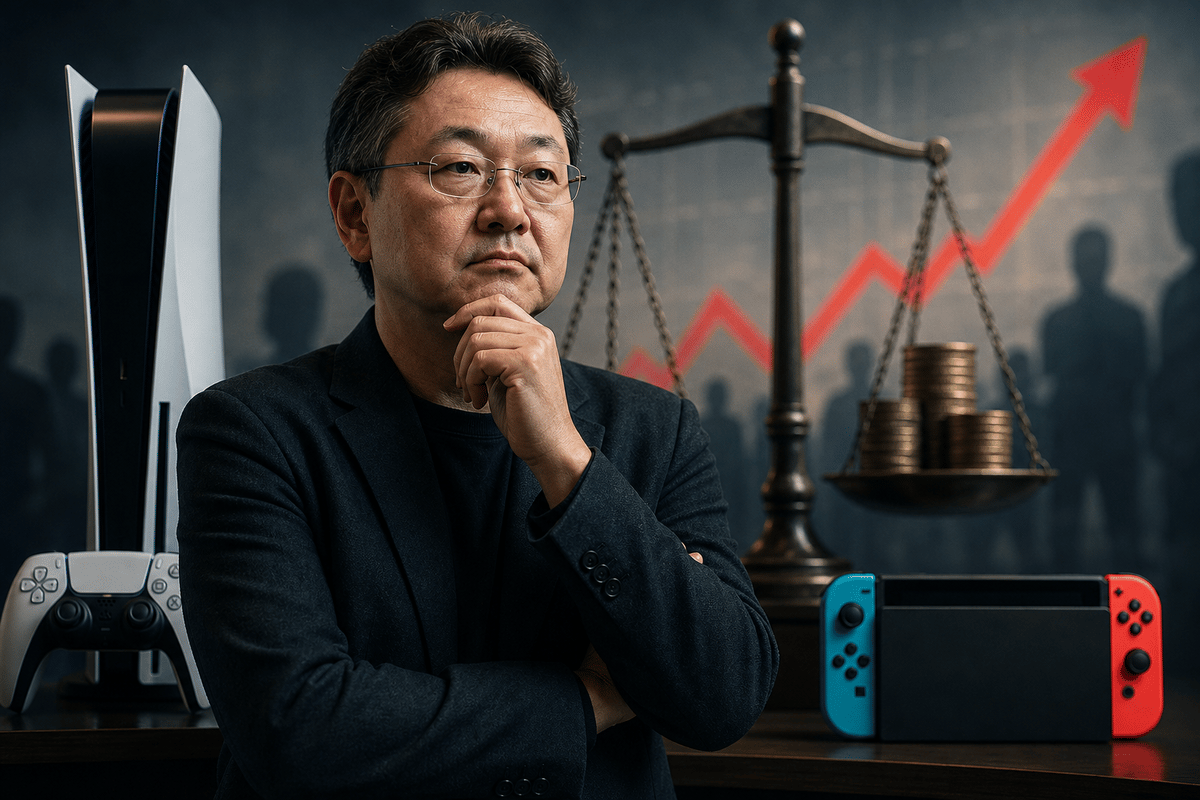
Even Nintendo’s new machine makes the point. Switch 2 launched at $450 and then moved to $500. Nintendo does not need to be thinking about a Switch 3 when its newer platform still needs time to build a library, establish an installed base, and earn the faith of people who skipped its launch. Treating PS5 and Switch 2 as if they occupy identical stages of life would be sloppy, but Yoshida’s larger point still holds: neither platform benefits from an automatic rush toward a successor.
PS5 needs longer support; Switch 2 needs room to grow
The PS5 and Switch 2 arrive at the same conclusion from different directions. PS5 is a mature platform whose owners are being hit with the unnerving reality of late-generation price increases. Switch 2 is newer and needs the breathing room to become the centre of Nintendo’s business rather than a device immediately shadowed by successor talk. Extending both generations makes sense, but the platforms have different jobs to do during that extension.
The practical comparison looks like this.
- Stay with PS5: worthwhile if the console keeps reliable access to major releases, stable performance, and no punitive loss of support. Sony’s job is long-term software support and clearer performance targets on the base machine.
- Buy PS5 Pro: worthwhile if the image-quality or frame-rate gains are visible on the player’s own display and clearly explained. Sony’s job is plain language about what each upgrade mode actually changes instead of vague “enhanced” labels.
- Wait for PS6: worthwhile only if the new hardware enables games and experiences current hardware cannot reasonably deliver. Sony’s job is a launch proposition stronger than higher resolution, faster loading, and a larger price tag.
That comparison is the whole argument in practical form. The PS5 Pro already proves that Sony can offer an in-generation premium option for people who genuinely value sharper image quality or steadier performance. Fine. Let enthusiasts pay for that choice if the improvement is explained honestly. But a premium mid-cycle machine does not create an obligation for everyone else to leap again into a PS6 launch window. Sony has to earn that next purchase with a change players can feel in the games they actually play.
“Players do not demand more power” has a limit
Yoshida’s strongest point can become misleading if the platform holders abuse it. Players are not marching in the streets demanding a more powerful console because players rarely ask for silicon by name. They ask for smoother performance, cleaner images, fewer compromises, more ambitious worlds, better simulation, and games that do not feel trapped between wildly different hardware targets. Those are technical demands, even when nobody phrases them as a request for a bigger graphics processor.
Developers also need more than an aging baseline and a cheerful corporate message about efficiency. A delayed generation works when teams get stable development tools, realistic performance targets, and enough time to build games around a known platform. It fails when publishers use the lack of new hardware as an excuse for unstable releases, aggressive cuts to design ambition, or a pile of expensive add-ons sold as substitutes for a meaningful upgrade.
That is the line Sony cannot cross. Keeping PS5 alive longer becomes player-friendly only if it protects players from a needless hardware bill while preserving the quality and availability of the software they buy. If a longer generation instead means more expensive games, costlier services, pricier accessories, and weaker technical standards, then patience becomes a polite word for paying more while receiving less.
Sony’s obligation during a longer PS5 era
Sony should not rush a PS6 out of ceremonial loyalty to the old seven-year rhythm. It should make the extra PS5 years count. That requires a much higher standard than simply keeping the store open and releasing a handful of cross-generation projects.
- Keep the base PS5 a viable version of major releases rather than treating it as an embarrassment beside PS5 Pro.
- State exactly what PS5 Pro enhancements change: frame rate, resolution, ray tracing, image quality, or loading behavior. “Enhanced” is marketing fog, not useful information.
- Avoid pushing hardware entry prices even farther beyond the $400 to $500 band that defined PS5’s launch.
- Give developers stable tools and realistic technical targets so they can improve performance without gambling every project on a future hardware transition.
- Reserve PS6 for a genuine leap in what games can offer, not a smaller visual gain sold at a larger upfront price.
Xbox’s Project Helix creates the obvious competitive pressure. Yoshida has framed Xbox as the exception pushing toward another next-generation offering, even while noting how hard that path is when Xbox has not been selling large quantities of consoles recently. Sony should not let a rival’s roadmap force a bad purchase proposition on PlayStation players. Hardware competition matters, but it does not turn a rushed, expensive PS6 into a smart idea.
A delayed PS6 is the right call only if Sony earns the delay
The fall in PS5 hardware sales makes the pricing problem impossible to ignore. U.S. PS5 hardware sales fell 58% year over year in May 2026. That figure does not reduce the entire market to one cause, but it does expose the absurdity of pretending every player is waiting impatiently to buy a still more expensive box. A household that balks at a $600 digital PS5 is not rescued by the promise of a PS6 that costs even more.
Yoshida’s position deserves a sharper version than “stay longer because people are satisfied.” Sony should extend the PS5 generation because the value case for a PS6 is currently too weak against the cost case. Nintendo should let Switch 2 establish itself instead of treating a successful launch as permission to restart the cycle. The industry needs to stop pretending a calendar date is a consumer benefit.
The verdict is simple: hold the PS6 until Sony can offer a clear leap without demanding an absurd entry price, and make every extra year of PS5 support materially better for the people who already bought in. More power can wait. Better value cannot.
FinalBoss // Gear
Level up your setup
01Best-selling PS5 gameson Amazon→02DualSense controllerson Amazon→03PS5 SSD upgrades (M.2 NVMe)on Amazon→04Discounted game keyson Kinguin→Affiliate links · As an Amazon Associate, FinalBoss earns from qualifying purchases.
Want to Level Up Your Gaming?
Get access to exclusive strategies, hidden tips, and pro-level insights that we don't share publicly.
Ultimate Gaming Strategy Guide + Weekly Pro Tips