
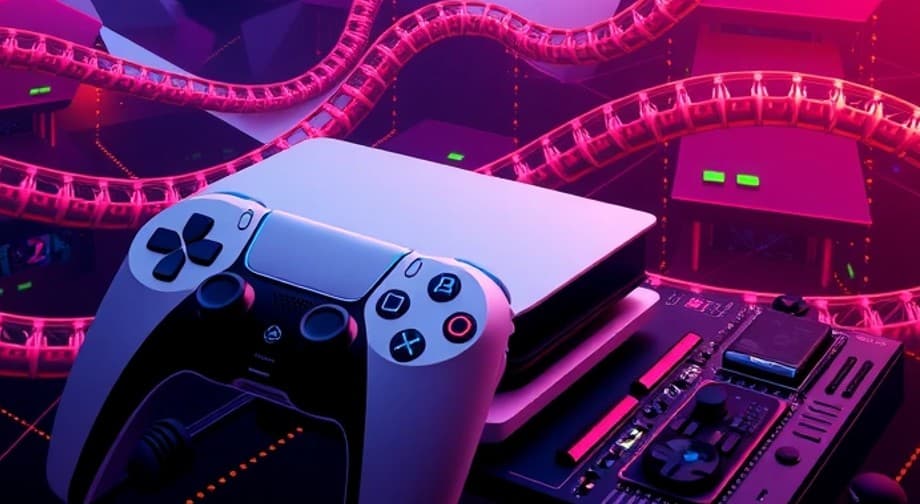
Three PlayStations at launch-a dockable handheld, a compact box, and a full-fat flagship-would be a wild swing from Sony. That’s the headline from a new round of leaks attributed to YouTuber Moore’s Law Is Dead, along with talk of Zen 6 CPUs, RDNA 5 GPUs, up to 36-40 GB of RAM, and a price ladder from $299 to $699. Sony, of course, has said nothing. Given the source’s mixed track record, grain of salt is mandatory-but the idea of Sony meeting the Switch/Steam Deck moment while still fielding a living room monster? That’s worth unpacking.
The claim is that Sony’s cooking three PS6 flavors: a portable that docks, a compact living-room unit, and a high-end console for the spec chasers. Under the hood, the lower two reportedly use 4 Zen 6c cores for games plus 2 low-power cores for the OS, RDNA 5 graphics with around 60% more performance per compute unit versus PS5’s RDNA 2, clocks that scale from roughly 1.2 GHz portable to 1.65 GHz docked, up to 36 GB LPDDR5X, and a 3 nm process. The flagship? Rumored 8+ Zen 6 cores, 40-48 CUs at 3+ GHz, ~40 GB unified memory, same 3 nm node—touted as “several times” PS5’s performance.
Specs like that would meaningfully change how games target consoles: more memory headroom for textures and simulation, stronger ray tracing, and room for modern upscaling pipelines to shine. But remember: these are component-era codenames (Zen 6, RDNA 5) not product commitments. Roadmaps slip, and die sizes dictate cost.
Timeline first. Court documents during the Microsoft–FTC saga suggested Sony’s next-generation PlayStation would arrive after 2027. If PS6 lands late decade, Zen 6/RDNA 5 on 3 nm isn’t sci-fi. By then, AMD’s next-gen RT and AI-accelerated features should be mature, and larger unified memory pools (36–40 GB) feel right for 4K with heavy RT and big worlds.
Pricing is where I pump the brakes. $299 for a fully local, dockable handheld running PS6-class games sounds aggressive given current handheld BOM realities. Steam Deck, ROG Ally, and Legion Go aren’t cheap, and that’s on older nodes. Sony could subsidize, but $299 feels more like a marketing dream unless the portable targets 1080p with tight power limits and very conservative clocks. The $699 flagship is easier to swallow if it’s legitimately a big leap—PS5 launched at $499 and costs have climbed, especially for cutting-edge nodes and large memory pools. Still, $699 will be a psychological barrier for a lot of players unless the value proposition is crystal clear.
As for performance claims like “several times PS5,” that’s doing a lot of work. In real games, leaps come from a mix of raw compute, smarter RT hardware, faster decompression, and highly effective upscaling. If Sony doubles down on its in-house upscaling (we’ve already seen Pro-class upscalers enter the console conversation), 4K60 with robust RT could be a reasonable target on the flagship. Just don’t expect native 4K path traced everything; upscaling and reconstruction are here to stay.
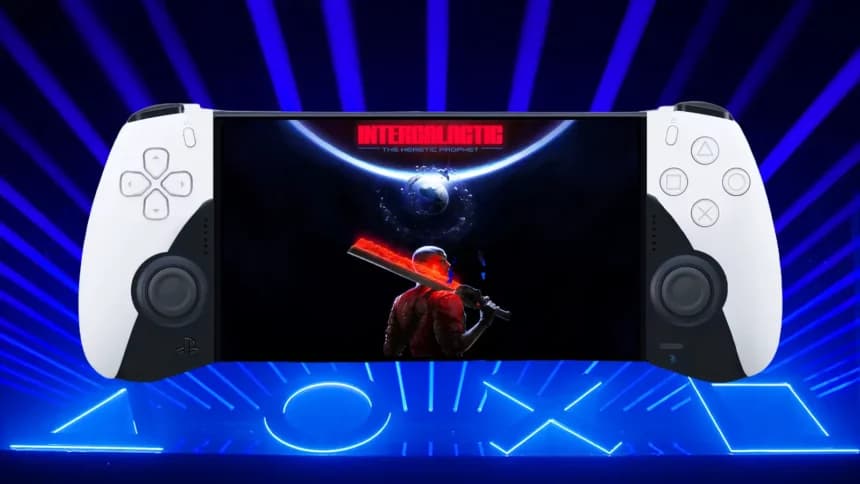
Consoles thrive on a fixed target. Sony managed a mid-gen split with PS4/PS4 Pro, and now PS5/Pro, by enforcing minimums and letting Pro hardware scale effects. Launching three very different PS6s on day one raises questions: do devs build to the handheld and scale up, or to the flagship and scale down? If the portable is truly native (not cloud/remote-play focused), it will need strict performance profiles—think locked resolutions and effect tiers—so studios aren’t QA-ing endless permutations. Sony would also have to nail development tools that auto-optimize across SKUs without devs writing bespoke render paths.
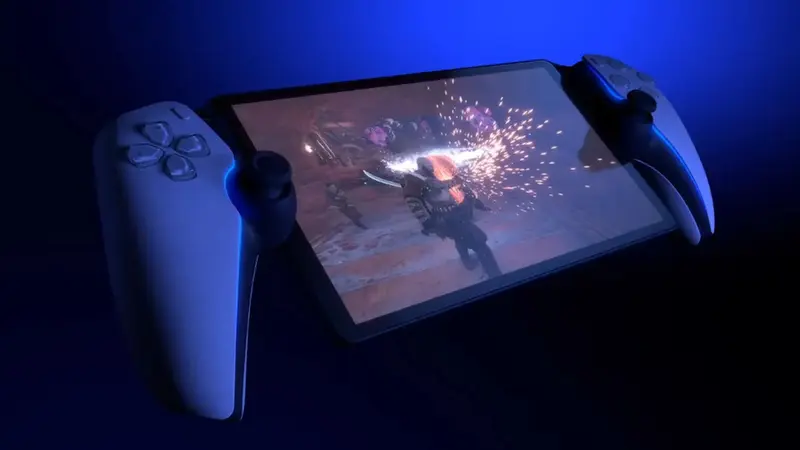
There’s consumer upside if Sony pulls it off. A dockable handheld lets you take single-player epics like Ghost of Tsushima or Horizon on the couch or a flight—no cloud stigma, no Wi-Fi dependence. Dock it at home for higher clocks and better visuals. That’s the Switch fantasy with PlayStation production values. The risk? Battery life and heat. 3 nm helps, LPDDR5X helps, but a “real console” in handheld form is a thermal puzzle. If the portable constantly falls back to 30 fps with blurry reconstruction, the magic breaks.
One more point: Moore’s Law Is Dead has had hits and misses. Treat this as a conversation starter, not gospel. The broad strokes—Sony acknowledging the handheld boom while protecting its high-end living room throne—make a ton of sense. The exact specs and prices? Expect movement.
A credible-sounding but unconfirmed PS6 leak points to a dockable handheld, a compact box, and a $699 flagship with late-decade silicon. The strategy is exciting and risky: great if Sony nails parity and battery life, messy if it fragments the platform. Until Sony speaks, file this under “plausible, not proven.”
Get access to exclusive strategies, hidden tips, and pro-level insights that we don't share publicly.
Ultimate Gaming Strategy Guide + Weekly Pro Tips