
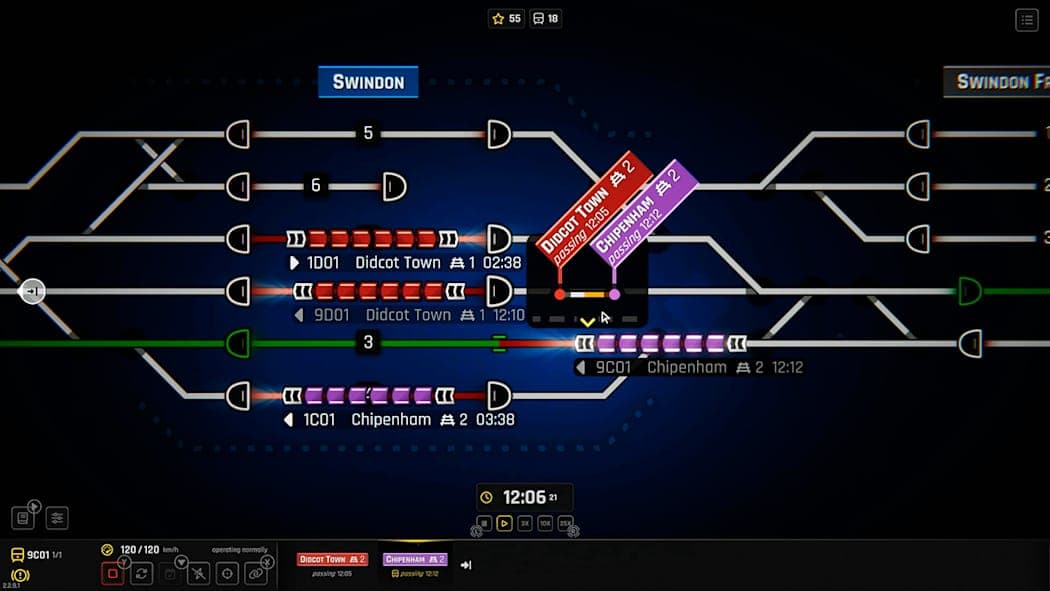
Rail Route on Switch: Handheld Train Automation Mastery
Game intel
Rail Route
This expansion focuses on the art of keeping passengers happy in your rail network. Introducing a completely new angle of gameplay, adding passenger demands in…
Rail Route on Switch: Handheld Train Automation Mastery
I’ll admit—mechanical sims are my jam. Whether I’m weaving arterial networks in Cities: Skylines or squeezing optimal throughput out of Factorio factories, that electrifying “aha” moment is what hooks me. So when Rail Route steamed onto Nintendo Switch, I wondered if a handheld could handle full-scale rail automation. Verdict: absolutely—and it’s loaded with indie charm that keeps you glued to the Joy-Cons.
PC Roots, Switch Adaptation
Rail Route debuted on PC in 2021 from indie studio TrainForge, earning a devoted niche for its logic-driven puzzles and automation tools. The Switch port preserves those core features—even community-created mods—and introduces touch controls, UI tweaks, and an adaptive HUD that scales between docked (1080p) and handheld (720p) modes.
Game Modes Breakdown
Story Mode: From Basics to Grand Circuits
The Story campaign acts as your signal-engineer bootcamp. Early stages introduce track layouts and one-way signals; by mid-game, you’re managing junction priorities and timed chains to avert multi-train pileups. Pro tip: build a bypass loop at critical switches and script an event trigger to reset points once the coast is clear.
Sandbox Mode: Unbound Creativity
Sandbox offers infinite resources and zero constraints—ideal for architectural showpieces and stress-testing your logic. I once threaded a corkscrew overpass connecting metropolis hubs in minutes. Just watch your script count: bundling triggers reduces CPU load and helps maintain smooth performance even as your network sprawls.
Timetable Mode: Precision Scheduling
Here, you inherit half-constructed networks and set departure times to meet passenger and freight quotas. One scenario might have you synchronizing multiple lines on a single platform—my go-to is staggering start times by seconds and linking hold scripts to buffer delays. It’s like coding your own rail OS.
Rush Hour: Peak Traffic Test
Think Tokyo-level commuter crush—constant arrivals, surprise closures, and shifting bottlenecks. I always pre-place a holding siding one block off the mainline so I can divert build-ups instantly with a single button press. It’s a lifesaver when the station turns into a parking lot.
Controls & UI
- Joy-Con/Pro Controller: Left stick pans, right stick zooms and tilts; ZL/ZR cycle tools; A confirms, B cancels; L opens the quick-build radial, R launches the scripting panel.
- Touch: Tap/drag to place rails and objects, pinch to zoom, two-finger rotate. Precise for layouts, though high-pressure adjustments can feel snug on the Switch’s screen.
The adaptive HUD shrinks less-essential elements in handheld mode; a “Compact HUD” toggle further unclutters cramped views.
Want to Level Up Your Gaming?
Get access to exclusive strategies, hidden tips, and pro-level insights that we don't share publicly.
Ultimate Gaming Strategy Guide + Weekly Pro Tips
Performance Insights
On a standard Switch, small scenarios run at a rock-solid 30 fps. Larger, train-dense layouts dip into the mid-20s under rush-hour stress. Docked mode offers a slight stability boost, but handheld play holds up impressively given the simulation’s depth.
Community & DLC Outlook
PC still boasts the widest array of user-made content, but Switch players get monthly Spotlight Maps curated by the devs. The official roadmap teases upcoming paid DLC—new regional networks and advanced signalling expansions—so keep an eye on developer announcements for release details.
Pros & Cons
- Pros: Full-featured desktop sim on-the-go; stable performance on small to mid-sized maps; dual input schemes; intuitive, adaptive UI.
- Cons: Steep learning curve; frame dips in massive networks; touch adjustments can feel cramped; no dynamic weather or day-night cycles.