
Table of Contents (13)
Rainbow Gate review: gorgeous mascot horror wrapped around an AI-shaped hole
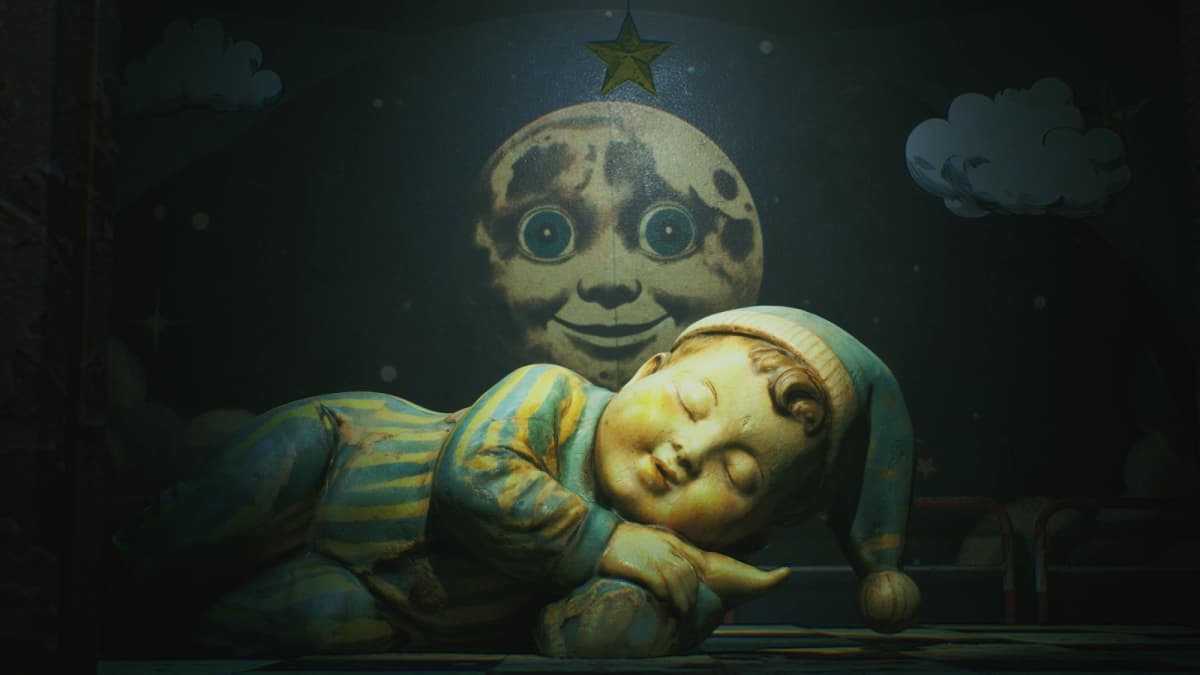
Rainbow Gate is one of those games that hits you with a mood before you’ve even processed what you’re looking at. It’s all sickly neon, claustrophobic corridors, and towering mascots that feel one bad day away from ripping your head off. On the surface, this is exactly the kind of short, punchy survival horror I tend to gravitate toward: focused scope, strong atmosphere, and a clear mechanical hook.
But spend a little time peeling back the layers and a weird dissonance creeps in. The lighting and materials are gorgeous, the animatronics are menacing, the chase sequences look frantic and readable… and then your eye lands on a wall texture or poster that practically screams “I was spat out by an AI model at 3AM.” Rainbow Gate constantly lives in that gap between technical brilliance and artistic shortcut, and that’s ultimately what defines the whole experience.
If you’re here hunting for a Rainbow Gate review to figure out whether this indie mascot horror game is worth your time, the short version is: it’s a tight, tense few hours of stealth-and-puzzle survival horror that looks far more expensive than its price tag, but it’s dragged down by repetitive structure and a very noticeable reliance on generative AI assets.
Key takeaways
- Fantastic Unreal Engine 5 lighting and materials create some of the most immersive mascot horror spaces around.
- Core line-of-sight stealth and chase design feels responsive and readable, closer to classic survival horror than pure FNAF-style tower defense.
- Resident Evil-style puzzles add welcome downtime, but several late-game puzzles are so punishing they wreck pacing.
- Heavy use of generative AI art and some audio assets undercuts the otherwise strong atmosphere.
- Short 4-6 hour runtime with little replay value; feels like a one-and-done horror night rather than a long-term obsession.
- Post-launch patches have already tweaked enemy speed and puzzle difficulty, showing a small but responsive dev team.
A detective, a dead park, and a camera bolted to your skull
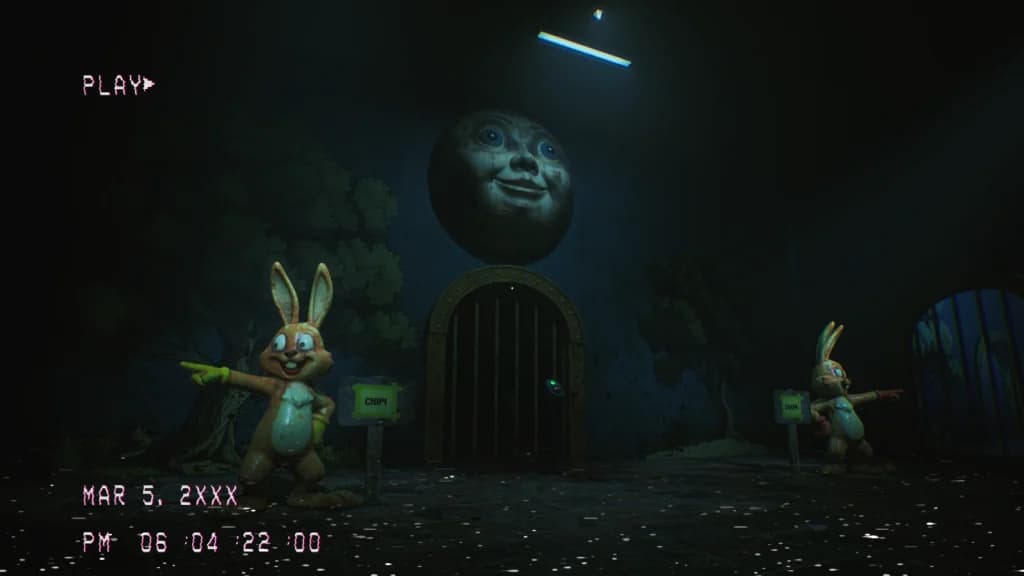
Rainbow Gate leans on a classic horror setup: you’re a detective pulled into a missing person case connected to a defunct toy factory and amusement park called, fittingly, Rainbow Gate. Think rusted rides, abandoned show floors, and plastic smiles frozen in the dark. It’s familiar territory, but the game’s twist is how it frames your perspective.
Almost as soon as you arrive, things go sideways. You’re knocked out and wake up with a camcorder strapped to your head and a creepy, almost ritualistic task: collect a set number of Rainbow Coins (usually 5-10 in a given area) if you ever want to leave. That camcorder isn’t just a lore prop; its HUD and VHS-style overlay define the entire visual identity of the game. Every hallway, every animatronic encounter is filtered through this grungy lens, which fits the detective angle surprisingly well.
The story itself is more scaffolding than centerpiece. You’re teased along by questions-what’s with the coins, who’s pulling the strings, why is this place still alive in its own sick way-but the payoff never quite hits as hard as the setup suggests. If you’re expecting a Poppy Playtime-style lore rabbit hole, this isn’t that. The narrative’s job here is mostly to justify why you’re sneaking through nightmare rides with a camera stapled to your face, and on that front it does enough to keep you moving.
Unreal Engine 5 at its moodiest… with a catch
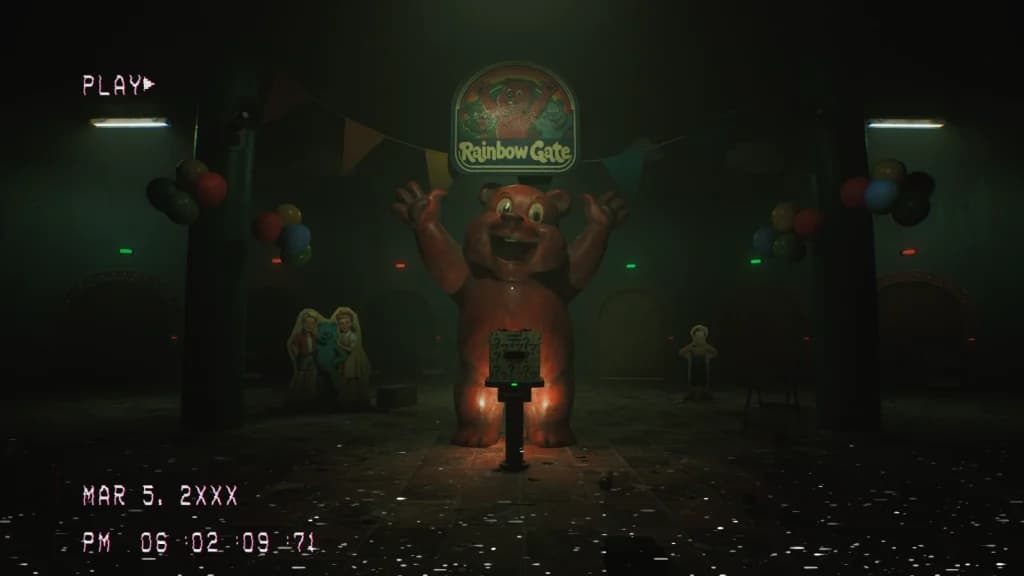
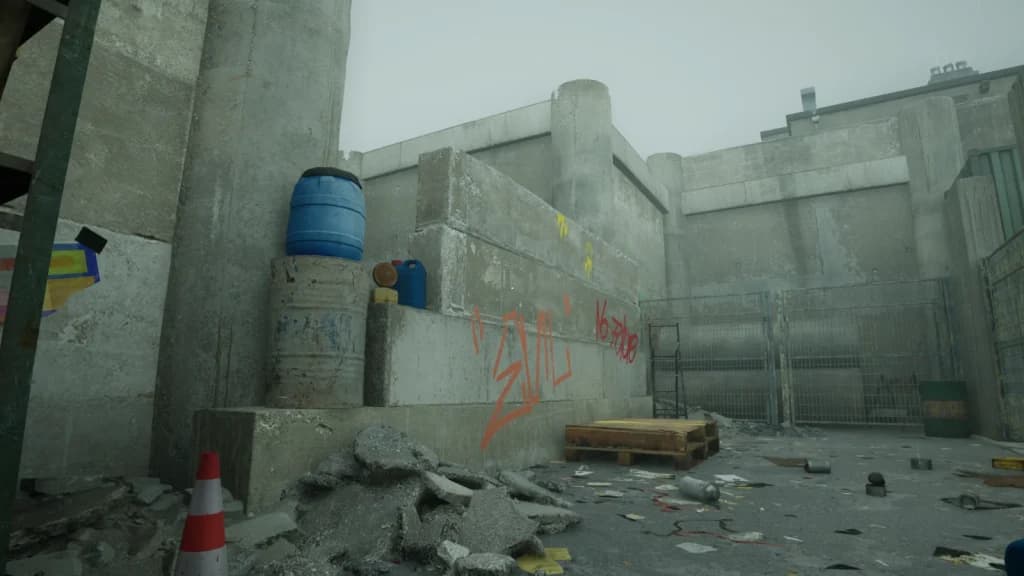
Visually, Rainbow Gate goes hard. Built in Unreal Engine 5, it leans into modern lighting and materials to sell its spaces. The contrast is what stands out: clean, plasticky toy surfaces next to grime-caked concrete, neon signage bleeding into shadowy corners, and mascot fur that looks just realistic enough to be unsettling under the wrong light.
The game loves putting you in liminal spaces-maintenance hallways behind colorful attractions, staff-only rooms that feel half-abandoned and half mid-shift. The lighting does a lot of the heavy lifting: darkness isn’t just “we turned the gamma down,” it’s pockets of visibility carved out by flickering lamps or your own limited perspective. There are moments where the whole scene could pass for a still from a moderately budgeted horror film.
The camcorder UI and subtle VHS distortion push it further. Layering film grain and lens artifacts over UE5’s crisp visuals is a risky combo, but here it mostly works. It makes the world feel observed and documented rather than just “seen,” reinforcing that detective angle and giving even simple corridor walks a slightly voyeuristic unease.
But then the illusion cracks.
7EVIL Studio has been open about using generative AI for a chunk of Rainbow Gate’s assets, and once you know that, you can’t unsee it. Posters on the wall, signage, some textures on boxes and props—they have that uncanny, over-smoothed AI look, the kind of detail that feels wrong when you stare at it for more than half a second. Some players have also called out certain audio stingers and effects as feeling “machine-cobbled.”
To the studio’s credit, they’ve publicly committed to replacing these AI-generated elements with human-made work in future updates. That’s a big step in the right direction, and their transparency beats the usual “pretend we didn’t do this” approach. But right now, that tension is just baked into the experience: a game that could stand shoulder-to-shoulder with much bigger productions visually, undercut by art that looks like a draft that slipped into the final build.
If you’re sensitive to AI art, it’s not a minor distraction—it actively chips away at immersion every time it shows its face.
Stealth and chases: mascot horror with actual movement
Mechanically, Rainbow Gate is closer to a streamlined Resident Evil or Alien: Isolation than it is to a straight Five Nights at Freddy’s clone. You’re not sitting in a control room flipping cameras and doors; you’re on the ground, sneaking through the park, physically hunted by animatronic nightmares.
The core is a line-of-sight stealth system. Enemies patrol, you scout their paths, and you manage your visibility rather than juggling power meters or static defenses. You can run, crouch, and climb at marked spots, and there’s a simple vault mechanic that keeps chases feeling fluid rather than sticky or clumsy. When you bolt across a room and slide over obstacles while a mascot barrels after you, the game briefly hits that perfect adrenalized state where every input feels responsive and every mistake feels like yours.
Enemy behavior backs that up. The animatronics aren’t omniscient; they work within the line-of-sight logic, which makes ducking behind props or slipping down side routes feel honest instead of scripted. Your victories in stealth feel earned, not handed to you by invisible leashes or sudden AI blindness.
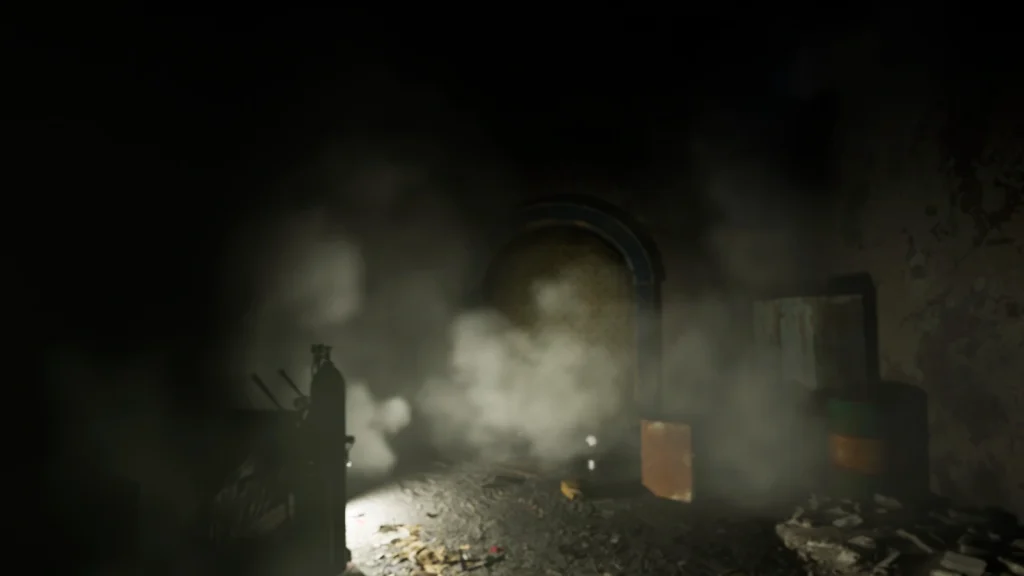
Chase sequences are the obvious highlight. These aren’t sprawling open levels—they’re more like dense, interconnected arenas where finding the “right” route to safety matters. You’ll find yourself mentally mapping loops and dead ends, trying to figure out how many mistakes you can make before the mascot closes the distance. When it clicks, it’s that same terror-tinged satisfaction that games like Outlast or Amnesia: The Bunker lean on: you’re prey, but you’re clever prey.
Post-launch, the developers have already patched some of the rough edges. Patch 1.3, for example, slowed down the Moon Bear enemy and softened a “Lullaby” mechanic that players found unreasonably punishing. That sort of tuning matters. In a short horror game, one badly balanced enemy can flip you from “on edge in a good way” to “annoyed and ready to alt+F4.” The fact that 7EVIL reacted quickly to feedback bodes well for anyone jumping in after those early difficulty spikes were sanded down.
The main weakness is repetition. Kill animations, while brutal and initially effective, start to lose bite after the third or fourth time you watch the same mascot tear you apart. As you repeat sections, the scares inevitably become more mechanical checkpoints than genuine shocks, and the game doesn’t always have fresh tricks ready to replace that fading fear.
Puzzles, pacing, and when “hard” becomes “exhausting”
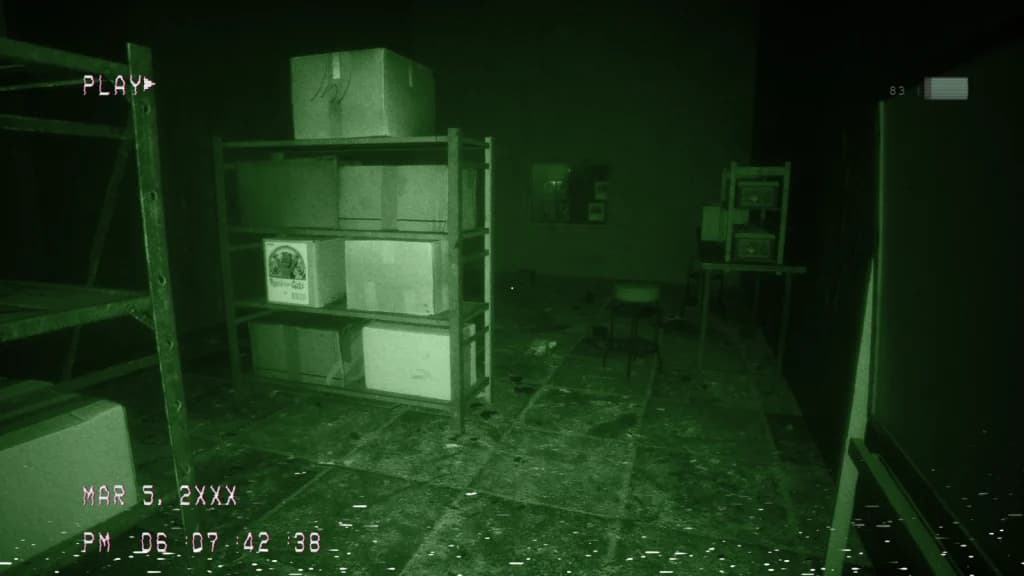
Where some mascot horror games are basically haunted house rides with keycards, Rainbow Gate actually asks you to think. Its structure borrows from classic Resident Evil: you explore an area, gather items, poke at environmental puzzles, and gradually open up routes and objectives while avoiding whatever’s hunting you.
At their best, these puzzles are a nice palate cleanser. After a tense chase, getting a few quieter minutes to decipher a code, interpret environmental clues, or figure out how to access the next cluster of Rainbow Coins gives your nervous system a break without killing the mood. It leans into that “detective in a cursed fun park” fantasy in a way that pure chase-fests never do.
As you progress, though, the complexity ramps up hard. Some of the late-game puzzles, especially the final coin puzzle that’s already infamous among players, cross the line from satisfying to outright punishing. They’re not impossible, but they’re the kind of head-scratchers that can leave you stuck long enough for dread to turn into irritation.
That’s particularly rough in horror, where momentum is half the experience. Being forced into long, frustrating puzzle stalls in the final stretch undercuts the carefully built tension of the earlier hours. Patches have apparently smoothed some of the worst offenders, but Rainbow Gate still feels like a game where the puzzle design occasionally forgets it’s sitting inside a horror story, not a pure brainteaser compilation.
Sound, swearing mascots, and the strange audio mix
Atmosphere in horror lives and dies by sound, and Rainbow Gate mostly understands that. Ambient noises—distant clanks, ride mechanisms shifting in the dark, the heavy footfalls of mascots somewhere just out of sight—do a lot of work in making every hallway traversal feel unsafe.
The standout, though, is the voice work. The animatronics talk, and not in the cutesy “Welcome to Rainbow Gate, kids!” way you might expect from their designs. Their lines are weirdly mature, sometimes outright crude, which creates a sharp and deliberate contrast with their colorful mascot bodies. That tonal whiplash ends up being one of the more memorable parts of the whole package; it’s jarring in exactly the way a good horror villain should be.
Where things get shakier is asset cohesion. Just like with the visuals, some of the audio feels like it might have come from generative tools or a grab-bag of mismatched samples. You’ll go from a well-acted line or crisp, weighted sound effect to something that feels oddly flat or out of place. It’s not constant, but it’s noticeable enough to add to that sense of “this part was handcrafted, this part wasn’t.”
Short, sharp, and mostly a one-timer
Rainbow Gate isn’t trying to be a 20-hour epic. You’re looking at roughly 4-6 hours depending on how quickly you solve puzzles and how many times a mascot sends you back to a checkpoint. That length actually suits the genre well: long enough to build a rhythm of stealth, chase, and puzzle, short enough that the core ideas don’t completely wear out their welcome.
The flip side is replayability. Once you’ve made your way through the park, seen the death animations a handful of times, and cracked the major puzzles, there isn’t a whole lot of reason to come back. There are no big branching paths, alternate endings, or deep systems that reward multiple runs. This is very much a “long evening with the lights off and headphones on” sort of game.
At its $13.99 price point, that’s not inherently a problem. As a self-contained horror ride, the value is fair. Just don’t go in expecting a new long-term obsession.
Performance and polish
On PC, Rainbow Gate runs better than a lot of indie UE5 projects have any right to. Frame rates are stable, input responsiveness during chases feels solid, and there aren’t widespread reports of technical disasters. The engine’s visual muscle is used smartly rather than recklessly, which means even mid-range rigs can get a good experience without fiddling for an hour in settings menus.
Combined with the quick post-launch balancing patches, it paints a picture of a small team that, while not perfect, is at least on top of the basics: don’t ship a broken game, and listen when players say “this boss is unfair” or “this puzzle is too much.”
The AI-shaped elephant in the room
It’s impossible to talk about Rainbow Gate without circling back to the AI asset issue. In a vacuum, this would just be a technically impressive indie horror game with some uneven pacing. But the decision to lean heavily on generative AI for art and, apparently, some audio assets changes the conversation.
On a purely practical level, it hurts the game’s aesthetic coherence. You have these painstakingly lit spaces and well-animated threats sharing screen real estate with props and posters that look like Midjourney outputs. It’s like walking through a lovingly built haunted house where half the decorations are placeholder stock images someone forgot to replace.
On an industry level, it taps into a bigger anxiety around how AI is being used in creative work. 7EVIL Studio being transparent and promising to replace those assets is genuinely encouraging—far better than quietly using them and hoping no one notices. But the shipped version is still the shipped version, and right now, players are paying for a product where a noticeable chunk of the art pipeline has that “AI gloss” instead of a human touch.
Whether that’s a dealbreaker will depend on where you personally draw the line. For some, the moment-to-moment tension and strong use of Unreal Engine 5 will outweigh the shortcuts. For others, especially folks already frustrated with generative AI’s encroachment into creative industries, it’s going to be a hard stop.
Who Rainbow Gate is really for
If you thrive on tightly scoped horror games and don’t mind that they end before they overstay their welcome, Rainbow Gate fits neatly into that niche. It’s especially appealing if you like the mascot horror aesthetic but want more actual gameplay than watching cameras and flipping switches. The blend of stealth, chases, and traditional puzzle-solving gives it more substance than a lot of “YouTube-bait” horror releases.
It’s also a reasonable pick if you’ve already burned through the heavy hitters—Resident Evil remakes, Amnesia, Poppy Playtime—and you’re craving something shorter but still tense to fill an evening.
On the other hand, if you care deeply about narrative payoffs, Rainbow Gate’s story probably won’t stick with you. It’s functional rather than memorable. And if you’re firmly against generative AI in commercial art, this is going to be a tough sell until (and unless) those promised asset replacements actually land.
Bottom line: tense, pretty, and compromised
Rainbow Gate is a fascinating contradiction. On one side, you’ve got a moody, well-realized horror playground powered by Unreal Engine 5, with responsive movement, smart stealth, and chase sequences that actually make your palms sweat. On the other, you’ve got a reliance on AI art and some overcooked puzzles that chip away at the immersion the game works so hard to build.
As a piece of horror entertainment, it mostly works. It’s scary when it needs to be, it gives you enough mechanical depth to stay engaged, and it wraps things up before boredom truly sets in. As a cohesive artistic statement, though, it falls short of greatness, stuck between hand-crafted tension and generator-fueled shortcuts.
TL;DR
- What it is: A short, first-person survival horror game set in a ruined amusement park/toy factory, blending stealth, chases, and environmental puzzles.
- What it does well: Gorgeous UE5 lighting, tense line-of-sight stealth, fun chase sequences, and surprisingly good mascot voice acting.
- What holds it back: Heavy use of generative AI assets, some uneven audio, and late-game puzzles that can grind pacing to a halt.
- Length & value: Roughly 4–6 hours for around $14; solid for a one-sitting horror experience, but with almost no replay value.
- Who should play: Fans of mascot horror who want more movement and puzzles than typical FNAF-likes, and horror players looking for a polished, mid-budget scare session.
- Who should skip: Players who prioritize narrative depth, hate difficulty spikes in puzzles, or are firmly opposed to visible AI-generated content in games.
FinalBoss // Gear
Level up your setup
01Top-rated gaming headsetson Amazon→02High-refresh gaming monitorson Amazon→03Gaming chairson Amazon→04Discounted game keyson Kinguin→Affiliate links · As an Amazon Associate, FinalBoss earns from qualifying purchases.
Want to Level Up Your Gaming?
Get access to exclusive strategies, hidden tips, and pro-level insights that we don't share publicly.
Ultimate Reviews Strategy Guide + Weekly Pro Tips