
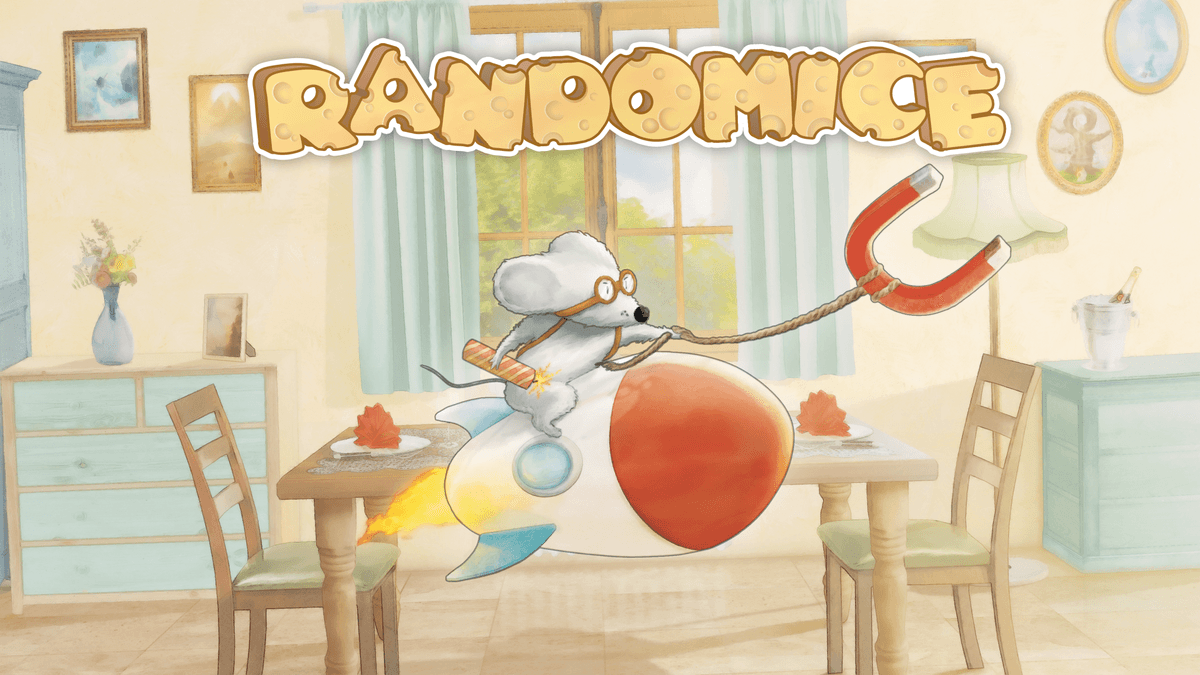
Randomice is a Combat-Free, Procedural Metroidvania Aiming at the Randomizer Crowd
Game intel
RANDOMICE
A procedural Metroid-like with no fights, focused on exploration and route-planning, in which you play a mouse trying to escape from an ever-changing house. E…
Why Randomice Caught My Eye
Videoludid has set a date: Randomice launches on Steam November 25, 2025, with a fresh trailer to match. What makes this more than just another cutesy indie? It’s a hand-drawn, procedural Metroidvania with no combat, built by solo developer Aurélien Defossez, and designed around randomized item order and route planning. That last bit is the hook. Instead of bolting a randomizer mod onto a finished game, Randomice bakes the randomizer into its DNA. If you’ve ever gotten hooked on community randomizers for Super Metroid or Hollow Knight, that pitch should perk up your ears.
Key Takeaways
- Metroidvania exploration without combat focuses the design on traversal, puzzles, and map mastery.
- Randomized item order means each run demands fresh route planning-built for replayability.
- Watercolor-inspired, hand-drawn art and lighthearted writing suggest cozy vibes with brainy challenges.
- Procedural structure is ambitious; the big question is whether layouts feel authored or algorithmic.
Breaking Down the Announcement
The headline is clear: Randomice is targeting the exploration-first slice of the Metroidvania audience. No combat means the game has to live and die on the quality of its traversal tools, environmental puzzles, and how satisfying it feels to crack open shortcuts and secrets. The randomized item order is the spice-every run should reshuffle what you get and when, forcing you to improvise new routes through a familiar house-sized labyrinth.
That “house as a world” concept is a smart scale choice for a solo project. Everyday objects become landmarks and obstacles, and the domestic setting fits a lighter tone without sacrificing mystery. The watercolor aesthetic is doing real work here too: think soft edges, readable silhouettes, and a storybook warmth that should make backtracking feel more like revisiting pages than grinding corridors.
The Real Story for Metroidvania Fans
Here’s why this matters right now. The genre is having a moment with non-combat design-Animal Well proved you can deliver tension and discovery without a single boss fight. Randomice looks to push in that direction but leans harder into replayable runs. That’s unusual. Most Metroidvanias prize a carefully tuned, hand-authored progression. Randomizers usually come later, via mods. Randomice flips it: progression logic and re-routeability are the core design pillars from day one.
If you’ve ever planned a run in a randomizer, you know the thrill: you find an early mobility trick, suddenly an off-route passage becomes the critical path, and your mental map reconfigures on the fly. The best randomizers avoid softlocks with smart logic—ensuring that, despite the shuffling, you can always reach the next key item with what you have. If Randomice nails that logic and communicates it cleanly, this could be catnip for players who love solving the map as a puzzle rather than brute-forcing enemies.
Where the Hype Meets the Hard Problems
Procedural Metroidvania design is notoriously tricky. Chasm remains the cautionary tale: competent systems, forgettable flow. Without bespoke rhythm and foreshadowing, procedural layouts can feel like a series of rooms rather than an adventure with crescendos. Randomice will need more than puzzles scattered in a pretty house—it needs moment-to-moment micro-arcs that make traversal feel authored even when the item order isn’t.

No combat also raises the design bar for stakes. How do you keep pressure without enemies? Timed hazards, physics puzzles, resource-limited tools, and route gambles can deliver tension, but it’s a delicate mix. The lighthearted writing helps tone-wise, but the gameplay loop has to carry the weight. If each run genuinely recontextualizes the map and teases alternate solutions, great. If “random” just means occasional detours, the novelty will fade fast.
Want to Level Up Your Gaming?
Get access to exclusive strategies, hidden tips, and pro-level insights that we don't share publicly.
Ultimate Gaming Strategy Guide + Weekly Pro Tips
What Gamers Need to Know Before Wishlisting
- Replayability is the value proposition. Expect runs, not a single sprawling campaign. The key question: how long is a run, and how meaningfully different do they feel?
- Clarity matters. The game should teach its item logic and telegraph reachable goals so you feel clever, not lost. Accessibility options for hinting and seed complexity would be a big plus.
- Performance and controls will make or break it. With traversal at the core, inputs need to feel crisp and consistent across procedurally varied spaces.
- Price is unannounced; keep an eye on whether the content and run variety match the tag.
Solo dev projects can surprise—Axiom Verge and Animal Well set the bar—but they also benefit from tight scope and a strong identity. Randomice has both on paper: a clear design thesis (randomized progression, zero combat) and a cohesive art style that stands out among the neon pixel crowd.
Looking Ahead
The new trailer should tell us two crucial things: how readable traversal puzzles are in motion, and how different two runs can look early on. If we see smart breadcrumbs, playful writing that doesn’t overstay its welcome, and routes that meaningfully diverge based on early items, Randomice could carve out a niche alongside the best non-combat explorers.

Bottom line: this isn’t just “Metroidvania but cozy.” It’s a deliberate swing at the randomizer community, packaged for everyone. If the procedural backbone holds and the logic prevents softlocks without training wheels, Randomice might be the game you replay because you want to, not because you missed a collectible.
TL;DR
Randomice launches on Steam November 25, 2025: a hand-drawn, no-combat Metroidvania built around randomized item order and replayable runs. It looks cozy but aims brainy—success hinges on strong traversal feel, smart progression logic, and procedural design that still feels authored.