
Table of Contents (8)
My weekend buried in Ratcheteer DX’s frozen dungeons
I started Ratcheteer DX on a Friday night “just to see what the Playdate port looked like on Switch” and ended up rolling credits before the weekend was over. It’s a small game, five-ish hours if you poke at most corners, but it’s the kind of compact adventure that sticks in your brain because almost everything in it feels deliberate.
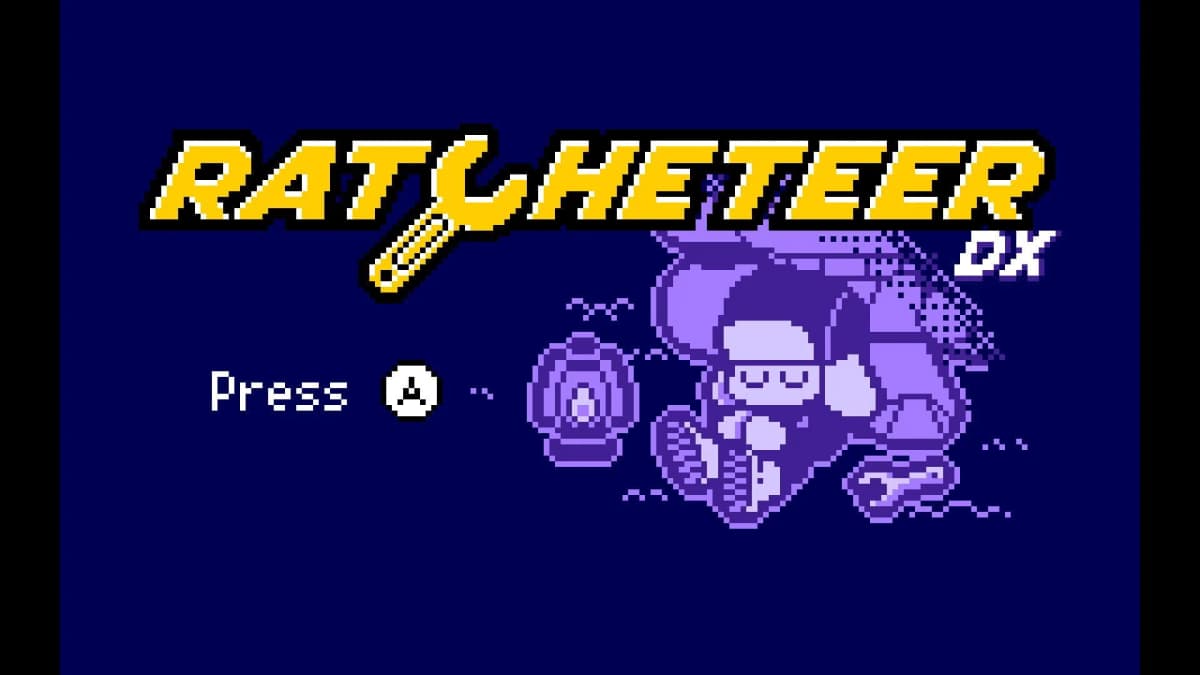
If you have even a passing nostalgia for Game Boy and early Zelda, Ratcheteer DX hits like a lost cart you found at the bottom of an old backpack. Top-down, chunky pixels, a melancholic overworld theme looping in the background, and a hero whose weapon is basically a wrench-sword. On paper it sounds like yet another retro homage. In practice, it’s sharper and more focused than that label suggests.
I played the Switch version mostly in handheld, curled up on the couch, and occasionally on a monitor to compare. Over one long night and a lazy Sunday session, I cleared the five main dungeons, wrapped up the final mech sequence, and chased down a few extra heart pieces and alien runes. By the time the credits rolled, I had that pleasant post-Zelda haze where your brain is still mentally pushing blocks and flipping switches.
Key takeaways after finishing Ratcheteer DX
- Laser-focused 4-5 hour Zelda-like built around smart, multi-use tools
- Excellent chiptune soundtrack that carries a lot of the atmosphere
- Interconnected overworld and dungeons feel tight and intentional, not padded
- Platforming and edge detection are noticeably harsher than they should be
- DX upgrades (color, controls, filters, performance) make this the version to play
An ice age, a wrench, and a colony on the edge
The setup grabbed me faster than I expected. Instead of another fantasy kingdom, you’re a mechanic waking up in subterranean cryo colonies during an extinction-level ice age. Imagine if the Hyrule overworld was buried under megatons of ice and the survivors decided the best bet was to literally sleep through the apocalypse.
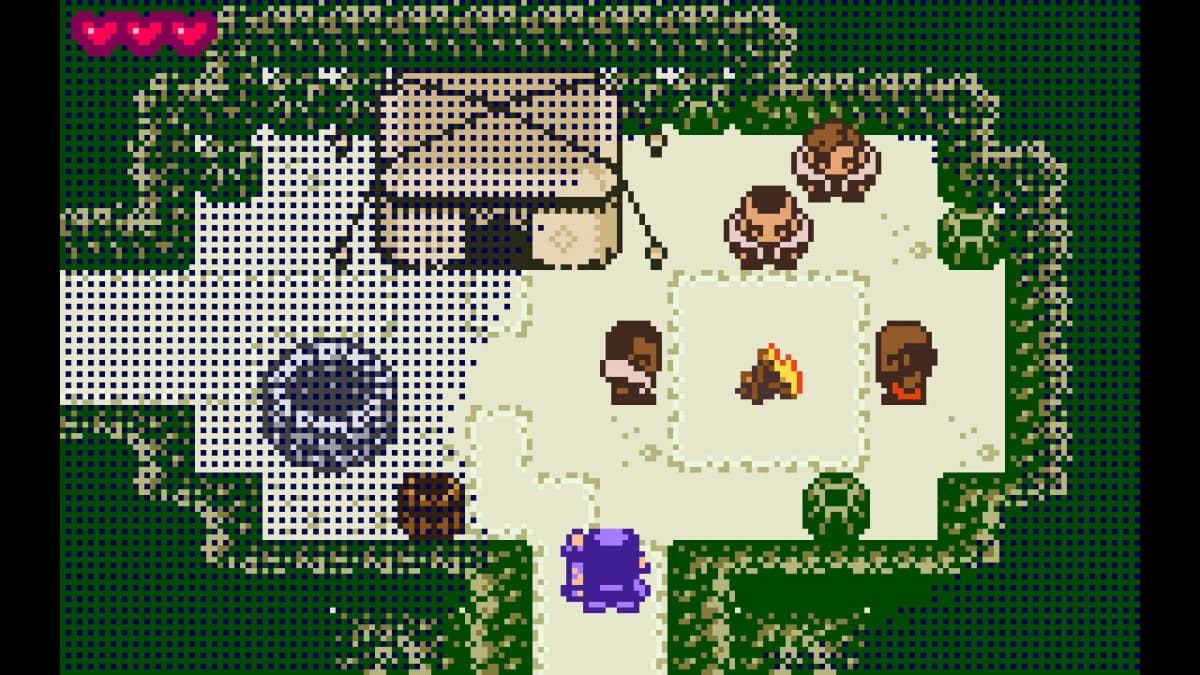
Your job, at least at first, is just maintenance: keep the life support humming, fix the failing systems, make sure the frozen people don’t quietly die. But the deeper you go, the more it becomes about reconciling three different groups: the sleepers, the communities that chose to stay awake and endure the cold, and a strange, almost EarthBound-flavored alien presence that lives just left of reality.
The storytelling is sparse, delivered through brief NPC chats, little environmental hints, and the occasional surprisingly earnest line about survival and compromise. There are no long cutscenes, no lore dumps. Yet I found myself stopping to read every line because the writing has that compact confidence you only get when a solo dev knows exactly how much they can say with a single textbox.
One moment that stuck with me: I’d just cleared the third dungeon and came back through a hub area I’d sprinted past earlier. An NPC I barely registered before was now ready to talk about what staying awake in this endless winter had cost them. It wasn’t dramatic, just a quiet bit of regret in a handful of lines, backed by that soft, sad overworld track. It did more for the setting than any exposition dump would have.
Small but fierce: dungeons, tools, and that “just one more room” pull
Structurally, Ratcheteer DX is very much in conversation with NES and Game Boy Zelda: a compact overworld with five themed dungeons branching off, each one introducing a new tool that then ripples back into earlier areas. What separates it from the pile of “Zelda-like” games is how tight that loop feels.
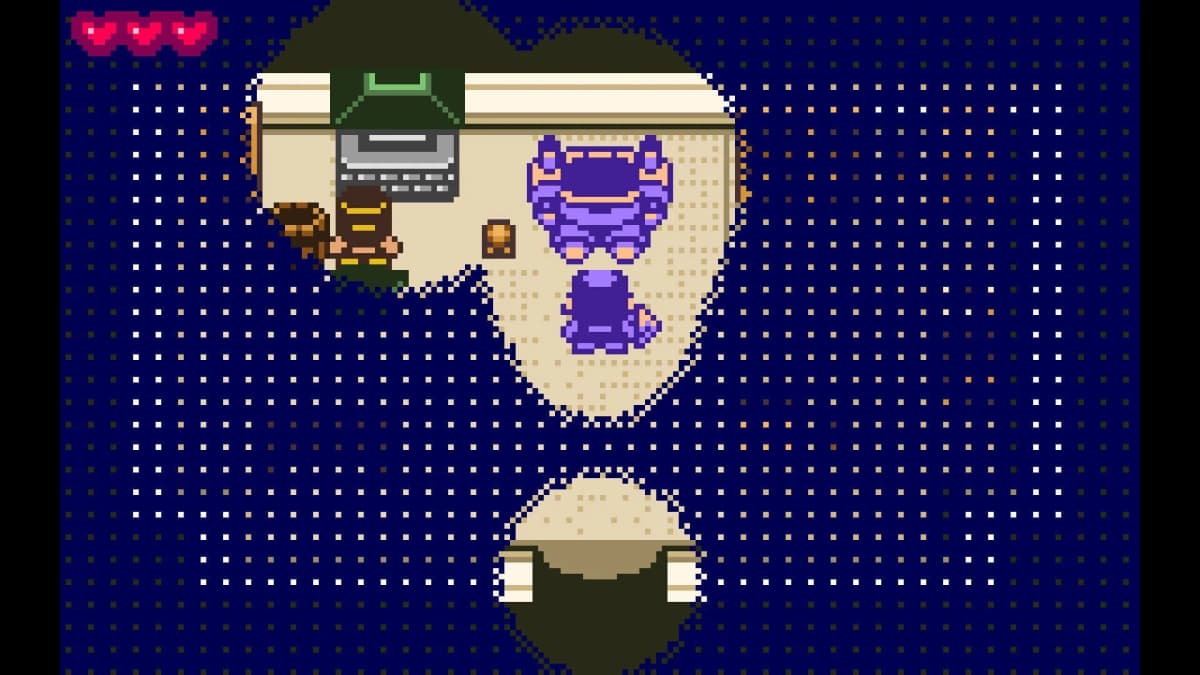
Within the first half hour you’ve got a lantern and your wrench-sword. The lantern does the obvious thing-lights up the claustrophobic tunnels-but also exposes certain enemy weaknesses and reveals little environmental tells. It sounds small, but in practice it means you’re constantly flicking it on and off, reading rooms rather than just face-tanking enemies.
Then the game starts layering in gear: jump boots; a drill that doubles as both shield and environmental battering ram; a movement tool that will definitely make Sonic fans grin the first time they use it. Every item does at least two jobs-combat and traversal, traversal and puzzle solving, puzzle solving and world access—and because the campaign is short, nothing overstays its welcome.
A typical run through a dungeon goes something like this: you step into a new area, poke at a few enemies to see how they react, notice a suspicious wall pattern, try the drill, and suddenly you’ve opened a shortcut back to the main hall. There’s often a locked door visible from the entrance that you can’t reach until you’ve done a half-loop through the dungeon and dropped a ladder down from the other side. It’s classic stuff, but the layouts are compact enough that you’re never more than a couple of rooms away from understanding how everything slots together.
I especially liked that secret hunting never felt like a pixel-hunt. Heart pieces and alien runes (which act as a kind of light collectible / lore system) are tucked just off the main paths—behind a wall pattern you’ve been taught to question, or on a platform that’s just out of reach until you remember the glide or your newfound mobility trick. Half the satisfaction is that little “oh, of course it’s that” when the mental Tetris pieces click together.
The overworld uses the same logic. Early on, I noticed a series of stone wells with cryptic markings and didn’t think much of them. Hours later they revealed themselves as a makeshift fast-travel network, cutting what could have been tedious runs down to quick jumps between key hubs. That kind of delayed payoff happens a lot: doors you saw but couldn’t open yet, icy ledges that become trivial once you’ve upgraded your movement, caverns that recontextualize when you get another tool.
Bosses are brisk and readable. This isn’t a game trying to be a boss-rush brutality test; they’re more like big, punchy final exams for each dungeon’s main idea. One used my drill in three different ways in the span of a single fight—blocking projectiles, reflecting shots, and punching through breakable geometry to expose weak points. Once I recognized the pattern, the battle snapped into that satisfying dance where you feel clever rather than just mechanically skilled.
Where Ratcheteer DX stumbles: precision platforming in a cozy puzzler
For all the praise I have for the puzzles and tools, there’s one system that kept nagging me: the platforming. Not because it’s omnipresent—this is still more of a dungeon crawler than a precision jumper—but because when the game leans on it, the cracks show.
Edge detection feels noticeably stricter than the rest of the game’s tone suggests. You can be a pixel off a ledge and the character will slip down instead of catching it. In combat-heavy rooms, that’s mildly annoying. In rooms where a missed jump means falling into damage or being kicked back to the start of an obstacle sequence, it’s genuinely frustrating.
The glide ability you get later on is part blessing, part curse. It lets you cross bigger gaps and do some very cool sequence-breaking if you’re bold, but its arc is just floaty enough that I regularly overshot what looked like safe platforms. A few of the mid- to late-game rooms clearly expect you to have mastered exactly how long to hold the button, and they felt out of step with the otherwise generous vibe.
The lowest point for me came in the fourth dungeon. Ghost enemies can phase in right as you’re committing to a jump and knock you off-course. Combine that with snow-like quicksand patches that swallow you whole and force a full-screen reset, and suddenly you’re repeating the same little gauntlet not because you misunderstood the puzzle, but because the physics and enemy timing didn’t quite line up in your favor.
None of this ruined the game for me—every rough patch was conquerable with a bit of stubbornness—but it did lead to a couple of those “alright, I’m taking a break” moments. If the jump leniency and glide tuning were just a hair more forgiving, I think Ratcheteer DX would land squarely in “cozy challenge” territory instead of occasionally dipping into “mildly aggravating.”
From Playdate crank to Joy-Con: why DX is the definitive version
I messed around with the original monochrome Ratcheteer on Playdate back when that little yellow handheld was new. It was impressive then, but you could feel it wrestling with hardware constraints: limited buttons, the crank gimmick, and a tiny screen. Ratcheteer DX on Switch and PC is what that game always wanted to be.
On Switch, tools are mapped across the face buttons and shoulders in a way that makes swapping feel instant. I rarely had to dig into menus mid-room; when I did pop into the inventory or map, it was primarily to chart where I wanted to go next, not to do busywork. That alone makes combat smoother and puzzle rooms snappier than on the original device.
Performance-wise, my Switch experience was rock solid. The game targets 60fps and, in my playthrough, held it without visible stutters or hiccups, even in busier boss encounters with multiple projectiles and animated hazards flying around the screen. Given the lo-fi pixel look you’d hope for that stability, and it’s nice that it actually delivers.
The DX part isn’t just “it’s in color now,” though that alone changes the vibe a lot. You can flip between multiple palettes and visual filters: full color (which I used most of the time), a clean black-and-white mode, a Playdate-style grey, and a very nostalgic Game Boy green. On top of that, there are overlays like scanlines, dot-matrix, and grid effects, plus scaling options so you can get that fake CRT look or a sharp, big-pixel window depending on your nostalgia flavor.
I ended up running full color with a light grid effect in handheld and a slightly heavier scanline filter on a monitor. It’s a small touch, but it made the game feel like it belonged equally on a modern console and in some imaginary 1998 magazine spread.
Pixel tundras and chiptune melancholy
Visually, Ratcheteer DX lives in that sweet spot between simple and expressive. Early areas lean hard on darkness and tight corridors—by design, because your lantern is doing a lot of heavy lifting—but the deeper you get, the more variety sneaks in. Soft pastel palettes break up the industrial blues and greys, alien structures puncture the snow fields, and the cryo facilities take on an oddly cozy, lived-in feel.
The dungeons themselves can blur together a bit theme-wise; they’re all variations on frozen-industrial-buried-tech rather than wildly distinct biomes. What saves them from feeling samey is their layout and the micro-details: the positioning of pipes, little warning signs half-buried in snow, the way certain surfaces signal “this can probably be drilled” once you’ve learned to read the tiles.
The real star of the show is the soundtrack. Ratcheteer DX runs on a chiptune score that knows exactly when to be heroic and when to lean into the loneliness of wandering through a ruined, frozen world. The main overworld track has this subtle thread of melancholy running underneath the usual adventure bounce, and it matches the premise perfectly: you’re not saving a thriving kingdom, you’re trying to wake a planet that might not want to come back.
Boss themes go harder, all snappy percussion and driving leads, but they never feel out of step with the rest of the OST. One late-game dungeon theme, with its slightly detuned arpeggios, reminded me of the weirder corners of Game Boy-era Final Fantasy music in the best way. I found myself lingering in a couple of rooms just to let the loop resolve again.
DX brings CD-quality stereo audio compared to the original Playdate’s lo-fi speaker, and you can tell. In headphones, subtle panning on certain sound effects and the weight of some of the lower chiptune notes come through in a way they absolutely didn’t on the handheld.
Who should actually play Ratcheteer DX?
Ratcheteer DX is not trying to be your 40-hour epic. My save file hit just over four and a half hours when I beat the final boss and did a bit of extra exploring, and I’d guess 100% completion is maybe another hour beyond that. Personally, I loved that about it. It’s tuned for a couple of evenings rather than a month-long commitment.
If you’re the kind of player who loves classic Zelda but groans when yet another open world throws a million markers at you, this is a refreshing antidote. You get familiar rhythms—tools unlocking new areas, dungeons looping back on themselves, heart piece hunting—without any bloat.
On the other hand, if you need deep RPG systems, character builds, or heavy narrative branching to stay engaged, Ratcheteer DX will probably feel too light. It’s mechanically clever but mechanically simple; there are no skill trees to min-max, and the story is more vibes and implication than long monologues.
I’d also flag the platforming quirks as a soft warning. If slightly touchy jumps and occasional “ugh, again?” respawns really get under your skin, know that there are segments here that might test you more than the rest of the game does. They’re absolutely beatable, but you’ll want a little patience in reserve.
For everyone else—especially Switch owners looking for something tight and affordable between big releases—Ratcheteer DX slides effortlessly into that “perfect weekend game” slot. It’s easy to pick up, hard to put down, and short enough that you actually see the end.
FinalBoss // Gear
Level up your setup
01Best-selling Switch 2 gameson Amazon→02Switch 2 accessorieson Amazon→038BitDo controllerson Amazon→04Discounted game keyson Kinguin→Affiliate links · As an Amazon Associate, FinalBoss earns from qualifying purchases.
Want to Level Up Your Gaming?
Get access to exclusive strategies, hidden tips, and pro-level insights that we don't share publicly.
Ultimate Reviews Strategy Guide + Weekly Pro Tips