
Table of Contents (7)
The Timer Gets Teeth – And That’s Good For Ravenswatch
Ravenswatch hooked me because of one brutal idea: you’ve got 18 minutes to prep in a sprawling map before the master nightmare drags you into a boss fight, ready or not. That ticking clock makes every chest, event, and shop stop a tough call – no dithering, just decisions. The new Hourglass of Dreams update leans hard into that tension with “overtime,” time-gated rewards, and fresh quests. It’s the kind of risk/reward shake-up that can keep a roguelike spicy months after launch – if it doesn’t sand down the game’s bite.
Key Takeaways
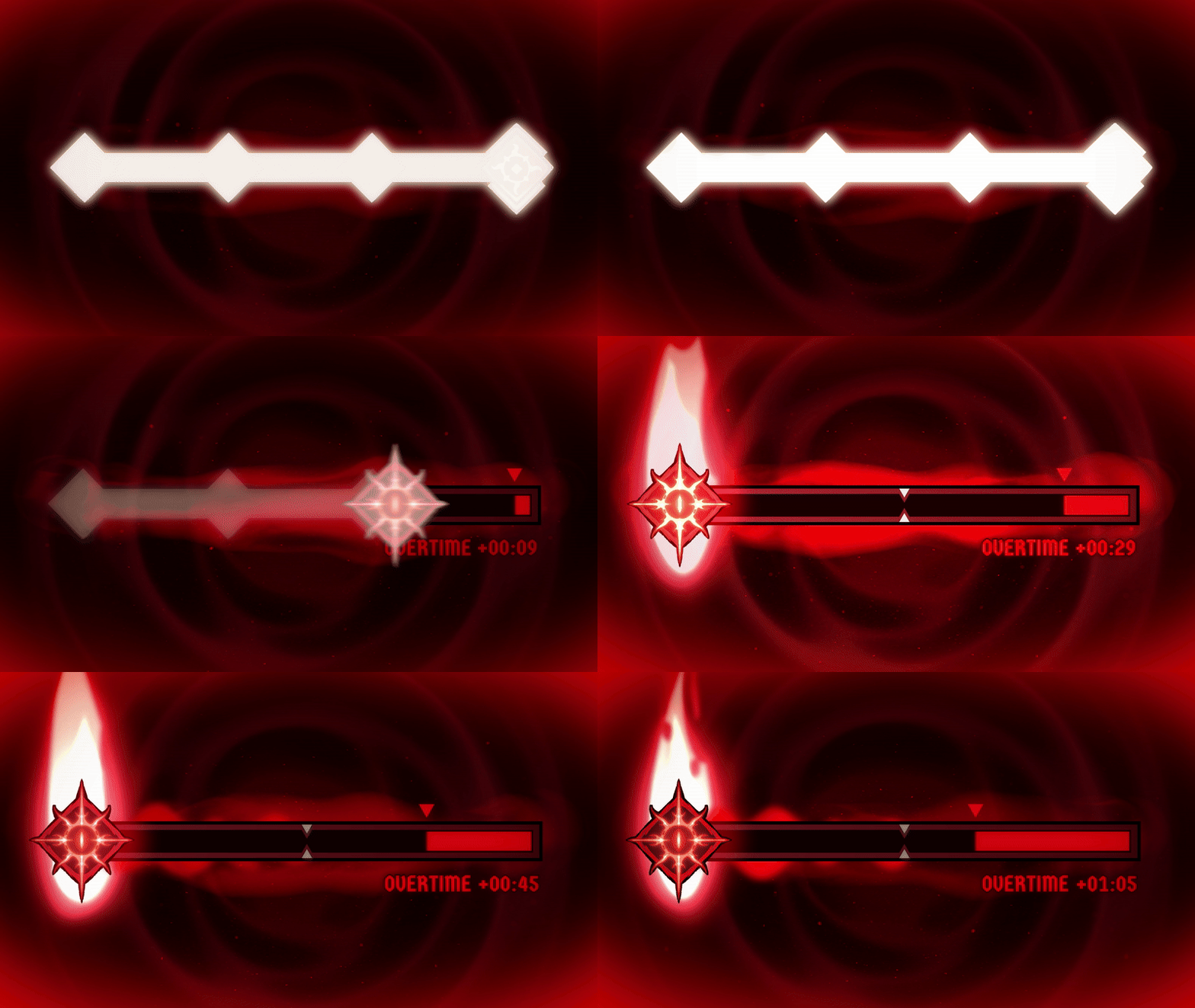
- Overtime adds up to three extra minutes after the 18-minute timer — but the boss grows stronger the longer you loiter.
- Trigger the boss early and you’ll earn Hourglass rewards for the next chapter, improving the sooner you start the fight.
- Three optional quests and the Leprechaun’s Cauldron activity add new ways to gamble time for power.
- A paid cosmetic pack drops alongside the free update — purely skins, with fiery Geppetto and skull-styled Scarlet highlights.
Breaking Down the Update: Overtime and the Hourglass
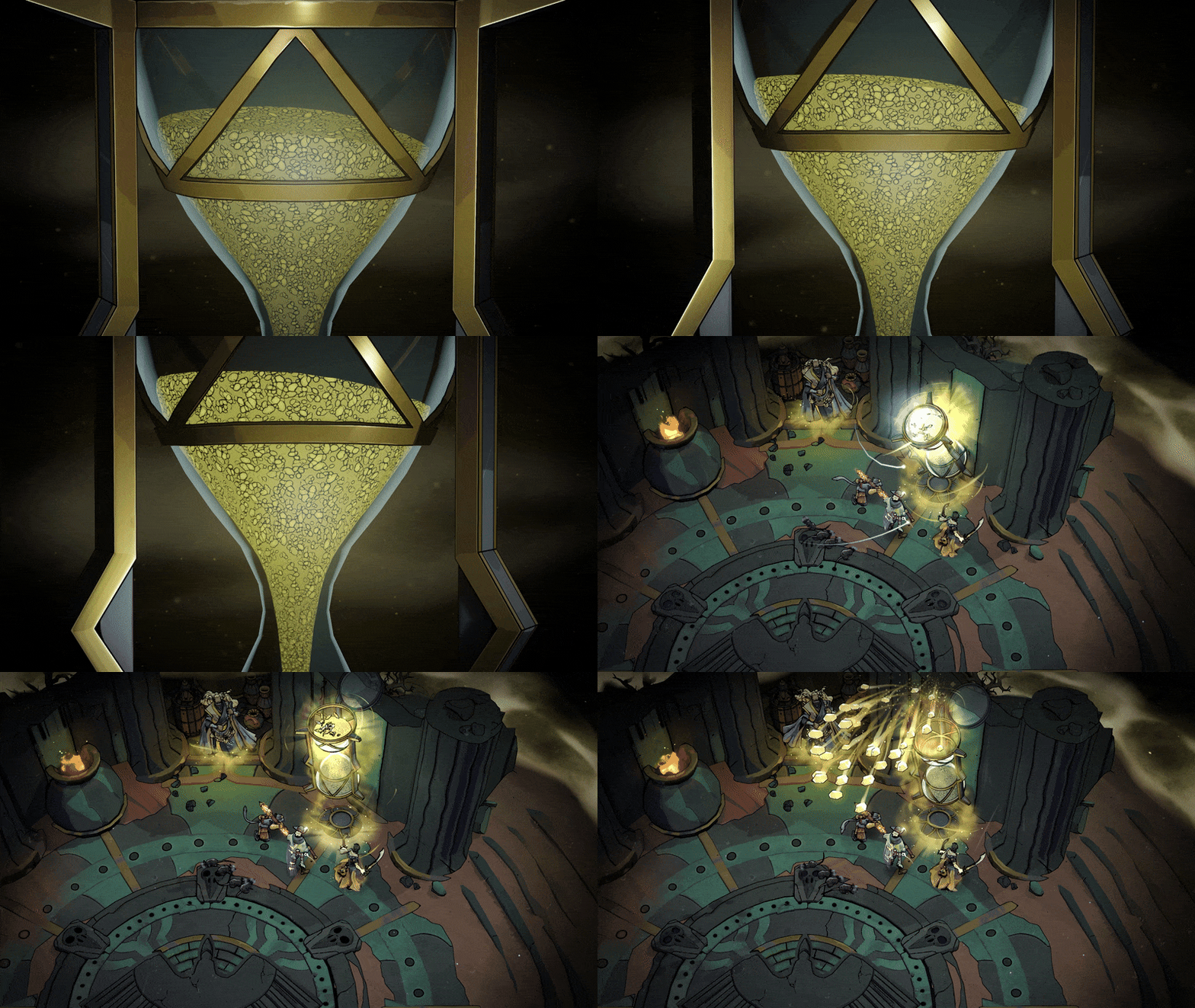
Here’s the headline: when the 18-minute prep phase ends, you now roll into an automatic overtime window that can last up to three minutes. It’s breathing room to finish an event, snag a shop upgrade, or rally your co-op squad — but there’s a sting. The master nightmare scales up the longer you linger, gaining attack power and health with every extra moment you steal. If you hit the boss instantly as overtime begins, there’s essentially no penalty for those first seconds, so fast-fingers squads can still snap to the fight.
The other half of the equation is the Hourglass of Dreams: start the boss early and you’ll bank rewards paid out at the start of the next chapter, with higher payouts the earlier you pull the trigger. Think Dead Cells’ time doors, but applied to a chapter flow built around one big showdown per region. It’s a clean answer to the community’s long-standing “why rush?” question. Previously, minimaxing meant squeezing every last second from the clock; now, speed has tangible upside, not just style points.
I like the design philosophy here. Passtech’s previous hit, Curse of the Dead Gods, thrived on enticing you to risk more corruption for more power. Ravenswatch’s timer already nudged us to make tough calls; overtime and Hourglass turn those nudges into meaningful gambles. The danger is obvious: if overtime feels mandatory or the boss scaling is tuned too gently, the timer’s tension deflates. But tying the cost directly to the fight — not the world — is smart. It keeps exploration flexible while preserving the final exam’s difficulty.

New Quests and Activities: More Toys, More Traps
Beyond the clockwork, three optional quests refresh the run variety. In Dark Hills, The Three Pigs can sometimes be replaced by a Jack and the Beanstalk scenario that escalates into a showdown with a sky-dwelling Ogre. On Storm Island, Sinbad’s treasure hunt now leads into a cave guarded by the mythical Roc, Simorgh — big beak, bigger hitbox. Over in Avalon, you’ll help Morgan unravel some very Arthurian family drama to reclaim the crown from Mordred.
The standout side activity is the Leprechaun’s Cauldron. It’s essentially a Dream Shard piñata on a timer: enemies ring the pot, and the stash inside starts bleeding out the moment you begin. Clear fast or watch your payout circle the drain. It’s a perfect fit thematically — and a nasty little decision problem. Do you spend overtime finishing the Cauldron for shards, knowing you’re buffing the boss, or bail early for Hourglass rewards and fight weaker? Ravenswatch at its best makes you sweat exactly like this.
The Gamer’s Perspective: Who Wins, Who Suffers
Co-op duos and trios that already blitz events — think Romeo and Juliet’s synchronized dive or Geppetto’s puppet-swarmed burst windows — will cash in most from Hourglass rewards. Builds that scale off early upgrades can snowball even harder into chapter two. Slower, ramp-heavy picks, or newer squads who need those extra seconds to shop and path, will feel the boss buff more sharply. Passtech says removing the timer with a modifier exists but “takes away the essence” — fair — so this overtime compromise is the studio doubling down on its identity rather than backing off the pressure.
Two asks from me: clearly display how much power and health the boss has accrued during overtime, and surface Hourglass reward tiers so players can make informed calls. Roguelikes reward mastery; give us the numbers to master. If Passtech nails the tuning, we’ll see true meta diversity: speedkill teams racing into early bosses for chapter payouts, and greedier squads banking shards via Cauldron plays — both viable, both spicy.
About That Cosmetic Pack
Alongside the free overhaul, there’s a paid skin bundle: pyrotechnic Geppetto, a skull-clad Scarlet, plus new looks for Aladdin and Melusine. It’s purely cosmetic, which is the right call for a run-based game where readability matters. If anything, I hope the flashier skins keep silhouette clarity — no one wants to lose a run because your firework grandpa blends into a burning arena.
TL;DR
Hourglass of Dreams turns Ravenswatch’s signature timer into a cleaner, riskier system: overtime lets you finish business, but the boss bulks up; start early and you’ll score next-chapter rewards. New quests and the Leprechaun’s Cauldron add fresh ways to gamble. If Passtech balances the numbers, this update deepens the game’s identity instead of softening it — exactly what a roguelike needs.
FinalBoss // Gear
Level up your setup
01Top-rated gaming headsetson Amazon→02High-refresh gaming monitorson Amazon→03Gaming chairson Amazon→04Discounted game keyson Kinguin→Affiliate links · As an Amazon Associate, FinalBoss earns from qualifying purchases.
Want to Level Up Your Gaming?
Get access to exclusive strategies, hidden tips, and pro-level insights that we don't share publicly.
Ultimate Gaming Strategy Guide + Weekly Pro Tips