
Table of Contents (7)
A limbless legend, a missing song: coming back to Rayman in 2026
I have a very specific memory tied to the original Rayman: a weekend rental, a scratched PlayStation disc, and me stuck in Band Land while the intro theme looped through a tiny CRT’s speakers. I never finished it back then. I mostly remember the way it looked and sounded – that lush, hand-drawn art and Rémi Gazel’s dreamy jazz riffs – more than any particular level layout.
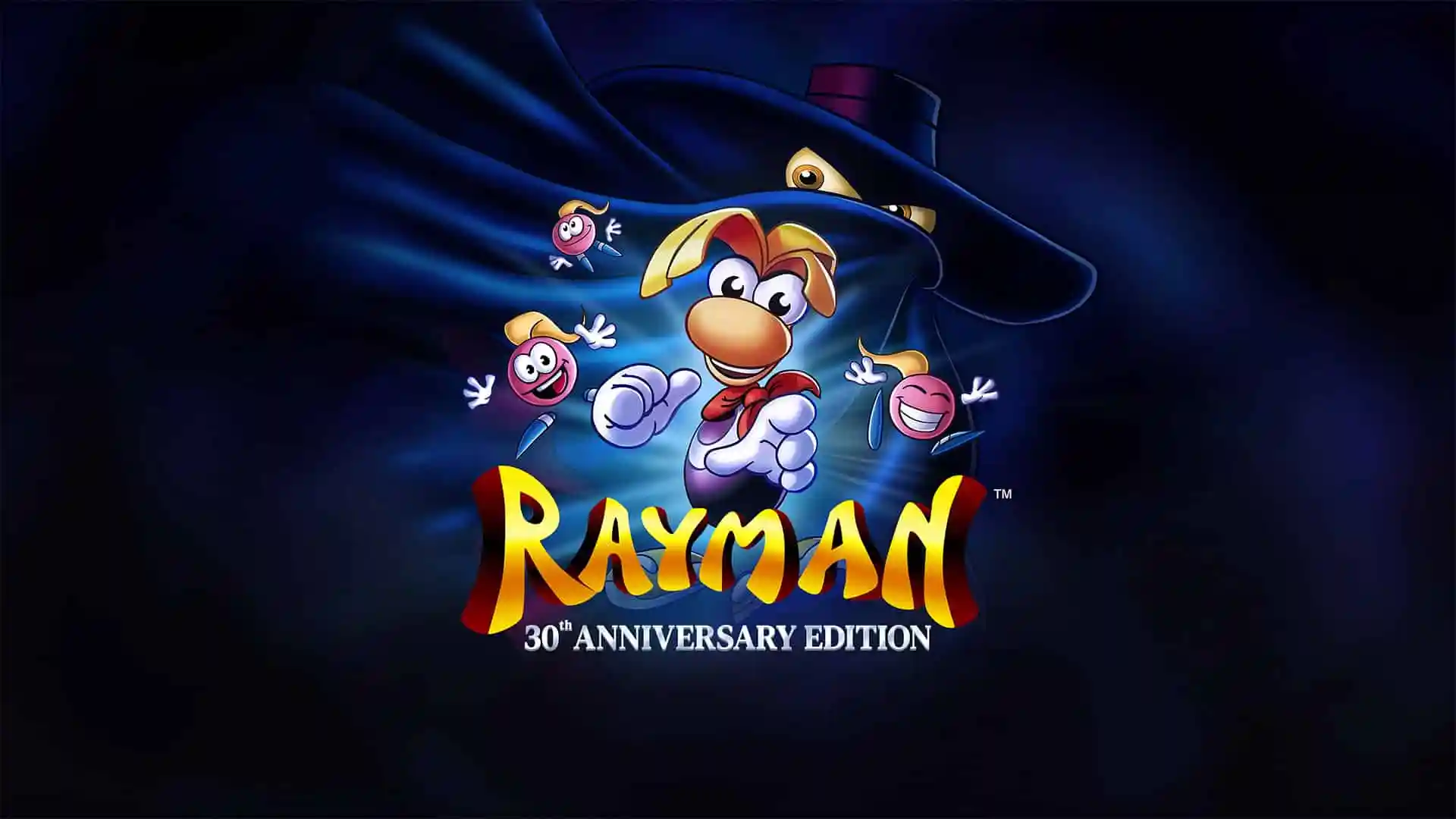
So sitting down with Rayman: 30th Anniversary Edition on Xbox Series X after a couple of decades felt weirdly like opening a time capsule that someone else had carefully curated on my behalf. It’s part museum, part emulation super-pack, part love letter to a character Ubisoft doesn’t seem to know what to do with anymore.
It’s also a tiny bit of a heartbreaker, because for all the care Digital Eclipse put into preserving almost every version of Rayman 1, the collection swaps out the original soundtrack. For a game that lives and dies on atmosphere, that one decision colors the entire experience.
The “almost everything” collection of Rayman 1
I played primarily on Xbox Series X, but the structure of the compilation is the same across platforms: this is a big launcher that lets you jump between different historical versions of the same 1995 game, along with some oddities and bonus material.
In the playable lineup, I found:
- The original PlayStation version, which is still the one my muscle memory gravitates toward.
- The Atari Jaguar build, with its slightly different feel and quirks.
- The old MS-DOS PC version, bundled with over 100 extra levels that were originally semi-official add-ons.
- The compromised but charming Game Boy Color port.
- The beefier but choppier Game Boy Advance version.
- An incredibly short, fascinating Super Nintendo prototype that’s basically a playable pitch.
That’s an impressive spread. Each version has its own menu tile, box-art-style framing, and a short blurb explaining what made it different back in the day. It’s very Digital Eclipse – if you’ve spent time with Atari 50 or The Cowabunga Collection, you’ll recognize that carefully nostalgic presentation immediately.
The one notable absence is the Sega Saturn release. It’s listed in some marketing blurbs and often mentioned alongside the other mid-90s platforms, but it’s not actually selectable in the build I played. Given how comprehensive the rest of the package is, that missing piece stands out.
Most people will probably do what I did after a couple of evenings: settle on one “main” version (for me, PlayStation and then MS-DOS for the extra levels), then dip into the others as curiosities. There’s definitely some repetition here. Rayman 1 isn’t like Sonic, where each port radically reimagined things; these are subtly different takes on the same punishing platformer. Fun to compare, but not five whole fresh games.
How Rayman 1 actually feels to play in 2026
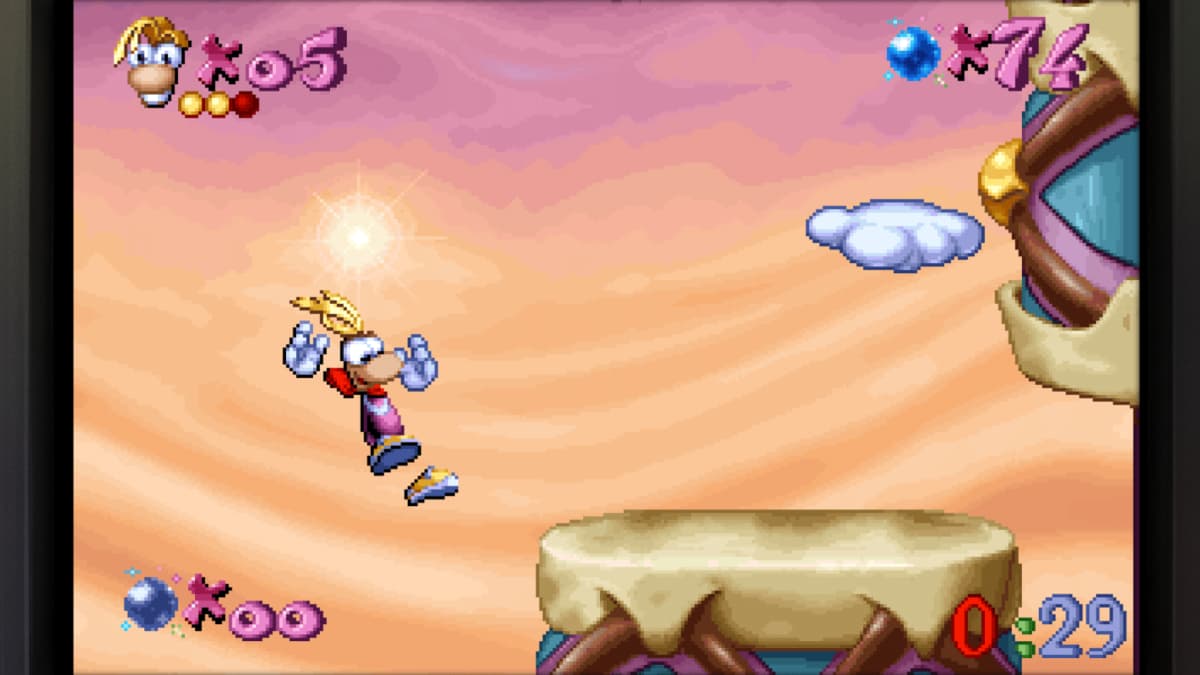
Within ten minutes of starting Pink Plant Woods again, the thing that hit me wasn’t the missing music. It was how solid Rayman still feels to control.
He’s slower than a Mario or Sonic, more deliberate. The first few stages lull the player into thinking this is a cuddly kids’ platformer: punch some living trombones, ride some moving fruits, enjoy the scenery. Then the game quietly tightens the knife. By the time I revisited the late-game sections like the caves of Blue Mountains or the nastier parts of Picture City, I was right back to that “one more try” rhythm I remember from the ’90s.
Movement is precise. There’s a tiny slide on landings, jumps have a clear arc, and Rayman’s mid-air helicopter hair gives just enough hang time to feel generous without ever bailing out a truly bad jump. One evening, I spent almost an hour redoing a series of collapsing platforms over a void in the Band Land stages, trying to snag a far-off Electoon cage. It never felt unfair; it felt like the game asking me to get better, not luckier.
The compilation doesn’t rebalance or smooth out those spikes. If the original Rayman’s difficulty curve drove someone away back in 1995, nothing fundamental here will change that. There are plenty of “devilishly hard for no sane reason” sections where a mistimed jump means losing a big chunk of progress.
The saving grace now is that progress isn’t chained to the mercy of three lives and a memory card with your mom’s Final Fantasy save on it. Modern emulation options change the feel of the game more than any tweak to physics could have.
Emulation, rewind, and all the modern comforts
This is where Rayman: 30th Anniversary Edition really shines. Digital Eclipse clearly understands why people want these old games in 2026, and “because I love suffering” isn’t the only reason.
- Save states: You can drop a save anywhere, in any version, and hop back instantly. I ended up using this as a personal checkpoint system before particularly nasty sections.
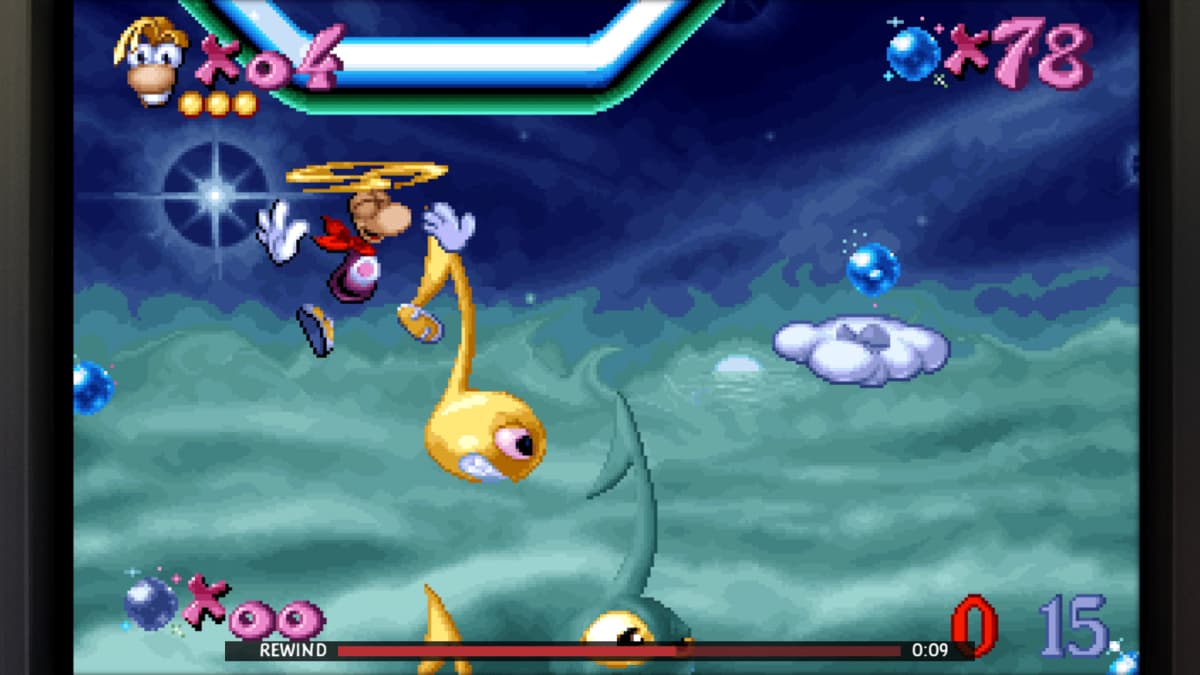
- Rewind: The collection lets the player scrub back up to 60 seconds, not just a token couple of seconds. A missed jump, an accidental plunge into spikes, an unfair enemy spawn – it’s trivial to drag the timeline back and try again.
- Cheat toggles: Invincibility, infinite lives, full ability unlocks and level access – togglable from menus, not via obscure button codes.
- CRT filters and scaling: A few tasteful visual filters emulate scanlines and softening, and the base pixels are sharp and clean if those filters are disabled.
- Quick Resume (on Xbox): Hopping straight back into the exact frame where I left Rayman mid-jump felt borderline illegal compared to the original load times.
The 60-second rewind is the big one. I forced myself not to use it at first, wanting to see how long my old-school patience would last. Then I reached the latter half of the Ms. Stone section, mistimed one glide, and watched Rayman plummet into oblivion. Staring at the “Game Over” screen, I caved and flicked the right trigger back in time. Suddenly, this unforgiving 90s platformer turned into something much more approachable, without becoming trivial.
Purists can ignore all of this. Nothing is mandatory. If someone wants to play bare metal with original life counts and passwords, those systems are intact. For everyone else – folks with jobs, kids, and not a lot of free evenings – the collection quietly respects that time is now the rarest resource.
On Series X, input felt tight in the main console builds. I didn’t notice any of the input lag issues that some PC players have reported externally with certain emulations. The Game Boy Advance version still runs at a lower framerate and feels a bit sluggish, but that’s more about faithfully emulating a weaker handheld than the compilation doing anything wrong.
The soundtrack swap: a respectful misstep
All of that goodwill crashed into one jarring realization the first time I loaded the intro: the notes were wrong.
The original Rayman’s soundtrack, composed by the late Rémi Gazel, is engraved in a lot of players’ brains. It’s playful but melancholic, a strange mix of jazzy chords and dreamy pads that make the worlds feel otherworldly instead of just “Saturday morning cartoon.” In this anniversary edition, that music is gone.
In its place is an entirely new score by Christophe Héral, the composer behind Rayman Origins and Rayman Legends. On paper, that’s a classy choice. If the original tracks truly couldn’t be licensed – and given Gazel’s passing in 2019, that seems like the most plausible behind-the-scenes issue – picking another beloved Rayman composer is basically the best possible backup plan.
The new soundtrack itself is not bad. In isolation, some of these tracks are lovely. Héral leans into whimsical instrumentation and little rhythmic tricks that fans of Origins will recognize. After half an hour, I caught myself humming along to a new Jungle loop without realizing it.
The problem is that this collection sells itself as archival. It’s the “30th Anniversary Edition,” a museum-style package that painstakingly preserves minor console variations and long-lost PC levels. Inside that frame, replacing the original music feels wrong in a very deep, gut-level way.
It’s the same feeling that hits when booting modern ports of Crazy Taxi without the Offspring, or the GTA remasters with missing songs. Games from this era were audio-visual packages; the soundtrack isn’t background flavor, it’s part of the identity. Gazel’s tracks are half of why the Dream Forest still lives rent-free in my brain decades later.
After around 10 hours across the various ports, my relationship with the new score settled into something complicated. I stopped wincing at it. I appreciated some of the subtle re-interpretations of classic moods. But it never felt definitive, and for an edition that otherwise screams “definitive,” that really stings.
An ideal world would have offered both: original soundtrack by default, with a toggle in an options menu for Héral’s reinterpretation. If legal reality made that impossible, I wish the game said so plainly somewhere in the museum section, instead of just… quietly replacing history.
The documentary and archival extras are borderline priceless
Where the collection absolutely nails the “museum” angle is in its extras. The headline piece is a 50+ minute documentary, broken into chapters, that charts Rayman’s origins inside mid-90s Ubisoft.
It mixes archival footage, new interviews, old sketches, and a lot of very 90s French office fashion. Hearing Michel Ancel and other key developers talk through how they prototyped Rayman on hardware that had no business pushing this much 2D art is genuinely gripping if you have any interest in game development history.
There’s something almost surreal about watching a young Ancel sketching on paper in grainy footage, then flipping back to the SNES prototype for a few seconds and seeing how those same ideas manifested in parallax layers and chunky sprites. It’s short – that prototype really is over in less than a minute – but as a playable artifact of what might have been, it’s more powerful than most concept art galleries.
Beyond the doc, the collection tucks away concept art, design notes, and promotional material. Some of it is basic “here’s a poster; remember this box art?” stuff. Some of it is nerdier: hand-drawn level layouts with scribbled notes about enemy placement, ideas that never made it in, and early Rayman designs that look nightmarish compared to the final limbless goofball.
For players who care about preservation and process, this side of the package might actually be the main event. I spent almost as long poking through these materials and watching the documentary as I did grinding through the MS-DOS bonus levels.
Not quite flawless: repetition, rough edges, and who this is for
For all its strengths, Rayman: 30th Anniversary Edition is not some miraculous conversion that makes an old game feel entirely new.
First, the repetition. When a compilation contains five slightly different ports of the same tight, linear platformer, fatigue creeps in. After beating the PlayStation version and diving into the MS-DOS extra stages, I found my desire to also clear the Jaguar and handheld ports fading fast. The smaller games become more like bonus features than full playthrough candidates.
Second, Rayman 1’s difficulty philosophy remains what it always was: cute art hiding sadistic level design. Even with rewind and save states, late-game sections can grind down anyone who isn’t ready for pattern memorization and pixel-perfect jumps. The modern assist features turn it from a brick wall into a climbable one, but it’s still a climb.
Third, there are a few technical quirks. The handheld versions feel exactly as choppy as they did on their native hardware, which is authentic but not flattering. External reports mention some input latency on certain PC setups; on Series X I didn’t run into anything that felt off, but the experience doesn’t feel as painstakingly tuned as, say, a first-party Nintendo retro collection.
All of that shapes who this collection is really for. After living with it for a week, it’s hard to view this as a casual recommendation for someone who only knows Rayman from Origins or Legends. Those later games are breezier, more fluid, and built around co-op chaos. Rayman 1 is slower, stricter, and much more old-school in its “learn the pattern or die” mindset.
Where it absolutely shines is for a different group: players who grew up with 16-bit and early 32-bit platformers, or anyone fascinated by game history and preservation. On that axis, this package hits hard. As a historical object, it’s incredibly strong. As a modern game-night pick for someone craving a new Rayman adventure, it’s a tough sell.
FinalBoss // Gear
Level up your setup
01Top-rated gaming headsetson Amazon→02High-refresh gaming monitorson Amazon→03Gaming chairson Amazon→04Discounted game keyson Kinguin→Affiliate links · As an Amazon Associate, FinalBoss earns from qualifying purchases.
Want to Level Up Your Gaming?
Get access to exclusive strategies, hidden tips, and pro-level insights that we don't share publicly.
Ultimate Reviews Strategy Guide + Weekly Pro Tips