
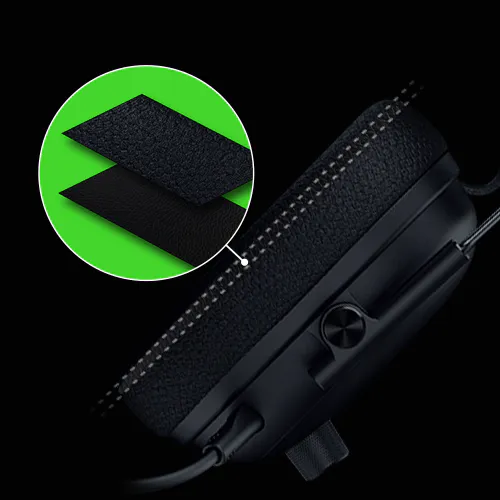
When Razer launched the BlackShark V3 Pro in early 2025, I swapped out the usual RGB dazzle for a marathon of CS2 and Valorant matches to see if it delivers where it counts. After countless late-night scrims chasing pinpoint audio cues, I’ve learned to spot gear built for performance, not just flash. On paper, the V3 Pro checks every box: advanced bio-cellulose drivers, hybrid noise cancellation, dual-band wireless, THX Spatial Audio and an upgraded mic. But specs don’t win clutch rounds—real-world performance does. So does this headset give you an edge when the stakes are highest? Let’s dive in.
At roughly 320 grams, the BlackShark V3 Pro feels remarkably light, even during back-to-back ranked sessions. The matte black frame balances sturdiness and flexibility—there’s no creaking when you adjust the headband, which extends smoothly with visible detents for repeatable sizing. Memory-foam ear cushions wrap around your ears without pinching, and the ventilated headband sits comfortably on different head shapes, letting heat escape rather than trapping it.
Minor details, like subtle stitching in green, blue or black indicating the PC, Xbox and PlayStation versions, keep the aesthetic clean. There’s no garish RGB on ear cups—just a small logo that blends into the headset’s profile. I wore these for three hours straight, glasses and all, without any pressure points developing. Even if you switch platforms mid-session, the quick-mode switch on the left ear cup makes it simple to jump from 2.4 GHz on PC to Bluetooth for mobile notifications.
The bio-cellulose drivers are more than marketing jargon. In CS2, footsteps sound tight and defined—there’s no muddiness when multiple players run nearby. In Valorant, ability cues and reload clicks cut through ambient noise, and distant gunfire retains clarity instead of blending into a bass-heavy wash. Crank the volume, and distortion stays well in check; side-by-side with other headsets at maximum output, the V3 Pro remains punchy rather than harsh.
On PC, the THX Spatial Audio suite adds a layer of vertical immersion I didn’t realize was missing until I heard it. Strafe across a room and you can sense slight height differences—perfect for identifying opponents on balconies or in vents. Console integration is seamless, too: native 3D audio on PlayStation 5 felt just as reliable in Call of Duty campaigns. If you’re coming from stereo or basic surround, the upgrade in positional awareness is immediately noticeable.
Most esports headsets skip ANC to save on weight, but Razer’s hybrid ANC implementation is surprisingly effective without adding bulk. In a noisy apartment with traffic and roommates chatting, I activated ANC and felt isolated from everything beyond a gentle hum. Flip it off, and passive isolation still blocks out a lot of room noise, thanks to the snug ear seals.
The detachable boom mic is a standout. With cardioid pickup focused on your voice, common background noises like desktop fans, keyboard clacks and even a roommate’s laughter practically vanish. I tested it on Discord and in Valorant scrims—teammates kept saying my voice sounded “radio-clear.” There’s a firm mute switch on the mic itself, so you get tactile feedback when you’ve cut audio. Stow it away when you need pure headphone mode, and the headset switches seamlessly to a built-in sidetone so you can hear yourself speak.
Razer Synapse remains the Swiss Army knife for fine-tuning your audio experience. Out of the box, you get pro-tuned EQ presets tailored for CS2, Valorant, Apex Legends and more. These profiles emphasize footsteps, ability cues or distant gunshots depending on the title. If you want something personal, three custom EQ slots let you craft your own curve—boosting bass for immersion or lifting midrange for vocal clarity in team comms.
Beyond EQ, Synapse offers mic filter toggles: adjust the noise gate to cut silence, dial in sidetone if you need to monitor your own voice, or add a compressor to keep volume consistent. There’s also a “Tournament Mode” that locks your settings on the headset itself, so you can fly to LAN events or play on a friend’s PC without losing your custom profile. Controls are intuitive: drag-and-drop bands to shape frequency response, toggle THX Spatial Audio on or off, and save firmware updates—everything syncs in a few clicks.
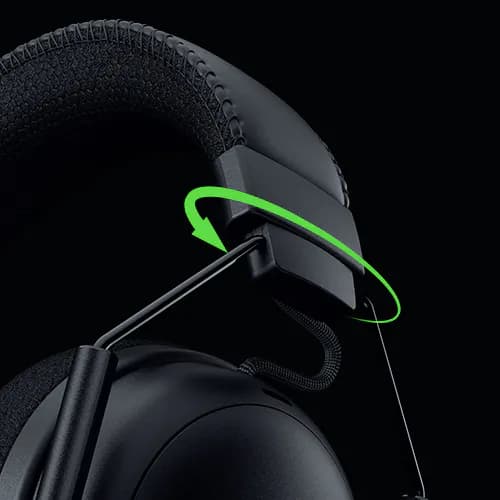
On the headset, quick-access buttons let you adjust volume, switch between 2.4 GHz and Bluetooth, toggle ANC modes and mute the mic. Even if you’re deep in a match, you won’t fumble through menus. And if your friends across the table want to share a Bluetooth connection, the headset supports dual-Bluetooth pairing so you can both connect your phones at once.
Razer quotes up to 24 hours of battery life with ANC off—and I got close. In mixed use (half gaming, half music streaming over Bluetooth) I hit about 20 hours before the low-battery LED flickered on. Leave ANC on and you’ll shave off roughly 4 hours, but you still get a full evening or two of play on a single charge. A 15-minute fast charge adds around 3 hours of runtime if you’re in a hurry.
Latency on the 2.4 GHz wireless dongle stays under 10 ms in my tests, which means gunshots, footsteps and dialogue hit your ears instantaneously. Even in frantic firefights where every millisecond matters, audio and on-screen action remain in lockstep. Switch to Bluetooth for music or chats, and you can still keep a stable connection for lower-priority audio without impacting gameplay.
In CS2 competitive matches, the V3 Pro’s clear footstep separation helped me call out flankers before they breached. Highs remained detailed enough to pick up distant armor breaks, while bass rumble gave explosions weight without drowning out dialogue. In Valorant’s clutch moments, I relied on spatial cues to track enemies behind smokes or rotating through vents—a split-second advantage that can tip rounds.
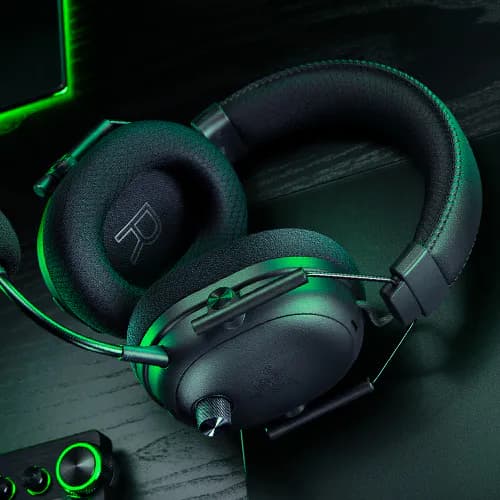
Apex Legends’ chaotic gunfights tested the headset’s dynamic range. Each weapon felt distinct: Prowler bursts had tight, impactful mids; Wingman shots cut through the mix with crisp transients. Even when a care package blew up nearby, the drivers handled sudden volume spikes without unpleasant clipping. Outside FPS titles, I streamed Lost Ark raids and noticed better instrument separation in orchestral tracks, thanks to those bio-cellulose diaphragms handling low and high frequencies without overlap.
Against the SteelSeries Arctis Nova Pro Wireless (about $300), the BlackShark V3 Pro is lighter and nearly $50 cheaper, though Nova Pro’s swappable batteries are handy for nonstop LAN play. The Logitech G Pro X Wireless nails mic customization but skips ANC entirely, and the ear cushions are slightly firmer, leading to fatigue on longer sessions. HyperX Cloud Alpha Wireless boasts booming low end and a marathon 40 hours of battery life, yet it can’t match the V3 Pro’s spatial clarity or hybrid noise rejection. For gamers seeking a balanced, competition-ready headset without overspending, the V3 Pro strikes a sweet spot.
Get access to exclusive strategies, hidden tips, and pro-level insights that we don't share publicly.
Ultimate Gaming Strategy Guide + Weekly Pro Tips