
Table of Contents (7)
Razer Project Motoko: a gaming headset that sees, listens and talks back – the CES demo that changes the peripherals playbook
At CES 2026 Razer didn’t just unveil another headset – it showed a concept for a new class of wearable: Project Motoko, a Snapdragon-powered, AI-native headset that uses dual eye-line cameras, near/far mics and plug‑and‑play AI hooks to give you audio-only feedback: gameplay tips, translations, summaries, fitness nudges and more. This matters because it shifts the headset from “audio appliance” to active sensory assistant, and that could be huge for how we play, stream and train – if the tech and privacy story hold up.
- Key takeaways:
- Motoko adds stereoscopic cameras and dual microphones to a traditional headset form factor — not VR or glasses — so audio quality and battery life stay priorities.
- Razer emphasizes on-device Snapdragon processing and compatibility with OpenAI, Grok and Gemini — a multi‑model approach that avoids vendor lock‑in.
- Use cases range from real-time coaching and off-screen threat alerts to translation and streaming enhancements — but Motoko is a concept with no release date.
- Data collection for AI training is baked in; gamers should weigh usefulness against potential privacy and telemetry concerns.
Breaking down Motoko: what’s new — and what actually matters
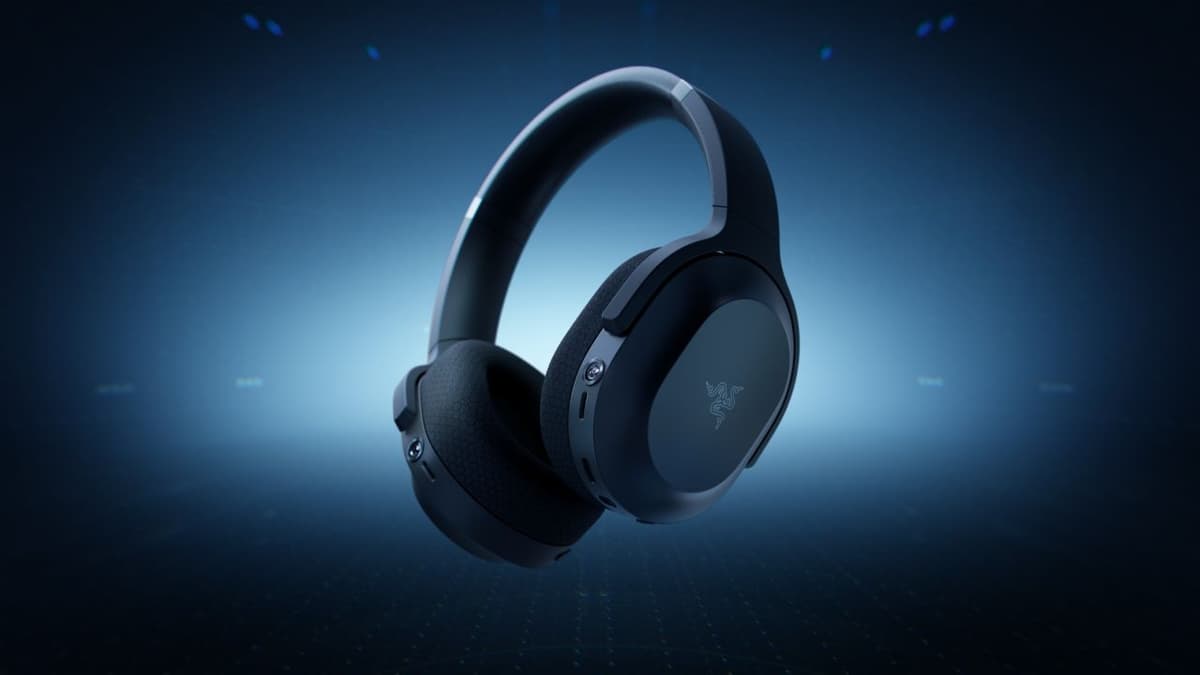
This caught my attention because Razer is known for making peripherals that gamers actually use — think solid headsets and the Blade laptop family — not vapourware. Project Motoko’s selling point isn’t novelty for novelty’s sake: Razer put computer vision and spatial audio smarts into a headset shape so you don’t compromise on sound or battery like you would with smart glasses. The dual FPV cameras at eyeline promise stereoscopic depth and “sub‑millimeter” object tracking; paired with near‑ and far‑field mics, the device can understand both what you’re looking at and what’s going on behind you.
Why this actually matters to gamers
Think beyond “AI tips.” In the demo Razer asked Motoko for loadout advice in a Battlefield match and the system used what it saw on screen to give tailored suggestions. That’s the important bit: context-sensitive, low-latency help delivered through audio so you don’t alt‑tab or stare at overlays. For competitive players, on-device Snapdragon inference reduces lag that cloud AI would introduce — milliseconds you can’t lose in esports.
For streamers and creators, point‑of‑view cameras + AI could automate scene descriptions, give real‑time stats or translate chat without reading screens. For accessibility, live voice or subtitle translation and contextual hints could be transformative. But usefulness depends on execution: camera placement, model accuracy, and UI design (audio cues can easily become noise).
Where my skepticism lands
Razer pushed the right notes — multi‑AI compatibility (OpenAI/Grok/Gemini), local-first processing, and a headset form factor — yet many questions remain. How powerful is the on‑device Snapdragon when it’s running computer vision and LLM in parallel? Will continuous camera processing demolish battery life despite Razer’s claims of “longer than smart glasses”? How intrusive will the audio prompts be during a clutch round? And perhaps most important: who owns the POV and attention data Motoko records?
Privacy, data and the tradeoffs gamers should expect
Razer is explicit that Motoko captures POV vision and attention data to improve AI models. That can speed up feature quality and make training datasets for robotics and perception research more realistic — but it also means your play sessions, what you look at and how you react could be logged. Gamers should expect options: local‑only modes, opt‑out telemetry, clear retention policies and transparency about sharing with partners. Without those protections, the convenience argument weakens fast.
What to expect next
Project Motoko is a concept; Razer gave timelines for Project AVA (an animated desktop AI) arriving H2 2026, but not for Motoko. That’s not surprising — prototypes at CES often show features long before productization. If Razer can solve performance, battery and privacy in a polished package, Motoko could change peripheral standards. If those problems linger, expect the tech to trickle into higher‑end models or developer kits first.
TL;DR
Project Motoko is the most interesting headset concept I’ve seen in years: it blends real‑time computer vision, multi‑mic audio and multi‑model AI to turn a headset into a situational assistant. That could be game‑changing for coaching, streaming and accessibility — provided Razer delivers on battery life, latency and data controls. For now, keep an eye on demos and demand clear privacy options before you get excited.
FinalBoss // Gear
Level up your setup
01Top-rated gaming headsetson Amazon→02High-refresh gaming monitorson Amazon→03Gaming chairson Amazon→04Discounted game keyson Kinguin→Affiliate links · As an Amazon Associate, FinalBoss earns from qualifying purchases.
Want to Level Up Your Gaming?
Get access to exclusive strategies, hidden tips, and pro-level insights that we don't share publicly.
Ultimate Gaming Strategy Guide + Weekly Pro Tips