
Table of Contents (8)
Key Takeaways
- In a March 2024 GameStar poll of 7,354 players, “more power” and longer battery life topped the wishlist—OLED screens and high refresh rates trailed far behind.
- Valve publicly insists no true Steam Deck successor before 2026, but engineers and designers confirm next-gen hardware prototype work is underway.
- Rivals like the Asus ROG Ally, Lenovo Legion Go and MSI handhelds are already pushing higher specs, turning Valve’s cautious cadence into a possible liability.
- Intel’s rumored Panther Lake mobile chips could finally hit the sweet spot of performance-per-watt, but driver maturity, thermal design and SteamOS integration remain critical unknowns.
Why raw power beats pretty visuals
When Valve introduced the Steam Deck in February 2022, its custom AMD “Van Gogh” APU—four Zen 2 CPU cores up to 2.4 GHz paired with an RDNA 2 GPU—felt like a breakthrough in handheld PC gaming. But four years on, the bar has moved. Modern AAA titles such as Starfield, Cyberpunk 2077’s latest update and Forza Horizon 5 push well beyond the Deck’s midrange envelope. A recent Digital Foundry demo of Crimson Desert on a high-end PC rig underscored how far raw GPU horsepower can stretch visual fidelity and frame stability.
That gap shows up in the community. In GameStar’s March 2024 survey of 7,354 Steam Deck owners, over half voted “more power” as their top priority, and roughly two in five listed extended battery life as their second. By contrast, only about one in ten named higher refresh rates or a new OLED screen. Players are less fascinated by cosmetic tweaks than by avoiding frame drops and mid-session shutdowns.
For many owners, running Control or Assassin’s Creed Valhalla on the Deck at 30 fps with scaled-down settings has become the norm. But as ports get less forgiving—and as next-year’s Starfield DLC and GTA VI (whenever it arrives) demand heavier hardware—Valve risks watching its flagship handheld fall behind.
Valve’s tightrope: avoid a half measure
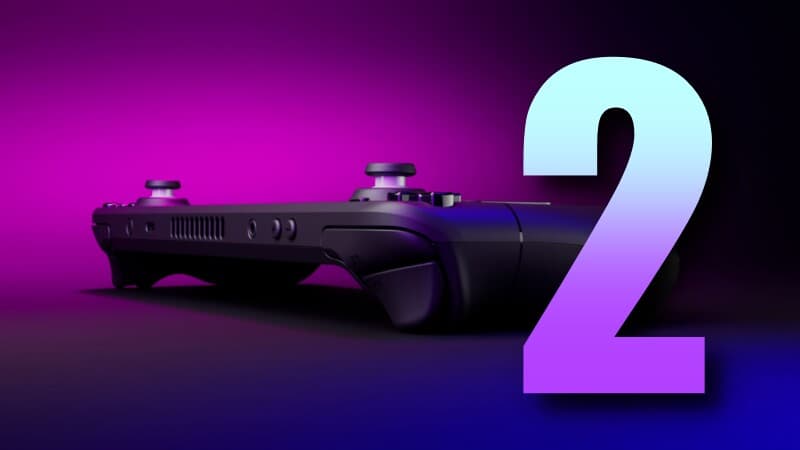
Behind the scenes, Valve’s engineering leads are walking a strategic tightrope. Principal engineer Pierre-Lou Griffais has publicly stated there won’t be a “Deck 2” before 2026, emphasizing that any true successor needs a “significant performance leap” without a corresponding battery life regression. Meanwhile, designers Jay Sha and Lawrence Yang have acknowledged in recent interviews that next-gen hardware work is ongoing—yet they’re careful not to promise a release date or call it “Steam Deck 2.”
That stance makes sense on paper: Valve wants to avoid fragmenting developer support or shipping a spec bump that feels underwhelming. But every quarter they wait, Asus, Lenovo and MSI advance the market floor. A half-hearted refresh could be worse than waiting—by signaling that Valve no longer leads handheld innovation, it hands competitors a narrative win.
Rivals are here and they’re already selling
The Asus ROG Ally launched in mid-2023 with AMD’s Ryzen Z1—Rembrandt-based silicon that delivers similar theoretical compute as the Deck’s APU but paired with Windows 11 and a higher 60 Hz screen. Lenovo answered with the Legion Go’s 8.8-inch 144 Hz OLED panel, and MSI’s Pulse GL earned praise for its squeeze-box form factor. Those machines aren’t perfect—AMD driver hiccups have left some titles stuttering on the ROG Ally, and early Legion Go units experienced thermal throttling in warm rooms—but they demonstrate the threat.
In side-by-side tests published last fall, Resident Evil 4 Remake ran at single-digit fps on an unpatched ROG Ally build, while a Deck with Valve’s Mesa/SteamOS drivers hit a smooth 40 fps at similar settings. That driver advantage has been crucial for Valve—but only because it bought time. When rivals nail their software stacks, the original Deck’s 20 W TDP ceiling and conservative cooling design start to look like outdated tradeoffs.
Chips, drivers and the efficiency conundrum
Intel’s upcoming “Panther Lake” mobile chips—expected on Intel 4 process technology in early 2026—offer one possible path for Valve. In recent Intel demos, a Panther Lake prototype held solid 1080p performance at 25 W, whereas Meteor Lake silicon needed closer to 35 W for the same frame rates. That kind of power-efficiency boost could let Valve chase raw performance without tanking its six-hour battery life goal.
But raw silicon is only half the story. Effective GPU driver support, optimized thermal design and tight SteamOS integration are equally important. Valve’s in-house Mesa stack and OS-level tweaks have given the Deck smoother frame pacing than many Windows handhelds. If Intel or AMD handheld platforms can’t match Valve’s system-wide polish, the theoretical gains from newer silicon might never fully materialize.

Leaks, rumors and the perils of hype
Every few months, a fresh Steam Deck 2 rumor circulates. The most recent is a Russian blog post claiming a November 26, 2026 launch at $649.99, complete with a 120 Hz OLED screen and an AMD Ryzen Z2 Extreme chip. It makes for clicky headlines, but it directly conflicts with Valve’s timeline and cites no credible sources.
Until Valve itself offers a roadmap—most likely at GDC 2026—any leak should be treated with a heavy dose of skepticism. Rumors can excite the community, but they also saddle Valve with inflated expectations and give competitors free ammo to frame the Deck as “premature.”
What’s next: events, benchmarks and signals to watch
- GDC 2026: Look for any hardware roadmap hints in Valve keynote sessions or booth demos.
- Driver updates: Watch AMD’s and Intel’s handheld GPU driver releases for stability and performance gains.
- Panther Lake benchmarks: Third-party tests will reveal real-world efficiency and sustained throughput over 30+ minute sessions.
- Deck stock levels: Persistent OLED model shortages or inflated third-party prices could pressure Valve to accelerate a refresh.
- AAA port performance: Developer feedback on how upcoming titles run on current Deck hardware will be a bellwether for market appetite.
Conclusion
Four years after shaking up portable gaming, the Steam Deck stands at a crossroads. Its community isn’t clamoring for flair—they want raw performance and endurance. Valve’s promise to hold out until a true technological leap makes sense, but every quarter of delay hands market share to Asus, Lenovo and MSI. With Intel’s Panther Lake and AMD’s Ryzen Z2 on the horizon, Valve may yet engineer the perfect successor. The real question: can they wait until 2026 without ceding too much ground?
FinalBoss // Gear
Level up your setup
01Graphics cardson Amazon→02Gaming laptopson Amazon→03High-refresh gaming monitorson Amazon→04Discounted game keyson Kinguin→Affiliate links · As an Amazon Associate, FinalBoss earns from qualifying purchases.
Want to Level Up Your Gaming?
Get access to exclusive strategies, hidden tips, and pro-level insights that we don't share publicly.
Ultimate Gaming Strategy Guide + Weekly Pro Tips