
Real Flight Simulator 3.0’s “Real World Engine” Brings a True Globe to Mobile
Game intel
Real Flight Simulator
RFS: Real Flight Simulator lets player experience flying in any part of the world and exploring sceneries and airports in high resolution with satellite maps,…
Mobile Flight Sim Just Leveled Up – For Real
Real Flight Simulator 3.0 caught my eye because it tackles the thing mobile sims usually hide behind haze: the world itself. RORTOS’ new Real World Engine swaps the old projection tricks for a fully spherical Earth, upgrades lighting and water, sharpens satellite imagery, and reworks the poles. On paper, that’s the difference between “good mobile sim” and “I can actually plan proper long-hauls without the world breaking.” For a platform that lives or dies on performance and smart compromises, this is a bold bet.
Key Takeaways
- A true spherical Earth model should fix high-altitude and polar weirdness that’s plagued mobile sims.
- Sharper global imagery, refined terrain, and reduced fog mean better VFR and clearer IFR situational awareness.
- Lighting and water upgrades boost immersion, especially at dawn/dusk and over coastal routes.
- RFS is doubling down on a subscription-driven roadmap guided by community feedback-great if updates stay substantial.
Breaking Down the Real World Engine
Let’s start with the headline: a fully spherical Earth. If you’ve flown high in mobile sims, you know the horizon often looks “off,” long-range visibility pops in, and near-polar routes fall apart because flat map tricks don’t like 80+ degrees latitude. A true globe fixes a lot of that. Expect more natural curvature at cruise and more consistent navigation behavior on long-hauls-think LAX to Tokyo or JFK to Doha—without the polar wobble or visual seams.
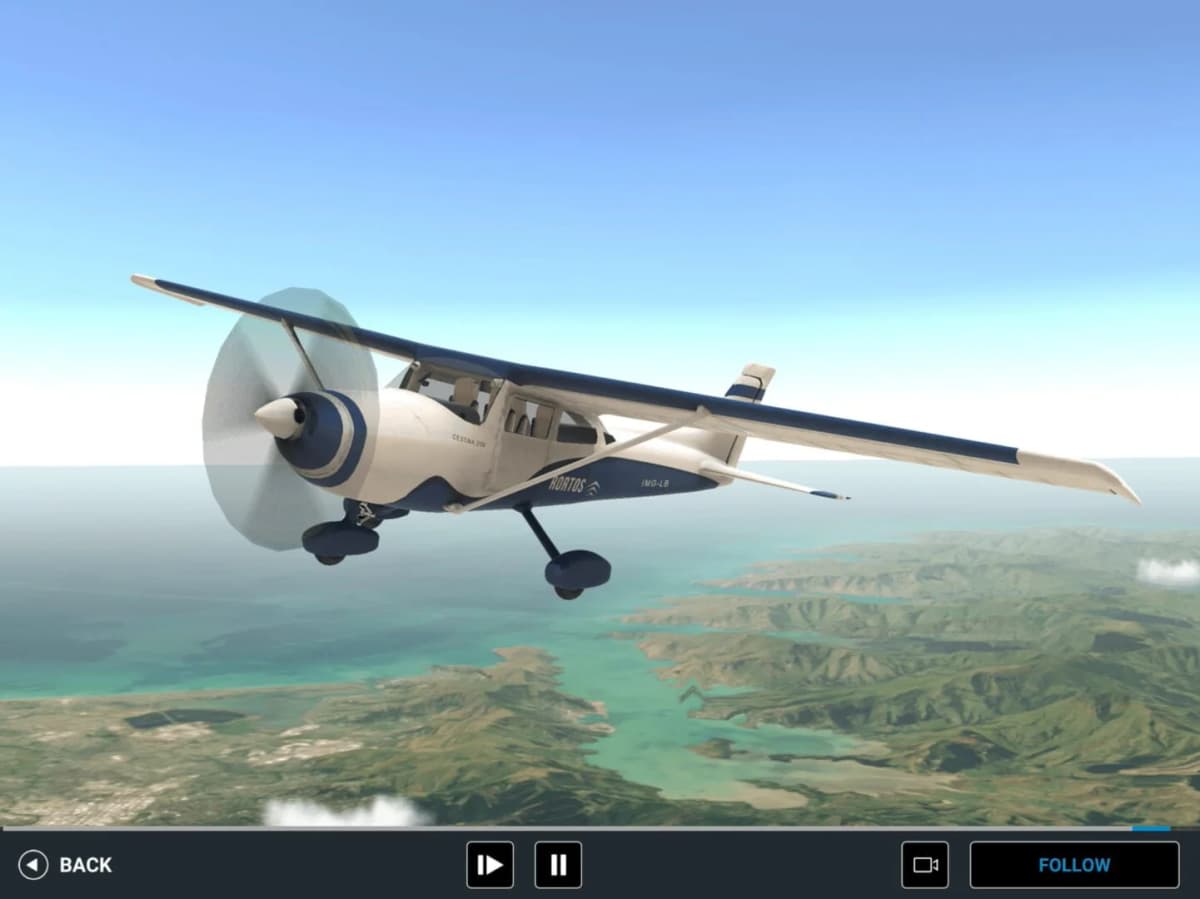
The terrain and imagery work is the practical payoff. Sharper satellite data plus better elevation mapping means mountains should actually read like mountains from the pattern, not melted piles until you’re on top of them. RORTOS also rebuilt the polar regions, which matters if you like routing via Anchorage, Reykjavik, or pushing north of Svalbard. The press note about “reduced fog” is telling—fog on mobile often doubles as a performance curtain to hide low-res ground textures. If RFS is dialing that back, they’re confident the new assets can hold up at distance.
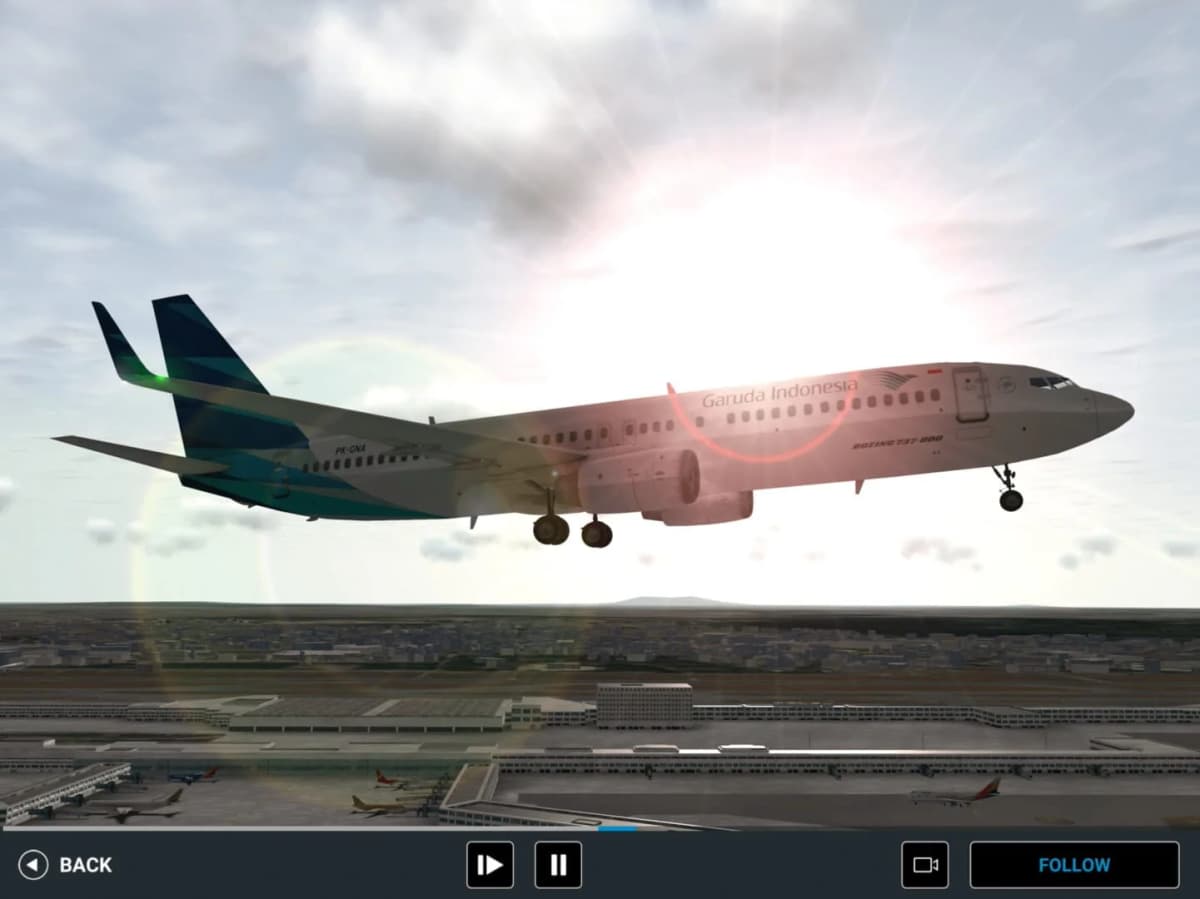
Lighting and water tweaks are the vibe upgrade. Stronger contrast, more natural sunrise and sunset tones, and better aircraft light reflections move screenshots closer to “MSFS-lite on a phone.” Water with improved color and transparency should help coastal approaches feel less like flying over a matte blue sheet. It’s the kind of thing you notice on final into Madeira or skirting the Greek islands at golden hour.
RORTOS’ Product Owner Paolo Sommacampagna framed it simply: “With the Real World Engine, we’re taking that to a whole new level… This is the most ambitious step we’ve taken and it’s only the beginning.” That’s marketing, sure, but the feature list backs it up—this isn’t a new livery pack masquerading as a major version bump.
What This Changes for Actual Flying
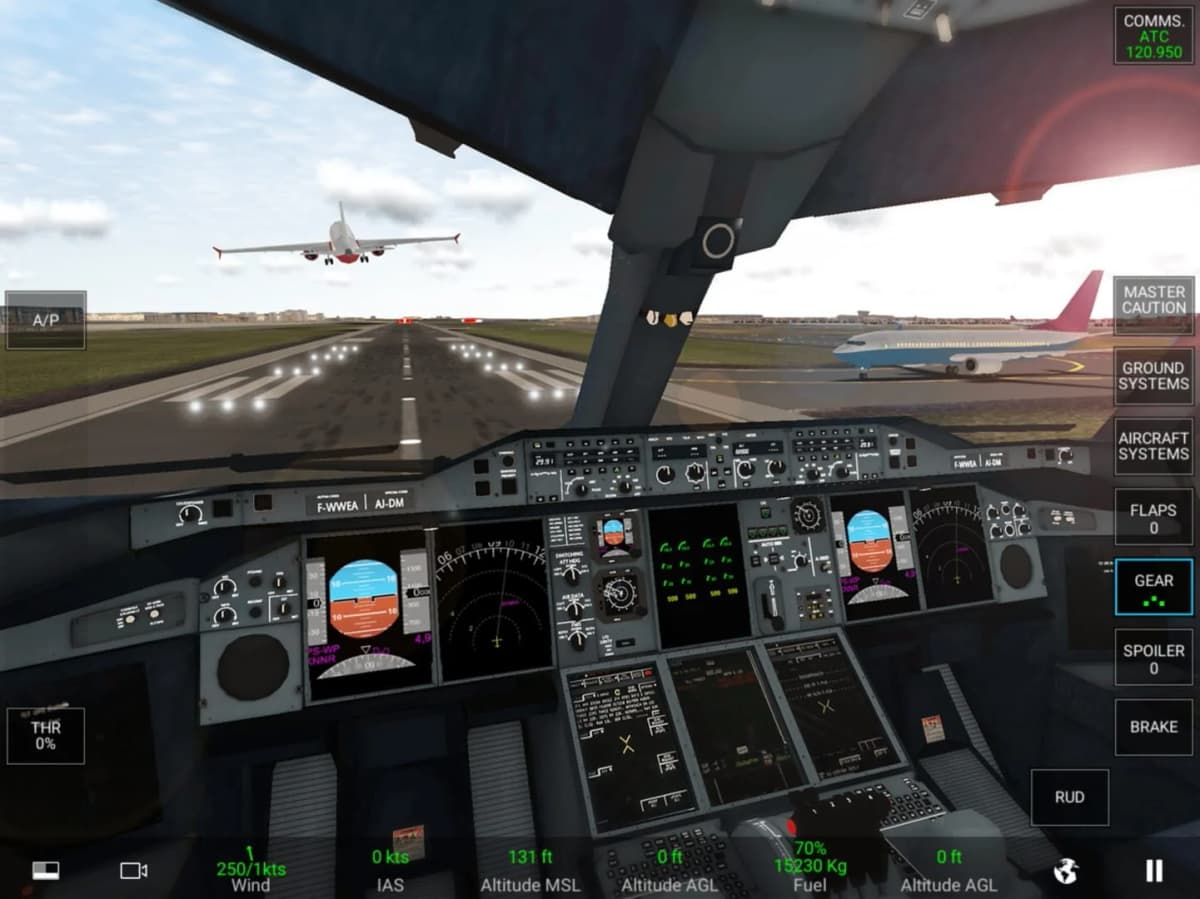
For VFR fans, less haze and better terrain definition mean clearer landmarks and more reliable visual navigation. Pattern work at Innsbruck or Queenstown should feel closer to the real profiles you’ve seen in cockpit videos, not a fuzzy postcard. For IFR, consistent visuals at distance help with situational awareness on STARs and departures, and the lighting revamp should make runway environment acquisition at dusk less of a gray smear moment.
The polar rebuild is quietly huge for long-haul nerds. Mobile sims historically get weird near the poles—track lines bend wrong, waypoints jitter, and the world can visually tear. If RFS has genuinely smoothed this out, cross-polar routes become less novelty and more viable plan.
The Subscription Bet (and Why It Matters)
RFS is the subscription outlier inside Ten Square Games’ portfolio, which tells you the studio wants a live-service sim with steady drops. That can be great—Infinite Flight’s sub-fueled cadence kept it relevant for years—and it puts pressure on RORTOS to keep pushing core systems, not just content churn. If RWE is the new baseline, the obvious next steps are weather depth, navdata cadence, airport detail passes, and systems polish. The community-driven line is promising, but players will judge by the roadmap and the speed of fixes.
The Skeptic’s Checklist
Big visual leaps on mobile come with trade-offs. Will mid-range devices throttle or drop frames at cruise with the new draw distances? Does “reduced fog” mean you’ll sometimes see the limits of satellite tiles on older phones? How big is the download, and will streaming chew data on the go? None of that kills the update, but it decides whether you keep everything on “high” or start sliding toggles after your phone warms up.
Also: this is a world and lighting overhaul, not a flight model rewrite. If you’re hoping for deeper aircraft systems or more sophisticated ATC, this update isn’t claiming that. Fair enough—foundation first—but the bar for mobile sims is rising. Microsoft Flight Simulator on cloud and handheld PCs is creeping into the same couch space. Visual parity helps, but depth keeps people subbed.
Bottom Line
RFS 3.0’s Real World Engine is a meaningful, player-facing upgrade. A true spherical Earth, sharper global imagery, cleaner poles, and better lighting/water make flights feel right at altitude and prettier in the circuit. If RORTOS follows this with weather and systems depth—and keeps optimization tight across common phones—the subscription pitch gets a lot easier to swallow. For now, this is the rare mobile update that actually changes how you fly, not just how your screenshots look.
TL;DR
RFS 3.0 upgrades the planet: true globe, sharper terrain, less haze, better lighting and water. It’s a real improvement for VFR and long-hauls. Watch performance on mid-range devices and hope the next updates aim at weather, navdata, and systems depth.