
Table of Contents (19)
Reanimal endings guide: what they show, what they imply, and how to see both
After spending a weekend running through Reanimal multiple times, the thing that stuck with me wasn’t just the sheep’s tar-dark body or those glowing eyes – it was how much the ending refuses to explain itself, and how different the game feels once you’ve seen the coffin-based secret finale. On my first clear I just sat there staring at the credits, trying to work out whether I’d just witnessed a failed ritual or the end of a timeloop. On my second, after tracking down all five coffins, the extra scene completely changed how I read the girl’s fate.
This guide breaks down both endings in detail, shows how the secret one is triggered, and pulls together the clearest clues we have right now – useful whether you’re writing about the game, speedrunning it, or just trying to make sense of what you saw.
Massive spoiler warning: this article discusses the final chapters of Reanimal in depth, including the secret ending and post-credits scene.
Key takeaways
- The standard ending shows the sheep-like creature devouring the children, a ritual in its stomach, the girl being dropped down a well, and finally reanimating as sheep chant around her.
- The simplest read is that the kids are stuck in a ritual-gone-wrong or a timeloop they’ve been trying (and failing) to correct – backed up by the “five faces vs four faces” well imagery.
- A secret ending unlocks if you interact with all five coffins scattered through the game; this adds a new scene in the well where rabbit-masked children comfort the girl.
- The secret ending awards the “Full Circle” achievement on Steam, which only about 15% of players had unlocked as of early 2026.
- A typical first playthrough takes around 4–6 hours; hunting down all five coffins usually adds another 2–3 hours of deliberate exploration.
- Three DLCs have been announced, and the imagery in both endings (the well, rabbits, water, chanting, and that sheep) is almost certainly laying groundwork for where the story goes next.
How many endings does Reanimal have?
Right now, in the launch version on PC, Reanimal effectively has two story outcomes:
- Main ending – what you see by simply finishing the game once, after rescuing your friends and clearing the final chase and well sequence.
- Secret “coffin” ending – a modified version of the well scene that plays if you have interacted with all five coffins hidden throughout the game before you hit the finale.
There aren’t branching dialogue trees or big binary choices here; it’s closer to how hidden endings work in other modern horror games. You always reach the same final chapter, but your thoroughness with a specific collectible (the coffins) determines which final cutscene you get.
On Steam, the secret-ending achievement “Full Circle” has an unlock rate of roughly 15% as of February 2026, which tells you two things:
- The main ending is the only one most casual players see.
- The coffin route is obscure enough that even people who finish the game once often miss it on their first run.
Main Reanimal ending: step-by-step walkthrough of what actually happens
Before we get into theories, it helps to untangle the raw sequence of events. On my first clear I found it easy to blur moments together, especially around the chase and stomach sections, so here’s the finale broken into clean stages.
1. The sheep escapes the well and devours the children
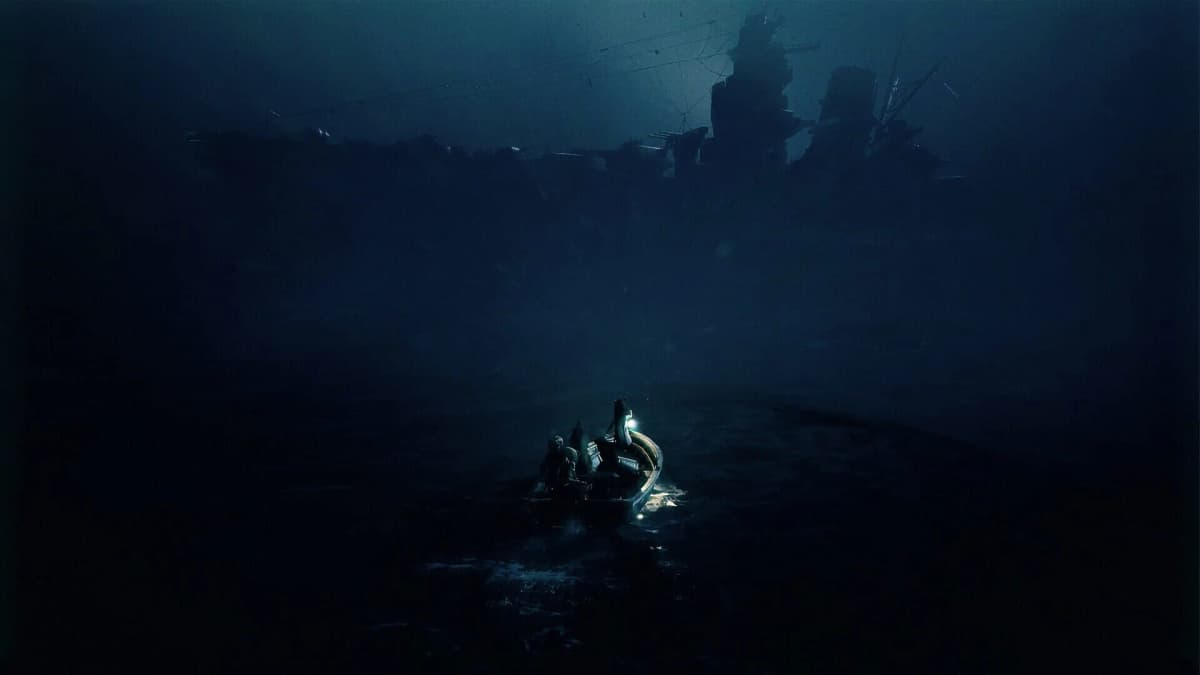
By the time you reach the endgame, the nightmarish sheep-like creature – tar-black body, glowing eyes, and all – has appeared several times in the distance or lunging out of the darkness. In the finale, it finally emerges fully from the well where it’s been trapped beneath the island.
The group of children you’ve spent the game rescuing are gathered on the island. The sheep hauls itself out of the well and begins swallowing them one by one. It’s not quick and clean; the scene lingers on the creature’s mass as it engulfs them, emphasising that this isn’t a simple “game over” monster but the centre of some larger ritual.
You and the boy escape in a large tank, driving across the flooded landscape while firing at the sheep. This chase and combat sequence takes around five minutes once you know the route, and it feels very much like a classic final boss showdown: you hammer the creature with shells until it finally collapses.
But as the protagonists climb out of the tank, the sheep reappears, seemingly unfazed by its apparent death. It swallows the boy outright and continues to pursue the girl alone, leading into the last chase sequence of the game – roughly 20–30 tension-heavy minutes depending on how many times you fail and retry.
2. Inside the sheep: the barn ritual in its stomach
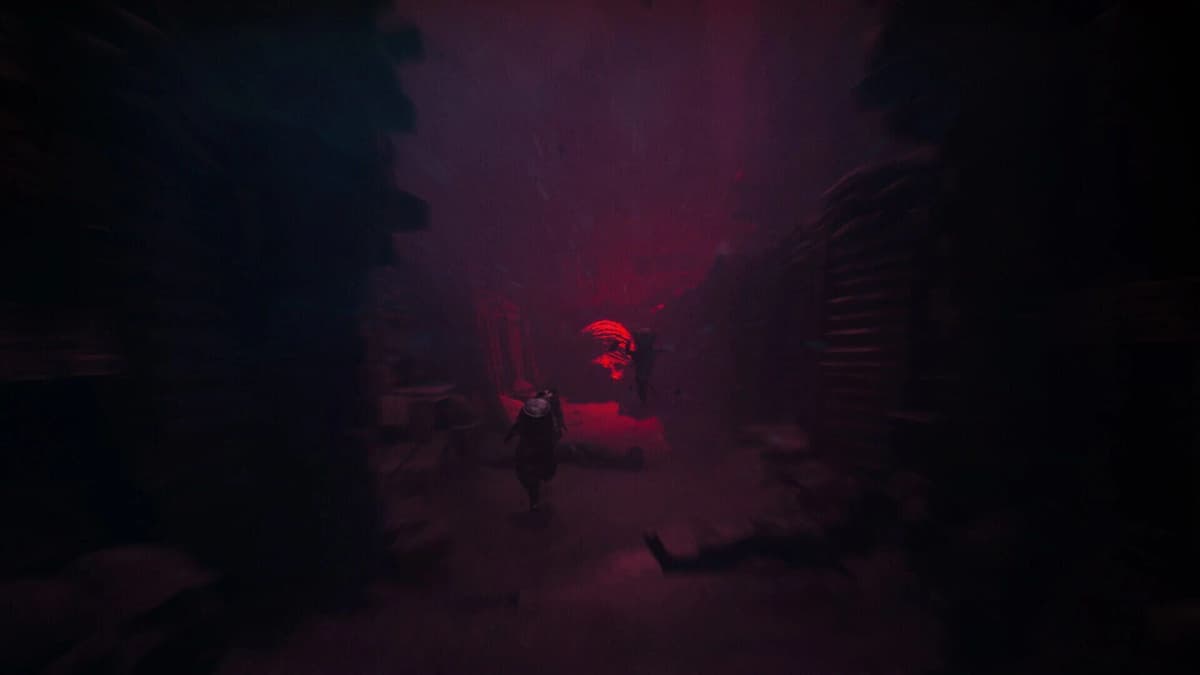
Eventually the girl is caught and swallowed as well. Instead of a traditional game-over screen, we find her inside the sheep’s stomach. It’s not a fleshy digestive space in the usual sense; it feels more like a warped pocket of reality, echoing familiar locations in sickly, dreamlike ways.
Guided through this internal landscape, the girl reaches a barn-like structure. Here, her friends are already waiting. On the floor, ritual symbols are laid out, echoing the chalk markings and strange diagrams you’ve been seeing all over the island. A dead rabbit lies nearby, mirroring earlier scenes of the children slicing their palms and bleeding into a wooden, chalice-like contraption.
The implication is that what we’re seeing now is another step – or another loop – of that same ritual. The kids perform the ceremony, positioning the girl, the symbols, and the rabbit in a specific configuration. At the climax, the girl is struck and knocked unconscious.
3. The well, reanimation, and the post-credits flood
With the ritual complete, the girl’s friends carry her to the well and drop her down. From their perspective, she’s dead – a sacrifice, or at best a gamble. We cut to the bottom of the shaft, where the girl lies motionless as sheep-like figures chant around her.
This is where the game leans hardest into its ambiguity. Surrounded by chanting sheep, the girl eventually reanimates. We’re not shown a clean “she’s fine now” animation; it’s unsettling and liminal, leaving you unsure whether she’s truly alive, possessed, or caught in the same curse that made the sheep what it is.
The framing here deliberately echoes the game’s opening image: at the very start of Reanimal, we see five faces peering down into the well. By the time we reach the ending, there are four. Something – or someone – is missing, and that difference becomes a key piece of the timeloop/ritual puzzle.
After the credits, a short stinger shows the well overflowing with bubbling water. That visual connects back to the island’s flooding and strongly hints that what happens in or under the well isn’t just spiritual; it has physical, environmental consequences for the world above.
Main ending explained: ritual, timeloop, or both?
The developers never step in to tell you outright what’s going on, but the game scatters enough concrete visual clues that certain readings make more sense than others. Here’s how I’d break down the most grounded interpretations, based on multiple endings and frame-by-frame rewatching of the final scenes.
The ritual-gone-wrong reading
- Evidence: repeated blood offerings into the wooden chalice, the dead rabbit in the stomach-barn, the chalk symbols under the girl’s body, the deliberate positioning of the children during the ritual.
- Reading: the kids are performing a ritual that originally involved rabbits as sacrificial animals, but now they are using themselves. The sheep may be the result of an earlier failed attempt – a reanimated, warped animal-god that now requires more victims to sustain whatever cycle it’s part of.
- Well as altar: the well becomes the drop point for offerings. Throwing the girl down is not murder from their perspective, but a necessary step to complete or fix the rite.
The timeloop reading
- Evidence: the “five faces vs four faces” framing, the title Reanimal itself, the girl’s literal reanimation at the bottom of the well, and the sense that we’re replaying variations of the same ritual rather than experiencing it once.
- Reading: the children are caught in a loop, repeating the ritual to try to change its outcome. Each cycle seems to “re-animalize” someone – rabbit, sheep, girl – but never quite in the intended way.
- Loop failure: the main ending feels like another failed attempt: the sheep survives your tank assault, the boy is lost, the girl is sacrificed again, and we end on yet another reanimation without resolution.
How the two ideas overlap
You don’t really have to pick between “ritual” and “timeloop” – they reinforce each other. The kids are repeating a ritual over and over, tweaking details in the hope that the well, the sheep, and the flood will finally behave differently. The post-credits flood matters here: each failed loop may be one more time the well overflows and drowns the island.
With that baseline in place, the secret ending becomes the crucial extra data point.
How to unlock Reanimal’s secret coffin ending
On my first clear I suspected there had to be more, partly because the game keeps surfacing death and burial imagery that never quite pays off. The breakthrough came when I started deliberately checking every suspicious object and realised that the child-sized coffins weren’t just set dressing: interacting with all five of them in a single run changed the final scene and popped a hidden achievement.
Here’s how the trigger works in practice, staying within what we can reliably confirm from the release build.
Secret ending requirements (confirmed)
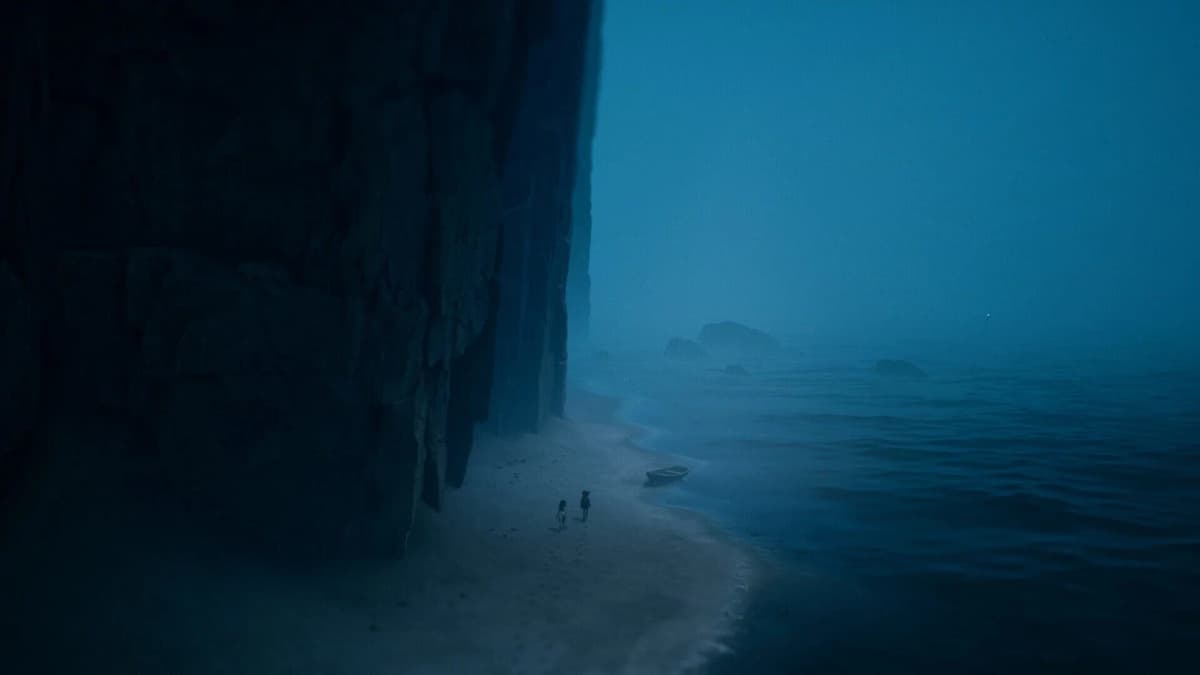
- You must interact with all five coffins scattered throughout the game.
- The interaction is intentional – you need to trigger the in-game prompt on each coffin, not just walk past it.
- Once you’ve interacted with all five, simply finish the game normally. The change happens automatically during the well sequence; there’s no extra input required there.
- When the secret scene plays, you also unlock the Steam achievement “Full Circle”, which confirms you hit all five coffins correctly.
What we don’t have hard data on (from the game itself) is whether the coffins can be spread across multiple saves or must be done in one clean run. In practice, everyone I’ve spoken to – myself included – has unlocked the secret ending by treating it as a single-playthrough challenge.
Practical strategy for a coffin-focused run
The game doesn’t shout about the coffins, and there’s no in-game checklist, so you want to be methodical. I recommend approaching your coffin run like this:
-
Step → Action → Result1
Action: Plan a full second playthrough dedicated to secrets, rather than trying to improvise on your first blind run.
Result: You already know the story beats and chase timing (including the ~5-minute tank fight and the longer escape chapter), so you’ll have mental bandwidth to explore side paths and strange props without constantly worrying about survival. -
Step → Action → Result2
Action: In every safe exploration area, sweep from wall to wall before triggering obvious progress points (doors, ladders, scene transitions). If something looks like a coffin, walk up to it and check for an interaction prompt.
Result: You reduce the odds of leaving a room before the game even gives you the button cue for a coffin interaction. -
Step → Action → Result3
Action: Keep simple notes as you go – even just jotting “Coffin 1: village shed” or “Coffin 2: shoreline cave” in a notepad.
Result: When you reach the final chapters, you’ll know exactly how many you’ve already triggered instead of second-guessing yourself. -
Step → Action → Result4
Action: Once you think you’ve interacted with all five, push straight through to the finale without reloading or sequence-breaking.
Result: If the secret ending doesn’t trigger, you’ll know you miscounted or missed one, and you can cross-check against your notes on a future run. -
Step → Action → Result5
Action: When the credits roll, verify that the “Full Circle” achievement has unlocked in your Steam overlay or profile.
Result: This confirms you’ve seen the coffin ending correctly and don’t need to repeat the hunt unless you’re routing it for a speedrun or guide.
From experience, a focused collectible run takes around 2–3 hours longer than a straightforward story clear, depending on how many detours you take and how comfortable you are with the platforming and chase sections.
What the secret coffin ending actually shows
So what changes once you’ve done the work and hit all five coffins?
In the main ending, after the girl is dropped down the well, we jump straight to her body on the floor and the surrounding sheep-figures chanting until she reanimates. In the coffin ending, an extra scene slips into that same space.
- New imagery: Children wearing rabbit masks slowly creep towards the girl at the bottom of the well.
- Posture and pacing: They don’t attack or restrain her. Instead, they gather around her as she lies motionless on the floor, their movement and positioning reading more like consolation than threat.
- Timing: The scene appears to take place before the reanimation moment we see in the main ending, as if filling in a missing beat between sacrifice and revival.
The key here is the rabbit motif. We’ve already seen a dead rabbit at the heart of the barn ritual and earlier sequences of the kids bleeding into that wooden chalice device. Now we see the children themselves adopting the rabbit as a mask, climbing down (or appearing) into the well to be with the sacrificed girl.
When you contrast the two endings side by side, the tone shifts significantly:
- In the main ending, the girl’s reanimation is framed as something done to her by the sheep and whatever force it represents.
- In the coffin ending, the presence of the rabbit-masked children suggests she isn’t alone in that space – and that the kids are, in some sense, participants or witnesses in the reanimation, not just oblivious sacrificers up above.
How the coffin ending changes the story
Once you’ve seen the secret ending, a few new angles open up.
- Coffins as preparation, not just graves: Interacting with the coffins throughout the game feels less like macabre sightseeing and more like steps in a longer ritual chain. Each coffin interaction may symbolically tie a child to the rabbit role, culminating in the masked figures in the well.
- Rabbits as intermediaries: The switch from a dead rabbit on the ritual floor to living, rabbit-masked children comforting the girl suggests the role of “rabbit” has shifted from victim to guide. They might be helping her cross the boundary between death and whatever state the sheep exists in.
- Loop memory: If you favour the timeloop reading, the rabbit-masked kids could be echoes of children from previous cycles – versions that remember more than their present incarnations, returning to the well to stick with the girl this time.
Importantly, the coffin ending doesn’t “solve” the story. It deepens it. The flood still comes, the loop still feels unbroken, and the sheep’s origin remains opaque. But for lore-focused players and writers, the additional images – masked kids, wellside comfort, and the sense of unseen steps between death and reanimation – are crucial data points when charting how this world’s rules might work.
What the DLC might do with these endings
Three DLCs have been announced for Reanimal, and it’s hard to imagine they won’t lean heavily on the ending imagery:
- The well and the flood: The post-credits shot of water bubbling out of the well is practically an invitation for a story that either explores the island after the overflow or shows us a previous cycle where the flood first began.
- Other perspectives: A DLC that puts you in the shoes of one of the rabbit-masked children, or even inside the sheep more extensively, would make immediate use of the main and secret endings’ strongest motifs.
- Clarifying the ritual: We may see earlier iterations of the ceremony – perhaps focused on animals rather than children – to clarify how the group’s practices spiralled into the horror we see in the main game.
For now, though, the two existing endings are all we have – and they’re rich enough that the community has already generated hundreds of posts dissecting them on discussion boards and social channels.
How to study and compare the endings effectively
If you’re analysing Reanimal for a feature, video essay, or deep-dive thread, a bit of structure goes a long way. Here’s a workflow that’s helped me keep the symbolism straight between runs.
-
Step → Action → ResultA
Action: Record or capture your full main-ending run, especially the final chase, barn ritual, well, and post-credits shot.
Result: You can scrub frame by frame later to catch details like floor symbols, number of faces at the well, and exact timing of the girl’s movements. -
Step → Action → ResultB
Action: Do the same for your coffin-ending run, making sure to note when each coffin interaction happens.
Result: You’ll have clean footage to compare the two well sequences and identify what’s truly new (rabbit masks, posture, camera angles) versus what just feels different in the moment. -
Step → Action → ResultC
Action: Build a simple timeline of events covering both endings: sheep emergence, tank fight, devouring, stomach barn, ritual, well drop, reanimation, post-credits flood.
Result: This makes it easier to test theories (ritual vs timeloop) against specific, ordered moments instead of vague impressions.
Because a standard run takes 4–6 hours, doing this with both endings is very achievable in a weekend – especially once you know where the high-failure chase segments are and can plan around them.
TL;DR – Reanimal endings in one place
- The main ending shows the sheep escaping the well, devouring the kids, and surviving your tank assault before swallowing the boy and girl. Inside its stomach, a barn ritual plays out around a dead rabbit and chalk symbols, ending with the girl being dropped down the well and eventually reanimating amid chanting sheep.
- The strongest grounded interpretations are that the children are trapped in a ritual-gone-wrong and a timeloop, repeating sacrifices to try to fix past failures. The five-faces-to-four-faces well imagery and the post-credits flooding shot support this.
- The secret coffin ending unlocks once you’ve interacted with all five coffins hidden throughout the game; finish the game afterward to see an altered well scene and earn the “Full Circle” achievement.
- In the secret ending, rabbit-masked children surround and comfort the girl at the bottom of the well before her reanimation, tying the rabbit motif directly into the sacrifice-and-return cycle and suggesting the kids have a more active role than the main ending alone implies.
- Three planned DLCs are likely to expand on the ritual, the well, and the flood, but for now these two endings – and the differences between them – are the best evidence we have for understanding Reanimal’s world.
Seen together, the main and secret endings don’t answer every question, but they give you a coherent framework: a failed or repeating ritual, a cursed well that can both resurrect and drown, and a group of children who are slowly learning – across cycles – how to change the rules. If you’ve only watched one version so far, it’s worth the extra hours to chase those coffins and see how different the story feels when the rabbit-masked kids finally step into the light.
FinalBoss // Gear
Level up your setup
01Top-rated gaming headsetson Amazon→02High-refresh gaming monitorson Amazon→03Gaming chairson Amazon→04Discounted game keyson Kinguin→Affiliate links · As an Amazon Associate, FinalBoss earns from qualifying purchases.
Want to Level Up Your Gaming?
Get access to exclusive strategies, hidden tips, and pro-level insights that we don't share publicly.
Ultimate Guide Strategy Guide + Weekly Pro Tips