
Table of Contents (8)
A weekend trapped on Reanimal’s cursed island
I went into Reanimal with a very specific itch: “What if Little Nightmares, but properly built for couch co-op?” Tarsier Studios made the first two Little Nightmares, then handed the third to someone else. Reanimal is basically their way of saying, “We’re not done with child-sized horror yet.”
I played on PlayStation 5, mostly in local co-op with a friend on the couch, and briefly solo to see how the AI partner behaved. Across roughly five hours, we cleared the story, poked at some collectibles, and spent a lot of time just…standing still, letting the island’s rot and weird beauty sink in.
Those first 30 minutes hit hard. You’re dropped in as a brother and sister – literally just “the Boy” and “the Girl” – marooned on an island that feels like someone drowned a children’s book in formaldehyde. You’re tiny in the frame, swallowed by damp corridors, collapsed shacks and distant industrial shapes. There’s almost no dialogue, barely any tutorialization. Just a hand to hold and an instinctive understanding: this place wants you dead.
My first thought was, “Okay, this is absolutely Little Nightmares’ cousin.” My second, five minutes later as a siren wailed somewhere in the fog and a shadow moved just out of frame: “They’ve gone darker this time.”
Art direction that makes you stop walking, even when you’re terrified
Reanimal is one of those games where the screenshots almost look like concept art, and the full thing somehow looks better in motion. Tarsier leans into a single shared camera for both players – no split-screen here – and uses it like a horror director instead of a tech constraint.
There are Hitchcock-style angles where the kids are pressed into the bottom-right corner of the frame while some monstrous silhouette dominates the background. Other times the camera cranes up so far that you feel like you’re watching a diorama being slowly choked by mold and rust. It’s not “Tim Burton cute-goth”; it’s more David Lynch meets grimy fairy tale. The Little Nightmares DNA is obvious, but Reanimal has a harsher, more clinical edge.
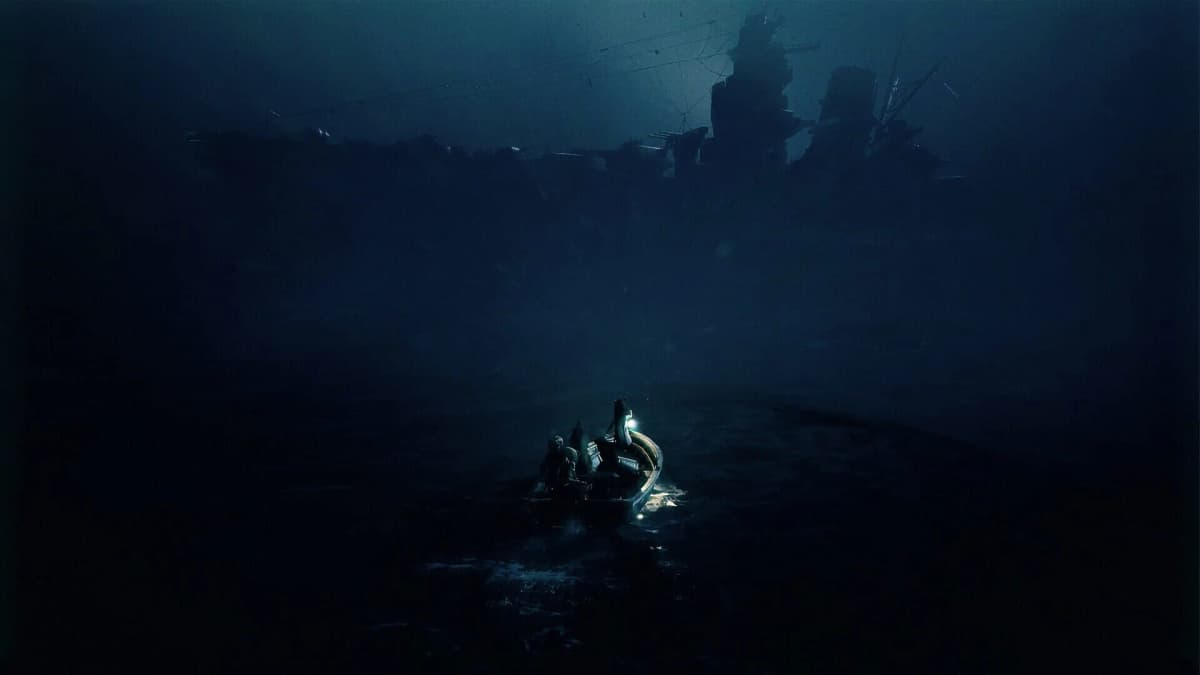
The lighting is the real star. This whole island feels carved out of darkness and fog, pierced by sickly yellows, harsh blues, and those incredibly aggressive red beacons that guide your tiny boat through the mist. One of my favorite sequences was that boat ride: you and your co-op partner huddled on this little craft, the world swallowed in grey, navigating only by crimson haze and far-off horns. Nothing jumps out for a while, but the dread is unbearable because you know something will eventually break the stillness.
Textures are gross in the best possible way. Wood looks swollen with damp. Fabrics have that frayed, over-handled look, like nursery toys that should’ve been thrown away years ago. The kids’ animations sell the whole thing: the way they skid slightly when stopping, how they reach for each other’s hands, or hug shakily after you die and respawn. Those tiny motions did more for me emotionally than any cutscene.
Sound design quietly keeps the screws tightening. Reanimal doesn’t drown you in music. It leans on distant machinery, muffled screams, waves slapping against rotting docks, and those awful, distorted animal noises whose source you’d rather not confirm. When the score does swell, it’s usually to underline a chase or a reveal, and it never overstays its welcome. I strongly recommend headphones; playing through TV speakers felt flat by comparison when I tested it.
Simple controls, strong variety: atmosphere first, mechanics second
If you’re looking for deep systems or complex puzzles, Reanimal is not that game. Your verbs are barebones: run, crouch, jump, interact, push/pull, and a basic swing for breaking obstacles (or, rarely, defending yourself). On paper that’s almost painfully simple, and honestly, it never really evolves.
What kept me engaged is how each chapter remixes those simple actions into different kinds of tension. One section is slow, creeping stealth around a huge creature that reacts to sound. Another is a straight-up panic gauntlet where you sprint, slide under debris, and shout directions at your co-op buddy because you can’t afford to stop and think. There are environmental puzzles sprinkled through – pulling levers in the right order, using physics objects to create cover, timing movements between patrol patterns – but they’re more about rhythm than brain-burning logic.
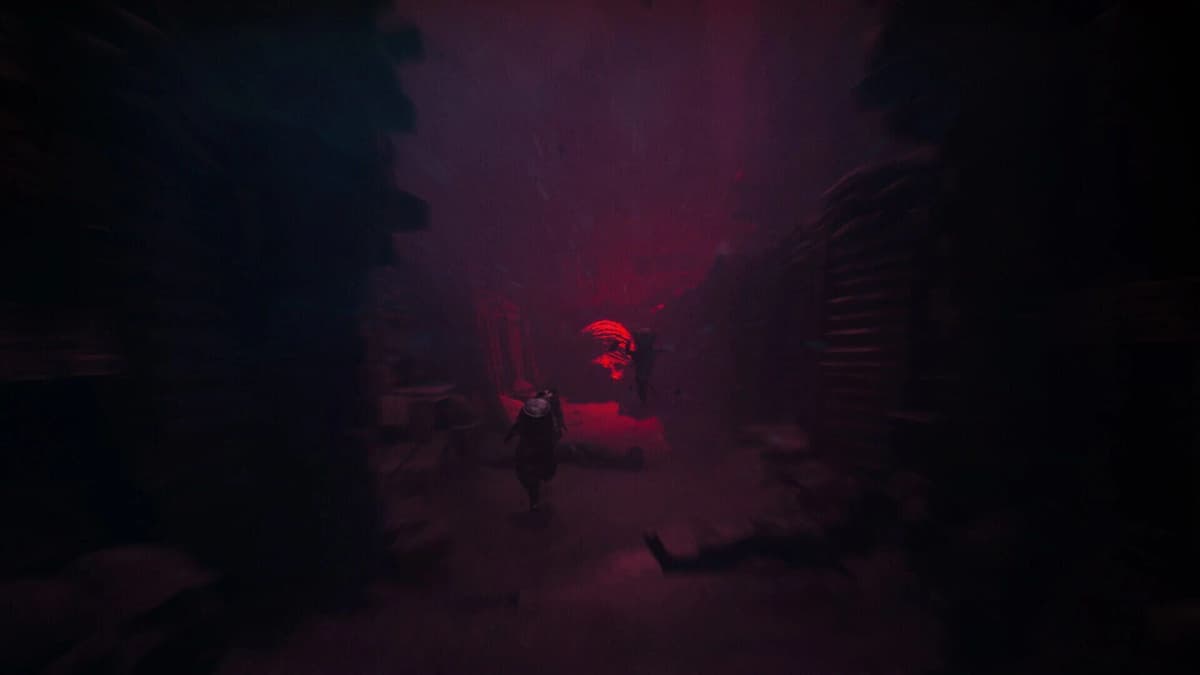
The game dips into “die and retry” fairly often. You’ll enter a room, get annihilated by something you didn’t know was there, then reload almost instantly and go, “Okay, got it, we’ll hug the left wall this time.” Normally that design annoys me, but Reanimal’s checkpoints are generous and deaths are fast. I rarely felt cheated; it felt closer to a horror movie’s “Don’t go through that door… oh, they did” loop, where the second viewing is about spotting the trap you missed.
Still, mechanically, nothing surprised me. There are no big late-game twists like you might’ve seen in something like Inside or even a wild setpiece akin to It Takes Two. Reanimal is content being a polished, linear haunted ride with some light interaction. If you go in wanting a mechanics-driven co-op game, you’ll probably bounce off. If you’re here for thick atmosphere and manageable stakes, it works.
Co-op horror that really wants you on the same couch
Everything about Reanimal feels tuned for two players nervously laughing on a sofa. One of you plays the Boy, the other the Girl. There’s no skill tree, no build differences; they’re essentially interchangeable mechanically. The “co-op” is more about sharing perspective than complementary powers.
There are classic duo interactions – boosting each other up ledges, holding switches while the other crawls through, coordinating distractions. But they’re fairly standard; if you’ve played any co-op puzzler in the last decade, you’ve seen most of these tricks before. The game rarely forces clever two-player problem solving. It’s more: “Two people surviving this is emotionally better than one.”
We spent a lot of time just wordlessly reacting together. A hand twitching in a doorway. A sudden, muffled thud behind us. The Boy stumbling and the Girl automatically reaching back. Those moments feel like Tarsier’s real goal: recreate that slumber-party horror feeling where half the fun is whispering “what the hell was that?” to the person next to you.
Structurally, Tarsier supports this by including a Friend Pass on supported platforms, so someone can join you in co-op without both of you buying the game. It’s the right call for a short, story-focused experience like this and lowers the barrier to actually playing it the way it’s meant to be played.
Online, things are workable but not perfect. The game uses that single shared cinematic camera even in networked co-op, and when latency creeps in, timing-sensitive sections feel a little mushy. In my time online I hit a couple moments where my partner swore they’d cleared a jump on their screen while on mine they barely left the ledge before falling. It never broke the game, but it confirmed what I felt from the first hour: if you can, play Reanimal locally.
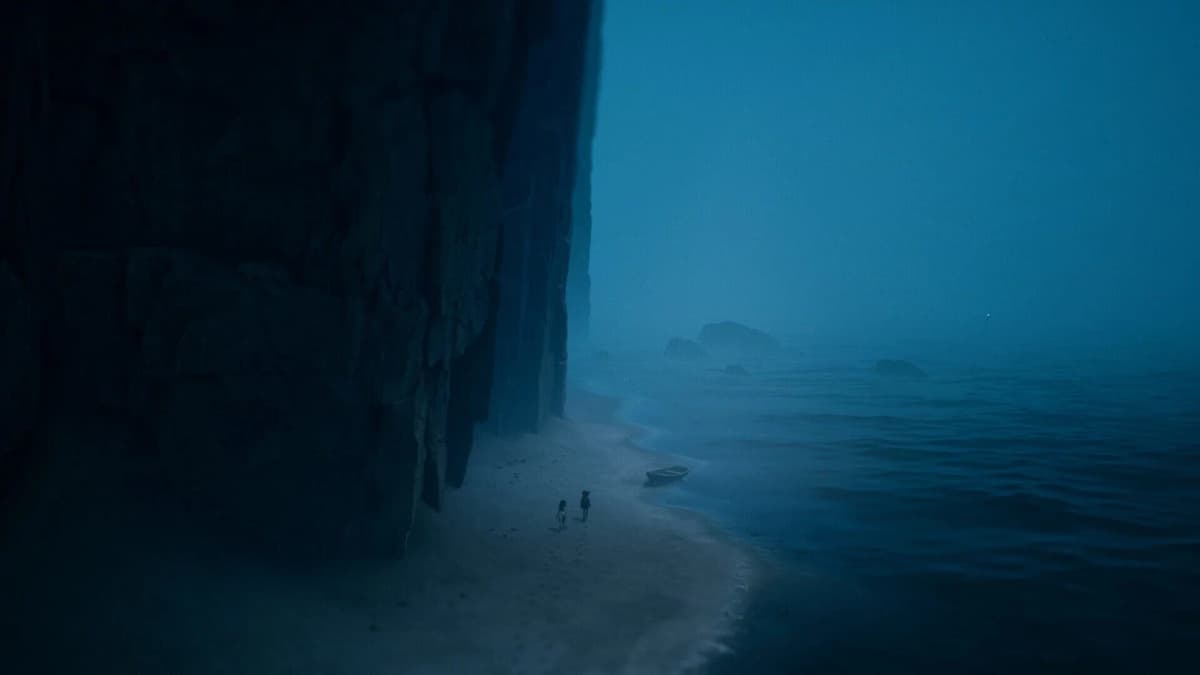
Playing solo is better than I expected, though. The AI partner generally keeps up, takes cover, and helps with contextual actions without needing babysitting. A couple of times they chose a slightly weird path during chases, but I never had to restart a section purely because they bugged out. Still, losing that human gasp next to you dulls what makes Reanimal special. Alone, it’s a strong atmospheric horror. Together, it’s a shared ordeal in the best sense.
When the darkness and camera get in your way
The same art choices that make Reanimal look incredible can occasionally make it a pain to play. This world is dark. Not just “spooky mood lighting” dark, but “is that a door or just textured blackness?” dark. Even after bumping up brightness a bit, there were stretches where my co-op partner and I argued about where the walkable path actually was.
Because both kids are small silhouettes in oversized clothes, in certain lighting they’re hard to tell apart at a glance. The game gives them slightly different color accents, but under heavy shadow those might as well not exist. Several times in frantic moments I thought I was controlling the character on the left, realized too late I was actually the one on the right, and ran straight into a monster’s line of sight.
The single-camera system is brilliant for tension but occasionally cruel for readability. It loves dramatic angles where foreground objects obscure parts of the playable area. That’s great when you’re peeking around a corner at something huge pacing in the distance. Less great when you jump into the void because a subtle depth cue was hidden behind debris. It only happened a handful of times, but when Reanimal kills you, it should be because you messed up, not because the pretty shot lied to you.
I also ran into a couple of small bugs – an enemy getting stuck on geometry, a prompt not appearing until we shuffled around for a bit – the kind of rough edges you’d expect from a smaller game launching across every current platform. Checkpoints meant these never cost more than a minute, but they did break immersion when they popped up.
The story: all vibes, not many answers
Narratively, Reanimal is almost aggressively cryptic. If you need clear exposition, character arcs, or a neat explanation for what the island is and why it’s like this, you’re going to leave disappointed. The game communicates almost everything through implication: background details, environmental storytelling, and the kids’ body language.
There are obviously big themes swirling here – childhood trauma, warped innocence, cycles of violence. But the game refuses to put any of it into words. That can be powerful; there were moments where a single static tableau in the background said more than a monologue ever could. At the same time, I reached the credits feeling like I’d experienced an incredibly intense nightmare and then forgotten key parts of it on waking.
The violence is unflinching. Deaths are quick but not sanitized, and some of the creature designs stray into genuinely nauseating territory. I found a couple of scenes edging into “too much” – not because of gore, but because of what was being implied about the victims. It fits the Little Nightmares lineage of kids versus unspeakable adult horrors, but with even less filter. This is not a cozy spooky game; be ready for some mental splinters.
There are collectibles scattered around – little objects and shrines that hint at backstories and the island’s former life. They add flavor and a tiny bit of replay value, but don’t expect them to suddenly make everything click. Reanimal clearly wants its lore to live in Reddit threads and YouTube essays rather than in the game itself.
Short, sharp, and already selling you more
We rolled credits in just under five hours, taking our time to explore most nooks we could safely reach. If you mainline objectives and don’t chase every side path, you could finish in closer to four. For me, that length suited the intensity; I’d rather a horror game leave me rattled than numb.
What rubbed me the wrong way wasn’t the length itself, but how aggressively the Season Pass looms over the experience. Tarsier and THQ Nordic have already announced multiple DLCs expanding the world, bundled into a pass. That’s become standard these days, but paired with a very short core story and a deliberately opaque ending, it’s hard not to wonder how much of Reanimal’s world is being held back for later.
To be clear: the main game does stand on its own as a complete arc of “two kids arrive on an island, try to escape, and face awful things in between.” But it also feels like the team is keeping some powder dry, pacing revelations (or even just weirder locations) for those expansions. Whether that bothers you will depend on how allergic you are to the modern DLC eco-system.
Who Reanimal is really for
After a full weekend with Reanimal, here’s where I landed.
- If you loved Little Nightmares and want something in that vein but moodier and more brutal, this is almost a no-brainer – as long as you’re okay with less inventive puzzles.
- If you’re hunting for a new co-op game to play over one or two evenings with a friend or partner, Reanimal is a strong pick, especially with the Friend Pass option.
- If you crave mechanical depth or replayability, you’ll probably find it too light. Once we finished, I didn’t feel an urge to immediately go back through.
- If opaque storytelling frustrates you, you’re going to bounce off hard. Reanimal doesn’t want you to understand so much as endure.
Personally, I’m glad I played it. There are images and moments lodged in my brain that I don’t think I’ll shake for a while – the kids clinging to each other after a narrow escape, that boat cutting through red-lit mist, the way one huge enemy cocks its head when it senses you but can’t quite see you.
At the same time, I can’t pretend the experience wasn’t slightly hollow once the credits rolled. I wanted one more mechanical surprise, one truly clever co-op sequence we’d be talking about for weeks, or a final story beat that tied some of the imagery together. Instead, Reanimal fades out the way a nightmare does: abruptly, with more feelings than answers.
FinalBoss // Gear
Level up your setup
01Top-rated gaming headsetson Amazon→02High-refresh gaming monitorson Amazon→03Gaming chairson Amazon→04Discounted game keyson Kinguin→Affiliate links · As an Amazon Associate, FinalBoss earns from qualifying purchases.
Want to Level Up Your Gaming?
Get access to exclusive strategies, hidden tips, and pro-level insights that we don't share publicly.
Ultimate Reviews Strategy Guide + Weekly Pro Tips