

Why Reentry 1.0 Hits the Sweet Spot for Space Sim Fans
Game intel
Reentry
Do you have what it takes to be an astronaut? Reentry is a realistic space flight simulator based on NASAs space programs; from the first American human spacef…
Why Reentry 1.0 Actually Matters
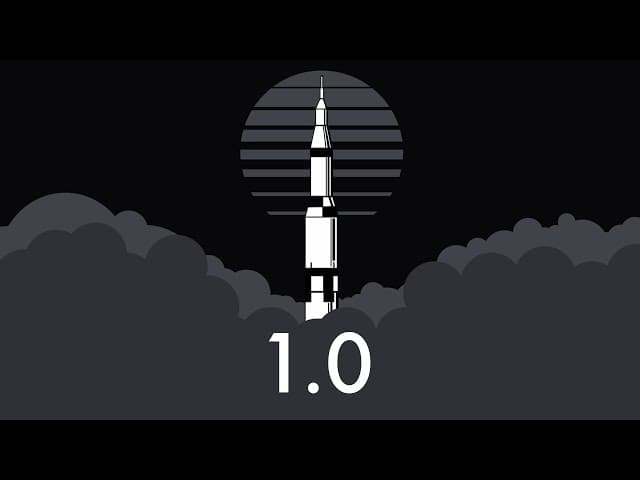
Space games tend to live on two opposite ends: the sci-fi thrill rides where you hop between star systems, and the ultra-real sims where you need a PhD in rocket science just to launch. Reentry’s 1.0 release finds a “sweet spot” between them. Seven years in Early Access (a decade if you count the pre-Steam prototype), Lyra Creative’s single-developer passion project, helmed by Petri Wilhelmsen, has finally “met the 1.0 scope.” It models Mercury, Gemini, and Apollo-era spacecraft with systems fidelity that will make checklist nerds grin, yet comes with an Academy mode, readable manuals, and guided checklists so more players can actually clear the pad.
Key Takeaways
- Reentry 1.0 delivers Project Mercury orbit, Gemini rendezvous/docking, and Apollo lunar landing gameplay.
- Authentic failures and redundant systems meet Space Flight Academy tutorials and step-by-step checklists.
- Overwhelmingly Positive on Steam (97% at launch) and 20% off through November 14, $27.99/£23.60.
- Serious learning curve: rewards patience, procedure, and real-world orbital mechanics.
Breaking Down the 1.0 Release
Reentry isn’t a grab-bag of spacecraft; it’s a coherent, vintage sim faithful to NASA’s early programs. You’ll manually reach orbit in Mercury, execute Gemini rendezvous and docking, and attempt a full Apollo lunar descent. Cockpits bristle with switches, guarded toggles, and circuit breakers—you’ll follow real-world sequences rather than mash a single “Launch” button. As Wilhelmsen puts it in the 1.0 patch notes, “This release represents the complete vision I had for Reentry: authentic procedures backed by accessible training.”
Technical Context: Where Reentry Stands Among Sims
If you’ve flown Orbiter or DCS, you know the appeal of procedure-first simulation. Orbiter’s free, community-driven engine nails orbital mechanics but has a steep UI and aged graphics. DCS delivers ultra-detailed cockpits and system failures—but in modern aircraft, not vintage rockets. Reentry borrows from both schools: its physics engine simulates thrust-to-weight, gravity turns, and drag with accuracy comparable to Orbiter, while its cockpit fidelity and failure modeling (e.g., fuel line leaks, power bus faults) echo DCS’s attention to circuit-level detail. Yet unlike those hardcore sims, Reentry wraps everything in an in-game Academy with interactive tutorials and printed manuals, lowering the barrier to entry without dumbing down authenticity.
System Requirements & Performance Notes
Reentry is a PC-exclusive title, optimized for DirectX 12. Minimum specs start at a quad-core CPU, 8GB RAM, and a mid-range GPU (GTX 1060 or RX 580 class) to run 30fps at 1080p with moderate settings. For a smooth 60fps experience at 1440p, you’ll want a six-core CPU, 16GB RAM, and a GTX 1070/RTX 2060 or equivalent. VR mode is supported on SteamVR headsets—though expect framerates to drop by 20–30% when rendering two eyes at once. Early adopters have flagged occasional stutters in high-particle reentry phases; a recent hotfix (1.0.1) improved stability during atmospheric descent. Lyra Creative notes ongoing optimization patches in the official Steam discussion thread.
Mercury Launch Walkthrough: Step by Step
1. Pre-launch Checklist (Academy mode will walk you through each item):
- Power up the E-6 main bus, verify 28V and 115V lines.
- Arm the yaw, pitch, and roll thrusters; toggle the RCS master switch.
- Confirm guidance computer alignment: input your launch azimuth and orbit target.
- Load oxidizer and propellant tanks to 100%, check pressure gauges.
2. Countdown Sequence:
- T-minus 2 minutes: close engine bay doors, enable T-0 arm circuit.
- T-minus 30 seconds: purge lines, activate spark igniters on the Redstone engine.
- T-minus 0: hold the throttle at 100%, maintain attitude hold mode until liftoff.
3. Gravity Turn & Orbit Insertion:
- At 10km altitude, gently pitch eastward to 10–15° using manual gimbal controls.
- Monitor vertical speed: aim for ~180m/s before starting the gravity turn.
- Roll program over to 90° azimuth at 20km altitude; throttle back to 70% to conserve propellant.
- Cut engines at 170km apoapsis and coast; execute a 180s retro-burn at perigee for a circular orbit.
Common Pain Points: Maintaining a steady gravity turn without inducing oscillations, avoiding overpitch that spikes drag, and nailing the timing of your circularization burn.
Gemini Rendezvous & Docking Sequence
Rendezvous in Reentry is orbital ballet, not a point-and-click. Here’s a simplified rundown:
- Phasing burn: from your initial orbit, adjust your periapsis by ±5km to set up a 24-hour rendezvous window.
- Loiter burn: circularize at a slightly lower orbit to let your target catch up by 50–100m/km per orbit.
- Approach initiation: when range closes to 5km, perform a small retrograde thrust to null relative velocity.
- Stationkeeping: maintain range <500m using short RCS bursts; align your velocity vector with the target’s radial vector.
- Final fly-around: hold a 10-degree offset, gradually null lateral and radial velocities until you’re within 10m.
- Soft dock: apply 0.2m/s forward thrust, latch docking collars, then engage hard capture sequence.
Typical Failure Modes: Overcorrecting lateral velocity and sending yourself tumbling, exhausting RCS propellant by firing too frequently, or misaligning the velocity vector and drifting off during final approach.
Want to Level Up Your Gaming?
Get access to exclusive strategies, hidden tips, and pro-level insights that we don't share publicly.
Ultimate Gaming Strategy Guide + Weekly Pro Tips
Apollo Lunar Descent: Inputs, Timing & Pain Points
Attempting a lunar landing is the crown jewel of Reentry’s 1.0 scope. In Apollo mode, you’ll switch between guidance computer autopilot (AGS and EMS) and manual throttle control. The high-level steps:
- Descent Orbit Insertion (DOI) burn: align your LM to the lunar horizon and burn retrograde at perigee.
- Powered descent initiation: hand-fly through the “Braking Phase,” throttling to maintain a 2°–3° flight path angle.
- Approach Phase: transition to vertical descent at ~1,500m altitude; linear descent at 0.5m/s downrange velocity.
- Final Hover and Landing: at 100m altitude, switch to manual throttle, maintain a near-zero horizontal velocity, and touch down at <0.3m/s vertical speed.
Hands-on Controls: Your throttle axis directly controls engine thrust; pitch and yaw axes steer your descent vector. You’ll frequently switch between EMS “Landing” autopilot and manual override to correct drift. Pain points include throttle lag, compass wrap-around near lunar poles, and managing fuel margins (<1% center-lines mean game over).
Where Reentry Fits in the Space-Sim Landscape
While Starfield and No Man’s Sky let you marvel at nebulas and trade routes, Reentry is about the craft itself. It’s procedure-first like Orbiter, circuit-level detail like DCS, and it throws you an instructional life-raft via its Space Flight Academy. You won’t need an external PDF or 3rd-party mod to figure out how to turn on cabin pressure or reroute power after a fuel cell failure. For veterans tired of overpromised sandbox sims, Reentry feels grounded, purposeful, and meticulously tuned.
What Gamers Need to Know Before Buying
If you crave “press W to win” gameplay, look elsewhere. Reentry is about planning, checklists, and precision. Expect to spend multiple sessions getting comfortable with panel layouts, failure procedures, and orbital math. But nothing beats the adrenaline of a successful docking or landing after you’ve manually guided your module to a safe touchdown. It’s not casual—it’s a labor of love, and that love shows.
Reentry is available now on Steam at $27.99/£23.60 with a 20% launch discount through November 14. The review score sits at 97% Positive. For full system requirements and patch notes, see the official Steam page and community discussion forums, where Wilhelmsen actively posts updates and hotfix timelines.
Looking Ahead
Reentry’s tight focus on NASA’s early programs and strong onboarding is a strategic win. The big questions moving forward are breadth and depth: will we see missions beyond Apollo, like Skylab or Soyuz flights? Can the Academy scale with new modules—perhaps advanced EVA training or interplanetary navigation? If the past seven years of iterative, community-driven development are any guide, Lyra Creative has built a robust foundation for long-term support and expansion.
TL;DR
Reentry 1.0 isn’t a sightseeing tour—it’s a demanding, authentic space sim that finally makes “do it like NASA” achievable. If checklists, manual procedures, and zero-autopilot thrills sound like your kind of challenge, now’s the perfect time to strap in.