
Table of Contents (12)
Relooted Review: A Heist Game That Finally Asks Who the “Loot” Belongs To
The moment Relooted first popped up during Day of the Devs, I had that jolt of, “Oh, this is different.” A 2D heist-platformer about African cultural repatriation, set in a semi-futuristic Johannesburg, led by a Black South African woman trying to steal back artifacts looted under colonialism? That’s not just a hook; that’s a challenge to the entire “treasure hunter” fantasy games have been milking for decades.
I also went in wary. Conversations around museum restitution and African artifacts get ugly fast-full of bad-faith arguments, racism, and “but actually, they’re safer in the West” takes. So I spent about 20 hours with Relooted on PC (Steam), half excited, half anxious about whether developer Nyamakop could walk that line between strong political stance, good history, and an actually fun platformer.
What I got was one of the most thoughtful, specific takes on cultural repatriation I’ve ever seen in a game, wrapped around a heist fantasy that genuinely flips the script on Lara Croft and Indiana Jones. But it’s also wrapped in clunky controls, unreliable wall-jumps, crashes, and uneven storytelling that repeatedly dragged me out of its best moments.
Key Takeaways
- A bold premise: You lead a crew of vigilante thieves in Johannesburg, reclaiming African artifacts stolen during colonialism and hidden away from a new restitution treaty.
- Real history, carefully handled: Around 70 researched artifacts, accurate pronunciations, and strong cultural framing make this as much a crash course in African history as a game.
- Platforming problems: Wall-jumping, parkour flows, and some timed jumps feel unreliable, leading to cheap-feeling failures and a lot of repetition.
- Technical issues: Controller quirks, bugs, and crashes-plus spotty autosaves-cost me progress multiple times.
- Uneven storytelling: The core cast and cutscenes have real heart, but voice direction and the planning-to-heist connection often feel disconnected.
- Overall: A vital, necessary story wrapped in a mixed heist-platformer—worth playing if you care about representation and cultural repatriation, but be ready to fight the game as much as its security systems. Rating: 7/10.
Johannesburg, 21st-Century Heist Capital
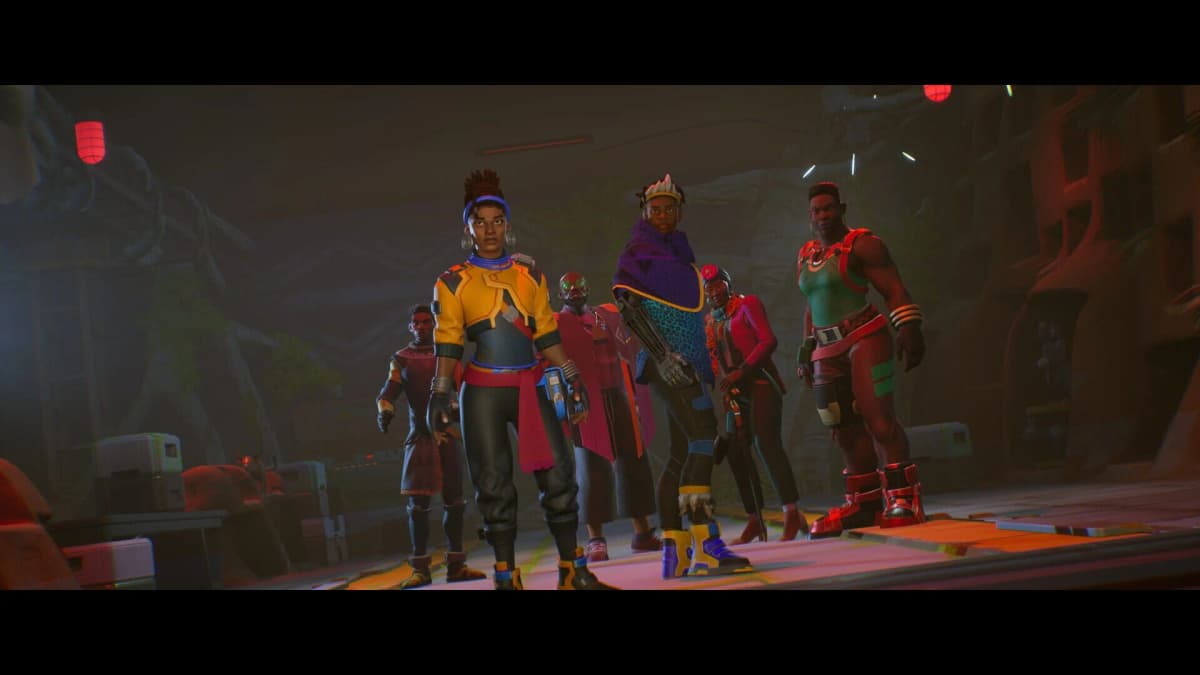
Relooted is set in a stylized, semi-futuristic Johannesburg where neon-lit tech and very current politics sit side by side. You play as Nomali, a determined big sister whose initial goal is simple: save her younger brother, Trevor. That personal hook slowly grows into something much larger, thanks to the other key figure in her life—her grandmother, Professor Grace, an art historian with receipts.
Grace pushes Nomali to think beyond one family crisis. Through her, we see the scale of theft: African artifacts scattered across Western museums and private collections, some on display, others buried in vaults where no one can see them, all separated from the communities and spiritual contexts they were created for.
The game’s central device is the Transatlantic Returns Treaty, a fictional framework that feels uncomfortably close to recent headlines. The treaty says artifacts on public display must be returned to their countries of origin—if a deal can be struck. It says nothing about objects quietly removed from display and locked away, or sitting in private collections.
So the museums and collectors simply change tactics: take things off the walls, stick them in vaults, and call it “preservation.” Legal? Sure. Ethical? Absolutely not. That loophole is Relooted’s inciting crime, and Nomali’s crew becomes the counter-crime: they’ll “bypass” the treaty by stealing back what should have been returned in the first place.
If you’ve watched any classic heist movie—The Italian Job, Ocean’s Eleven, The Thomas Crown Affair, Inception—you’ll recognize the skeleton: assemble a crew, study a mark, pull off the impossible. What struck me about Relooted is how intentionally it casts its thieves as amateurs with expertise rather than hardened criminals. These are archivists, hackers, scholars, and everyday people with skills, not mobsters. It keeps the tone grounded and makes failure feel like you’re letting down a movement, not just botching a score.
Reframing the Treasure Hunter Fantasy
Relooted’s smartest move is how it inverts the usual treasure-hunting fantasy. In a Tomb Raider or an Uncharted, you’re rewarded for breaking into sacred sites and carting relics away like souvenirs. Here, you’re doing the exact opposite. You’re returning pieces that were looted as trophies of violence, framed as “world heritage” in Western spaces while the communities they were taken from are written out of the story.
Nyamakop doesn’t treat this as window dressing. The team brought on full-time researchers to choose which pieces to include, landing on about 70 artifacts from across the African continent (and a few from outside it). Each one gets a proper entry—who made it, where it’s from, what it represented, how it left, and why it matters. As you steal your way through galleries and vaults, you’re constantly reminded: this isn’t fantasy loot, it’s cultural memory.
The care shows up in details. Pronunciation guides were created with a specialist to ensure ethnicities and artifact names are spoken correctly in dialogue. That might sound small, but if you’re used to hearing African names mangled in Western media, it hits different when a game works this hard to get it right.
The game keeps tying its fiction to reality. While Relooted doesn’t turn into a lecture, it clearly echoes recent events: like the University of Cambridge sending dozens of Ugandan objects “back” under a loan-like arrangement rather than simple restitution; or Germany’s long-overdue agreement to return hundreds of Benin Bronzes to Nigeria. And then there’s the Bangwa Queen—an iconic sculpture requested back by Cameroon but still held abroad after stalled negotiations. That specific piece appears in the game, and the moment you encounter it, the mixture of reverence and anger is palpable.
Playing through these missions, I repeatedly had that “I shouldn’t be learning this from a video game before I hear it from the news” feeling. Relooted doesn’t pretend to solve museum restitution, but it forces you to live inside the argument—as someone breaking the law to do what should have been done legally decades ago.
Heists, Planning, and Where the Design Starts to Fray
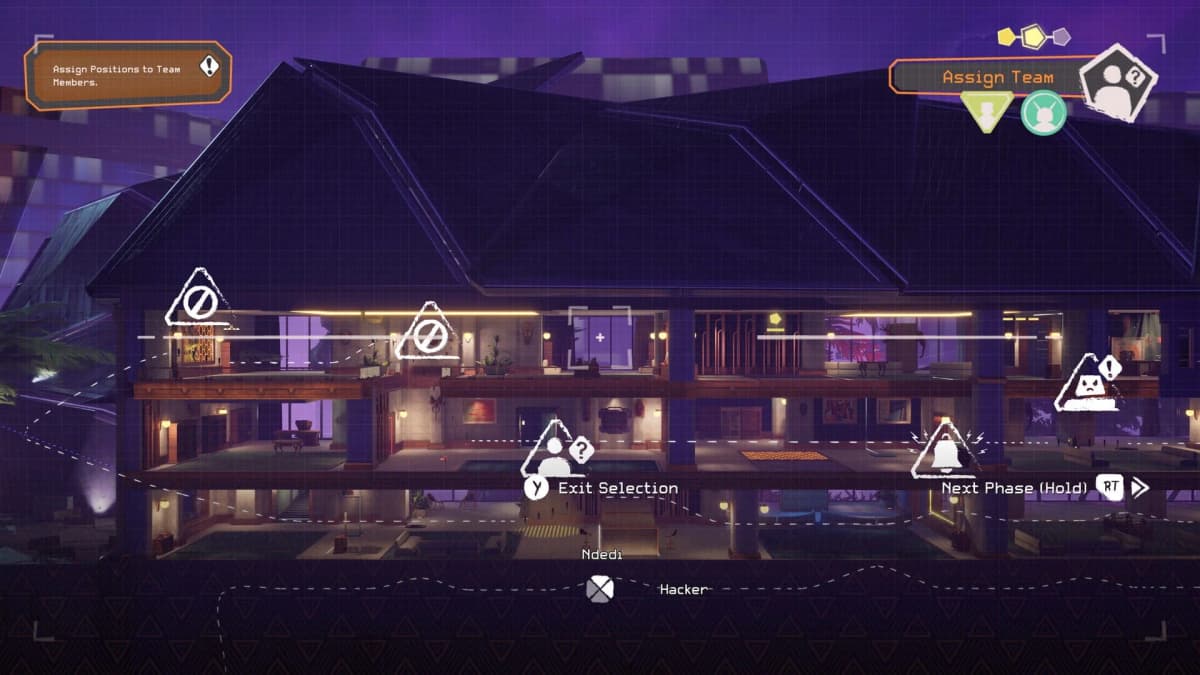
On paper, Relooted’s structure is exactly my thing. You plan a heist with your team—asking questions, gathering intel, choosing approaches—then execute a side-scrolling platforming mission where you infiltrate a space, secure the artifacts, and get out clean.
The levels themselves are strongly themed: creepy installations like the House of Horrors, gleaming vaults such as the Shiny Place, training environments like the Maiden Voyage and Ndedi’s session. Visually, they’re memorable and distinct enough that I could describe sections from memory even days later. Layouts often mix stealthy movement, traversal challenges, and puzzles about how to navigate security systems while protecting fragile objects.
But the “planning” part, which should be the glue that makes it all feel like a proper heist, doesn’t always land. You’re given dialogue choices, you ask your crew questions, you feel like you’re being thorough—then the actual mission mostly plays out the same way regardless. Aside from obvious goals like “find the artifacts” and “mark a way out,” the link between your prep and what unfolds in the heist feels thin.
More than once, I finished a planning sequence expecting some clever payoff—alternate routes, different security layouts, bonus objectives—and instead found myself on a fairly linear path where my earlier questions barely mattered. It’s not that the heists are bad. They’re just less reactive than the setup suggests, which made the planning sections feel more like flavorful cutscenes than meaningful systems.
Platforming: When the Ground Doesn’t Quite Meet Your Feet
Relooted “looks and plays like a well-designed side-scrolling platformer” at first blush. The animation is smooth, and if you watch footage without a controller in your hands, it seems like a tight mix of wall-running, wall-jumping, speed boosts, and timing-based jumps.
Once you start playing, the cracks appear.
The big offender is wall-jumping and parkour flow. In theory, you can chain jumps along walls, kick off at angles, and make daring aerial escapes. In practice, I had too many moments where Nomali simply refused to trigger a jump, slid off a surface in a way I couldn’t predict, or felt slightly delayed. On precision sections—tight gaps, timed lasers, moving hazards—that inconsistency moves from “a bit annoying” to “I want to put the controller down.”
Two levels in particular—House of Horrors and Shiny Place—pushed me from mild irritation into outright frustration. Sequences that clearly wanted me to feel slick and nimble instead felt like I was fighting the input timing. I’d line up the same jump several times and get slightly different outcomes, which is exactly what you don’t want in a platformer built around repetition and mastery.
There are fun moments. During the Maiden Voyage training for Ndedi, I misjudged a sprint and smashed Nomali straight into a window, only for her to get stuck mid-air in some bizarre half-fall pose. I laughed, grabbed a screenshot, and mentally filed it under “bugs I can live with.” But the cumulative effect of these little issues—especially where they collide with serious heist stakes—wears on you.
The Real Final Boss: Bugs, Crashes, and Autosave
Relooted’s biggest problem isn’t thematic, or narrative, or even structural. It’s technical.
Across my 20 hours on PC (Steam), I ran into a messy mix of controller issues, gameplay bugs, and crashes. Some controller problems felt isolated—buttons not responding once, odd input behavior here and there—but others piled up during tricky sections and made it hard to tell whether I’d messed up or the game had.
More damaging were the crashes and the way Relooted handles saving. Auto-saves don’t always trigger when you expect them to, especially between key story beats and during longer missions. A couple of times, a crash sent me back far enough that I had to replay not just platforming sections but whole chunks of dialogue and setup. When you’re already frustrated by finicky wall-jumps, losing 10-20 minutes of progress can be the thing that makes you alt-F4 for the night.
None of these issues feel insurmountable. This is the kind of stuff a few solid patches can smooth out. But as it stands right now, they meaningfully affect the experience. I was constantly bracing for the game to hiccup at the wrong time, which isn’t the mindset you want while trying to enjoy high-stakes fiction.
Characters, Voice Direction, and Emotional Payoff
On the narrative side, Relooted has a strong foundation: a tight-knit crew, generational tension between Nomali and her grandmother, and the moral weight of stealing back stolen things. When the game leans into its cutscenes, especially those focused on family or the politics of repatriation, it can be genuinely gripping.
The issue is that the emotional energy of those scenes doesn’t consistently carry over into minute-to-minute play. A lot of this comes down to voice direction. The actors themselves clearly have range, and there are a handful of interactions that clicked for me—banter before a heist, a quiet moment between Nomali and Trevor, a heated debate with Grace.
But in many regular gameplay lines, characters sound disconnected from one another, like they were recorded in different rooms (which, to be fair, they probably were). The timing sometimes feels off; reactions don’t always match the intensity of what’s on screen. Instead of feeling like a real crew riffing and clashing, it can have the stiffness of an early table read.
This is especially noticeable because the story stakes are so high. You’re talking about the spiritual and religious significance of items that were literally looted under violence, and yet some exchanges land with a shrug. It’s not that the script is bad—thematically, it’s doing important work—but the delivery doesn’t always support it.
Art Direction, Representation, and Why It Still Matters
If all you care about is polish, you’ll probably bounce off Relooted. But if you care about what games can say, Relooted is hard to ignore.
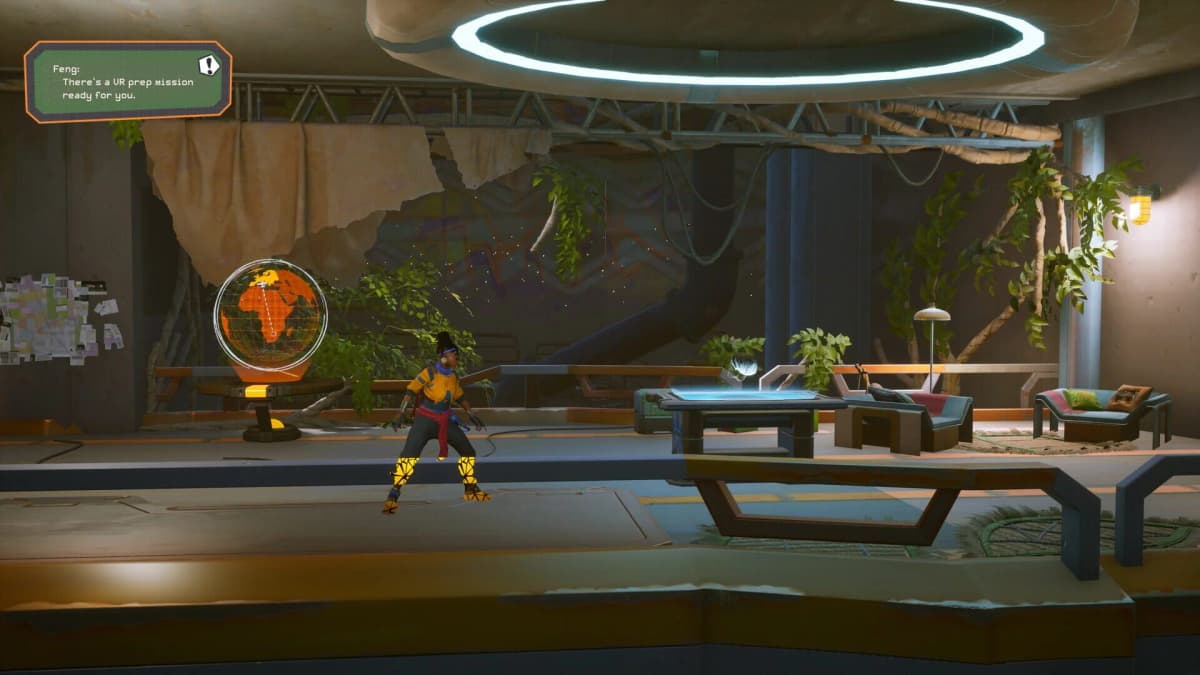
The art direction does a lot of heavy lifting. Nomali’s Johannesburg feels lived-in: a city that’s semi-futuristic but rooted in recognizable South African textures—architecture, signage, fashion, and the way people move through public and private spaces. The 2D environments are layered with visual storytelling; you can practically feel which places are meant to welcome you and which are designed to exclude you.
The artifacts themselves are lovingly recreated in 3D, placed in otherwise sterile Western spaces that emphasize the disconnect between origin and display. Every time you pick one up, the game pauses enough to treat it like more than a collectible. It’s a subtle but powerful way of insisting these aren’t just “items” on a checklist.
Relooted also succeeds as representation. African history isn’t just a background texture—it’s the plot, the mechanics, the stakes. Hearing names and languages pronounced correctly, seeing a Black woman lead a heist crew for righteous reasons, operating out of Johannesburg rather than some anonymous “global city,” all feels pointed in the best way.
For anyone tired of games where Africa is only a backdrop for Western heroes or a shorthand for “dangerous exotic locale,” Relooted feels like a deliberate course correction. Even when I was annoyed at yet another missed wall-jump, the broader cultural work the game is doing kept me engaged.
Who Should Play Relooted?
Relooted is not a universal recommendation, but it’s an important one.
- Play it if: you care about cultural repatriation, museum restitution, and representation in games; you’re okay with a platformer that’s a bit rough technically but rich in ideas; you like heist fiction and want to see it from an African perspective for once.
- Maybe wait for patches if: you’re easily frustrated by buggy platforming, crashes, and unreliable autosaves; you want that Celeste/Hollow Knight level of responsiveness and polish from your jumps.
- Probably skip if: you don’t have much patience for narrative-heavy games, or you mainly want a pure mechanical platformer with no rough edges.
Bottom Line: A Vital Story, Held Back by Its Own Systems
Relooted is the kind of game I want to champion loudly and critique just as loudly. It’s doing something the industry has largely failed to do: center African voices, history, and stolen heritage in a way that’s specific, researched, and unapologetic. It reframes the classic heist fantasy into a story about justice and repair, not just adrenaline and greed.
At the same time, the nuts and bolts matter. Slippery wall-jumps, technical bugs, crashes, and a sometimes-fractured connection between planning, execution, and performance keep it from reaching the heights it’s clearly reaching for. When you’re making a game about precision and high stakes, your controls and stability can’t feel like a coin flip.
Even with those caveats, I’m glad Relooted exists. It’s a necessary, overdue counterpoint to decades of “adventurer” stories that treated pillaged artifacts as shiny loot. Here, you’re not the thief in the museum—you’re the one putting history back where it belongs.
Rating: 7/10 — An essential cultural statement wrapped in a flawed, often frustrating heist-platformer. If its subject matter resonates with you, it’s absolutely worth your time, ideally with a bit of post-launch patching.
TL;DR
- What it is: A 2D side-scrolling heist platformer set in a semi-futuristic Johannesburg, about stealing African artifacts back from Western museums and collectors.
- What it nails: Deep research, around 70 faithfully recreated artifacts, thoughtful cultural framing, strong art direction, and a powerful critique of colonial looting and museum restitution.
- What drags it down: Inconsistent wall-jumping and parkour, controller quirks, bugs, crashes, and patchy voice direction that sap some narrative power.
- Why it matters: It meaningfully reclaims the “treasure hunting” trope and adds real weight to ongoing debates around cultural repatriation and African history in games.
- Verdict: Ambitious, important, and imperfect—Relooted is worth playing for its ideas and representation, even if its platforming and polish fall short of its vision.
FinalBoss // Gear
Level up your setup
01Top-rated gaming headsetson Amazon→02High-refresh gaming monitorson Amazon→03Gaming chairson Amazon→04Discounted game keyson Kinguin→Affiliate links · As an Amazon Associate, FinalBoss earns from qualifying purchases.
Want to Level Up Your Gaming?
Get access to exclusive strategies, hidden tips, and pro-level insights that we don't share publicly.
Ultimate Reviews Strategy Guide + Weekly Pro Tips