
Table of Contents (11)
Metal Gear Solid came out in 1998. It still embarrasses most “cinematic” games in 2026.
Metal Gear Solid dropped in 1998, on a grey PlayStation that sounded like it was about to take off every time you changed area. 3D was still awkward, voice acting was mostly an afterthought, and “story” usually meant three text boxes before sending you back to blasting demons or aliens.
Yet somehow, in that awkward, polygonal era, Hideo Kojima delivered something that still feels more confident, more daring, and frankly more grown-up than half the “cinematic experiences” we’re drowning in right now. I’ve replayed Metal Gear Solid more times than is healthy – original PS1 disc, Twin Snakes, the more recent collections – and every time I come back to Shadow Moses, the same thing hits me: this wasn’t just ahead of its time, it defined the time that came after.
We’re in a moment where Konami is dusting off its old trophies again – Silent Hill’s back, Castlevania rumours won’t die, Snake Eater got a shiny remake that sold over a million copies in its first month – and Kojima himself is out there calling his next project, Physint, a “spiritual successor” to Metal Gear. So if there was ever a time to be brutally honest about what actually made Metal Gear Solid special, it’s now.
Because if Konami and half the industry think they can just crank up the resolution, add some mocap, spam us with cutscenes and call it “cinematic stealth,” they’ve learned nothing from the game that wrote the playbook.
Kojima didn’t just add cutscenes – he weaponised cinema inside a game
I’m tired of people talking about Metal Gear Solid like it was “the first game with lots of cutscenes.” That’s such a shallow read it might as well be box art copy. Yes, it had more than ten hours of cinematics and codec conversations, shot like a mid-budget Hollywood thriller. Yes, the opening credits roll like an actual film, giving equal billing to designers, actors and composers. But the point isn’t that it had a lot of story – it’s how that story bled into the systems.
Kojima had been chasing this for years. Snatcher, Policenauts, the MSX Metal Gears – all him trying to glue cinema and interactivity together with duct tape and passion. With PlayStation, he finally had enough horsepower and storage to go unhinged: a reported budget in the single-digit millions of dollars, early sales cracking seven million units by 2000, and now a place in the Library of Congress and the World Video Game Hall of Fame. This wasn’t niche; this was a global statement.
What mattered to me, sitting way too close to a CRT as a teenager, wasn’t simply that Snake talked a lot. It was that the talk, the framing, the pacing were welded to the way I played. The torture scene doesn’t just play out as a movie; it rips control from you and hands it back in bursts, making you hammer the button until your forearm burns. Boss monologues aren’t cleanly separated from mechanics; Sniper Wolf’s tragic backstory is literally sandwiched between you crawling through a minefield and lining up a shot across a blizzard.
Modern cinematic games love to pretend they’re doing this, but most of them are just alternating between movie mode and parkour mode. Metal Gear Solid, with all its clunky tank controls and fixed camera angles, still feels more deliberate in how it fuses the two.
Stealth as tension, not invisibility
Before Metal Gear, “stealth” usually meant “the AI is too dumb to notice you behind this barrel” or “we forgot to give you enough ammo.” Kojima flipped the logic. The entire fantasy of Metal Gear Solid is that you’re outgunned and outnumbered, and staying unseen isn’t about power fantasy – it’s about barely holding things together.
The systems themselves are simple on paper: enemy vision cones, sound cues, a basic alert/evade/caution loop, the iconic radar. But the density of ideas inside that framework is what still hits hard. Guards leave footprints in the snow you can exploit – or accidentally expose yourself with. Puddles splash when you run through them. Shadows give you away. Cigarettes gently tick down your health but reveal laser tripwires. Every room is a tight little puzzle box grounded in the same clean rules.
Replay it now and you can see the DNA of a whole genre exploding outwards. Splinter Cell absolutely rode this wave, dialing up the realism and shadow play. Hitman took the idea of systemic infiltration and ran it into sandbox clown-murder territory. Even Assassin’s Creed owes some of its early identity to the fantasy Metal Gear nailed: slipping through hostile spaces, information as power, the idea that not fighting is the smart option.
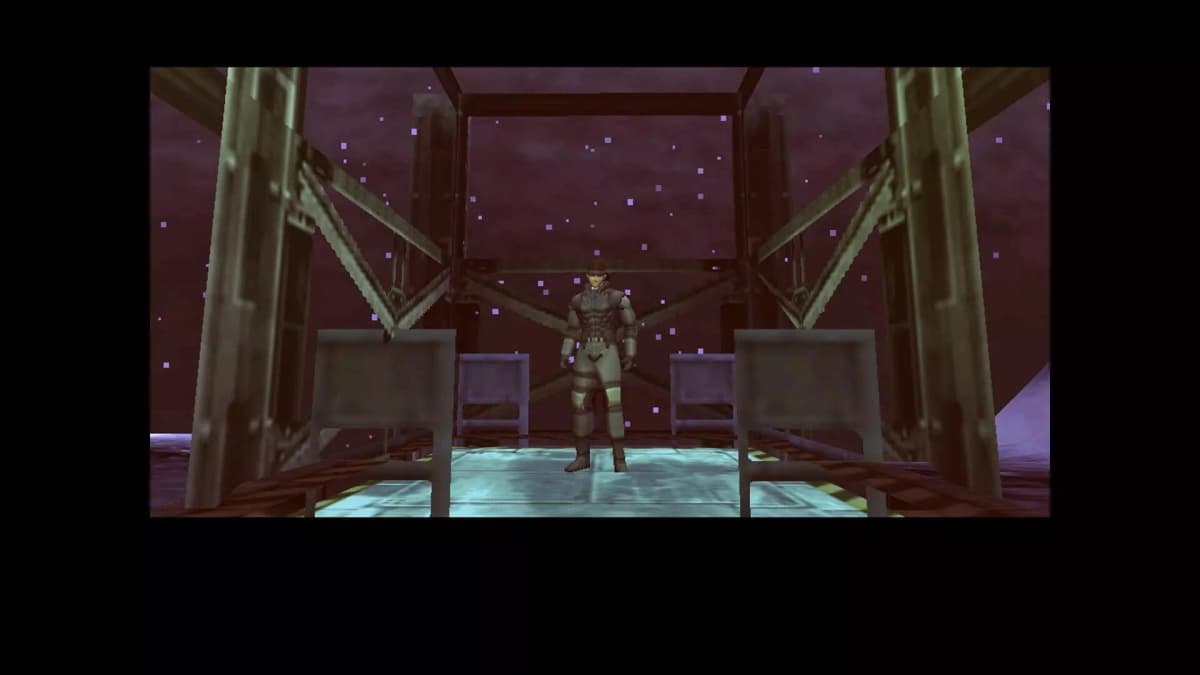
There are numbers to back that up – by most market analyses, stealth as a labeled genre exploded after 1998, with hundreds of titles chasing that formula across PS2, Xbox and PC. But the quantity almost obscures the reality: very few games actually matched the tight, almost claustrophobic tension of Shadow Moses. Open worlds swallowed stealth into yet another checkbox activity. You can “go loud” in a lot of modern games because the AI’s trash and the level design’s the size of a small country.
In Metal Gear Solid, going loud felt like you’d broken the contract. Shadow Moses is compact, almost theatre-like. Piss off the guards and the whole room becomes hostile geometry. There’s no side activity to hide behind, no fast travel, no “we’ll reset the outpost once you walk 50 meters away.” The game commits to its premise harder than most modern titles dare.
Psycho Mantis and the moment games stopped pretending they weren’t games
Every time people talk about “meta” design now, it’s some half-baked fourth-wall joke or UI glitch effect. Metal Gear Solid’s Psycho Mantis fight was meta before that word became a marketing term. It wasn’t just clever; it was a direct attack on how you thought about the medium.
On the surface, he’s a standard “psychic boss.” In practice, he’s reading your save data off the memory card and turning your console’s hardware against you. He comments on which Konami games you’ve played – Castlevania, Suikoden, even Kojima’s own Snatcher and Policenauts, complete with special lines. He makes your controller rumble to prove he can “move it with his mind.” The screen suddenly cuts to a fake “HIDEO” channel ID as your TV “turns off.” And the actual mechanical solution? Plugging your controller into port 2 so he can’t “read your moves.”
Under the hood, it’s just clever use of system APIs. The game queries the memory card directory, looks for certain save identifiers, and flips rumble on and off. But what matters is the intent. This wasn’t just a gag; it was reinforcing the game’s themes about surveillance, information warfare, and the idea that nothing in this world – not even the boundary between player and console – is truly private.
I look at modern prestige games, with their endless QTE boss fights and canned “cinematic” finishers, and I can’t help feeling we’ve gone backwards. We have exponentially more hardware power, but very few titles are willing to do something as weird and confrontational as telling you to physically rewire your setup mid-battle.
FOXHOUND: villains with actual weight, not just concept art
The real genius of Metal Gear Solid’s story isn’t just Solid Snake. It’s the rogues’ gallery that makes Shadow Moses feel like a closed-circle war drama instead of just a military theme park. FOXHOUND isn’t a checklist of “one fire guy, one sniper, one big tank man.” It’s a set of characters whose mechanics, backstories and aesthetics all line up.
FOXHOUND: villains with actual weight, not just concept art
The real genius of Metal Gear Solid’s story isn’t just Solid Snake. It’s the rogues’ gallery that makes Shadow Moses feel like a closed-circle war drama instead of just a military theme park. FOXHOUND isn’t a checklist of “one fire guy, one sniper, one big tank man.” It’s a set of characters whose mechanics, backstories and aesthetics all line up.
🎮 Get This Game at the Best Price
Compare prices instantly and save up to 80% on Steam keys with Kinguin — trusted by 15+ million gamers worldwide.
*Affiliate link — supports our independent coverage at no extra cost to you
Revolver Ocelot is a sadistic cowboy gunslinger obsessed with revolvers because they never jam and never run out “if you’re good enough.” His boss fight is a straight duel in a room full of trip mines – a test of angles, patience and timing. Vulcan Raven is a literal tank of a man who first attacks you in a tank, then hunts you through a cold storage maze, his footsteps telegraphed like a slasher villain. Sniper Wolf isn’t just “the sniper level”; her arc is laced through the whole game, from that first brutal shot in the snowfield to the long-range duel that forces you into a backtrack, to her execution in the snow and Otacon’s breakdown.
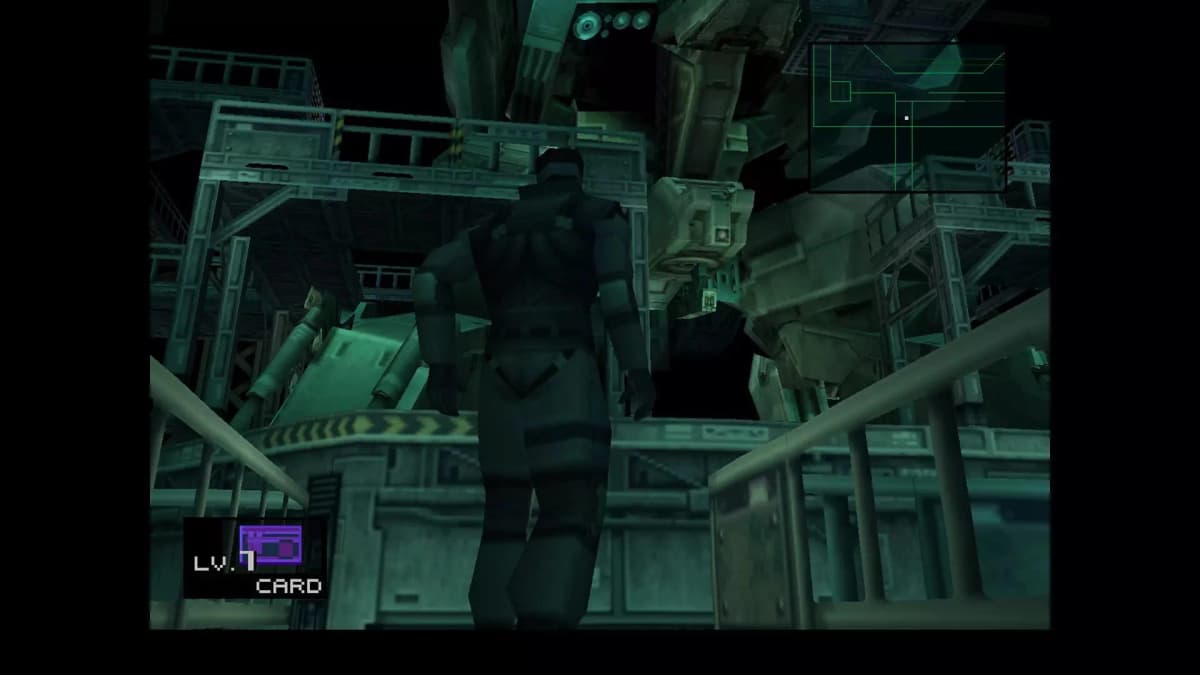
Each FOXHOUND member forces you to play differently – but more importantly, they feel like real antagonists rather than temporarily themed puzzles. The game gives them time to breathe, with monologues, codec debriefs, and those weirdly intimate death scenes where they lay out their entire philosophy while bleeding out. You can roll your eyes at the melodrama, but it’s a hell of a lot more memorable than another boss that just screams and explodes.
That’s a big part of why Metal Gear’s iconography stuck. FOXHOUND’s logo, Ocelot’s laugh, Sniper Wolf in the snow, Psycho Mantis’ gas mask, even Snake hiding in a cardboard box because Kojima was obsessed with Kōbō Abe’s The Box Man – it all coheres into something that developers, critics and fans kept coming back to. There are more than 200 talks at GDC that reference Metal Gear in some way, and it’s not because people liked the bandana; it’s because this thing was a design school disguised as a blockbuster.
Replay it now and the design still holds – the bloat of modern AAA doesn’t
Booting Metal Gear Solid in 2026 is a shock if you’ve been drowning in open-world fatigue. The game is lean to the point of cruelty. Shadow Moses is a tightly looped environment where every room, every corridor, every vent has been touched by a designer with a plan. You’re not crossing 2km of empty space to tick off a side quest marker; you’re re-entering the same armoury and noticing that the guard patrols have changed because the story has escalated.
What’s aged badly is obvious: the controls are awkward if you grew up on twin-stick shooters, the camera can be stubborn, and some of the codec dumps go on long enough to feel like an impromptu university lecture on nuclear disarmament. But structurally, it’s tighter than most big-budget releases today.
To be blunt, replaying this game made me even harsher on modern “stealth sections.” They’re usually either:
- An optional bonus path in what is fundamentally a shooter.
- A forced, scripted sequence where being detected instantly fails you.
- A half-baked system bolted onto an open world so marketing can claim “multiple playstyles.”
Metal Gear Solid doesn’t treat stealth like a feature bullet. It’s the spine. The layout of Shadow Moses, the gadget design, the alert system, the boss mechanics – they’re all pulling toward the same idea. Contrast that with a lot of major releases now, where half the mechanics feel like studio politics made manifest: somebody had to get their pet system in, even if it doesn’t actually belong.
Konami’s “revival” worries me more than it excites me
On paper, Konami finally remembering it owns Metal Gear should be good news. The series has shifted over 60 million units across decades. Metal Gear Solid V alone sold more than six million. The recent Snake Eater remake moved over a million in its first month. The business case is obvious. Konami’s execs have been talking about a “full revival commitment” for their classic IPs, and you don’t trot out language like that unless you’re planning something bigger than nostalgia collections.
The problem is that Metal Gear is dangerously easy to misunderstand. You can recreate the FOXHOUND faces in 4K. You can rebuild the Shadow Moses helipad in Unreal. You can hire a celebrity to do the gruff voice. None of that guarantees you’ve captured the thing that mattered: the willingness to make a game that doesn’t give a damn about current marketing textbooks.
Look at how long Hollywood’s been faffing around with a Metal Gear Solid film – announced in 2006, Oscar Isaac attached as Snake in 2020, still no cameras rolling. Every few months, someone posts an AI-rubbish mockup of some actor as Snake with a “La Li Lu Le Lo” caption, the internet loses its mind for a day, and then nothing. Everyone wants the cool poses and the bandana; nobody wants to deal with the genuinely weird pacing, monologues, and geo-political nerdiness that define this series.
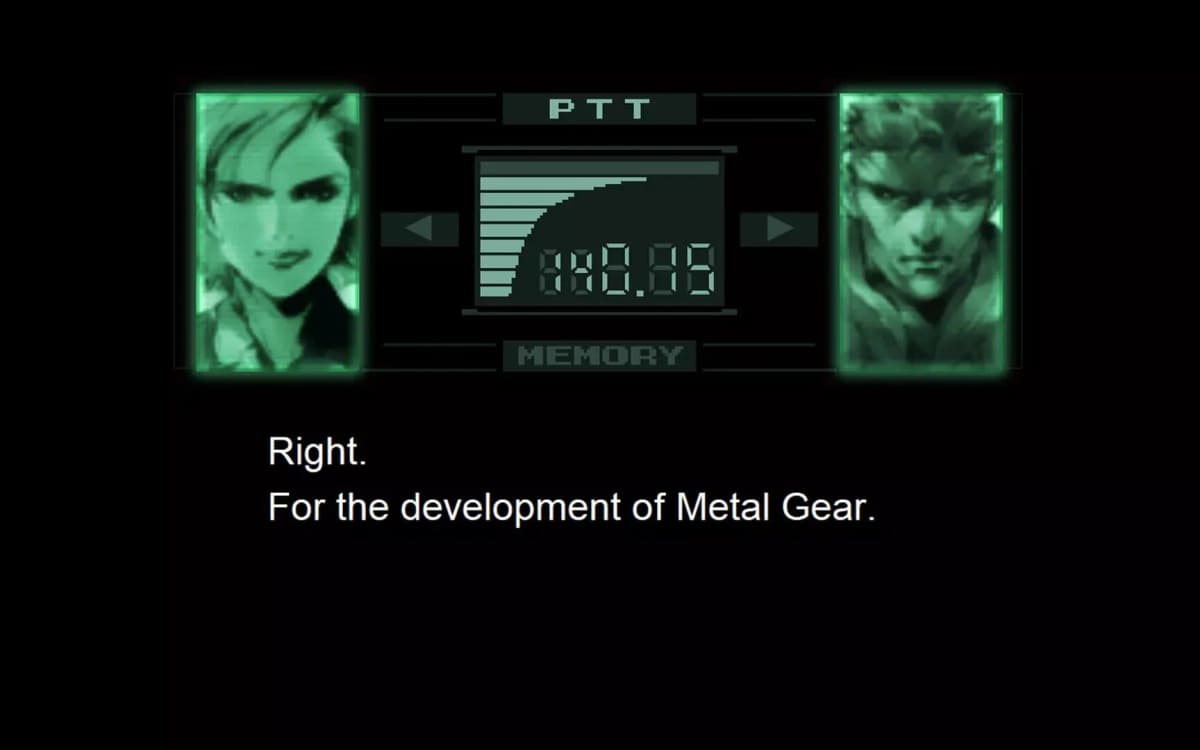
That’s my fear with Konami’s revival push. If they chase the surface – the memes, the boss quotes, the CQC takedowns – without embracing the risk and structural boldness, we’ll get very pretty, very empty Metal Gear pastiches. Games that look like Metal Gear in screenshots but feel like focus-tested action movies when you actually pick up the controller.
Kojima’s Physint might be the real heir, for better or worse
The wild card in all of this is Hideo Kojima himself. Since the spectacular breakup with Konami, he’s already proven once with Death Stranding that he’s still willing to build something half the audience will bounce off of and the other half will spend 100 hours in. Now he’s out there saying Physint is a “spiritual successor” to his stealth work – an “interactive movie” with real actors and heavy cinematic ambition.
I don’t automatically cheer just because his name’s on the box. Not every late-career auteur swing lands. But if anyone has both the ego and the track record to at least try pushing narrative and stealth forward again, it’s him. The original Metal Gear Solid was made with a fraction of the resources modern triple-A enjoys, and it still rewired the industry – IGN literally called it “the blueprint for modern narrative games” in a retrospective. Imagine what the same mindset could do with today’s tech if it’s pointed at something more ambitious than prettier facial capture.
To be clear, I don’t want Physint to just be Metal Gear with the serial numbers filed off. I want it to remember why Metal Gear mattered: because it took massive swings, from a story stuffed with nuclear policy lectures to boss fights that fiddled with your hardware to make a point. If all we get is a “cinematic stealth shooter” with a famous cast and some prestige-TV lighting, then we’ve learned nothing.
Metal Gear Solid raised my standards – and I’m not lowering them for anyone
Metal Gear Solid wrecked my ability to be satisfied with disposable stealth segments and boilerplate “serious” stories. After Shadow Moses, I started expecting games to actually say something with their systems, not just their scripts. I wanted villains with weight, not just health bars. I wanted designers to treat my console and controller as part of the narrative toolkit, not just input devices.
When I see modern blockbusters brag about how many hours of cutscenes they have, or how many lines of dialogue they recorded, I think back to a PS1 disc that did more with compressed audio, boxy character models and two controller ports than most nine-figure productions manage with entire mocap studios. When studios call their latest sequel a “cinematic stealth experience” and then fill it with half-baked gunplay and copy-pasted outposts, I go back to Shadow Moses and remind myself we already solved this 28 years ago.
Konami can revive Metal Gear. Kojima can reinvent his own formula. Remakes can polish old classics and new games can borrow the iconography. But the reason Metal Gear Solid still matters – the reason it’s been dissected in classrooms, cited in hundreds of GDC talks, and preserved in institutions that barely acknowledge games existed before the HD era – is simple:
It treated stealth as a language, cinema as a tool, and the player as a co-conspirator. Until more “cinematic” games are brave enough to do the same, Metal Gear Solid won’t just be a classic. It’ll be a mirror that shows how timid the modern industry has become.
FinalBoss // Gear
Level up your setup
01Top-rated gaming headsetson Amazon→02High-refresh gaming monitorson Amazon→03Gaming chairson Amazon→04Discounted game keyson Kinguin→Affiliate links · As an Amazon Associate, FinalBoss earns from qualifying purchases.
Want to Level Up Your Gaming?
Get access to exclusive strategies, hidden tips, and pro-level insights that we don't share publicly.
Ultimate Gaming Strategy Guide + Weekly Pro Tips