
Table of Contents (7)
The moment Requiem convinced me Capcom still understands fear
It took exactly one corridor in the Wrenwood Hotel demo to flip my attitude from “yeah, another Resident Evil” to “okay, they might actually get it this time.” I was playing as Grace Ashcroft, creeping down a hallway that felt like someone slammed the Spencer Mansion and a modern boutique hotel into the same cursed building. Two bullets in the mag, one herb in my inventory, pulse scanner battery nearly dead. A wet dragging sound started somewhere behind the walls, and the scanner gave me this sick little blip that said, “something’s breathing in the room ahead… but not for long.”
That’s when it clicked: Resident Evil Requiem isn’t trying to be a content treadmill. It’s trying to be mean. Tight. Ammo-scarce. The kind of survival horror that makes you stop and actually think before you pull the trigger. As someone who’s been playing this series since renting the original Resident Evil 2 on a scratched PS1 disc, that matters more to me than any shiny trailer.
So if you’re here for Resident Evil Requiem – everything we know: release date, platforms, story, sure, I’ll hit that. But the reason I care – and the reason I’m even cautiously excited in 2026, after a decade of AAA lies and “live service” sludge – is because Requiem feels like Capcom finally choosing a side. Less bombastic spectacle, more Raccoon City nightmares that get under your skin.
That February 27, 2026 release date actually says a lot
Capcom has nailed down a global launch for February 27, 2026, across PS5, Xbox Series X|S, PC (Steam, Epic, GeForce Now), and Nintendo Switch 2. No staggered releases, no “coming later to PC” nonsense. Just one universal “you’re all screwed on Friday” moment. As a fan, that matters way more than marketing departments like to admit.
First, the timing. February is basically “prestige horror month” now. It’s far enough away from the holiday AAA pile-up that a 15–20 hour survival horror campaign like Requiem can actually breathe. I remember playing Resident Evil 7 in January 2017 and loving that it wasn’t competing with three massive open worlds and a dozen battle passes. Requiem dropping in late February hits that same sweet spot: long enough to sink a weekend into it, short enough not to become homework.
Second, the confidence. Capcom’s already bragging about 1,000,000+ wishlists and projecting something like 10 million copies in launch week. That obviously could just be marketing hot air, but the fact they’re giving us a clear date, pre-load window around February 25–26, and a fat ~100GB install size this far out tells me one thing: this is the flagship Resident Evil for this console generation, not some side experiment.
Does that guarantee a smooth launch? Absolutely not. I still remember patch-hunting my way through early Village bugs and watching other “polished” AAA horror games fall apart on day one. But I’d be lying if I said seeing a locked-in date across every platform doesn’t give me at least a little faith that Requiem isn’t being duct-taped together at the last minute.
Platforms: this time, nobody’s left outside Raccoon City
Requiem is skipping last-gen completely and going straight for PS5, Xbox Series X|S, PC (Steam, Epic, NVIDIA GeForce Now), and Nintendo Switch 2. As someone who played RE2 Remake on a creaking PS4 and watched it cry in the rain-soaked streets, that’s honestly refreshing. We’re finally in the “stop dragging PS4/Xbox One around like dead weight” phase of horror development.
On PS5 and Series X|S, Capcom’s pushing the usual suspects: performance and quality modes, ray-traced lighting in the Raccoon ruins, and near-instant loading when you inevitably die because you got greedy with one last headshot. DualSense haptics on PS5 for me are a bigger deal than they probably should be – the idea of actually feeling the jolt of a pistol misfire or the slosh of a licker sliding past a vent syncs perfectly with the series’ obsession with tactile horror.
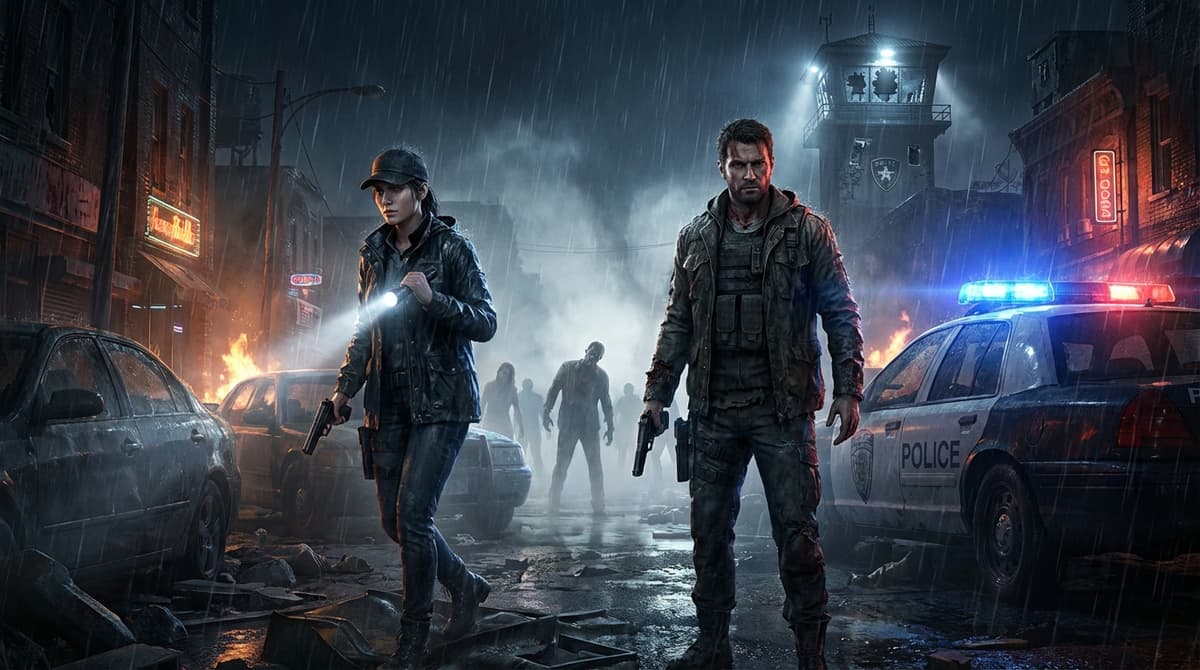
PC is where I’ll probably end up, though. DLSS/FSR, high refresh, ray tracing, the whole buffet. RE Engine has quietly become one of the best-optimized engines in the business, and everything I’ve seen of the Requiem demos on high-end RTX cards looks disgustingly smooth. If Capcom doesn’t bungle anti-cheat or DRM, Requiem could be one of those rare “actually worth tweaking your settings for an hour” horror PC releases.
But here’s the surprise: the Nintendo Switch 2 version might be the most interesting move of all. Capcom’s promising native, optimized performance – not the embarrassing cloud-streamed compromises we had before – aiming at 1080p docked and 60fps with tuned assets. Portable RE2 Remake-style horror, on an 8-inch OLED, with gyro aiming? If they hit that target, it’s basically a statement that grimy, high-fidelity survival horror doesn’t have to be chained to the living room anymore. That’s a future I’m absolutely here for.
Story and setting: another trip to Raccoon… and why I’m not sick of it (yet)
On paper, “we’re going back to Raccoon City” should feel played out. We’ve done the police station loop. We’ve dodged zombies in those streets more times than I care to count. But Requiem frames it as exactly what the title says: a funeral. Not just for the city, but for everyone the series left behind.
You start as Grace Ashcroft, an FBI analyst investigating a mysterious illness killing off the last remaining Raccoon survivors. That alone is such a killer hook; it’s not just “Umbrella is bad,” it’s “what happens to the people who survived that night, only to be hunted by its aftermath decades later?” The opening Wrenwood Hotel segment I played leans hard into that vibe – old money, old secrets, and new bio-organic freaks squatting in the walls.
Leon S. Kennedy is your other playable lead, and his sections, at least from what we’ve seen in trailers and demos, go full “clock is ticking” action-thriller. You can practically feel Capcom trying to reconcile the vulnerable rookie cop from RE2 with the one-man wrecking crew from RE4. The smart move is that Grace and Leon don’t share the same tone: she’s methodical, cerebral, weighed down by survivor guilt; he’s the battering ram trying to keep the present from collapsing.
If Capcom pulls it off, it won’t just be nostalgia bait. It’ll be the first time in a while that returning to Raccoon isn’t about recreating the past beat for beat, but using that history to say something about what this series has become. That’s why I’m not rolling my eyes at yet another ruined city shot. Requiem looks like it actually understands that Raccoon City is trauma, not just a backdrop.
Dual protagonists and first-person horror: smart design or pacing disaster?
The boldest thing Requiem is doing structurally is that mid-chapter switching between Grace and Leon. This isn’t like old-school “pick A or B scenario and replay later.” The game yanks you between their perspectives inside the same chapter, bouncing from puzzle-heavy investigation to sweaty firefights, and then back again.
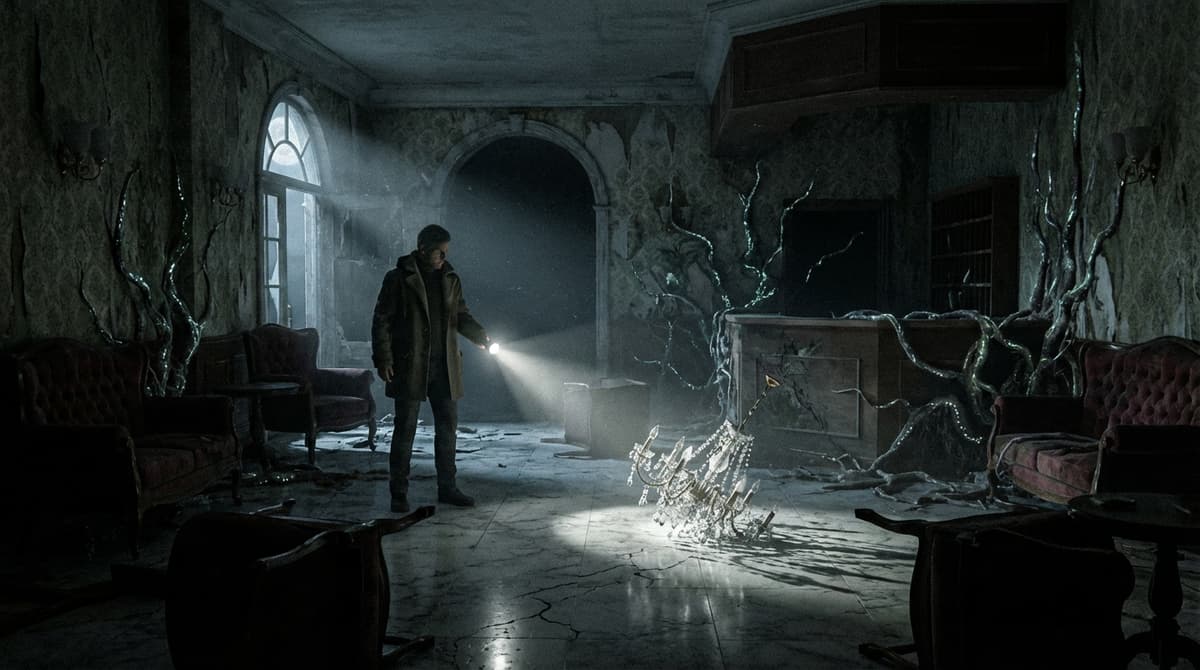
In the Wrenwood demo, I got a real taste of how that works. One moment I was Grace, crawling through a service corridor, using the new pulse scanner to pick up heartbeats through walls and sneaking past a cluster of infected because I literally didn’t have the ammo to risk it. Then the perspective cut to Leon in another wing of the building, same overarching timeline, but now it’s about holding a staircase against a wave of transformed patients with a barely-functional shotgun.
Normally, that kind of forced switching is a red flag for me. It can kill tension if it’s just a gimmick. But Requiem is doing it in first person, which changes everything. You’re not just watching two campaigns interlock from a distance; you’re inside both heads, and you feel the contrast. Grace’s sections weaponize uncertainty: unarmed corridors, locked rooms, hacking mini-games where a 30-second time limit feels like a death sentence. Leon’s bits are explosive valve releases – still ammo-starved, still tense, but cathartic in a way only a clean headshot on a lunging monstrosity can be.
What really sold me was how the systems support that tension. Ammo is brutally scarce. Weapons degrade – my knife broke after about ten desperate uses, and I hated how much I loved that feeling of vulnerability. The inventory is an updated RE4 Remake-style grid, but you can’t hoard your way out of bad decisions. The estimated 15–20 hour campaign length suddenly makes sense: this isn’t designed as a 60-hour sandbox, it’s designed to crush you in very curated, very deliberate bursts.
And then there’s the dynamic AI. Zombies don’t just stand there waiting to be kited anymore. In one nasty Wrenwood encounter, after I ducked under a barricade to flee a room, an infected I’d crippled earlier actually crawled under the same gap to follow me. It’s a small detail, but it completely changes how you read a space. Corners are no longer safe just because you think you’ve “cleared” them, and that’s exactly the kind of psychological pressure survival horror has been missing in the age of overpowered protagonists.
Release date, platforms, story… and then the pre-order circus rolls into town
Now for the part I hate talking about but can’t ignore: editions, pre-order bonuses, and all the marketing cruft orbiting an actually promising horror game.
Here’s the breakdown as it stands: a Standard Edition at $69.99, a Deluxe at $89.99, and a Collector’s Edition at a frankly absurd $199.99. The Deluxe throws in the Trauma Pack (costumes, extra items, soundtrack, some early access weapons) plus 48 hours of early access. The Collector’s piles on statues, artbooks, coins – you know the drill.
This is where Capcom starts to lose me. When early access is locked behind a pricier edition, it stops being a “thank you” and starts being a tax on FOMO. I say that as the idiot who bought Resident Evil 3 Remake at full price on day one and finished the main story before my pizza got cold. I’ve learned my lesson. I don’t need a 10-inch Grace statue to validate my fandom; I need a game that respects my time and my wallet.
Personally, I’m eyeing the Standard Edition on PC and waiting for the first round of post-launch impressions before I even think about DLC bundles. The Trauma Pack cosmetics and early weapons might make your first run slightly more comfortable, but comfort is the enemy here. If Requiem really is a “back to ammo-scarce terror” entry, then buying a smoother start feels like paying extra to blunt the whole point.
Why Requiem matters more than just “the next Resident Evil”
Beyond all the dates, platforms, and marketing noise, here’s why I’m rooting for Requiem: it’s one of the few big-budget horror games in years that’s openly rejecting bloat. No open world. No “checklist” map packed with outposts and sidequests. Just a focused, 15–20 hour campaign that wants to scare the hell out of you, then get out of your way.
If you’re burned out on sprawling horror-lite experiences where you’re looting crafting mats more than you’re actually afraid, Requiem looks like the antidote. Grace’s methodical investigations, Leon’s desperate action spikes, the return to Raccoon City framed as a requiem instead of a nostalgia tour – it all points to Capcom finally understanding that the series’ future isn’t in chasing trends, but in doubling down on what made it iconic in the first place.
Will they stick the landing? I don’t know. The dual-character structure could collapse under its own ambition. The marketing push around editions and pre-orders could drown out the actual craft. A day-one patch could break everything. I’ve been playing games long enough to know nothing is guaranteed until the credits roll.
But after getting my hands on the demo, looking at the February 27, 2026 release date, seeing the full platform list, and digging into the story setup, I’m more hopeful for Resident Evil than I’ve been since RE7. Requiem feels like a line in the sand: either this convinces Capcom that tight, brutal survival horror still sells, or we slide right back into bombastic action with zombies as target practice.
For now, I’m keeping my expectations in check, my wallet on a short leash, and my pulse scanner metaphorically charged. Raccoon City is calling again. Whether we answer that call with a pre-order or a healthy dose of skepticism is up to each of us – but for the first time in a long time, I actually want to open that door.
FinalBoss // Gear
Level up your setup
01Top-rated gaming headsetson Amazon→02High-refresh gaming monitorson Amazon→03Gaming chairson Amazon→04Discounted game keyson Kinguin→Affiliate links · As an Amazon Associate, FinalBoss earns from qualifying purchases.
Want to Level Up Your Gaming?
Get access to exclusive strategies, hidden tips, and pro-level insights that we don't share publicly.
Ultimate Gaming Strategy Guide + Weekly Pro Tips