
Table of Contents (7)
A 30-Year Nightmare Comes Home
The moment that sold me on Resident Evil Requiem wasn’t a boss fight or a massive twist. It was a filthy stairwell.
I was playing as Grace, creeping down into the ARK complex’s auxiliary power wing. My flashlight was dying, the UI politely telling me I had “one good flicker” left in the battery. I could hear something breathing below me, that horrible wet rasp the new Blisterheads make just before they start to swell.
First-person, pitch dark, my inventory already a mess because I’d prioritized Hemolytic Injectors over ammo like a coward. Classic survival-horror brain: keep the weird tool, you might need it for a puzzle. Halfway down, the light cut out completely. The game didn’t spawn a jump scare, didn’t crack a window, didn’t even give me a sting of music. I just stood there, listening, counting my own breaths, realizing I could either burn a precious injector to thin the infection in the room ahead… or try to slip past blind.
This is where Requiem hit me: Capcom has spent thirty years teaching us how Resident Evil “should” feel, and then spent the last decade breaking its own rules. This anniversary entry somehow does both at once. It’s a capstone to the first three decades of the series and the clearest hint yet of where survival horror is headed next.
I finished the campaign in just under 19 hours on PS5 (Standard difficulty, Performance Mode), with a good chunk of extra time spent poking around optional rooms and chasing a few collectibles. By the time the credits rolled and the final montage tried very hard to make me cry, it was obvious why this has quietly become the highest user-rated entry in the franchise so far. This is the most confident Resident Evil has felt since RE2 Remake, and arguably since the original game rewired the genre in 1996.
Two Protagonists, Two Flavors of Fear
On paper, Requiem sounds like a risky mash-up: one campaign built around slow, first-person survival horror with a mostly new face, Grace Ashcroft; the other a third-person, over-the-shoulder reunion tour with Leon S. Kennedy, the most overqualified cop in video game history.
In practice, the split structure is the smartest thing Capcom has done since deciding to remake Resident Evil 2.
Grace’s sections are where the game leans hardest into old-school tension. Limited vision, scarce ammo, deliberate movement speed-if you bounced off the more action-heavy stretch of Resident Evil 5 and the later chapters of Village, this is the side of Requiem that will probably hook you. You’re scavenging in decaying hospitals, service corridors, and research wings that feel like someone took the Spencer Mansion’s love of locked doors and fed it steroids.
There’s one early sequence in a morgue that sums up her whole playstyle. You’re told there’s a key stored “with the uninfected deceased.” The problem: the tags have rotted, and half the bodies are early-stage Blisterheads waiting to pop. You can poke around, try to read names, or use a Hemolytic Injector to force a reaction in the infected. Either way, you’re working with incomplete information, listening for the telltale gurgle that means you’ve picked the wrong drawer. It’s not a complex puzzle, but the way the game forces you to literally gamble resources vs. safety feels very Resident Evil 1, updated for modern sensibilities.
Leon, by contrast, is basically an interactive victory lap for everything Capcom has learned since Resident Evil 4. His campaign shifts to that familiar, snappy over-the-shoulder view, and the moveset will feel immediately comfortable if you’ve played the RE4 remake: quick-turns, tight headshot windows, brutal melee follow-ups, and those wonderfully crunchy shotgun blasts.
What stops Leon’s half from turning into full-on power fantasy is the level design. Rooms are compact, chokepoints are deliberately awkward, and enemy placements push you to manage space more than just dump bullets. There’s a later chapter back in Raccoon City-yes, you’re going home again-where you’re weaving through a half-collapsed police annex and every single corridor feels tailored to force close-quarters panic. It’s indulgent fan service, but it’s also smart, reactive combat space in its own right.
The only real downside is balance. In my playthrough, the game’s back half leans more towards Leon. You end up solving a lot of the big conflicts with firepower, and while the story justifies that shift, I missed Grace’s miserable, claustrophobic stealth when I was three set pieces deep into Leon’s final act. I wouldn’t call it a tonal whiplash, more like a gradual, intentional slide from haunted-house horror into apocalyptic action—but I wanted just a couple more slow burns before the fireworks.
Classic Survival Horror, Sharpened for 2026
What makes Requiem special isn’t just that it has both styles. It’s that it refuses to treat “classic” and “modern” horror as separate boxes.

The bones of 90s survival horror are all here: limited resources, meaningful inventory decisions, locked-room layouts, and enemies that are dangerous enough to make you consider running instead of fighting. But Capcom’s pulled those ideas through everything it learned from RE7 and Village, right down to how it uses sound design and perspective to mess with you.
The dual inventory systems are a good example. Grace’s pack is pure old-school stress: tiny grids, item width and height actually mattering, and that constant voice in the back of your head asking if you really need to carry three keys at once. Leon’s loadout is more streamlined—slot-based with quick-assign shortcuts—but the game nudges you into the same kinds of dilemmas via ammo variety and attachable upgrades. I loved how a decision I’d make in Grace’s half, like hoarding certain blood samples, would echo later when I was crafting enhanced ammo for Leon.
The new infected, Blisterheads, are another neat mechanical throwback disguised as something fresh. They start out looking like slightly bulkier zombies, but the longer they stay active in a room, the more unstable they become. Heat, noise, and blood all increase their “pressure,” and if you let them build up too long, they erupt into AoE nightmares that can wipe your healing items in a blink. It’s a modern, systemic twist on the classic Crimson Head idea from the 2002 remake: ignore corpses and you’re punished later, but in a way that respects the pace of real-time combat encounters.
Then there are the Hemolytic Injectors, weird little syringes that might be my favorite single mechanical addition. You can use them to thin infection before a fight, cleanse certain environmental hazards, or, at a nasty risk, overclock a Blisterhead into a walking bomb. The first time I stuck one into an enemy on purpose, then realized I’d trapped myself in the same narrow corridor as it was about to pop, I swore out loud. It’s the kind of systemic toy that gives you just enough rope to hang yourself with, and it makes both stealth planning and action encounters more interesting.
Not everything hits that level. The environmental puzzles are serviceable at best. You’ll get your fair share of “find the right fuse, align the power grid, rotate the statue” moments, and only a handful of them genuinely stuck with me. Resident Evil has never been mechanical-puzzle royalty like classic Silent Hill or Zero Escape, but after the brilliant castle contraptions in Village, I was hoping for something a bit more inventive here.
Still, the overall pacing — moment-to-moment tension, exploration, then explosive release — is some of the tightest Capcom has managed. I can count on one hand the number of times I felt like I was trudging through padding. Most chapters introduce a clear mechanical or narrative idea, push it just far enough to be satisfying, then move on before it wears out its welcome.
Nostalgia That Does Real Work
Going into a 30th-anniversary Resident Evil, I was braced for fan service overload. The series has a giant history to draw from, and it would’ve been easy to just shove recognizable locations and faces at the screen and call it a celebration.
Requiem doesn’t do that. Or rather, it does, but not cheaply.
Requiem doesn’t do that. Or rather, it does, but not cheaply.
🎮 Get This Game at the Best Price
Compare prices instantly and save up to 80% on Steam keys with Kinguin — trusted by 15+ million gamers worldwide.
*Affiliate link — supports our independent coverage at no extra cost to you
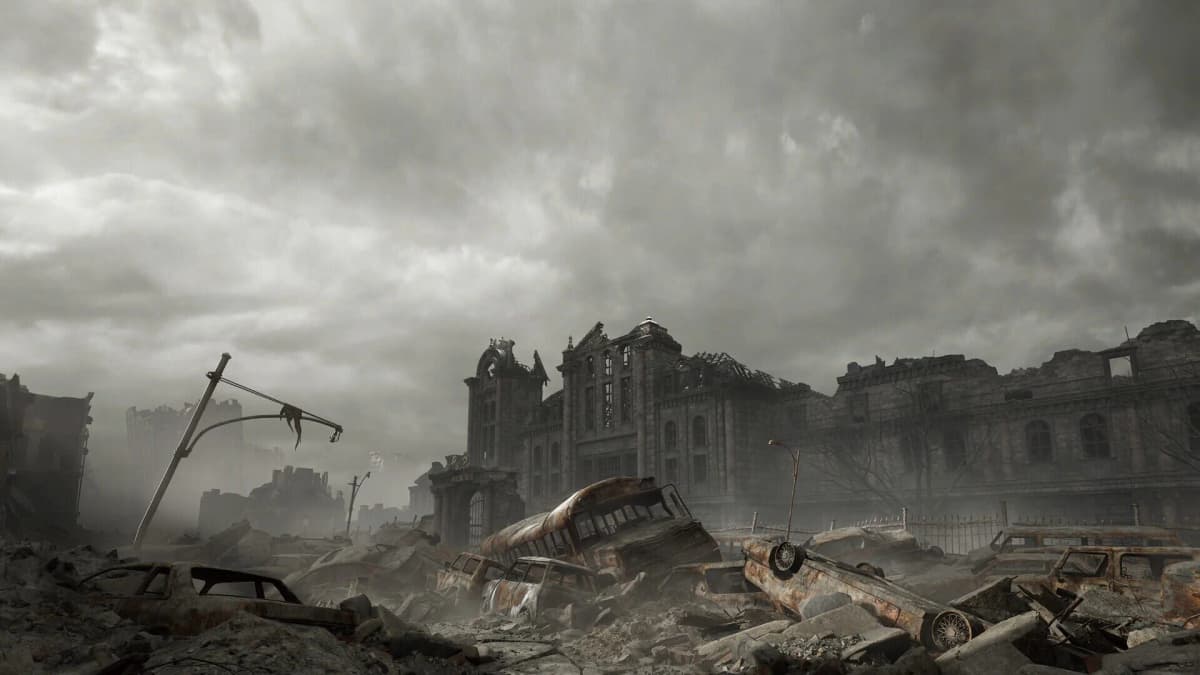
Yes, you go back to Raccoon City. Yes, you’ll see spaces that deliberately echo the Spencer Mansion, the labs under Raccoon, and even the rural decay of RE4 and Village. The difference is that these callbacks are almost always embedded into how the game plays, not just how it looks.
There’s a late-game sequence that mirrors the original mansion’s infamous dog corridor. You walk past a long stretch of windows that practically scream “something’s coming through.” In the 1996 game, it’s a scripted scare. In Requiem, the windows stay quiet on your first pass — if you resisted shooting at the shadows pacing just outside. Fire off a panic shot, even as a warning, and you’ll pay for it on the way back through. It’s a tiny inversion, but one that makes veteran players second-guess their own muscle memory.
Leon himself is treated like living fan service, but again, there’s a point to it. He’s visibly older, more tired, but also more competent than he’s ever been. Animations sell a man who has done this too many times: the way he braces his shoulder when kicking a door, the resigned grunt when a Blisterhead gets back up, the quick, subtle check of his wedding ring in one quiet cutscene. The final montage makes that ring impossible to miss, a soft, almost domestic note under all the gore that says, “This world might actually heal.”
That’s the genius of Requiem as a closing chapter for this era of Resident Evil. It acknowledges the absurd pile of trauma this universe has accumulated but refuses to wallow in it. We’re not doing another “secret Umbrella lab under a different city” reset; the narrative genuinely tries to say, “What happens after decades of bioterror when humanity finally gets a chance to breathe?”
That thematic shift matters because it opens up space for a different kind of fear going forward. If the first three decades were about surviving catastrophe, the next phase could be about surviving the aftermath — rebuilding in a world where the rules of biology have been broken, where people have learned to live with the idea that monsters are real.
Performance, Presentation, and Playing Comfortably Scared
Technically, Requiem is one of the most polished RE launches I’ve played. On PS5 in Performance Mode, I had a rock-solid framerate for almost the entire run, with only a bit of hitching during one effects-heavy boss in the ARK reactor core. Resolution Mode adds some crispness to distant detail and really shows off the atmospheric lighting, but for my money, the fluidity of Performance Mode is the way to go, especially for Leon’s sections.
Visually, this is a refinement of the RE Engine more than a revolution, but that’s not a complaint. Skin shaders and blood effects have quietly gotten better, which matters in a game where so much horror is body horror. Blisterheads look genuinely gross as they bubble and strain, and the environments are rich with little touches: water stains creeping down ARK’s concrete, faded safety posters referencing long-closed Umbrella subsidiaries, flickering fluorescent tubes buzzing just off the edge of the frame.
Sound design is doing a lot of the heavy lifting. Playing with headphones is almost mandatory for Grace’s campaign; so many encounters hinge on reading audio cues. The distant slap of bare feet on tile, the sharp click of a Licker’s claws on metal, that wet balloon-skin stretch when a Blisterhead is about to rupture — the mix is detailed enough that I found myself playing slower just to listen.
Voice acting is strong across the board. Leon’s performance walks a careful line between weary and wry; he’s not quipping through the apocalypse, but he also hasn’t turned into a grunting caricature. Grace sells the “reluctant, in over her head” angle early, but by the midpoint, she feels like a real person adapting rather than a stock scream queen. Their chemistry, even when they’re communicating indirectly through logs and shared spaces early on, gives the story a backbone that keeps all the lore dumps from sagging.
On PC, based on what I’ve tested briefly, it scales well — no obvious shader compilation stutters, and options to tweak RT, texture streaming, and even a per-protagonist FOV toggle. Xbox Series X lands roughly where PS5 does, with similar performance/resolution trade-offs.
Where Requiem Leaves Resident Evil (and Survival Horror)
By the time the final boss goes down — in a set piece that somehow channels the Tyrant fights from the classics and the grotesque scale of the more recent entries — it’s obvious Requiem is meant as a line in the sand.

It ties off a lot of loose threads. It explicitly gestures at a cure, or at least a long-term containment, for the nightmares Umbrella unleashed thirty years ago. It lets some of its characters actually move on in small, human ways. But it doesn’t feel like a reboot setup, and that’s important. This isn’t Capcom saying, “Forget everything, here comes Resident Evil Begins.” It’s saying, “We’ve earned the right to change the kind of stories we tell now.”
That has big implications for both Resident Evil 10 (or Resident Evil X, if they keep the roman numeral gag going) and survival horror in general. For almost three decades, the genre has either chased RE’s formula or reacted against it: slower, weirder indies like Signalis and Tormented Souls making “classic” their identity, while big-budget titles leaned into action or cinematic horror.
Requiem proves those poles don’t have to be opposite. You can have deliberate, stressful resource management in the same game as fluid, kinetic shooting. You can indulge nostalgia without just remaking old rooms. You can close a chapter of a long-running franchise without detonating continuity.
The next mainline entry now has the freedom — and the burden — to push that idea further. Does it go even more experimental with dual perspectives? Does it drop the crutch of old locations entirely? Whatever direction Capcom takes, Requiem feels like the proof-of-concept that modern survival horror can be both reverent and restless.
FinalBoss // Gear
Level up your setup
01Retro consoleson Amazon→028BitDo controllerson Amazon→03Capture cards (Elgato & more)on Amazon→04Discounted game keyson Kinguin→
Affiliate links · As an Amazon Associate, FinalBoss earns from qualifying purchases.
Want to Level Up Your Gaming?
Get access to exclusive strategies, hidden tips, and pro-level insights that we don't share publicly.
Ultimate Reviews Strategy Guide + Weekly Pro Tips