
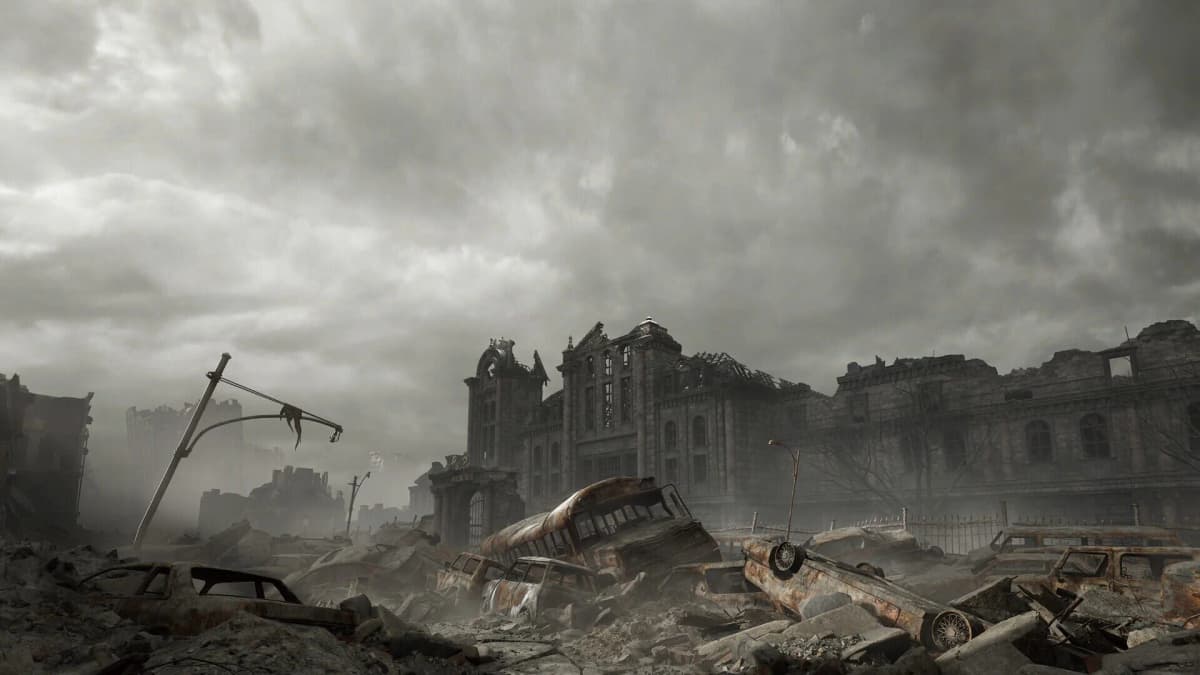
Resident Evil built its identity by turning places such as Raccoon City’s police station into hostile puzzles. A locked door mattered because ammunition was scarce, a hallway mattered because something could be waiting at the end of it, and every grotesque body on the floor made players second-guess the safest route. That tension is foundational. It also creates a very real barrier for players who love the investigation, inventory management, combat, and absurd biohazard lore yet cannot enjoy an experience engineered to keep their nervous system on high alert.
Hideki Kamiya is right to call that barrier out. The original director of Resident Evil 2 has said Capcom’s newer Resident Evil games have become “way too scary,” arguing that the studio has grown numb to the franchise’s terror level. He wanted a non-scary mode for Resident Evil Requiem, and he meant far more than lifting the gamma slider a few clicks. His deliberately silly pitch involved cute zombies, cherry blossom petals in place of blood, and upbeat music replacing oppressive horror audio.
I would not want Capcom to turn its flagship survival-horror game into a pastel slapstick carnival by default. That would be a cowardly way to sand down a series that is supposed to make players uncomfortable. I do want Capcom to take the underlying point seriously: fear has adjustable components, and players deserve control over more of them than volume, subtitles, and general difficulty.
Resident Evil Requiem released on February 27, 2026 for PlayStation 5, Xbox Series X|S, PC, and Nintendo Switch 2. It has a roughly 10-hour campaign split between Grace Ashcraft and Leon S. Kennedy at key story junctions. Grace’s sections lean into resource-starved stealth, meaning long stretches where avoidance, timing, and limited tools matter more than firepower, in claustrophobic spaces that include a hospital where the mood, darkness, and uncertainty do as much work as the enemies. Leon’s third-person combat sections bring a more aggressive kind of spectacle, including a chainsaw that can rip through zombie crowds.
That contrast is exactly why a real fear-reduction setting makes sense. Resident Evil Requiem already contains multiple ways of engaging with danger. Grace gathers infected plasma with a blood collector, then uses it to craft medkits and single-use hemolytic injectors, close-range tools that can be jammed into an undead monster’s spine to trigger a stealth kill. Leon has the firepower and physical presence to confront a crowd head-on. The game has systems worth seeing through. No player should have to choose between enduring an experience that overwhelms them and skipping the game entirely.
Table of Contents (4)
Kamiya’s joke has a serious accessibility point
The brown paper bags over zombie heads are funny. The cherry blossoms are funny. The cheerful music is funny. Kamiya knows all of that is funny. Yet the joke lands because it exposes how lazy the usual industry answer can be. Studios often treat “accessibility” as a single menu category, then act as though a brightness option solves every problem involving low visibility, visual stress, startling imagery, or sustained dread.
Brightness is useful. It also does almost nothing about a loud sting when a corpse grabs the player, a monster’s wetly animated face filling the screen, chase music raising the pulse, blood-heavy kill animations, or a scripted ambush designed to produce a scream. Fear is a package. Capcom’s settings need to acknowledge the package instead of pretending one slider covers it.
Kamiya has said he could not push through Resident Evil Requiem’s early stages, even while playing with someone else, and that he wanted to revisit the Raccoon City Police Department before the horror drove him away. Some players will sneer at that admission because Resident Evil has always been horror. That reaction misses the point so badly it becomes self-parody. A veteran creator saying, plainly, that a game’s presentation prevents him from reaching its puzzles and combat should make every studio examine where atmosphere stops serving the game and starts excluding players from it.
This is the part of the debate where people love to act tough and unserious at the same time. They hear “non-scary mode” and picture someone demanding that every zombie wear party hats. That is not what the useful version of this idea looks like. A fear-reduction preset does not need to erase danger. It needs to reduce the sensory load that makes some players bounce off before the systems underneath can hook them.
I have no patience for the argument that every optional comfort setting somehow dilutes artistic intent. A default experience can remain uncompromising while an alternate preset removes particular sensory obstacles. Players who want Resident Evil Requiem at full intensity can keep the rotten faces, suffocating darkness, violent stingers, gore, and surprise attacks exactly as designed. Players who need less of that should still get the same rooms to explore, the same locks to solve, the same resources to manage, and the same enemies to defeat.
That distinction matters because the barrier here is not mechanical incompetence. It is not always about reflexes, aiming, or puzzle logic. Sometimes the thing blocking progress is the game insisting on pounding the player’s nerves from every angle at once. Horror fans can love that design. Horror fans should keep that design. But Capcom can preserve it without treating everyone outside that tolerance band as a lost cause.
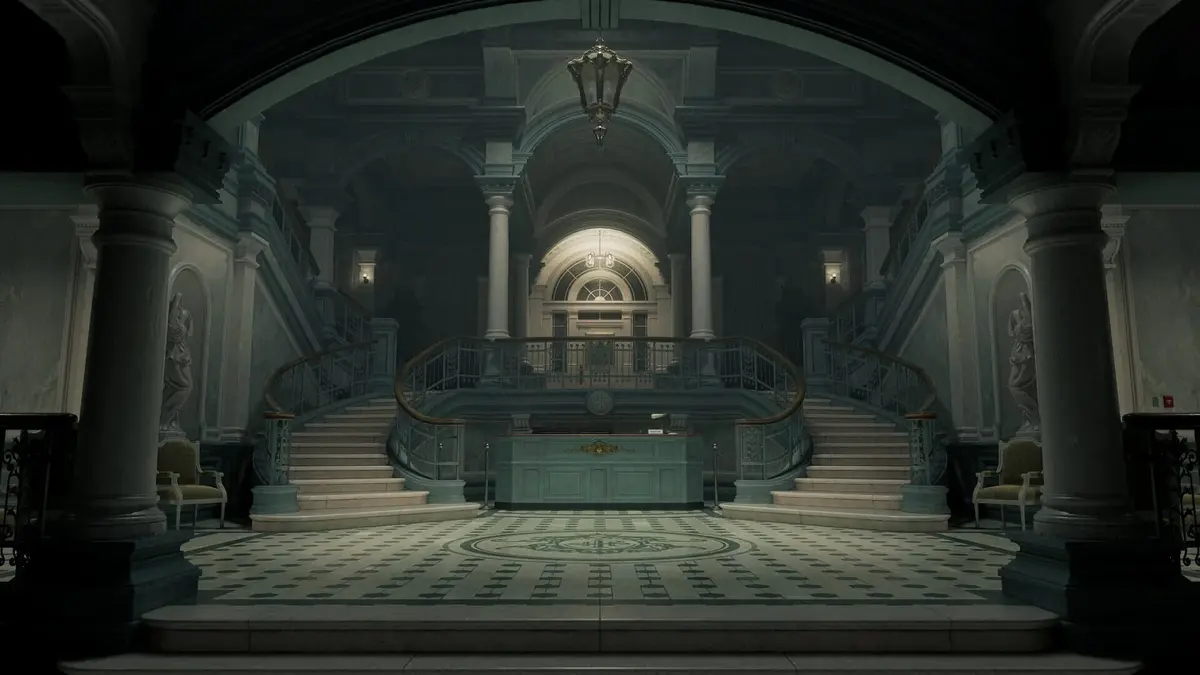
A real no-scares mode needs to change presentation, pacing, and readability
The phrase “no-scares mode” invites people to imagine an easy mode with a cute label. That would fail Kamiya’s test immediately. Lowering enemy health or handing out extra ammunition addresses challenge. It leaves the horror machinery intact. A real fear-reduction preset needs to target the individual tools Resident Evil Requiem uses to generate anxiety.
| Option | What it changes | Why it falls short or succeeds |
|---|---|---|
| Brightness adjustment | Raises overall image visibility. | Useful for dark rooms, yet it leaves grotesque enemies, ambushes, audio stingers, gore, and chase sequences untouched. |
| Easy difficulty | Can reduce incoming damage, enemy durability, or resource pressure. | Helps players survive, yet it can still leave every shock, scream, and threatening visual fully intact. |
| Real fear-reduction preset | Combines visual, audio, and scripted-tension controls while preserving exploration and combat systems. | This directly serves players who want Resident Evil Requiem’s mechanics and story without its harshest horror presentation. |
First, Capcom should offer enemy-readability controls. Give players clearer silhouettes, stronger contrast around threats, less visual clutter in combat spaces, and an option to reduce facial grotesquerie. Kamiya’s paper-bag idea is intentionally extreme, yet the principle is sound. A player does not need a monster’s exposed teeth, swollen eyes, and pulsing skin rendered at maximum disgust in order to understand that it is dangerous.
That readability point matters even more in a game built around two different player fantasies. Grace’s stealth sections ask you to read routes, spacing, and vulnerability windows under pressure. Leon’s combat asks you to identify threats quickly when a room turns ugly. In both cases, visual legibility is gameplay information. Making that information easier to process does not cheapen the encounter. It lets more people meaningfully participate in it.
Second, the game needs a low-tension lighting preset that goes beyond gamma. Resident Evil Requiem’s dark interiors can retain their layout, environmental clues, and sense of isolation while providing more consistent ambient light. The hospital does not need to become a cheerful department store. It does need an option that keeps doorways, floor hazards, enemy movement, and interactable objects readable before a player is already panicking.
This is where horror traditionalists often overstate the trade-off. More readable lighting is not the same thing as no atmosphere. A room can still feel abandoned, cold, and wrong without forcing every anxious player to sweep the camera around a black rectangle waiting for a face to pop out. If the point is dread, the environment can do that work. It does not always need near-blindness as a co-author.
Third, audio needs proper separation. Dialogue, environmental clues, and gameplay feedback are all useful. Sudden impact stings, meaning those sharp audio blasts meant to startle, shrieking enemy cues, aggressive chase tracks, and bass-heavy dread loops serve a different purpose. Capcom should let players turn those fear-specific layers down independently. The default mix can stay brutal. The accessibility mix should stop treating a surprise audio blast as mandatory proof that someone experienced the game correctly.
Audio is probably the cleanest place to prove this concept works. Lowering scare-specific sounds would not break the map design, the enemy logic, or the resource economy. It would simply stop weaponizing volume and tonal whiplash against players who find those cues overwhelming. That is not a compromise of the game’s systems. It is a refusal to confuse stress with purity.
Fourth, Capcom should reduce scripted startle design under the preset. Corpses that suddenly lunge, enemies that burst through an obvious barrier, abrupt camera attacks, and repeated forced ambushes can be softened, signposted, or replaced with less startling versions. This is where the anti-accessibility crowd usually starts yelling that players want the game “changed.” Of course the presentation would change. That is the whole point. The puzzles, level progression, resource economy, and combat encounters can remain intact while the game stops springing traps on people for the sake of a reaction clip.
Finally, Capcom should provide cosmetic gore controls. Blood can become a less graphic visual effect. Extended injury animations can be shortened. Explicit body-horror close-ups can shift to a less detailed version. Kamiya’s cherry blossom petals are probably too far for the tone Resident Evil Requiem has established, though they would make an excellent optional novelty filter. The practical version is simpler: give players the ability to reduce graphic violence without making them lose mechanical information.
And yes, that last part matters. If a blood effect or injury state communicates danger, the reduced-gore version still has to communicate danger. Accessibility settings work best when they preserve information while reducing strain. The goal is not to scrub the game into a bland mush. The goal is to let someone parse what is happening without recoiling from the presentation so hard that they stop playing.
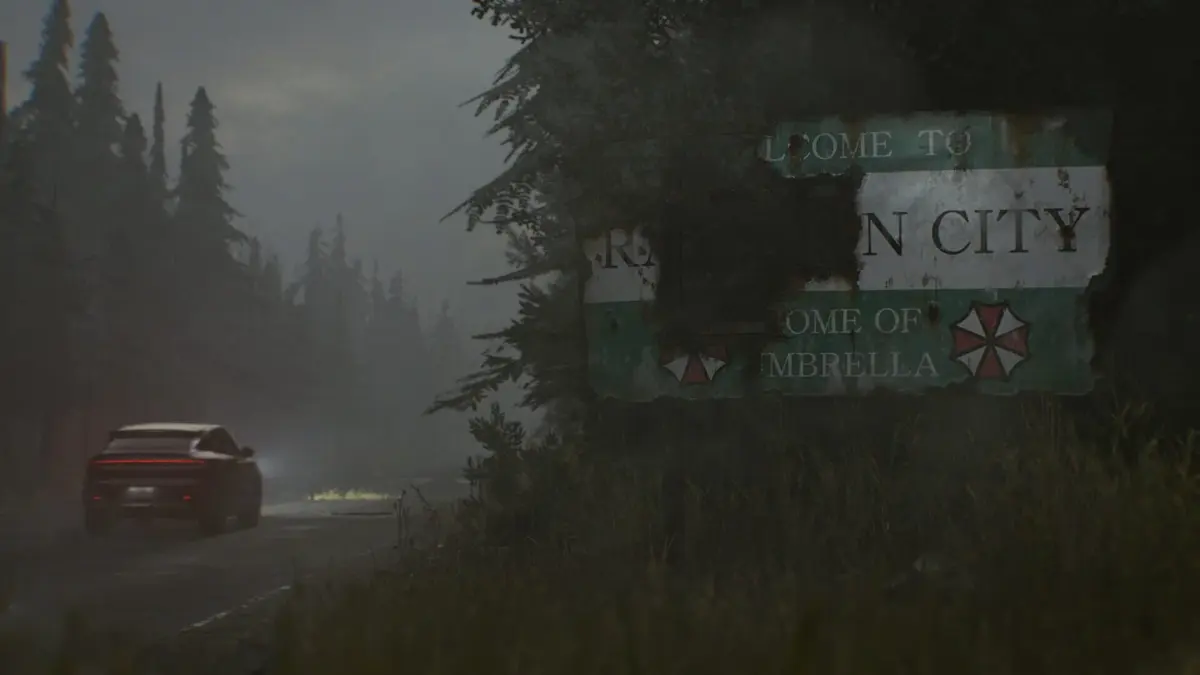
Capcom must keep danger intact
The strongest objection to Kamiya’s idea is also the easiest one to answer. Resident Evil’s horror design creates its pressure. Strip out every disturbing sound, every ugly enemy, every dark room, and every unpleasant animation, and the game risks losing the atmosphere that makes a key feel valuable and a single bullet feel precious.
That is why “no-scary” should be a presentation preset rather than a surrender button. Zombies should still pursue Grace. Stealth routes should still demand timing. A hemolytic injector should still require the player to get close enough to risk a kill. Leon’s battles should still require positioning and resource awareness. The preset should reduce sensory punishment, not remove failure states or flatten the game’s systems into an effortless tour.
This is the balance Capcom should chase: preserve consequence, trim overload. If Grace gets cornered, that should still be dangerous. If Leon wastes ammo, that should still matter. If the player ignores the layout of a room, they should still suffer for it. None of those stakes require the harshest possible visual disgust, the loudest possible sting, or the most aggressive possible ambush timing. Challenge and fright overlap, but they are not the same thing.
Capcom also needs to avoid hiding the setting behind a completion reward, a one-time early menu prompt, or some patronizing label that makes players feel embarrassed for choosing it. Put it in the accessibility menu from the opening screen. Make it adjustable at any point. Let players tune visuals, lighting, audio stings, scripted scares, and gore individually rather than forcing them into one all-or-nothing “gentle” package.
That flexibility matters because fear is personal. One player can handle blood and body horror yet hates sudden loud noises. Another can manage chase music but cannot play through pitch-black rooms. Someone else wants every creature and combat mechanic intact while avoiding close-up gore. A single checkbox cannot account for those differences. Granular controls can.
Capcom has not announced the mode, and that should be the pressure point
Capcom has not announced a no-scares mode, no-stress mode, or fear-reduction accessibility preset for Resident Evil Requiem. Kamiya’s cute zombies, sakura-blood effects, and upbeat soundtrack are his own pitch rather than a feature plan. That distinction matters, because it would be easy for Capcom to laugh along with the viral version of the quote and ignore the actual design issue underneath it.
That would be a mistake. Resident Evil Requiem’s dual-protagonist structure already shows an appetite for giving players different flavors of Resident Evil. Grace’s tense stealth and Leon’s combat-heavy sequences sit under the same narrative roof. A fear-reduction preset would extend that philosophy to people who want the game’s broader experience without being hammered by every sensory horror cue.
More importantly, this is a cleaner ask than people make it sound. Players are not asking Capcom to stop making survival horror. They are asking for fear to be treated as a configurable layer instead of a sacred monolith. That is a modern accessibility question, not an attack on genre identity. If a game can separate subtitles from dialogue volume, aim assist from difficulty, and color settings from art direction, it can also separate horror intensity from its underlying mechanics.
The practical standard for Capcom is clear. Keep the full-blooded horror experience as the default. Add a preset that improves lighting, clarifies enemy silhouettes, reduces stingers and chase intensity, softens scripted jump scares, and offers optional gore replacements. Preserve the puzzles, combat, progression, and consequences. That approach respects the players who want to be terrified and the players who want to enter Raccoon City without dreading every doorway.
Kamiya’s exaggerated proposal deserves better than being dismissed as an old director making a joke about cute zombies. His underlying demand is one Resident Evil should embrace: let people decide how much fear they can carry into the game, then let them enjoy everything else Capcom has built around it.
FinalBoss // Gear
Level up your setup
01Top-rated gaming headsetson Amazon→02High-refresh gaming monitorson Amazon→03Gaming chairson Amazon→04Discounted game keyson Kinguin→
Affiliate links · As an Amazon Associate, FinalBoss earns from qualifying purchases.
Want to Level Up Your Gaming?
Get access to exclusive strategies, hidden tips, and pro-level insights that we don't share publicly.
Ultimate Gaming Strategy Guide + Weekly Pro Tips