

Game intel
Resident Evil Requiem
Resident Evil Requiem is the ninth entry in the Resident Evil series. Experience terrifying survival horror with FBI analyst Grace Ashcroft, and dive into puls…
I went into Resident Evil Requiem with one big worry: “Ten hours? For a game that’s supposed to mash together classic puzzles, proper horror, and Leon’s dumb action hero energy? No way that doesn’t feel rushed.”
Cut to me, eleven-ish hours later (Standard difficulty, a couple of optional deaths, PC with an RTX 3070, Ryzen 5 5600G, and 16GB RAM), staring at the credits and realizing something kind of wild: there was almost nothing in Requiem I wanted to cut. No bloated side errands. No padded stealth corridors. Just a sharp, constantly shifting tour through everything I actually like about Resident Evil.
Requiem isn’t the biggest, scariest, or craziest entry in the series. But it might be the most efficient-in the best possible way. It feels like Capcom sat down, pinned index cards to a wall labeled “Why people love Resident Evil,” and then built a compact game around the overlap: puzzles, tension, explosive set pieces, and yes, Leon Scott Kennedy being a ridiculous badass.
Structurally, Requiem is simple: a singleplayer campaign that bounces between two protagonists-series legend Leon S. Kennedy and newcomer Grace Ashcroft-across a roughly 10-hour story that eventually circles back to Raccoon City. No co-op, no multiplayer, no roguelike mode. Just an unapologetically old-school campaign that ends before it wears out its welcome.
The clever bit is how it divides the series’ personality between its two leads. Leon handles the power fantasy: tight third-person shooting, meaty melee finishers, and a parry system that basically weaponizes his arrogance. Grace is where the game gets under your skin, creeping through a grotesque hospital with barely enough bullets to justify pulling the trigger, juggling stealth, puzzles, and the kind of “I don’t want to open this door” dread that made Resident Evil 7 so effective.
Requiem doesn’t try to smash everything into every scene. It slices the experience into clean, focused segments and then keeps moving. That’s what makes the short runtime work: the game trusts you to keep up instead of stretching each idea to death.
My game started with Grace, and that opening stretch in Rhodes Hill Hospital is where Requiem’s horror side really flexes. Grace is not an action hero. She’s not meant to be. She’s cautious, under‑armed, and constantly forced to decide whether that bullet in your pocket is worth spending right now or saving for whatever’s snarling around the next corner.
Rhodes Hill itself is classic Resident Evil design: a central hub with locked doors and weird contraptions, branching wings that slowly loop back on themselves, and a to‑do list that looks like a detective’s wall of red string. Early on, Grace has to collect three quartz blocks to open a heavily secured exit. That sends you chasing safe codes, poking at creepy body puzzles, and tracking down oddly placed jewelry that you just know is going to slide into some baroque contraption.
None of the individual puzzles blew my mind—this is familiar territory if you’ve ever rotated a weirdly ornate key item in a Resident Evil inventory menu—but the routing did. The moment everything clicked for me was when the hospital stopped being a scary unknown and started feeling like a space I understood better than the things hunting me in it. I knew which hallway to avoid because the knife‑wielding zombie chef liked to patrol it. I knew which side room was my emergency detour if I heard the heavy footsteps of a hulking “Chunk” enemy thudding up the stairs behind me.
Requiem gives Grace one hilariously overpowered trump card: a legendary revolver named Requiem, gifted by Leon himself. It will absolutely delete almost anything you point it at. The catch? You start with a single bullet. For several hours, I only ever had two rounds at most.
The game quietly asks a great question: who deserves those bullets? I didn’t waste them on the chef or the Chunk. Instead, I saved them for the shrieking infected that lock you in place and melt your health bar while screaming directly into your ears. Killing those felt like clearing true obstacles to progress, not just burning a trump card for convenience. That kind of decision-making—the “Is this worth it?” internal argument—is where survival horror lives, and Requiem hits that sweet spot more often than not in Grace’s half.
Then there are the stalkers. One particular creature with bulging eyes and a jerky, unnatural gait shows up later and instantly became one of my most hated (in a good way) Resident Evil enemies. It doesn’t just chase you; it haunts you. I started the game in first-person with Grace for maximum immersion, but during those sequences I actually swapped to third-person because creeping through pitch-black corridors with that thing somewhere nearby in first-person was just too much for my spine.
That basement run people are going to be whispering about? Completely earned. By the time I reached Grace’s boss encounter that caps off the hospital arc, it felt like I’d been training for that fight for hours without realizing it—learning routes, learning when to stand my ground, and when to cut losses and bolt. Her arc isn’t super verbose in cutscenes, but it’s written in how you eventually stop being afraid to push forward.
If Grace makes you feel clever, Leon makes you feel cool. Sliding into his first chapter after the hospital is like going from watching a slow‑burn horror film to flipping on a late‑night action flick. Same franchise, totally different mood.
Leon’s perspective is the familiar over‑the‑shoulder third-person gunplay fans of Resident Evil 4 and its remake know well. Zombies shamble in, you pop a few heads, line up a kneecap shot to stagger the next, then close the distance for a kick or brutal melee finisher. The first time I nailed a perfect parry with his combat axe and turned it into a follow‑up combo, I actually laughed out loud. It’s that brand of exaggerated violence that somehow still stays just grounded enough to feel satisfying rather than goofy.
The parry system is deceptively simple: hit the button at the right time, and Leon counters incoming melee attacks, often opening enemies up to finishers or buying the space you need in a crowd. It’s generous without being brain-dead, and it adds another layer of rhythm to fights. I started chapters playing cautiously, but once I trusted the timing, I was dancing through encounters—shoot, parry, melee, reload, reposition—without ever feeling invincible.
What I appreciated most is that Requiem rarely leaves you confused about how to handle an enemy. Whenever I did die, the answer was obvious the next time: “Okay, don’t get greedy here, use the shotgun to control space, save the rifle for that weak spot.” There are no cheap one‑shot puzzle bosses where you just sort of trial‑and‑error your way to a gimmick solution; these fights are readable brawls that reward you for paying attention.
Leon’s arsenal is reassuringly straightforward: pistols, a chunky revolver, a classic shotgun, rifles, and some heavier toys as the campaign escalates. Each one has a distinct role, and upgrades are immediately noticeable. I tuned my handgun for raw power, my shotgun to reduce knockback so I could fire faster in tight quarters, and shaved reload time off my rifle. I never felt stuck with the “wrong” ammo type for the situation, which is a big deal in a game that leans this hard on momentum in its action scenes.
Battles scale up accordingly: cramped fights in flooded parking garages, a church siege that turns into a swirling melee of infected and a towering boss, arena encounters where the environment’s explosives become as important as your aim. One late-game boss leans on precision shooting, another nudges you to chain parries and axe blows, and Leon’s final showdown is a satisfying mix of everything you’ve learned.
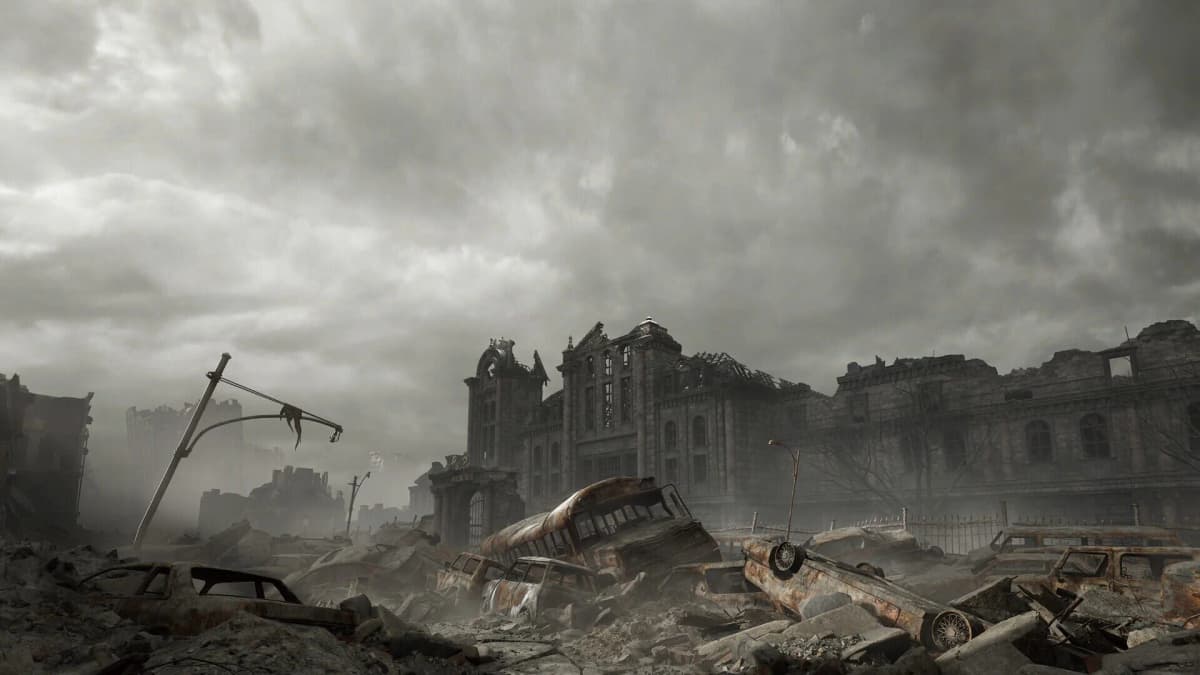
And then there’s the set piece: a roaring motorbike dash through a devastated Raccoon City, Leon on one bike, theatrical villain Victor Gideon on another, Cerberus mutants hounding you while rockets and machine gun fire crisscross the screen. It’s ludicrous. It’s not that hard. It might also be the most fun I’ve had in a Resident Evil sequence since spearfishing Del Lago. It perfectly nails the series’ campy, “how is this even happening” energy without feeling like a parody.
On the puzzle front, Requiem feels intentionally conservative. You’re still rotating objects in the inventory screen to spot hidden latches, hunting down crests and gemstones to slot into elaborate doors, and poring over scribbled notes for safe codes. If you’ve lived through Spencer Mansion or the RPD, you’ll see the lineage instantly.
What’s changed is the pacing. In earlier games, puzzles could grind the story to a halt; here, they act more like short speed bumps that make you slow down just long enough to soak in the environment. I rarely got stuck for more than a few minutes, and there were definitely times I wished the game pushed my brain a little harder. But in exchange, the campaign never loses its flow. Grace’s hospital sequence is the standout, a full Rube Goldberg machine of keys, locked doors, and shortcuts that come together beautifully once you’ve kicked around long enough.
Later locations are more linear but still generous with small environmental puzzles—juggling power, manipulating valves, piecing together clues from documents. It’s less about stumping you and more about reminding you that Resident Evil isn’t just about point‑and‑shoot gunplay.
Tonally, Requiem leans into a split personality. The first half, dominated by Grace, is closer to straight survival horror: resource scarcity, elongated tension, and enemies you often can’t or flat-out shouldn’t fight. The back half tips firmly toward action, putting Leon front and center with bigger arenas, more frequent boss fights, and a general sense that the training wheels are off and it’s time to wreck some monsters.
I liked that swing. The horror sections hit harder because I had the contrast of Leon’s power trips, and the action felt more cathartic coming off the suffocating hospital hours. That said, if you came strictly for the slow, nerve‑shredding side of Resident Evil, the second half might feel a little too eager to blow things up. There are still creepy moments later, and Grace remains relevant, but the balance definitely tilts toward gunfire over dread.
Story-wise, it’s familiar bio‑weapon melodrama. Victor Gideon is a wonderfully theatrical mad scientist in a snakeskin coat, and the script gives him just enough absurd villain monologues to slot neatly alongside the Weskers of the world. Leon’s exactly the mix of cocky and competent you’d expect, and Grace quietly walks away with the game as the grounded human at the center of all this nonsense.
The writing leans hard on series history. Requiem assumes you care about Raccoon City and recognize a few returning threads, and it doesn’t pause often to hold new players’ hands. If this is your first Resident Evil, the emotional payoff of certain scenes will absolutely be muted. For me, as someone who’s replayed the RPD more times than I’ll admit, coming back to that ruined city in a new context hit the exact nostalgic nerve I wanted without feeling like a lazy remake remix.
On my mid‑high PC setup (RTX 3070, Ryzen 5 5600G, 16GB RAM), Requiem ran smoothly at high settings without any noticeable hitching or crashes. The RE Engine continues to be bizarrely efficient considering how good the game looks: wet concrete, glistening gore, and grimy hospital corridors all pop without that plasticky sheen some horror games fall into.

Controls feel tuned with a controller in mind, but mouse and keyboard work fine. I ended up playing Leon primarily on a gamepad because the stick-driven camera and aim assist vibe just feel right in this series, while swapping back to mouse when I wanted more precision for particular sections. The game offers the usual sensitivity and display options you’d expect, and nothing about the PC version got in the way of the experience.
This is very clearly a game for people who already like Resident Evil. It’s a victory lap more than a fresh starting line.
If your favorite entries are RE7 and Village, Grace’s Rhodes Hill chapters will scratch that first-person (or over‑the‑shoulder, if you flip the view) survival itch. Limited ammo, terrifying pursuers, deliberate movement—it’s all there. If you adore RE4’s confident chaos, Leon’s segments are basically fan service: crowd control gunplay, melee chains, wonderfully excessive boss encounters, and that motorbike sequence you’ll be talking about with friends.
If what you want is a 25-30 hour epic with sprawling side content and deep RPG systems, Requiem will feel slight. It’s a game you can binge in a weekend. There are replay incentives—higher difficulties, tighter runs once you know puzzle solutions, and a few secrets worth revisiting—but the core proposition is “a short, polished campaign.” I respect that, but it’s not what everyone’s after.
It’s also not the best point of entry for absolute newcomers. You can play it without context and enjoy the mechanics, but a lot of the emotional and nostalgic punch relies on you already having history with Raccoon City and Leon. If you’re totally new, I’d still nudge you toward RE2 Remake or RE7 first, then come here once you’re curious about a condensed “greatest hits” tour.
Resident Evil Requiem feels like Capcom looked at the last decade of the series and asked, “What if we stopped picking one lane per game and just did all of it, but faster?” The result is a focused, 10-hour ride that doesn’t waste your time, doesn’t bloat its mechanics, and rarely steps wrong even when it’s being unapologetically silly.
Grace’s campaign is the highlight for pure horror fans: tense, methodical, and full of genuinely unnerving encounters. Leon’s is a riot of headshots, axe parries, and set pieces that lean into the franchise’s campy action heritage without going completely off the rails. The puzzles are more comfort food than brain burners, and the story leans heavily on nostalgia, but the overall craft is hard to argue with.
I ended up liking Requiem more than I expected, precisely because it ends when it does. It’s a tight album, not a bloated deluxe edition. As a long-time fan, it felt like being handed a highlight reel where almost every clip is something I’d actually want to rewatch.
Score: 9/10 – Not the most original Resident Evil, but one of the most purely enjoyable, and a worthy return trip to Raccoon City.
Get access to exclusive strategies, hidden tips, and pro-level insights that we don't share publicly.
Ultimate Reviews Strategy Guide + Weekly Pro Tips