
I went into Resident Evil Requiem expecting “RE9 with a new face and some Leon fan service.” What I got instead felt closer to a full-blown legacy sequel in the movie sense – part RE4 follow-up, part RE2 epilogue, and part soft handoff to a new protagonist who absolutely earns her spot.
Across roughly 14 hours to credits on PS5 (and another few in New Game+), Requiem swung me between two very different kinds of fear: white-knuckle, low-ammo horror as Grace, and loud, sweaty, guns-blazing panic as an older, heavier, very tired Leon S. Kennedy. The magic is that it doesn’t make you choose which version of Resident Evil you want. It lets you have both and makes them feed into each other.
Table of Contents (9)
The first hour: limp hands, shaky aim, and a very different Leon
My first 30 minutes as Grace are still burned into my brain. You wake up in this half-lit hospital that looks like it’s been abandoned since 1998 and then hastily re-opened for something much worse. Grace’s hand actually trembles on her first pistol; the reticle wobbles just enough that lining up a headshot feels like threading a needle while your heart’s doing double time.
I’m used to Resident Evil protagonists being a little scared narratively, but mechanically competent from frame one. Grace isn’t. She stumbles, her breathing spikes when something moves in the dark, and the game makes a point of letting you feel that through the controls. The first time I watched a “blister-head” zombie peel itself off the wall, bloated sacs pulsing, and realized I only had three bullets and a scalpel? I actually paused to check the difficulty setting. It wasn’t the game being unfair; it was the game committing to her vulnerability.
Then the story hard-cuts to Leon, and the whiplash is immediate. Over-the-shoulder, third-person, weighty guns, and that familiar stance from RE4, but there’s a stiffness that wasn’t there before. Leon’s older. He’s bulkier. His sprint has a bit of that “my knees aren’t what they used to be” vibe, and the camera lingers on his face just long enough for you to see the lines and the exhaustion.
It’s still power fantasy compared to Grace, but a haunted one. The first time I raised Leon’s axe to parry a charging mutant – sparks flying as metal met flesh and I countered with a shotgun blast – it felt like playing the greatest hits version of modern Resident Evil. But then he mutters a line under his breath that isn’t just a goofy one-liner; it’s a guy using bad jokes as duct tape over trauma he never dealt with. That mood carries the whole game.
Two campaigns, two kinds of fear
Requiem is basically two parallel campaigns that weave into each other, not a simple A/B route split. You’re regularly bounced between Grace’s first-person survival horror and Leon’s action-heavy third-person stretches, but they’re always dealing with the same overarching catastrophe from different angles.
With Grace, you get the slow-burn nightmare. Her sections are all about rationing, improvising, and reading environments like puzzle boxes. You’re counting bullets in single digits, crafting weird, quasi-medical tools from infected blood, and squeezing through vents because head-on confrontation is usually a bad idea. I spent a good ten minutes in one early wing of the hospital just listening — trying to track a blister-head’s scraping footsteps on the floor above through 3D audio before committing to a hallway.
Leon’s half, in contrast, is the spiritual successor to RE4. Tight corridors open into combat arenas; enemies flank, rush, and try to corral you into bad positions. His weapon arsenal is classic “Resident Evil cop turned one-man army”: handguns with crunchy feedback, a beefy shotgun that practically rips enemy torsos in half, a rifle for precise limb shots, and that new parrying axe that makes close quarters feel like a mini rhythm game.
The clever bit: the game doesn’t just alternate these styles for variety’s sake. It uses one to reframe the other. You might clear a route as Leon in a blaze of gunfire, then later explore the aftermath as Grace, picking through the carnage with a very different perspective (and far fewer resources). Or you’ll solve an environmental puzzle as Grace that opens a path Leon will later bulldoze through. It genuinely feels like two people surviving the same disaster, not two siloed campaigns checked off a list.
Grace: from trembling rookie to someone you desperately want more games with
I’ll admit it: going in, I assumed Grace would be an “Ethan Winters 2.0”—a soft-spoken POV vehicle while the real stars stayed elsewhere in the canon. That didn’t last beyond the first hour.
Her whole arc is about actually learning to survive in a world that Leon and Chris treat like some awful nine-to-five. Early on, she flinches at every surprise and fumbles reloads if you panic. Later, after you’ve taken a few beatings together, there’s a tiny mechanical shift: her gun sway slows down, reloads are a hair quicker, and her voice in cutscenes carries more steel. It’s subtle, but it’s there, and by the last act I didn’t recognize the terrified agent from the prologue.

The blood-based crafting system symbiotically sells that progression. Grace can harvest infected blood at certain terminals and from particular enemies, using it to whip up improvised tools: coagulant traps that slow advancing zombies, makeshift ampoules that amplify a single bullet’s stopping power, or foul-smelling decoys you can toss to lure enemies into kill zones. None of it turns her into an action hero, but it gives you just enough agency to feel clever without puncturing the tension.
One of my favorite sequences in the entire game is a late-hospital gauntlet where power flickers in and out while you’re trying to reroute generators. I ended up spreading three coagulant traps across a narrow ICU corridor, lured a blister-head into them with a blood decoy, then shoulder-checked past it while it thrashed in place. I fired one gloriously overpowered “ampoule bullet” into its exposed core as I backed through a set of manual doors I’d pre-unlocked. That whole plan came together over ten sweaty minutes and a lot of map-staring — the sort of small, desperate triumph survival horror lives on.
Leon: the aging action hero who finally gets to be human
If Grace is Requiem’s heart, Leon is its baggage. The game doesn’t pretend RE2 and RE4 didn’t happen, or that RE6 wasn’t a weird fever dream. Instead, it leans straight into the idea that no one should live through that many bio-terror incidents and come out quippy and fine.
On the gameplay side, his sections are a love letter to the RE4 remake with a few new wrinkles. The parrying axe adds a delicious layer of risk-reward: do you shoot the rushing enemy, or wait to time a parry and open them up for a melee follow-up? Ammo is more plentiful than in Grace’s chapters, but not infinite; if you try to play this like RE6, you’ll run dry fast. Enemies will test your crowd control — lunging biters up front, spitting variants that force you to reposition, and bulked-out monstrosities that demand careful limb targeting.
But what stuck with me wasn’t just the feel of the firefights; it was the way the game keeps undercutting Leon’s “cool.” He groans when he hauls himself over obstacles. He gets visibly winded. There’s a late-game scene where he meets someone who only knows him as the young cop from the Raccoon City incident, and the awkward, strained way he reacts says more than any lore dump could.
Requiem becomes a rare video game that actually asks: what does it look like when your mascot character doesn’t stay in Bart Simpson time? Leon is older. He’s slower. He’s still brave in the way only Resident Evil protagonists are, but you feel the cost in every grimace and every too-long pause after a boss fight. It’s probably the most I’ve liked him since the original RE4, because he finally feels like a whole character again instead of a collection of memes.
The “Requiem” gun: one weapon, two owners, a lot of pressure
The titular Requiem gun is the game’s big mechanical and thematic showpiece. It’s a heavy, custom-built hand cannon that passes between Leon and Grace over the course of the story, usually at key turning points. Ammo for it is brutally scarce — I finished my first run having fired it fewer than twenty times — and every shot feels like firing money directly into a monster’s skull.
As Leon, the Requiem is your “absolutely not” button. Big, armored bio-weapons that shrug off your shotgun suddenly stagger and crack under its impact, and there’s a nasty satisfaction in timing that single, echoing blast as a boss winds up for a kill move you really don’t want to see. As Grace, the same weapon becomes a last-resort equalizer: you’re so unused to that level of power that pulling the trigger actually feels wrong, like you’ve momentarily stolen someone else’s story.
Most importantly, the game treats its presence like a narrative tether between them. Cutscenes linger on who’s holding it, who gives it up, who refuses to. There’s a mid-game moment where I realized I’d been hoarding Requiem rounds for hours “just in case,” only for the story to pivot and put it into the other protagonist’s hands. It was a clever way of weaponizing my own survival-horror habits against me — and of making this chunk of metal feel like more than just another magnum.
Puzzles, backtracking, and the comfort of being lost
Requiem’s puzzles lean more “smartly staged” than “mind-bending,” but they fit the tone. You’re mostly dealing with layered key hunts, power reroutes, and environmental riddles: signage in the hospital pointing to the right ward, keypad codes hidden in medical charts, emblem locks in a decaying Raccoon City alley that are one wink away from RE2’s police station puzzles.
I never got completely stuck, but I did occasionally need to walk a couple of laps, re-reading notes or checking doors I’d written off earlier. That sweet spot — just enough friction to make the solution feel earned — is where classic Resident Evil lives, and Requiem hits it more often than not. If you’re the kind of player who grew up drawing mansion maps on scrap paper, there are a few wings in here you’ll want to mentally chart the same way.
If anything, my biggest knock is that a handful of puzzle beats feel like they’re mostly there to slow down the pace rather than express some clever idea. A late-game sequence involving color-coded security shutters, in particular, dragged on for me; by the third loop of “flip breaker, backtrack, new door opens,” I just wanted to move on to the next set piece.
Horror design, atmosphere, and those legacy-sequel fireworks
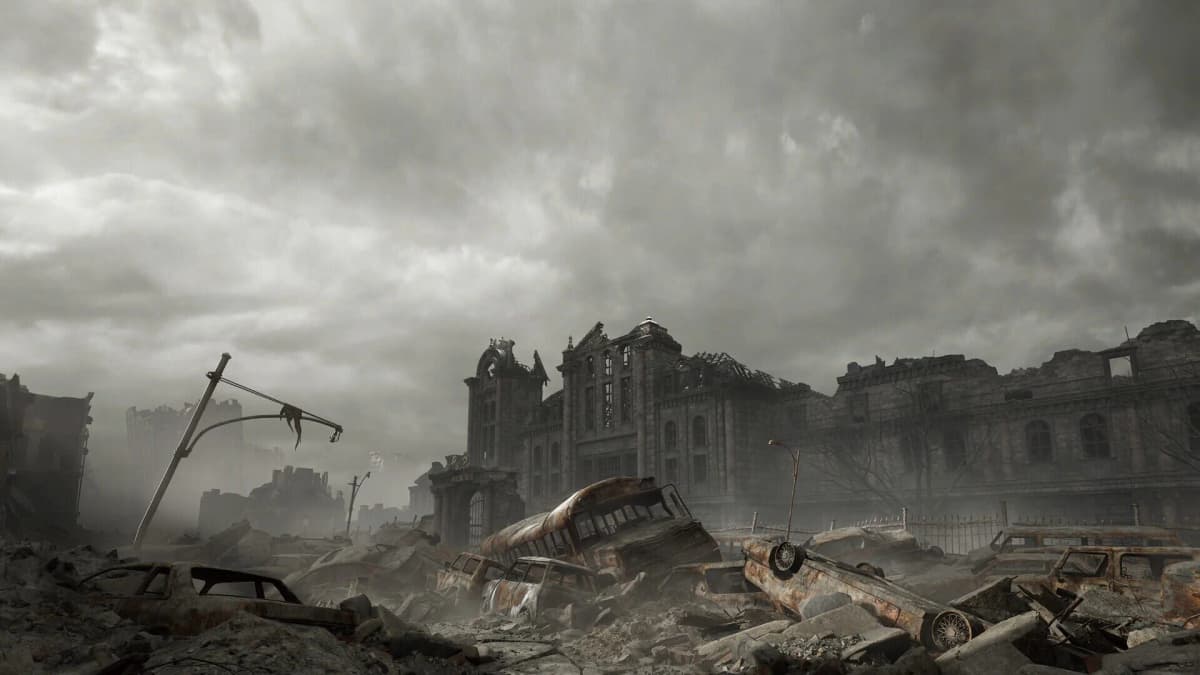
Structurally, you can feel Capcom stitching together thirty years of Resident Evil into one haunted tapestry. Grace’s grounded, almost procedural horror in the hospital and government facilities leans into Seven-esque unease, all moldy wallpaper and buzzing fluorescents. Leon’s path gradually veers into more operatic territory: ruined city streets crawling with infected, storm-battered outskirts, and yes, a return to Raccoon City that is so loaded with references it probably should come with a spoiler warning logo.
There’s a specific late-game environment — long-time fans will know it when they see it — that made me actually stop at the entrance and just soak it in. The layout has been smartly reworked to fit modern pacing, but the bones are familiar. Files you find there gently poke at old mysteries without over-explaining them, and enemy placements echo iconic encounters in ways that feel like respectful riffs rather than lazy copy-pastes.
Sound design does a lot of the heavy lifting. With headphones on, every distant groan, rattling vent, and muffled public-address announcement builds a sense of place that text alone can’t carry. Blister-heads, in particular, have a horrid wet crackle to them that made my skin crawl every time one shambled into view.
Requiem is also not shy about jump scares, but they almost always sit on top of slower, more earned dread. One of the scarier moments for me wasn’t a monster bursting through a window; it was standing in a pitch-black surgical theater as Grace, flashlight off, listening to something circling the balcony above and realizing I’d backed myself into a dead end two saves ago.

Performance, options, and replay value
On PS5, I mostly stuck to the performance mode. It held a smooth 60 frames per second in nearly every encounter, with only a couple of hitches during very busy late-game set pieces. The image takes a minor sharpness hit compared to quality mode, but when you’re panicking through a crowd of infected as Leon, responsiveness matters far more than pristine ray-traced reflections.
Controls feel tight for both protagonists once you adjust to their deliberate differences. Grace’s slightly slower aim and movement are a feature, not a flaw, communicating her inexperience. Leon, conversely, sits neatly in that RE2/RE4 remake sweet spot: he’s precise without feeling like a twitch shooter. Accessibility options aren’t exhaustive but do include aim assist sliders, camera sensitivity tweaks, and some UI readability toggles that made late-night sessions easier on my eyes.
Replay-wise, Requiem is classic Resident Evil. New Game+ lets you carry over gear, encouraging a more aggressive second run, and the dual-protagonist structure practically begs for it. I immediately started a replay on a higher difficulty, this time pushing Grace’s stealth-crafting to the limit and treating Leon’s segments like a personal challenge run to preserve as much Requiem ammo as possible. There are also optional rooms and side paths I outright missed on my first playthrough — the kind of “huh, what was behind that locked gate?” stuff that makes a return trip worthwhile.
Who Resident Evil Requiem is (and isn’t) for
If your favorite Resident Evil is RE4 and you’ve always wished the series would find a way to reconcile that game’s gleeful action with the suffocating dread of the originals, Requiem is about as close to a perfect middle ground as we’ve gotten. Leon’s campaign scratches that “master the combat sandbox” itch; Grace’s reminds you why the franchise terrified people in the first place.
If you’re completely new to the series, though, this is a rough starting point. The story isn’t incomprehensible — you can follow the basic beats of bio-weapons and conspiracies — but so many of the emotional punches land harder if you’ve lived through RE2 and RE4 with Leon already. The Raccoon City callbacks, in particular, are absolutely aimed at long-timers.
It’s also worth saying: if you only like one side of Resident Evil’s identity, you’re going to have to meet the other halfway. Pure action fans may find Grace’s sections slow and stressful; pure survival-horror devotees might grumble through Leon’s more bombastic encounters. For me, the contrast is the whole point — but your mileage will depend on how open you are to both flavors.
FinalBoss // Gear
Level up your setup
01Top-rated gaming headsetson Amazon→02High-refresh gaming monitorson Amazon→03Gaming chairson Amazon→04Discounted game keyson Kinguin→
Affiliate links · As an Amazon Associate, FinalBoss earns from qualifying purchases.
Want to Level Up Your Gaming?
Get access to exclusive strategies, hidden tips, and pro-level insights that we don't share publicly.
Ultimate Reviews Strategy Guide + Weekly Pro Tips