

I went into Resident Evil Requiem slightly worried. The idea sounded almost too clean on paper: take the first-person dread that defined Resident Evil 7 and Village, smash it into the over-the-shoulder carnage of Resident Evil 4, and hope the tonal whiplash does not rip the whole thing apart. After two long evenings and roughly 14 hours on PlayStation 5, the part that sticks with me is how often that fusion feels natural instead of gimmicky.
Requiem splits itself between two protagonists. Grace Ashcroft, an FBI analyst who has no business being anywhere near a bioterror incident, carries the first-person survival horror half. Leon S. Kennedy, older, cockier, and fresh off multiple international disasters, anchors the third-person action side. You swap between them through the story, and their sections feel so different that the game really does border on feeling like two campaigns welded together.
The surprise for me is that the weld holds. It creaks in a few places, but by the time the credits rolled, I felt like I had just played a sort of greatest hits package of modern Resident Evil, filtered through a new heroine’s raw terror and a veteran’s reckless swagger.
My first hours with Requiem were spent as Grace, trapped inside Rhodes Hill Clinic, and this is where the game absolutely got its claws in. Everything about her introduction screams vulnerability. The camera hugs her eyes. Her hands shake when you aim. Her little FBI flashlight barely chews through the darkness. Her inventory is stingy, and even reloading feels a fraction slower than you want it to be.
The clinic is classic Resident Evil labyrinth design: loops, shortcuts, and rooms that slowly stitch together in your mental map. What gives it teeth is how the infected behave. These are not mindless shufflers. They stagger around muttering fragments of who they were. A chef still trailing a filthy apron paces the kitchen, mumbling about orders. A nurse drags a bone saw down a corridor, repeating a half-remembered patient’s name. One opera-obsessed inmate wanders the ward humming an aria that grows louder as she closes in.
Hearing those broken loops through a headset at 1 a.m. while you try to peek around a doorframe in first person hits very differently from the more bombastic horror of recent entries. There were moments where I realized I had been crouched for minutes, just edging around furniture and listening for the direction of a voice, too nervous to commit to a route.
Grace is built for that style of play. One zombie can be a serious problem. Combat is clumsy and desperate by design, so the best encounters are the ones you avoid. Her inventory is tight, her ammo counts are microscopic, and the game constantly tempts you into risky fights by dangling a new mechanic in front of you: blood collection.
Every time you finally drop an enemy, their infected blood can be harvested into a special device Grace carries. Fill it enough and you can craft healing injections or combine it with scrap and gunpowder to squeeze out precious extra ammo. In practice, it turns every skirmish into a little cost-benefit analysis. Spending three bullets to earn enough blood for a heal might be worth it. Burning five or six just to feel safe and then coming up short at the next crafting station is the kind of mistake you feel for the next hour.
I learned that the hard way early on. I cleared out a corridor just because I was tired of hearing one particular orderly’s wheezing monologue. By the time I had harvested the blood and crafted what I could, I had actually ended up with fewer resources than if I had simply slipped past him. That was the moment the game snapped into focus. Grace’s sections are not about domination. They are about tolerance. How much tension you can tolerate, how much risk you are willing to carry as you move deeper into the clinic.
The one thing longtime fans might find surprisingly gentle during these segments is the puzzle design. Rhodes Hill looks like a shrine to classic Resident Evil logic – ornate locks, weird symbols, elaborate keys shaped like moons and suns – but solving them rarely strains the brain. Notes practically circle the answer in red ink, and there were maybe one or two moments in the whole game where I actually had to think about a code for more than a few seconds.
Instead, the difficulty comes from getting to the puzzle pieces without dying. A combination safe is trivial once you find the hint, but reaching the office that holds it means sneaking through a ward patrolled by a new kind of abomination that responds aggressively to noise. I cared less about the pattern on the lock and more about whether I had enough handgun ammo to risk a distraction shot or if I should try to weave between gurneys in the dark.
I would still have liked one or two proper head-scratching puzzles. The clinic’s early 20th-century aesthetic is perfect for that sort of contraption-heavy design. As it stands, the puzzles mostly exist to route you through danger zones rather than to challenge your reasoning, which works for pacing but may disappoint fans who grew up diagramming statue rotations and gemstone placements on scrap paper.
When the perspective snaps out to that familiar over-the-shoulder view and Leon steps in, Requiem almost feels like another game loading. The controls instantly feel more responsive, strafing is snappier, and Leon’s arsenal makes even mid-tier enemies look like soft targets compared to Grace’s ordeal.
Capcom clearly took everything it learned from the Resident Evil 4 remake and pushed it further. Leon starts relatively modestly, with a handgun and the series-standard combat knife equivalent, but by the midgame he is juggling pistols, shotguns, an automatic rifle, grenades, and the star of the show: a brutal axe that doubles as both execution tool and defensive lifeline.
That axe might be the single most satisfying piece of gear in the entire game. You can use it to cleave stunned zombies in half in wonderfully over-the-top finishers, but its real value sits in the parry system. Time a swing correctly and Leon deflects incoming attacks with a shower of sparks and a meaty sound cue. It never gets old. I lost count of how many times I deliberately baited a lunging enemy just so I could slam the parry window and chain into a follow-up roundhouse or execution.
To nudge you further into aggressive play, Leon wears a special bracelet that tallies his kills as points. The more stylish and brutal the takedown, the more the counter ticks up. Between encounters you can spend those points to upgrade weapons, unlock attachments, or grab entirely new guns with better stats. It is a smart spin on the old merchant economy. Instead of scrounging for cash, you essentially pay for upgrades in sheer body count.
In practice, it transforms crowd encounters into score-chasing playgrounds. I found myself herding mobs into chokepoints, lining up leg shots to knock them down in piles, and then detonating a grenade for a big points payday. Where Grace’s sections had me squinting into the dark and counting every bullet, Leon’s turned me into a reckless show-off, stomping through corridors and trying to squeeze one more melee finisher out of each stun.
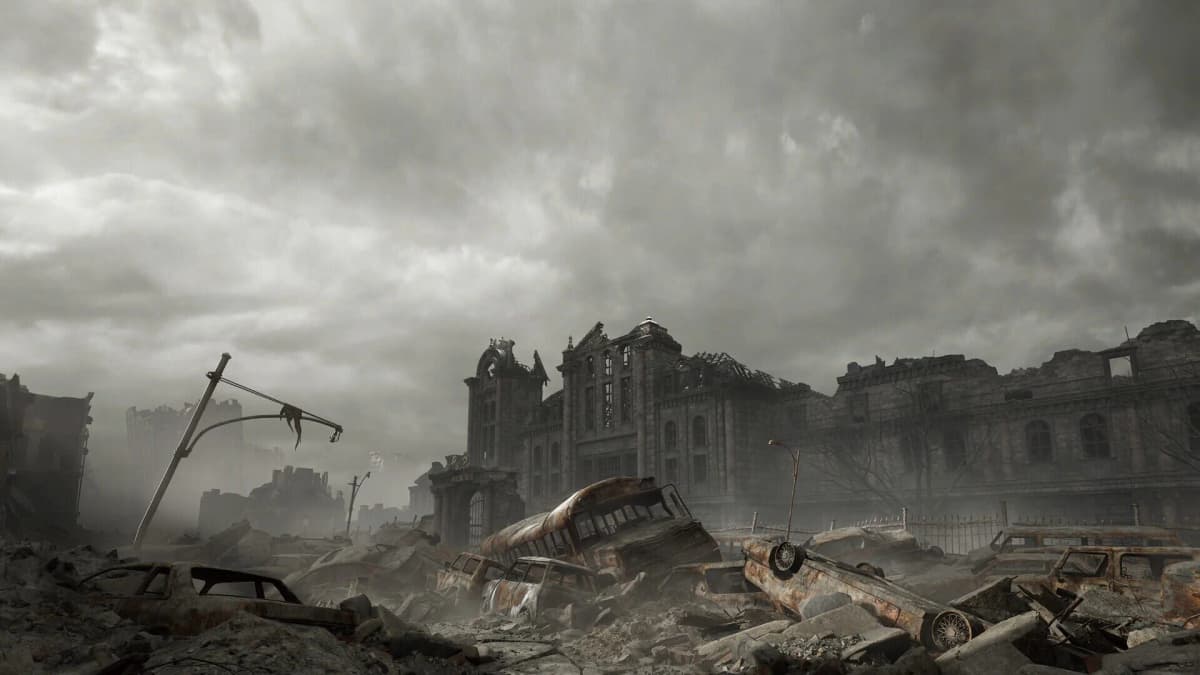
The high point of Leon’s campaign is the eventual return to Raccoon City. The game opens things up into a larger, semi-open chunk of the city where you can choose routes through ruined streets, duck into side alleys for optional objectives, and trigger little mini-scenarios that pay off in resources or lore nods. It hits that nostalgic sweet spot without drowning you in fan service. Familiar locations lurk at the edge of your vision, but the focus stays on the current disaster.
Leon’s boss fights also bring the spectacle. Requiem leans into disgusting, screen-filling mutations and multi-phase encounters. One mid-game fight that sticks in my mind had me circling an arena while an unstable creature mutated in real time, growing new limbs and altering its attack patterns as its health dropped. Managing crowd-control on spawned adds while reading the boss’s tells made those fights feel more tactical than simple bullet sponges.
If there is a criticism here, it is that Leon’s side of the story feels slightly more compressed. His set pieces are sharp and memorable, but when the credits rolled I wanted at least one more extended chapter with him. The game clearly leans into Grace as the emotional core, and that is a trade-off I mostly liked, though pure action fans might wish the ratio skewed the other way.
Structurally, Requiem alternates between Grace and Leon in self-contained blocks. You are not swapping on the fly like some co-op shooter. Instead, each character gets to own sections of the game for an hour or two at a time, and the story threads between them as they circle the same outbreak from different angles.
The central threat this time is tied to a new bioweapon called Elpis, and the script uses that as a way to tie Grace’s past to the wider Resident Evil mythos. The details are best experienced fresh, but the tone aims for closure rather than escalation. This feels like a soft capstone on the current era of the franchise, pulling elements from the first-person Winters games and the recent remakes into one package.
The writing does not always hit as hard as the atmosphere. Grace herself is a highlight, slowly unpeeling from panicked civilian into someone who understands the cost of surviving Resident Evil nonsense. Leon is his usual blend of dad jokes and absurd competence. Their actual interactions, when the story brings them together, can feel a little undercooked, more functional than emotionally rich.
Where the structure really works is pacing. My first night with the game was mostly Grace in the clinic, and I ended it because my nerves were wrecked. The following night skewed action-heavy with Leon’s stretch in Raccoon City, and it felt like exactly the release valve I needed. The second half definitely leans harder into set pieces and combat overall, which slightly blunts the creeping horror of the opening hours, but as a complete arc it flows better than any Resident Evil since 7 for me.
Requiem is another reminder of how flexible Capcom’s RE Engine has become. On PS5, the game stayed smooth for me from start to finish, even in the densest hordes in Raccoon City. I stuck with the performance-focused settings because the bump in fluidity makes both the first-person creeping and Leon’s snap-aim gunplay feel better.
What stands out visually is the contrast between spaces. Rhodes Hill is all peeling paint, yellowed tiles, and unsettlingly clean surgical tools glinting under harsh white lights. Leon’s urban war zones lean into wet asphalt, firelight, and the kind of grimy clutter that makes every alley feel lived-in before it was abandoned. Animation work sells the horror as much as textures do; the way infected stumble, jerk, and sometimes twitch mid-sentence taps into that uncanny “almost human” quality that makes them so unnerving.
And the gore is unashamedly indulgent. Blood sprays onto walls, pools under corpses, and clings to Leon’s boots. When the axe comes down in one of those slow-motion finishers, chunks fly in a way that feels just the right amount of cartoonishly excessive. The blood collection mechanic with Grace makes the stuff feel almost like a character of its own. Watching it drip into her device after a desperate encounter drives home how transactional survival is in this world.

Audio design does a lot of heavy lifting in Grace’s chapters especially. Footsteps echo down hallways just slightly longer than they should. Distant screams ride the edge of hearing. Those repeated phrases from semi-conscious infected loop and distort as they move through rooms. The soundtrack keeps things relatively restrained during exploration, letting environmental noise carry tension, then slams in with pounding percussion when a chase kicks off or a boss shifts phase. During Raccoon City segments, it leans harder into adrenal, almost militaristic beats that match Leon’s mode of play.
Requiem feels unabashedly aimed at people who have ridden with the series through at least the last few entries. The story assumes a baseline familiarity with bioweapon jargon and nods to earlier outbreaks, and some of the emotional beats land harder if you have Village and the RE4 remake in recent memory.
If your favorite Resident Evil is 7 or Village and you loved being underpowered and trapped in first person, Grace’s sections will probably end up being the highlight. They are not quite as relentlessly oppressive as Baker-era horror, but they come close at times, and the blood crafting plus resource starvation keeps them tense even after you learn the layouts.
If you are more of an action fan and hold RE4 or its remake as the peak, Leon’s campaign scratches that itch. The parry-focused melee, the crowd management, the upgrade loop built on a kill counter, and the big bosses are exactly the kind of loud, crunchy Resident Evil I wanted out of a modern Leon story.
Newcomers can start here, but it is not the ideal gateway. The plot is coherent on its own, yet a decent chunk of the satisfaction comes from recognizing how Capcom is merging its two modern directions into one cohesive package. Someone discovering the series through Requiem would get a strong survival horror shooter, but they would be missing most of the meta context that makes its structure feel like a statement.
Resident Evil Requiem is the most confident the mainline series has felt in years. It takes two very different philosophies of horror design, hands them to two sharply defined protagonists, and mostly sticks the landing. Grace’s Rhodes Hill nightmare is one of the best pure horror stretches Capcom has created in the modern era. Leon’s Raccoon City return is a satisfying victory lap for the RE4-style action template.
It is not flawless. The puzzles could stand to be trickier. The back half tilts a little too hard toward spectacle at the expense of the suffocating fear the early hours cultivate. Leon’s campaign ends just as it feels like it is hitting full stride. The story is solid and pleasantly free of the wild nonsense that dragged down something like Resident Evil 6, but it rarely surprised me beyond some late-game imagery and one extremely nasty boss transformation.
None of that stopped me from grinning through the credits. As someone who has stuck with this series since the mansion doors of the first game creaked open on PlayStation, Requiem feels like a reward. A polished, bloody, frequently terrifying celebration of what modern Resident Evil has become.
Score: 9/10
Get access to exclusive strategies, hidden tips, and pro-level insights that we don't share publicly.
Ultimate Reviews Strategy Guide + Weekly Pro Tips