
Table of Contents (10)
My First Night With Resident Evil Requiem
I started Resident Evil Requiem the way you probably shouldn’t start a new survival horror game: midnight, lights off, noise‑cancelling headphones on, alone in the apartment. Within half an hour I was creeping through a hospital ward as Grace Ashcroft, heartbeat thudding in my ears, genuinely fighting the urge to pause and walk away for a breather.
Then, hard cut: Leon S. Kennedy, older, sharper, sliding behind the wheel of an absurdly glossy sports car, checking an equally ridiculous watch while city lights streak past the windows. Same game, same story, completely different energy. That first switch between Grace’s suffocating vulnerability and Leon’s swaggering confidence set the tone for my entire time with Requiem.
Capcom’s been wrestling with how to reconcile Resident Evil’s two personalities for years: the slower, first‑person terror of 7 and Village, and the bombastic, crowd‑control carnage of 4 and 6. Requiem feels like the moment those halves finally stop arguing and start working together. It’s a cinematic, extremely bloody, surprisingly emotional send‑off (or reset?) that pulls in three decades of lore without collapsing under it.
Across roughly 12 hours on my first run (and about 6 more on a second), I bounced between Leon’s over‑the‑shoulder power fantasy and Grace’s resource‑starved nightmare. Sometimes that bounce is exhilarating; once or twice it undercuts the tension. But by the end, I was more invested in these two than in any Resident Evil cast since the Resident Evil 2 remake.
Two Protagonists, Two Flavors of Fear
Structurally, Requiem splits its campaign between Leon and Grace in a way that clearly nods to the old A/B scenarios but feels more tightly scripted and cinematic. You don’t do completely separate campaigns so much as weave between parallel perspectives on the same infection crisis, with occasional moments where their paths overlap in clever ways.
Grace: first‑person panic in a haunted hospital
Grace Ashcroft is an FBI agent, but she’s not a field‑tested supercop. She’s a forensic specialist and, crucially, she moves like one. In first‑person, the camera sways just a little too much when she sprints. Her breathing spikes into ragged gasps when something’s stalking nearby. If you flip her into third‑person (you can change perspectives for both characters), she’s visibly clumsier than Leon, even stumbling if you try to juke too aggressively.
Most of her section is anchored in a sprawling, decaying hospital – easily one of the most oppressive environments the series has ever done. The lighting here is vicious: harsh white fluorescents that suddenly cut to emergency red, pockets of darkness just big enough to hide a new variant of zombie with swollen, pus‑pocked heads that burst into showers of gore if you mishandle them. More than once I froze at the sound of wet, dragging footsteps somewhere beyond my cone of vision and just stood there, listening, trying to work out whether I had the ammo to risk it.
Grace’s whole playstyle is built around the idea that she’s smart but not physically dominant. Her pistol kicks like a mule and each bullet feels painfully expensive. The twist is her chemistry kit: using infected blood samples collected from the environment or enemies, she can brew ammo, improvised healing injectors, temporary health boosters, and nasty throwables like acid flasks. My personal favorite is the hemolytic injector, a syringe that lets you shank a zombie in the neck from behind and watch it crumple silently. Learning to trust those tools – and not hoard them out of anxiety – is half of what makes her sections sing.
On my first night, there’s a sequence where you’re guiding Grace through a burned‑out pediatric wing with almost nothing in your inventory. I had two bullets, one injector, and a half‑finished blood formula in the crafting menu while three blister‑headed freaks shuffled between the beds. Skirting just outside their vision cones, doubling back to snag one last vial from a corpse, and then finally threading a lethal stealth takedown through the middle of the room was the moment Requiem locked in for me. She never really stops feeling fragile, but the game gives you just enough systemic levers to turn that fragility into its own kind of power.
Leon: third‑person carnage with a ticking clock
Leon, by contrast, strides in like he’s walked through a hundred outbreaks already – which, at this point, he kind of has. By default you’re in that modern Resident Evil over‑the‑shoulder view, lining up precise kneecap shots and eye‑popping headshots before closing in for brutal finishers. If Grace is all about trying not to be seen, Leon is about making sure anything that sees him doesn’t get back up.
The combat on his side is some of the most satisfying Capcom has put together. Shooting off limbs staggers enemies in different ways, carving open options to vault over them, roundhouse them into an explosive barrel, or slam them down and bury a hatchet in their skulls. There’s a parry axe that can turn a lunge into a counter‑kill if your timing is tight. The game is absolutely drenched in guts; I lost count of how many times I flinched at a particularly nasty dismemberment animation.
Leon’s urgency is baked into both the story – he’s hunting a cure for his own creeping sickness – and the systems. As you wade through infested streets in the midwestern town of Elbridge and, later, a very familiar ruined city, each kill feeds a wrist‑mounted tracker that converts your zombie‑slaying into credits. At scattered supply cases, you can cash those in for new weapons, attachments, ammo, and armor.
Functionally, it feels a bit like having Mercenaries mode stitched onto the main campaign. I found myself making greedy detours to clear entire blocks just to squeeze out enough credits for a shotgun upgrade, then cursing that choice when an optional encounter chewed through the last of my shells. It’s here that the game’s “deep gun economy” really shows itself: yes, Leon is a powerhouse, but spray and pray and you’ll still find yourself clicking empty chambers at the worst possible moments.

Capcom’s smartest move is how these two playstyles talk to each other. After a long, white‑knuckle sequence as Grace, swapping back to Leon for a cathartic power trip feels intoxicating. After 30 minutes of gleeful dismemberment as Leon, returning to Grace’s desperate stealth puts you right back on edge. The swing doesn’t always land perfectly – one late‑game Leon set piece cuts off what was shaping up to be Grace’s most nerve‑shredding chapter – but for most of the campaign, the contrast is the point.
Combat, Crafting, and That Tight Gun Economy
Moment to moment, Requiem plays like a greatest‑hits mashup of the last decade of Resident Evil. Leon’s side leans hard into the crowd control, spacing, and movement puzzles of the Resident Evil 4 remake, while Grace pulls in the slower, suffocating dread of 7. What ties it together is how carefully tuned the resources are.
On Standard difficulty, I was never drowning in ammo or completely dry, but I had to think about every engagement. Do I spend a rare magnum round to quickly delete a new elite enemy, or kneecap and kite it through a room full of explosive canisters to save bullets? Do I explore that optional wing of the hospital for more blood samples as Grace, knowing that every extra encounter could be a run‑ender?
Grace’s blood‑based crafting is the standout system. Different enemy types yield different sample qualities, which in turn affect how potent your brews are. Early on, I burned most of my stock on healing and basic ammo; by the midpoint I’d realized how strong the utility items were and started walking into tricky rooms with a custom loadout of vials and injectors tailored to the problem. Mixing a potent corrosive to melt a barricade and then immediately regretting having nothing left to mend a near‑fatal scratch is exactly the kind of grim calculus I want from survival horror.
Leon’s upgrade economy is more straightforward but no less interesting. Weapons feel distinct in that classic RE way: the initial handgun is snappy and reliable, the later revolver (yes, there’s a disgustingly powerful hand cannon literally called “Requiem”) hits like a truck but reloads at a glacial pace, and shotguns turn tight corridors into meat grinders. You can’t afford to fully upgrade everything on a first run, so you end up speccing into a couple of favorites. I leaned into a high‑power pistol and crowd‑control shotgun, and the late‑game started to feel like a dance I’d choreographed myself.
The only place the combat falters a bit is toward the very end, when the game stacks back‑to‑back large‑scale encounters that lean closer to Resident Evil 6’s spectacle than I’d like. They’re fun in a dumb action‑movie way, but after the incredible tension of Grace’s tighter sequences, those sections feel a bit overlong.
Puzzles, Level Design, and Set Pieces
Requiem isn’t the most deviously puzzly Resident Evil, but it sits in a comfortable middle ground. You’re still slotting weird emblems into doors, rearranging power circuits, and cross‑referencing environmental clues, just without many head‑scratchers on the level of the Spencer Mansion’s meanest tricks. On my second playthrough I was ripping through most puzzles on autopilot, which, honestly, suits the replay‑friendly structure.
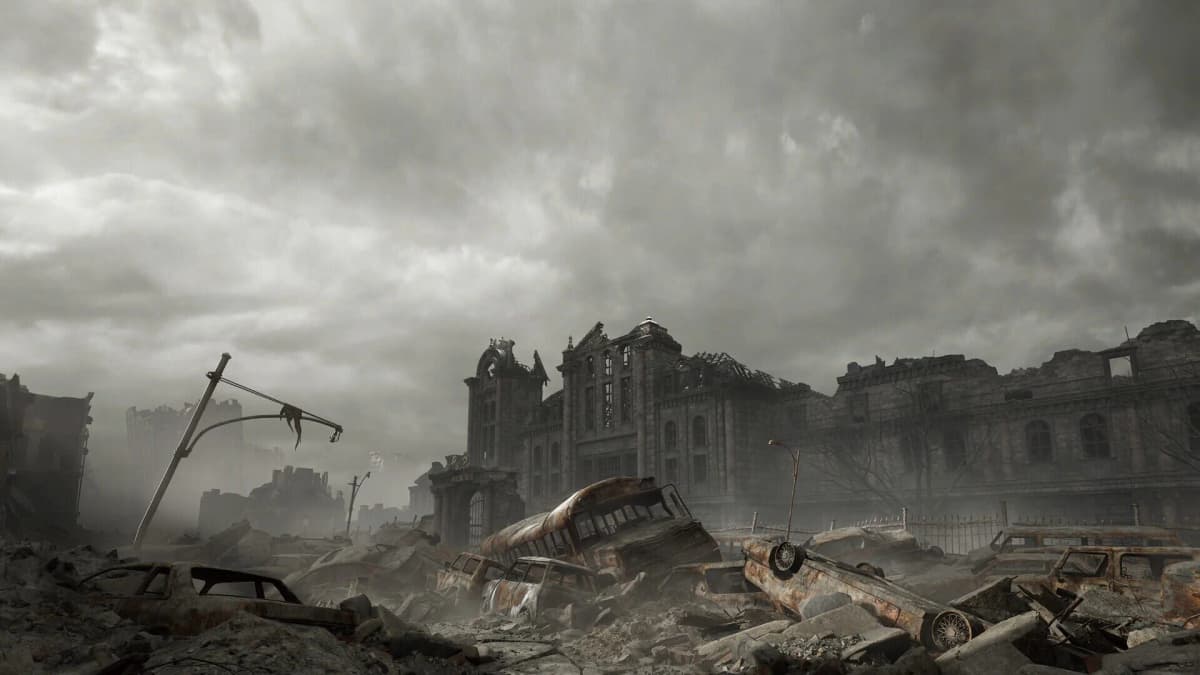
Level design is where the game really shines. The hospital’s verticality – operating theaters stacked above maintenance tunnels, children’s wards feeding into administrative offices – makes it feel like a real place that’s been torn apart. Elbridge’s downtown is a maze of alleys, fire escapes, and boarded‑up businesses that conceal nasty ambushes and optional side rooms stuffed with lore. When the story eventually returns to Raccoon City, the way it reframes certain iconic streets and landmarks is pure catnip for longtime fans without feeling like a lazy copy‑paste.
Set‑piece wise, there are at least three moments that are going to be talked about for years. I won’t spoil them, but one involves a pitch‑black surgical theater, a single working spotlight, and an enemy that only moves when you can’t see it. Another is a mid‑campaign Leon gauntlet through a collapsing high‑rise that had my palms pouring sweat even as I was grinning at the sheer ridiculousness of the choreography.
Story, Fan Service, and 30 Years of Baggage
Resident Evil’s storytelling has always walked a thin line between earnest melodrama and B‑movie cheese. Requiem absolutely keeps the cheese – it’s still a series where the coolest gun is named after the game – but it layers in more genuine emotion than I was expecting.
The core plot hooks are straightforward: Leon, dealing with a mysterious illness, and Grace, whose mother Alyssa will make old‑school fans sit up, are pulled into the hunt for a bioweapon called Elpis. Things spiral from Elbridge to Raccoon City, secrets are dredged up, various sinister suits and grotesque monsters make their entrances. The beats themselves aren’t revolutionary, but the way the dual perspective lets you see how differently Leon and Grace process the same horrors gives the story some real heft.
Fan service is everywhere. Cameos, visual callbacks, audio logs that finally tie off threads from spin‑offs long left dangling – this thing is absolutely built for people who have been following the series for years. Most of it feels earned. There were a couple of late revelations that hit me harder than any Resident Evil story beat has a right to, precisely because they draw on history that’s been simmering in the background for decades.
The flip side is that Requiem is not a friendly place to start if you’re new. The game doesn’t stop to explain who Leon is beyond a few lines, or why returning to certain locations matters so much. A friend who jumped in with only Village under their belt described the plot as “cool vibes, but half the cast felt like I was supposed to know them already.” I don’t think that’s a flaw for what this game wants to be, but it’s worth being clear about.
Capcom’s writers also still struggle a bit with nuance; some monologues spell out emotional beats that were already obvious from the performances. Overall, though, I came away impressed by how coherent and, at times, moving this is as a kind of thematic “song for the dead” of the series so far. It feels like a closing chapter to one era and a bridge to whatever comes next.
Visuals, Performance, and Pure, Nasty Gore
I played most of Requiem on PlayStation 5, with a couple of chapters tested on Xbox Series X. On both, performance mode kept things smooth in the busiest Leon firefights, with only tiny dips when the screen was a complete bloodbath. Resolution mode makes the already lavish lighting really stand out, particularly in the hospital and late‑game nighttime cityscapes, but I preferred the extra responsiveness for combat.
Art direction carries the day. This might be the best the series has ever looked in terms of sheer texture work and animation. Faces are detailed enough that you can see the strain in Leon’s eyes, the way Grace’s jaw clenches before a risky move. Cloth, water, and, most of all, flesh deform grotesquely under pressure. Limbs tear away with stomach‑turning weight. Blistered heads rupture in sprays of clotted chunks. If you’re squeamish, consider this a warning: Requiem is absolutely pushing the series’ gore threshold.
Audio is just as important. The groan of metal in a collapsing corridor, the wet rasp of something shuffling just out of sight, the subtle change in the soundtrack when you’re truly safe versus temporarily reprieved – playing with good headphones genuinely elevated the experience for me. In one beast‑of‑a‑boss fight, I survived because I realized the monster’s charge had a distinctive huffing breath a half‑second before the animation started, letting me dodge on sound cue alone.
Replay Value and That “First Time” High
Like the best Resident Evil games, Requiem clearly wants you to replay it. Finishing the story unlocks harder difficulties, some fun extras, and subtle tweaks: on a fresh file after clearing the game, Leon has access to a stocked supply crate much earlier, changing how aggressively you can build your arsenal. Puzzles don’t randomize, so once you’ve internalized solutions and enemy placements, you can start chasing faster completion times or self‑imposed challenge runs.

By the halfway point of my second run, I was breezing through rooms that had left me sweating the first time. Grace’s sections in particular lose some of their terror once you know exactly how many enemies are waiting behind each door. That’s inevitable – horror is always sharpest when it’s unknown – but it does mean Requiem may not become the endlessly replayable comfort‑food entry that, say, the RE2 remake is for me.
On the upside, the combat feels good enough to support that familiarity. Optimizing your route through Elbridge’s streets, deciding which optional encounters are “worth it” for Leon’s credit tracker, perfecting a stealth chain through a hospital wing as Grace without ever alerting a blisterhead – all of that remained satisfying even when the scares dulled a bit.
Who Resident Evil Requiem Is (and Isn’t) For
If you’ve been with Resident Evil for a long time, Requiem feels almost tailor‑made. It respects the old games without being trapped by them, finally pulls some stray threads together, and gives Leon the kind of character focus he’s frankly been owed for years. Grace, meanwhile, slots into the canon far more gracefully than “new co‑protagonist added in the eleventh main game” has any right to.
If you’re new, you’ll still get a polished, scary, mechanically rich horror game, but a decent chunk of the emotional payoff may fly over your head. The density of callbacks, returning locations, and sideways nods to spin‑offs is part of the charm here, and that charm is aimed squarely at existing fans.
Wherever you fall, it’s worth knowing that this is a relentlessly violent, often very stressful experience. Grace’s hospital campaign in particular leans into vulnerability and helplessness in a way that might be too much for players who bounced off 7. For those who want a pure action binge, Leon’s sections will scratch the itch, but you can’t just live there; Requiem insists that you sit with both sides of the outbreak.
FinalBoss // Gear
Level up your setup
01Top-rated gaming headsetson Amazon→02High-refresh gaming monitorson Amazon→03Gaming chairson Amazon→04Discounted game keyson Kinguin→Affiliate links · As an Amazon Associate, FinalBoss earns from qualifying purchases.
Want to Level Up Your Gaming?
Get access to exclusive strategies, hidden tips, and pro-level insights that we don't share publicly.
Ultimate Reviews Strategy Guide + Weekly Pro Tips